Executive Industry Overview: Defining the Single Deep Selective Racking Standard
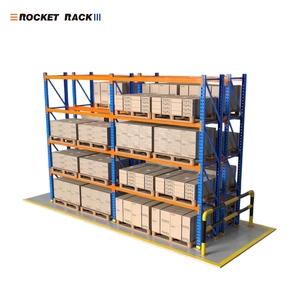
In modern supply chain architecture, Single Deep Selective Pallet Racking remains the foundational benchmark for 100% pallet selectivity, high-velocity stock rotation, and dynamic SKU consolidation. Operating on direct-access material flow, single deep systems decouple pallet retrieval from secondary handling bottlenecks, enabling standard reach trucks, counterbalance forklifts, and automated guided vehicles (AGVs) to interface seamlessly with each individual SKU position without honeycombing or buried stock.
As global logistics hubs face land cost escalation and extreme climatic stressors—ranging from the high ambient heat and humidity of Middle Eastern free zones to sub-zero cold chain operations—the structural integrity of single deep racking hinges on precision cold-roll-formed profiles, automated electrostatic powder coatings, and validated structural engineering under EN 15512, RMI MH16.1, and FEM 10.2.02. Selecting a premier tier-one manufacturer requires evaluating raw metallurgical yield strength (Q235B through Q355B), beam-end connector locking moments, column perforation tolerances, and comprehensive project execution from 3D layout modeling to seismic anchor verification.
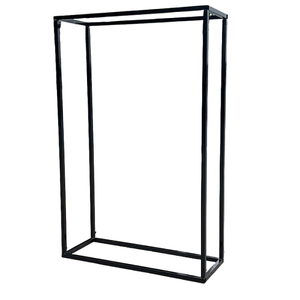
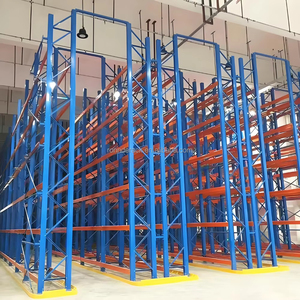
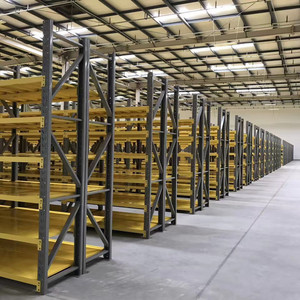
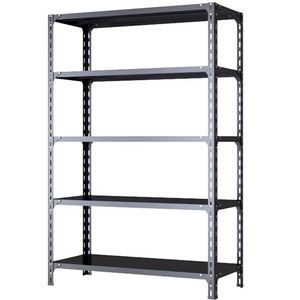
Core Industrial Storage & Single Deep Pallet Racking Systems
Heavy-duty, cold-room, bulk, and longspan systems manufactured in our certified facility for international logistics deployment.
Engineering Comparison Matrix: Single Deep Selective vs. High-Density Layouts
Optimizing warehouse storage requires balancing selectivity with volumetric cubic density. The matrix below contrasts Single Deep Selective Pallet Racking with Double Deep, Drive-In, and Radio Shuttle architectures across critical logistical KPIs:
| System Architecture | Pallet Selectivity | Space Utilization | Forklift Compatibility | MHE Fleet Capital Cost | Best Inventory Profile |
|---|---|---|---|---|---|
| Single Deep Selective | 100% Instant Direct | 40% – 50% Floor Area | Standard Counterbalance / Reach | Low (Standard Fleet) | High SKU variety, fast FMCG, dynamic 3PL |
| Very Narrow Aisle (VNA) | 100% Instant Direct | 55% – 65% Floor Area | Turret Trucks / Guided AGVs | High (Specialized MHE) | High-bay distribution, e-commerce fulfillment |
| Double Deep Racking | 50% Immediate (LIFO) | 60% – 65% Floor Area | Pantograph / Deep Reach Truck | Moderate (Deep reach) | Medium SKU count, multiple pallets per SKU |
| Drive-In Racking | Strictly LIFO (Batch) | 70% – 80% Floor Area | Standard Drive-In Truck | Low to Moderate | Low SKU volume, bulk uniform commodities |
| Radio Shuttle Automation | FIFO or LIFO Automated | 75% – 85% Floor Area | Counterbalance + Shuttle Units | High (Automation Units) | Cold storage, food processing, heavy beverage |
Why Global Exporters Rely on HEDA Shelves Engineering
Continuous steel innovation, automated cold forming lines, and precision quality protocols since 2001.
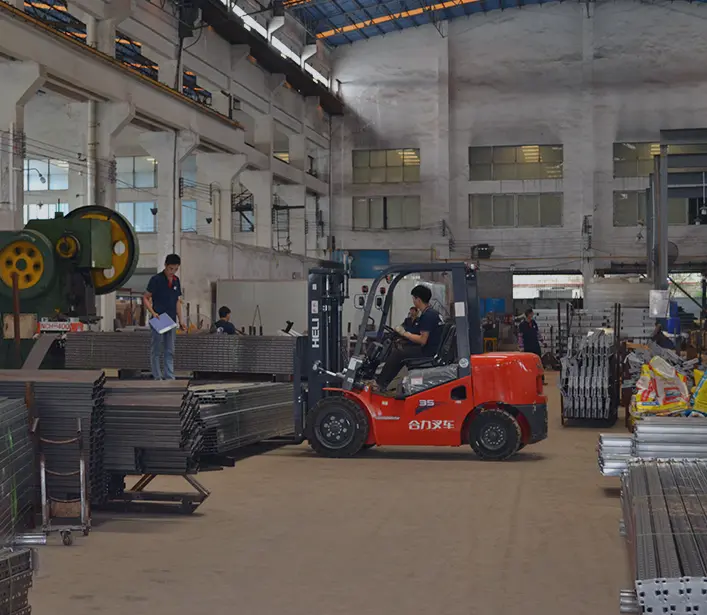
Tier-1 Manufacturing Capabilities in Guangzhou
Operating across an advanced 30,000 m² heavy production complex with 300+ certified engineers and technicians, HEDA Shelves produces over 30,000 tons of structural and cold-formed racking steel per month. Unlike regional brokers, our entire manufacturing chain is managed under one roof: from decoiling, CNC punching, precision cold-roll profile bending, to robotic beam welding.
Surface durability is guaranteed via an automated 10-stage chemical pickling and phosphating pre-treatment tunnel, followed by electrostatic epoxy-polyester powder baking at 200°C. This ensures high corrosion resistance in demanding coastal salt-spray and high-temperature logistics corridors across Dubai, Jeddah, Dammam, and Southeast Asia.
Complimentary 3D CAD & Structural Design
Every single deep installation begins with finite element structural analysis (FEA). Our logistics engineers model warehouse layouts, aisle turning radii, and seismic loading parameters in 2D CAD and 3D visual formats before steel fabrication begins.
Container-Optimized Bundling & Labeling
Export components are packed with protective corner guards, steel strapping, and sequential project color-coding matching site erection drawings. This eliminates transit friction across Jebel Ali, Khalifa, Hamad, Sohar, Dammam, and Shuwaikh ports.
On-Site & Remote Technical Assembly Guidance
From baseplate anchor torque verification to laser beam deflection alignment, we deliver complete multilingual structural assembly manuals, remote video inspection support, and on-site supervising engineers for multi-bay turnkeys.
Future Procurement Trends in Single Deep Racking (2025–2030)
Industrial warehousing is undergoing structural transformation driven by omnichannel commerce, autonomous material handling equipment, and carbon accounting. Procurement leaders must align specifications with four macro trends:
1. Micro-Fulfillment & Multi-Tier Mezzanine Hybrids
Single deep selective racks are increasingly adapted into rack-supported mezzanine floors and multi-tier picking structures. Logistics operators combine lower-level palletized picking with upper walkway catwalks to maximize cubic volume in proximity to dense urban corridors without altering warehouse building footprints.
2. Total Cost of Ownership (TCO) vs. Initial Capital Expense
Global logistics managers are transitioning from procurement based strictly on low initial steel price to life-cycle value analysis. Upright column protectors, heavy wrap-around base guards, structural impact deflectors, and hot-dip galvanized footplates reduce maintenance downtime and eliminate catastrophic rack failure liabilities.
3. Compliance with Seismic & Civil Defense Mandates
Municipal planning authorities in expanding economic zones (e.g., UAE Civil Defense, Saudi SASO, European EN 15512) require third-party structural calculations accounting for dynamic seismic ground acceleration, concrete slab pull-out loads, and adequate flue spacing for automated early suppression fast response (ESFR) ceiling sprinklers.
Engineering Evolution & Development Trends in Pallet Racking
The manufacturing of single deep pallet racking has evolved beyond standard channel bending into advanced aeronautic and structural cold-forming disciplines:
- High-Strength Micro-Alloyed Steels: Leveraging advanced high-yield cold-rolled coils (e.g., Q355B with niobium/vanadium micro-alloying) allows rack manufacturers to decrease dead load by 12% while maintaining structural load-bearing capacity up to 5,000 kg per beam level.
- Optimized Multi-Bend Upright Geometry: Traditional open C-profiles are replaced with patented 11-bend and 13-bend column cross-sections. These closed-loop roll profiles distribute torsional stresses and prevent lateral buckling during asymmetric fork truck impacts.
- Precision Slot & Interlocking Wedge Claws: High-precision robotic cold punching produces teardrop, diamond, and trapezoidal slot configurations with +/- 0.1mm tolerances. Combined with 4-claw and 5-claw high-tensile connectors, beam-column connection rigidity is maximized under seismic cyclic tests.
- Automated Storage & Retrieval (ASRS) & AGV Readiness: Uprights and pallet support cross-beams are calibrated for robotic sensor visibility, optical reflector alignment, and laser deflection tolerances (1/200th to 1/300th of beam clear span) to accommodate driverless laser-guided autonomous forklifts.
Frequently Asked Questions on Single Deep Racking Procurement
Clear, engineering-backed answers addressing the most critical operational, financial, and logistical concerns of project directors.
Q: How is the required load capacity per beam level calculated?
The total load capacity per level equals the maximum weight of one pallet multiplied by the number of pallets per bay (typically two or three), plus a 10% safety margin. For example, two 1,200 kg pallets require a uniformly distributed load (UDL) capacity of 2,400 kg. Beam deflection under full static load must not exceed L/200 (EN 15512 standard) or L/180 (RMI MH16.1 standard).
Q: What warehouse aisle width is required for single deep selective racking?
Aisle width depends on the handling equipment: standard counterbalance forklifts require 3,500 mm to 4,200 mm; standard pantograph reach trucks require 2,700 mm to 3,200 mm; articulated forklifts require 1,800 mm to 2,000 mm; and Very Narrow Aisle (VNA) turret trucks operate in aisles as narrow as 1,600 mm to 1,800 mm with wire or guide rail steering.
Q: How do your rack finishes withstand hot, humid, and coastal environments?
Our steel profiles undergo a 10-step immersion pre-treatment featuring degreasing, ultrasonic cleaning, acid pickling to remove mill scale, and zinc phosphating to create an anti-corrosion chemical bond. Components are then coated with thermoset epoxy-polyester powder (60–80 microns) cured at 200°C. For corrosive yards or deep-freeze cold storage, hot-dip galvanization is available.
Q: What technical parameters must be provided to receive a free 3D CAD layout?
To generate an engineered layout, please provide: building architectural CAD drawing with column grid locations, clear ceiling height under beams, floor slab thickness and compressive capacity, pallet dimensions (Length × Width × Height including product overhang), maximum gross pallet weight, forklift model specifications, and local seismic zone data.
Q: How do single deep racking layouts comply with Fire Civil Defense & NFPA codes?
Our layouts maintain transverse flue spaces (minimum 75 mm between back-to-back pallets) and longitudinal flue spaces (minimum 150 mm) along racking rows. This configuration allows heat from a fire to activate overhead ESFR sprinkler heads rapidly and enables water to penetrate through rack tiers, satisfying NFPA 13 requirements and municipal Civil Defense authorities.
Q: What is the standard factory lead time and export delivery process?
Standard manufacturing lead time is 15 to 25 business days for orders up to ten 40HQ containers. Goods are strapped in heavy-duty bundles, labeled with CAD installation marks, and shipped directly from our Guangzhou facility through major shipping lines to your designated global port.
Ready to Engineer Your High-Yield Warehouse Storage Facility?
Partner with Guangzhou Heda Shelves Co., Ltd.—a global leader in cold-formed industrial racking. Contact our engineering team today to receive a customized 2D CAD layout, comprehensive 3D renderings, structural calculations, and our complete export product catalog.