Featured Small Warehouse Racking Systems & Configurations
Compact and mid-scale industrial spaces demand higher load efficiency per square meter. The eight systems below represent factory-engineered solutions designed for tight turning radiuses, high vertical clearing, and automated integration.
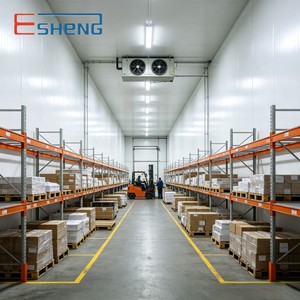
Automated High-bay Cold Storage -25℃~0℃ 12-24m High Racks, WMS & WCS, FIFO
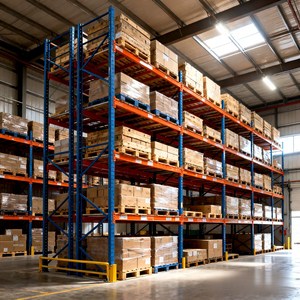
High-Rise Heavy Duty Beam Racking 10-15m Tall Steel Storage Shelves
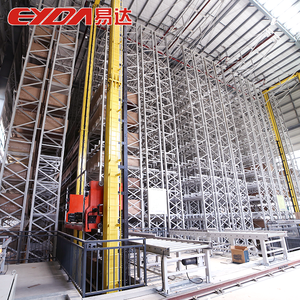
EYDA ASRS Warehouse System Stack Crane Shuttle Rack System
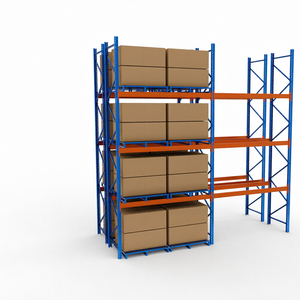
Metal Rack Heavy Duty Selective Pallet Beam Racking System
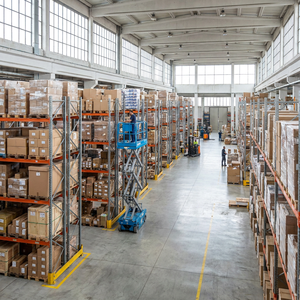
Anti Corrosion Hot Dipped Galvanized Steel Storage Racking
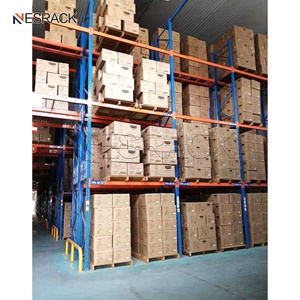
Industrial Heavy Duty 5 Layer Multi-layer Steel Pallet Shelf
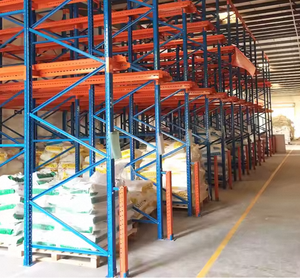
Adjustable Drive-Through & Drive-In Pallet Racking System
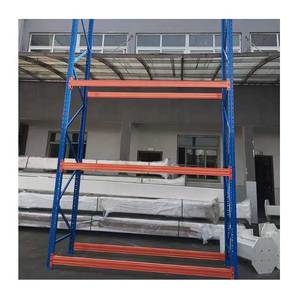
CE Certified Heavy Duty Bolted Industrial Pallet Rack Shelving
The Small Warehouse Paradox: Why Sub-5,000 m² Facilities Demand Higher Engineering Rigor
Procurement teams and facility operators often assume that small-format warehouses (ranging from 500 m² urban fulfillment nodes to 4,500 m² regional distribution points) are simpler to outfit than massive 50,000 m² logistics hubs. Structural engineers know the reality is precisely the opposite. In mega-distribution centers, spatial abundance forgives layout inefficiencies. Wide-aisle counterbalanced forklifts requiring 3.8-meter clearances can operate freely without suffocating volumetric storage ratios.
In small warehouse environments, every square meter of unusable floor space represents an exponential penalty on operational margin. When aisles occupy 60% of the building footprint, the facility is effectively functioning as an expensive indoor parking lot rather than a high-throughput fulfillment center. Achieving cubic utilization indices (CUI) above 75% requires a rigorous evaluation of structural upright moments of inertia, floor slab deflection tolerances, forklift minimum turning radiuses (Ast), and strict adherence to international safety codes like FEM 10.2.02, EN 15512, and RMI (MH16.1).
Key Metric: Cubic Volume Utilization Formula for Small Warehouses
CUI (%) = [Total Pallet Positions × Individual Pallet Volume (m³)] / [Gross Building Clear Volume (L × W × H)] × 100
Standard selective racking in small facilities yields a poor 28–35% CUI. Engineered high-density configurations (VNA, Radio Shuttle, Push Back, or Rack-Supported Mezzanines) elevate this threshold to 60–78% without compromising SKU selectivity.
Top 10 Technical Evaluation Criteria for Small Warehouse Racking Suppliers
Before issuing purchase contracts or approving architectural bids, verify your prospective manufacturing partner against these ten structural, chemical, and engineering production criteria.
Certified Steel Tensile Strength
Racking structural columns must be roll-formed from certified high-yield hot-rolled coils (Q235B or Q355B equivalent to ASTM A36 / SS400). Suppliers must provide mill test certificates verifying tensile yield minimums of ≥235 MPa to prevent permanent column buckling under sudden impact loads.
- Standard: EN 10025-2 / GB/T 700
- Tensile Elongation: ≥26% minimum
Precision Cold Roll-Forming
Multi-pass continuous cold roll-forming ensures upright sections (Omega and C-profiles) maintain uniform wall thickness and pitch precision within ±0.5mm across a 12-meter continuous span. Uneven punch pitch creates axial load eccentrically that reduces load capacity by up to 22%.
- Pitch Tolerances: ±0.5mm linear variance
- Roll Passes: 18–24 continuous stations
Robotic Joint Welding Standards
Beam connector endplates and structural brackets must undergo multi-axis robotic CO2 shielded welding. Welds must conform to AWS D1.1 structural welding code, maintaining 100% complete penetration without porosity, undercut, or slag inclusions that cause sudden shear failure.
- Weld Process: Robotic MAG/CO2 Shielded
- Code: AWS D1.1 / ISO 3834-2
9-Stage Chemical Pretreatment
Surface finishing longevity is determined by what occurs before the paint line. Top-tier factories utilize automated immersion pickling and iron/zinc phosphating to eliminate micro-scale mill oxidation, followed by three DI-water rinses to guarantee maximum electrostatic paint adhesion.
- Stage Count: 9-Stage degrease & phosphate
- Salt Spray Rating: ASTM B117 ≥ 500 Hours
Electrostatic Powder Curing
Dry powder curing at 180°C–200°C produces a resilient thermoset coating between 60μm and 90μm thickness. Cross-hatch adhesion testing (ASTM D3359) must achieve Class 5B with zero flaking under violent beam adjustment impacts or high ambient coastal humidity.
- Coating Thickness: 60 to 90 Microns
- Adhesion: ASTM D3359 Class 4B/5B
Factory Capacity & Direct Scale
Intermediary trading companies add 15–30% price markups and dilute engineering accountability. Direct tier-one manufacturers must possess at least 20,000 m² of physical factory floor, automated slitters, and rolling lines to assure stable delivery cycles and exact batch consistency.
- Factory Footprint: ≥ 30,000 m² dedicated
- Production Capacity: ≥ 25,000 Tons/Month
Free In-House 2D CAD & 3D Modeling
Suppliers must provide full spatial simulations within 24–48 hours, modeling exact building columns, overhead HVAC obstructions, fire egress corridors, and forklift turning paths before production begins, eliminating catastrophic field fitment errors during site erection.
- Output: AutoCAD .DWG and 3D SolidWorks
- Analysis: FEA Stress & Deflection modeling
Verifiable International Accreditations
Structural integrity requires third-party institutional proof. Insist on traceable CE marking under Construction Products Regulation (CPR 305/2011), audited ISO 9001:2015 quality management systems, and chemical compliance with RoHS directives for zero lead toxicity.
- CE Mark: EN 1090 / CPR-8605159
- Quality System: ISO 9001:2015 Audited
Export Packing & Numbered Bundling
International shipping subjects steel to ocean container humidity and dynamic transit shifting. Uprights and beams must be strapped with corrugated corner armor, heavy steel banding, and barcode-labeled manifests matching erection drawings for rapid customs and site handling.
- Packing: Protective wrap + corner steel guard
- Tracking: Component ID labeled to floor plan
Holistic Lifecycle TCO & Structural Safety Factor Engineering
The ultimate benchmark of an elite small warehouse racking supplier is not initial component purchase price, but the Total Cost of Ownership (TCO) calculated across a 15-year operational lifecycle. Cheap fabricators cut steel thickness from 2.0mm to 1.5mm and eliminate column stiffening ribs, resulting in dangerous beam deflection exceeding L/200 under nominal loading. Premier tier-one manufacturers engineer structural safety factors of 1.5 to 1.95, incorporate replaceable front leg upright splices, specify anchor bolts rated for cracking concrete slabs, and provide comprehensive load capacity rating plaques compliant with OSHA 1910.176 and EN 15635.
Guaranteed Traceability: The 10-Stage Precision Production Sequence
Every ton of structural steel transformed in our Guangzhou industrial complex passes through an unbroken 10-stage quality control sequence before departure to international ports.
Raw Coil Audit
Spectrometric chemistry validation and ultrasonic thickness verification of incoming Q235B steel coils.
Slitting & Cutting
Automated CNC hydraulic cutting lines deliver edge squareness and width tolerances within ±0.2mm.
CNC Hole Punching
Synchronized multi-ton punching dies generate diamond and teardrop pitch patterns with zero heat-affected zone.
Cold Roll Bending
Progressive bending dies introduce structural stiffener return lips to increase column torsional rigidity.
Profile Roll Forming
22-station high-speed continuous mills roll beam tubes and Omega uprights with uniform wall distribution.
Deburring & Polish
Automated rotary wire deburring removes sharp metal flashing to prevent personal injury and cable abrasion.
Robotic MIG Weld
Pulse-arc robotic welding heads join beam end connectors to tubes under argon/CO2 protective gas atmospheres.
Pickle & Phosphating
9-tank chemical immersion removes mill scale and establishes an insoluble crystalline conversion layer.
Electrostatic Powder
Nordson automated spray booths coat thermoset polyester powders, cured at 200°C for maximum impact armor.
QC & Ocean Packing
Dry film thickness (DFT) gauge verification, barcode labeling, and steel-banded bundling inside 40HQ containers.
Future Procurement Trends for Small Footprint Warehouses
Urban real estate premiums and surging e-commerce same-day delivery SLAs are driving unprecedented structural shifts in small warehouse racking procurement.
Urban Micro-Fulfillment Conversions
Sub-1,000 m² light industrial spaces in metropolitan peripheries are replacing standard wide-aisle systems with VNA (Very Narrow Aisle) and multi-level rack-supported mezzanines, multiplying SKU pick faces by 300% without expanding the physical foundation footprint.
Automation-Ready Hybrid Modular Racks
Small warehouse operators are actively demanding racking frames pre-engineered for future Autonomous Mobile Robot (AMR) and AGV integrations. Bolt-on guidance angles, ground-level laser reflector mounts, and wireless shuttle rails are now standard procurement specifications.
Low-Carbon Green Steel & Zero-VOC
Corporate ESG disclosures and EU Carbon Border Adjustment Mechanism (CBAM) regulations are forcing procurement officers to audit the embodied carbon of warehouse racking. Demand has surged for electric arc furnace (EAF) low-emission steel and heavy metal-free powder coatings.
Modular Reconfigurable Architectures
Short commercial warehouse lease cycles (2–3 years) require racking configurations that can be disassembled, re-pitched, and expanded without structural cutting or field re-welding. Boltless interlocking beam connectors and modular frame splices deliver maximum residual asset equity.
Small Warehouse Racking System Architecture Comparison
Compare mechanical attributes, operational volumetric densities, and handling equipment clearances across core industrial storage typologies.
| System Architecture | Volumetric Density | SKU Selectivity | Aisle Width Req. | Floor Slab Loading Req. | Forklift Compatibility | CAPEX Index |
|---|---|---|---|---|---|---|
| Standard Selective Pallet | Low (35–40%) | 100% Direct | 3.2m – 3.8m | ≥ 20 kN/m² (Light-Med) | Standard Counterbalance / Reach | $ (Baseline 1.0x) |
| Very Narrow Aisle (VNA) | High (60–65%) | 100% Direct | 1.6m – 1.9m | ≥ 35 kN/m² (Superflat Slab) | Articulated / Turret Truck | $$$ (2.2x) |
| Drive-In / Drive-Through | Very High (75%) | Low (LIFO/FIFO) | Lane Dependent | ≥ 30 kN/m² (Heavy) | Counterbalance / Reach (Narrow) | $$ (1.6x) |
| Push-Back Cart System | High (65–70%) | Medium (LIFO) | 2.8m – 3.2m | ≥ 25 kN/m² (Medium) | Standard Reach Truck | $$$ (2.4x) |
| Radio Shuttle Cart System | Maximum (80%+) | Semi-Automatic | Front Lane Only | ≥ 35 kN/m² (Heavy Dynamic) | Standard Forklift + Shuttle | $$$$ (3.5x) |
| Rack-Supported Mezzanine | 200% Floor Area | 100% Manual/Bin | Pedestrian + Pallet Gate | ≥ 40 kN/m² (Concentrated Point) | Manual Cart / Hand Stacker | $$$ (2.8x) |
Need an Engineered Floor Plan Analysis for Your Facility?
Send our structural team your building CAD .DWG drawing or clear measurements. Our engineers will return a complimentary 2D CAD layout, 3D rendering, and floor point load calculation within 24 hours.
Frequently Asked Technical & Procurement Questions
Detailed answers to structural calculations, municipal fire regulations, slab load mechanics, and ocean freight logistics for small warehouse operators.
How do I calculate concrete slab point-load capacity for tall racks?
What are the mandatory fire sprinkler flue space requirements?
How does forklift turning radius (Ast) dictate aisle width?
When should hot-dipped galvanizing be chosen over powder coating?
What verifiable certifications must small warehouse racks hold?
How are knockdown components packaged for ocean freight safety?
Begin Your Small Warehouse Engineering Design
Connect directly with our senior application engineers in Guangzhou. Receive a structural review, CAD floor plan, and complete factory direct quotation with zero obligation.
Get Catalog