Featured Industrial Pallet Racking & Decking Systems
Engineered from prime Q235B high-tensile steel with advanced automated resistance welding and precision roll forming. Fully compliant with international safety codes for selective, very narrow aisle (VNA), drive-in, dynamic flow, and multi-tier mezzanine installations.
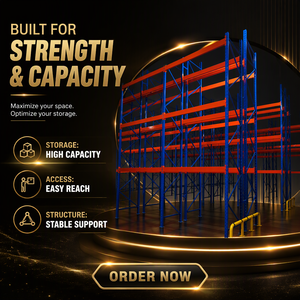
High Density Narrow Aisle Pallet Racking Steel Storage System
- VNA Layout
- Q235B Steel
- Adjustable 75mm
- Powder Coated
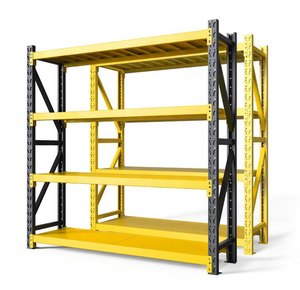
Robust Stacking Shelf System - Multi-Layer Storage Rack
- Stackable Frame
- Heavy-Duty Mesh
- Modular Unit
- Anti-Rust Coat
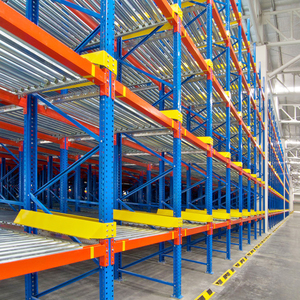
OEM Gravity Flow Roller Racking Heavy Duty Pallet Flow Rack
- Dynamic Roller
- SGS Certified
- Speed Controller
- Cold-Room Fit
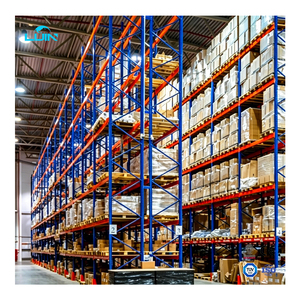
Steel Wide Span Racking Heavy Duty Industrial Warehouse Rack
- Long Span Beam
- Steel Decking
- Manual Picking
- 800kg/Level
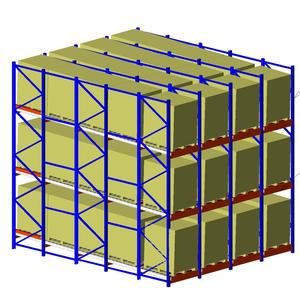
Heavy Duty Dynamic Gravity Pallet Rack 1000kg Capacity
- 1000kg/Pallet
- Zinc Galvanized
- Brake Drums
- Collapsible Bay
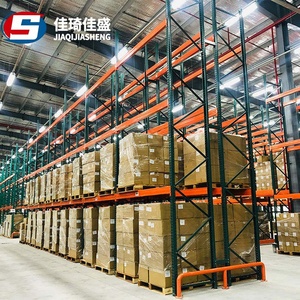
High Load Capacity Heavy Duty Steel Shelf Pallet Racking
- Up to 4000kg
- Box Beam Core
- Wire Deck Ready
- ISO 9001
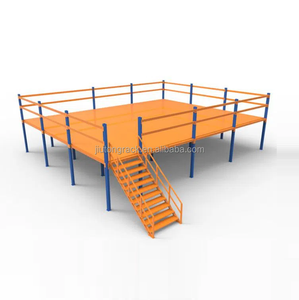
Stable Steel Structure Mezzanine Floor For Warehouse Storage
- Double Usable Area
- Galvanized Deck
- Perforated Steel
- Custom Stairs
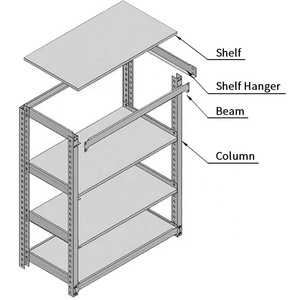
Wholesale Corrosion Protection Boltless Warehouse Shelving
- Boltless Setup
- Phosphated Steel
- Resistant to Salt
- E-Commerce Ready
Structural Principles & Design Criteria for Industrial Pallet Rack Decking
Pallet rack decking serves as the vital secondary structural interface between heavy unit loads and primary load-bearing horizontal beams. Sourcing from a premier Chinese manufacturer requires rigorous comprehension of load distribution physics, fire code compliance, metallurgic specifications, and cross-channel geometries.
Wire Mesh Decking Architecture
Engineered using heavy-gauge, cold-drawn carbon steel wire (typically 4.0 mm to 6.0 mm in diameter) spot-welded at 50×50 mm or 50×100 mm grid intersections. The assembly is reinforced by bottom-welded steel structural channels that sit flush or cascade across roll-formed step beams or structural box beams.
Under ANSI MH26.2 and RMI standards, wire decking must maintain a structural deflection limit not exceeding L/250 (Span length divided by 250) under uniform distributed loads (UDL). Flared waterfall designs provide universal seating over both step and structural channel beams, while inside drop-in designs ensure unhindered front-face barcoding.
- NFPA 13 Compliant
- 50% Open Water Flow
- Self-Cleaning Mesh
Solid Corrugated & Perforated Steel Decking
Fabricated from cold-rolled sheet steel ranging from 0.8 mm to 2.5 mm in thickness, profiled with longitudinal corrugated ribs to maximize section modulus. Solid decking offers an impenetrable surface, preventing loose hardware, carton tears, or chemical leaks from migrating to lower pallet tiers.
For warehouses bound by strict municipal fire regulations such as Civil Defense or European EN codes, perforated steel decking incorporates high-speed CNC punched matrix patterns that satisfy mandatory 50% open-area ratios for in-rack Early Suppression Fast Response (ESFR) sprinkler penetrations without sacrificing torsional sheet stiffness.
- Heavy Point-Load Capacity
- Spill Containment
- Continuous Picking Surface
Uniform (UDL) vs. Point Load Engineering
A critical failure mode in warehouse procurement is mistaking Uniformly Distributed Load (UDL) ratings for concentrated point-load resistance. While standard wire decks comfortably support 1,000 kg to 1,500 kg UDL, placement of container corner-feet, plastic skid runners, or heavy metal drums exerts extreme localized shear stresses.
Our engineering team incorporates inverted U-channel stiffeners, welded tubular hollow sections, or localized heavy support plates directly beneath high-stress contact planes, calculated using 3D Finite Element Analysis (FEA) to eliminate premature fatigue cracking and localized beam sagging.
- Finite Element Validated
- Dynamic Impact Cushion
- Zero Permanent Plastic Strain
| Decking Structural Type | Typical Steel Grade | Standard Load Class (UDL) | Fire Sprinkler Water Flow | Primary Industrial Applications |
|---|---|---|---|---|
| Standard Step Waterfall Wire Deck | Q235B / Cold-Drawn Wire | 300 kg – 1,500 kg / level | >70% Open Area (Superior) | FMCG, Retail 3PL, Dry Warehousing, E-commerce |
| Flared Universal Channel Wire Deck | Q235B Prime Carbon Steel | 500 kg – 1,800 kg / level | >70% Open Area (Superior) | Structural Channel Beams, Box Beams, Heavy Pallets |
| Inverted Channel Wire Deck (Pharma/Food) | Q235B / Electro-Galvanized | 400 kg – 1,200 kg / level | >65% Open Area (Prevents Dust) | HACCP Facilities, Cleanrooms, Date/Grain Processing |
| Solid Corrugated Galvanized Steel Deck | SPCC / DX51D Cold-Rolled | 800 kg – 3,500 kg / level | 0% (Requires in-rack baffles) | Chemical Storage, Heavy Die/Mold Racks, Lubricants |
| CNC Perforated Heavy-Duty Steel Deck | Q235B High-Yield Strip | 600 kg – 2,200 kg / level | 50% Open (NFPA / Civil Defense) | Automotive Spares, Cold Chain, Hazardous Industrial |
Future Procurement Trends in Pallet Rack Decking (2025–2035)
Global supply chains are reconfiguring around automated fulfillment, climate volatility, and stringent carbon governance. Procuring pallet rack decking directly from Tier-1 Chinese manufacturers requires navigating pivotal technological and commercial shifts.
Automation & AGV/AMR Interface Compatibility
The surge in Automated Storage and Retrieval Systems (ASRS), Autonomous Mobile Robots (AMRs), and Radio Shuttle carriers requires sub-millimeter deck manufacturing tolerances. Warped or bowed wire decks trigger optical sensor trip errors and cause robot wheel entrapment.
Next-generation procurement demands flush-top, high-rigidity decking profiles featuring laser-aligned perimeter rails that provide smooth transitional gliding planes for autonomous shuttles operating at speeds exceeding 1.5 m/s.
Carbon Neutrality & EPD Environmental Accounting
Tier-1 multinational logistics operators and sovereign wealth development funds (such as Saudi Vision 2030 and EU Green Deal initiatives) now demand audited Environmental Product Declarations (EPDs).
Forward-looking Chinese mills leverage electric arc furnace (EAF) steel with up to 60% recycled scrap content, paired with non-toxic, lead-free polyester powder formulations verified by RoHS and REACH compliance, substantially trimming scope-3 embodied carbon per pallet location.
Advanced Anti-Corrosive Chemistries for Extreme Climates
With major logistics hubs clustering in coastal and extreme microclimate zones—such as Jebel Ali Free Zone (UAE), King Abdulaziz Port Dammam (Saudi Arabia), and Singapore—traditional zinc electroplating is proving inadequate against salt mist and condensation.
Procurement is transitioning toward Zinc-Aluminum-Magnesium (ZAM) alloy coatings and duplex hot-dip galvanizing with cross-linked thermo-cured powder barriers capable of surviving 1,500+ hours of continuous salt-spray testing without red rust inception.
Total Cost of Ownership (TCO) & Container Nesting
Ocean freight volatility highlights that landed cost matters far more than FOB unit pricing. Traditional decking designs consume excessive container cube space due to unoptimized channel nesting geometries.
Advanced manufacturers utilize nestable tapered cross-channels and precision-bundled modular strapping protocols that increase 40ft High Cube container volumetric utilization from 62% to over 91%, yielding immediate freight savings of $0.80 to $1.60 per deck unit.
Guangzhou Heda Shelves: China’s Foremost Decking & Racking Manufacturer
Founded in 2001, Guangzhou Heda Shelves Co., Ltd. has evolved from a specialized precision metal workshop into an internationally recognized industrial storage conglomerate. Operating a flagship 30,000 square meter intelligent fabrication complex in Guangzhou, China, we deliver turnkey racking and decking systems to supply chains worldwide.
Certified Quality & Traceable Testing
Every production heat undergoes chemical spectrometry, tensile elongation checks, and destructive load compression testing. Our quality systems hold authentic accreditation under CE Certification (No. 2435-CPR-8605159), ISO 9001:2015 (No. 18624Q00169R0M, valid to 2027), and complete RoHS environmental documentation for worldwide customs clearance.
Full In-House Engineering & CAD/3D Layouts
Back by a team of over 300 experienced technical professionals, HEDA Shelves provides zero-cost front-end 2D CAD layouts, 3D structural BIM models, and localized load-deflection calculation packages. Our designs are tailored directly to local regulatory standards such as Middle East Civil Defense approvals, European Eurocodes, and US RMI guidelines.
Global Logistics & Middle East Readiness
With frequent, scheduled shipments departing to major global ports—including Dubai (Jebel Ali), Abu Dhabi (Khalifa), Dammam (King Abdulaziz), Jeddah Islamic Port, Hamad Port (Qatar), Sohar, and Shuwaikh—all cargo is pre-sorted, strapped on heavy fumigated skids, and tagged with weatherproof barcodes corresponding directly to assembly manuals.
Precision 10-Step In-House Manufacturing Sequence
Strict spectroscopic testing of high-tensile Q235B steel coils and high-yield wire rods.
High-speed CNC uncoiling and precision cold shear cutting within ±0.2mm tolerance.
Continuous hydraulic stamping for step channels, waterfall lips, and safety clip tabs.
Multi-station progressive roll forming to shape U-channel profiles and structural beams.
Automated mesh resistance welding delivering extreme shear strength at every intersection.
Precision robotic MIG/TIG welding securing reinforcing channel ribs to mesh panels.
Multi-stage pickling, ultrasonic degreasing, and phosphating for maximum coating adhesion.
Automatic powder spraying line applying durable, thermosetting epoxy-polyester coatings.
200°C continuous curing oven ensuring scratch-resistant, impact-absorbing surface finishes.
Fumigated palletizing, edge-board wrapping, and containerized loading for export.
Frequently Asked Questions by Global Racking Buyers
Clear, definitive answers regarding engineering specifications, load criteria, customs compliance, and installation best practices for international logistics directors and project contractors.
What is the structural difference between flared waterfall and step waterfall wire decking?
A step waterfall wire deck is specifically engineered to interface with standard roll-formed step beams. The bottom reinforcing channels feature notched ends that nest directly onto the interior step recess (typically 1-5/8 inch or 2 inches), ensuring the top deck surface sits almost flush with the top beam flange.
In contrast, a flared waterfall wire deck has channel ends flattened and angled outward in a trumpet-like flare. This allows the channels to rest securely across the flat horizontal surfaces of structural C-channel beams, structural box beams, or roll-formed beams without dedicated step recesses. Flared channels offer greater structural versatility across mixed warehouse racking configurations.
How does wire mesh decking support warehouse fire insurance and NFPA 13 compliance?
National Fire Protection Association (NFPA) Standard 13, alongside international municipal guidelines (such as UAE Civil Defense and Saudi Arabian Fire Codes), mandates specific flue-space venting and sprinkler water penetration parameters in high-density storage racks. Solid wood planks and non-vented steel panels act as fire umbrellas, blocking sprinkler water from reaching combustion points on lower pallet tiers while accelerating rapid horizontal flame spread.
Standard 50×100 mm or 50×50 mm wire mesh decking provides an open area exceeding 70%, facilitating unobstructed water flow from ceiling ESFR heads down through all rack levels. It also prevents smoke accumulation, enabling optical beam smoke detectors to activate quickly, which substantially reduces property insurance premiums.
Can custom sizes, load ratings, and inverted sanitary channels be fabricated for food and pharma?
Yes. As an authentic OEM/ODM manufacturer, HEDA Shelves engineers custom-dimensioned decking up to 1,500 mm depth and 2,500 mm width. For pharmaceutical, dairy, dry grain, and date processing facilities governed by strict HACCP hygiene regulations, standard U-channels tend to accumulate falling dust, grains, and debris.
We engineer inverted U-channels where the channel base is welded face-up against the underside of the mesh. This creates a sloped shed surface that prevents residue buildup and facilitates thorough high-pressure wash-downs. Units can also be specified in hot-dip galvanized or surgical-grade 304 stainless steel.
How does the pickling and phosphating process prevent corrosion in Middle East coastal zones?
Direct application of powder paint onto bare, untreated steel leads to micro-flaking and rapid subsurface rust blistering when exposed to GCC ambient temperatures exceeding 45°C paired with coastal salt humidity (e.g., Dubai, Dammam, Manama).
Our automated pretreatment line immerses all components in acid pickling baths to strip mill scale, followed by a hot zinc-phosphate immersion that deposits a micro-crystalline conversion layer. This layer creates a chemical anchor that triples powder adhesion strength, delivering up to 500 hours of salt-spray endurance under ASTM B117 standards. For outdoor yards, hot-dip galvanizing with 85-micron zinc coating thickness is provided.
What information is necessary to receive a free structural calculation and CAD layout?
To enable our structural engineers to generate complete 2D layout drawings, 3D renderings, and beam/decking deflection calculation sheets, clients need to provide:
1. Architectural warehouse drawings indicating clear ceiling height under roof trusses, column spans, and door/dock locations.
2. Unit pallet details: Length × Width × Height, including pallet overhang and maximum gross load weight.
3. Operational forklift specifications: Type (Counterbalance, Reach Truck, or VNA), turning radius, and maximum mast lift height.
4. Target storage layout preference (FIFO vs. LIFO) and daily inventory throughput volumes.
How are products protected against mechanical impact and moisture during ocean shipping?
Long-haul intermodal sea freight presents risks of container condensation ("cargo sweat") and transit vibration damage. Wire mesh decks are nested tightly in interlocking 50-unit bundles, banded with high-tensile steel straps, and wrapped on solid fumigated hardwood skids with thick corrugated corner edge-boards.
The entire bundle is enveloped in multi-layer UV-stabilized shrink wrap embedded with industrial desiccant bags. Every bundle features a barcode label matching the CAD layout plan, enabling installation crews to offload, stage, and erect materials quickly without site confusion.
Optimize Your Warehouse Capacity with Certified Chinese Engineering
Whether you are outfitting a high-density logistics park in Riyadh, expanding a cold storage facility in Jebel Ali, or bidding on a European 3PL distribution hub, our factory engineering team delivers precision, competitive pricing, and verified structural integrity.