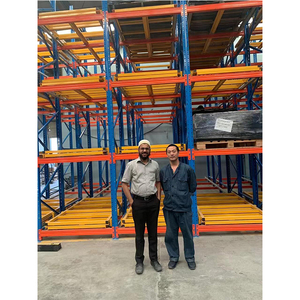
Intensive 2-6 Deep
URGO Heavy Duty Push Back Pallet Rack
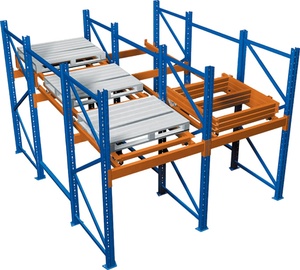
Engineered multi-level nested carriage structure maximizing floor footprint for high-throughput warehouses requiring rapid LIFO rotation.
Explore our certified 2-to-6 deep nested trolley configurations, cold storage push back arrays, and structural dynamic racking tailored for demanding industrial intralogistics.
Intensive 2-6 Deep
Engineered multi-level nested carriage structure maximizing floor footprint for high-throughput warehouses requiring rapid LIFO rotation.
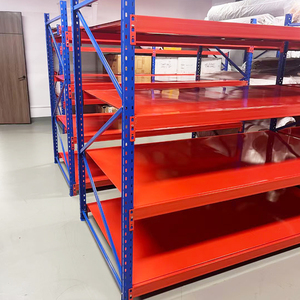
Custom Carriage
Bespoke rail inclination with low-friction stainless steel wheel bearings, custom built for non-standard or variable European and GMA pallet footings.
1000kg - 4000kg
Surface-treated with zinc-rich priming and electrostatic thermoset epoxy powders. Proven performance in high-humidity and refrigerated environments.
High-Density DJ
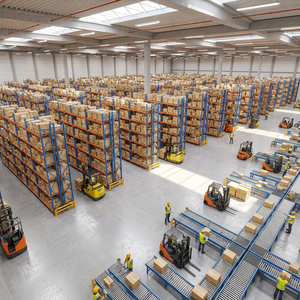
Engineered for high SKU batch processing. Provides discrete access to individual lanes without driving lift trucks directly into the rack bay superstructure.
Factory Wholesale
Cost-optimized structural frames manufactured on automated CNC roll-forming lines. Direct container shipping for EPC industrial contractors and distributors.
Micro-Push System
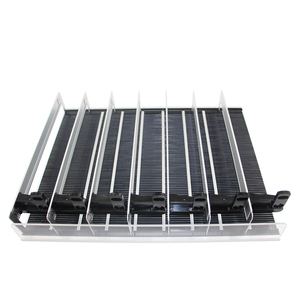
Compact, precision spring-driven continuous feed pusher tracks designed for light carton presentation, automated picking bays, and retail parts lockers.
Extra Heavy Load
Engineered with reinforced box-channel beams and structural nested tube carriages. Ideal for heavy manufacturing, chemical drums, and automotive dies.
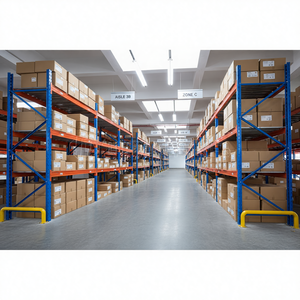
Structural Backbone
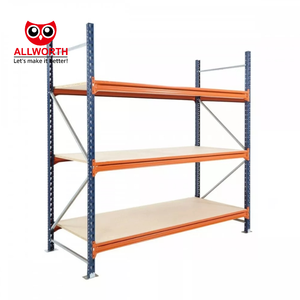
Continuous-punch 50mm/75mm pitch upright frames with safety lock connection clips, forming the high-rigidity structural basis for heavy push back retrofits.
A push back racking system represents one of the most mechanically balanced high-density storage methodologies in modern intralogistics. Operating on an inclined dynamic nested cart architecture (typically set at a precision slope of 2.5% to 3.5% / approximately 1.5° to 2.0° pitch), push back systems utilize gravity to deliver a Last-In, First-Out (LIFO) inventory flow while eliminating the substantial structural hazards common in drive-in racking bays.
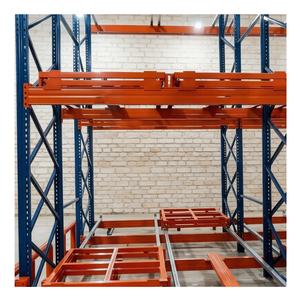
In a standard 4-deep configuration, the system consists of three tiered, nested steel carriages riding atop inclined structural support channels. The first pallet is positioned directly onto the top cart by the forklift mast. When the operator deposits the second unit load, the lift truck gently pushes back the first pallet, exposing the secondary cart beneath it. The process is repeated until the final pallet is placed directly onto the fixed structural steel rails. Upon retrieval, the hydraulic braking effect created by the trailing cart's self-weight ensures a smooth, controlled descent toward the loading aisle at controlled operational speeds.
Selecting the optimal intralogistics storage asset requires balancing volumetric storage density, forklift cycle efficiency, civil structural risks, and total capital expenditure.
| Evaluation Parameter | Push Back Racking (Nested Carts) | Drive-In Pallet Racking | Gravity Pallet Flow (Roller Beds) | Radio Shuttle Racking |
|---|---|---|---|---|
| Inventory Flow Logic | LIFO (Last-In, First-Out) | LIFO (Last-In, First-Out) | Strict FIFO | Both FIFO & LIFO configurable |
| Volume Utilization Ratio | 75% – 85% Floor Utilization | 70% – 80% Floor Utilization | 85% – 90% Floor Utilization | 85% – 95% Maximum Density |
| Forklift Bay Intrusion | Zero (Aisle Loading Only) | High (Truck drives deep inside) | Zero (Separate loading & picking) | Zero (Radio automated carriage) |
| Rack Damage & Impact Risk | Extremely Low | Very High (Frequent column collisions) | Low | Low |
| SKU Selectivity Depth | High per lane (2 to 6 deep) | Low (Dedicated to single bulk SKU) | Moderate (Deep continuous lanes) | High density, batch driven |
| Pallet Quality Sensitivity | Tolerates damaged/mixed pallets | Requires uniform intact bottoms | Requires pristine bottom skids | Strict dimensional compliance |
| Mechanical Maintenance | Minimal (Passive gravity wheel carts) | Structural inspections only | Moderate (Speed controllers & rollers) | High (Batteries, sensors, motors) |
| Capital Investment (ROI) | Moderate / Rapid 18-Mo Payback | Lowest initial CapEx | High CapEx | High CapEx + Ongoing Electronics |
As enterprise warehousing undergoes a rapid digital transformation, procurement directors are shifting from static, commoditized steel purchases toward dynamic, automated-ready infrastructure.
Next-generation push back systems are being recalibrated to interface with Automated Guided Forklifts (AGVs). By engineering precise, millimeter-accurate docking cart stops and laser reflector targets, automated lift equipment can execute high-speed push and retrieve operations without human operators.
With refrigerated cubic storage costs escalating, cold storage operators are migrating from selective racking to 4-deep and 5-deep push back racks. Concentrating thermal mass in dense push back corridors reduces chilled cubic space by up to 45%, lowering compressor electrical consumption.
Global supply chains now demand flexible modularity. Modern push back rails are built as self-contained drop-in cartridge units that can be seamlessly installed onto existing selective pallet rack step beams or box beams, converting low-density runs into dense storage overnight without concrete slab alteration.
Multinational procurement mandates require verified carbon footprint data. Forward-looking manufacturers utilize electric arc furnace (EAF) low-carbon steel, heavy metals-free eco-friendly zinc phosphate pre-treatments, and lead-free electrostatic thermoset powder coatings adhering to RoHS and REACH.
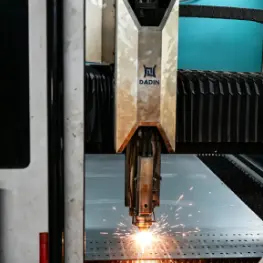
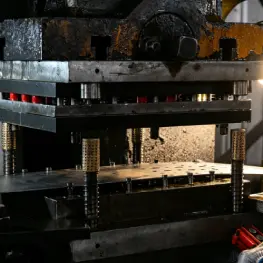
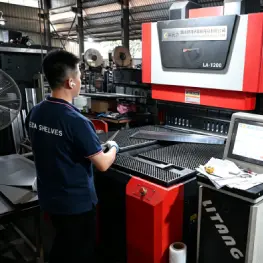
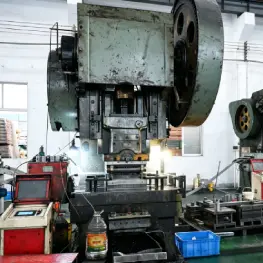
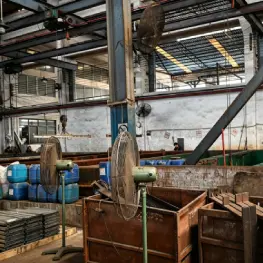
Operating a 30,000 square meter production facility with 300+ structural fabrication specialists, Guangzhou Heda Shelves Co., Ltd. oversees every phase from certified steel coil slitting to precision containerized packing.
01
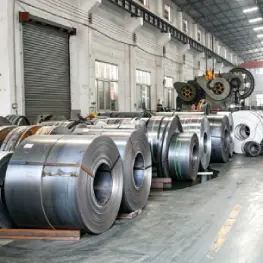
Spectrometric tensile and chemical testing of certified Q235B and Q355B prime hot-rolled steel coils.
02
High-tolerance automated longitudinal shearing guaranteeing burr-free edges and exact strip strip dimensions.
03
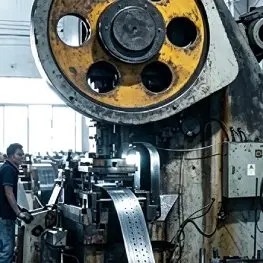
Continuous hydraulic multipoint pitch punch presses delivering repeatable 50mm/75mm upright pitch tolerances.
04
Multi-stand automated cold rolling shaping rigid omega uprights, step beams, and nested cart guide channels.
05
In-line optical measurement ensuring zero residual twist and strict linear camber control along full beam spans.
06
Smooth robotic grinding of beam connector plates, nested cart joints, and end stops to eliminate sharp flashings.
07
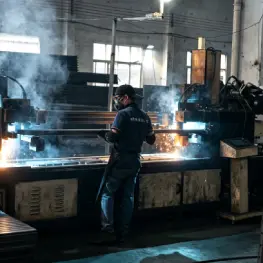
Automated multi-axis robotic welders generating uniform deep-penetration welds on high-stress trolley frames.
08
Multi-stage immersion cleaning stripping mill scale and depositing micro-crystalline zinc phosphate for adhesion.
09
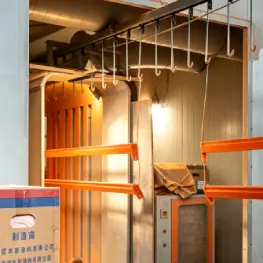
Swiss Gema automated spray guns applying 60-80μm thermoset polyester powder, cured in a 200°C convection tunnel.
10
Coordinate measuring verification, load testing, protective bubble wrapping, and color-coded sea-container stowage.
Every upright, beam, and nested cart assembly is accompanied by traceable Mill Test Certificates (MTC). Our production operations and quality systems adhere to CE Certification (No. 2435-CPR-8605159), ISO 9001:2015 Quality Management standards (valid until 2027), and RoHS environmental directives.
Our in-house structural engineering office delivers fully detailed 2D AutoCAD floor plans, static load calculations, and photorealistic 3D structural renderings within 24 to 48 hours. We calculate forklift aisle clearance, building column envelopes, slab point loads, and sprinkler flue spaces before production.
With more than two decades exporting to major seaports across the Americas, Europe, Middle East (Jebel Ali, Dammam, Jeddah), and Southeast Asia, our logistics specialists optimize container space. Every bundle is tagged with alphanumeric labels cross-referenced to step-by-step erection diagrams.
Detailed engineering, logistical, and operational answers to address common queries submitted by warehouse operations executives, EPC consultants, and procurement managers.
Push back racking systems are standardly engineered from 2-deep up to 6-deep pallet lane configurations. While 2, 3, and 4-deep systems represent over 85% of global installations due to standard forklift push-capacities, 5 and 6-deep configurations can be seamlessly manufactured using specialized low-friction wheel bearings and reinforced cart chassis. Beyond 6-deep, the cumulative push resistance required by the forklift mast and the vertical clearance consumed by nested cart stack heights typically favors switching to a Radio Shuttle Racking System.
Because push back carts nest inside one another when empty, their low-profile design minimizes lost vertical space. A standard 2-deep system requires approximately 100mm to 125mm of vertical beam clearance for the cart and rail assembly. Each additional depth level adds roughly 35mm to 50mm of nesting height. When calculating overall building clear height, our engineers factor in the total rail slope (approx. 25mm elevation rise per meter of depth) plus 150mm minimum clearance between the top of the pallet load and the beam above.
Yes. This is one of the distinct competitive advantages of cart-style push back racking over gravity roller flow racks. In a push back system, the pallet sits stably atop a heavy-duty, welded structural steel cart rather than directly on spinning roller axles. Therefore, pallets with broken bottom boards, missing skids, warped stringers, or plastic/metal footings can be safely handled without the risk of jamming, getting stuck, or suffering catastrophic hang-ups inside the lane.
Standard counterbalanced forklifts, reach trucks, and articulated trucks (such as Bendi or Flexi) are fully compatible. There is no need for specialized straddle attachments or specialized mast carriages. The lift truck requires only enough hydraulic tractive effort and mast rigidity to gently push the combined weight of the staged pallets back along the 3% incline. All loading and picking is performed entirely from the structural front aisle, ensuring lift trucks never enter the rack bay.
For cold chain and blast freezer applications, Guangzhou Heda Shelves equips nested carts with custom low-temperature metallurgy. We utilize high-grade alloy or stainless steel wheels paired with deep-groove ball bearings packed with low-viscosity synthetic synthetic fluorinated grease rated to -40°C. This prevents standard industrial grease from coagulating, maintaining constant cart rolling velocity and preventing wheel lockup or skidding on frost-covered rails.
Our structural engineering designs are calculated in strict accordance with the latest international storage standards, including European EN 15512, FEM 10.2.02, and American RMI (Rack Manufacturers Institute) MH16.1 specifications. For seismic zones, we calculate baseplate surface dimensions, floor anchor shear values, and upright frame cross-bracing using finite element analysis (FEA) tailored to local geotechnical reports and spectral acceleration parameters.