Engineered Industrial Wide-Span & Pallet Racking Systems
Continuous robotic roll-formed structural frameworks compliant with RMI, FEM 10.2.02, and EN 15512 standards. Custom engineered for dynamic load balancing, cold-chain preservation, and ultra-dense fulfillment operations.
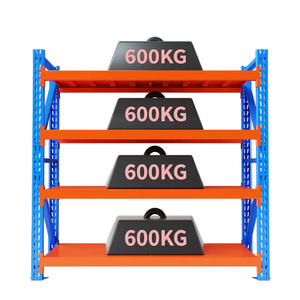
High Quality 500kg Adjustable 5-Layer Pallet Racking System
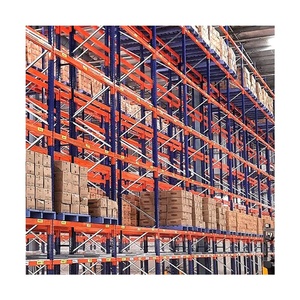
Heavy Duty Metal Pallet Racking Unit for Cargo Storage
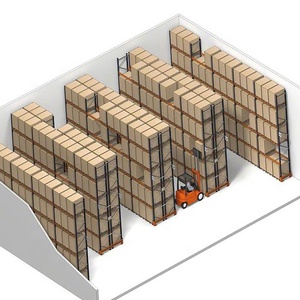
Industrial Selective Beam Racking Storage Framework
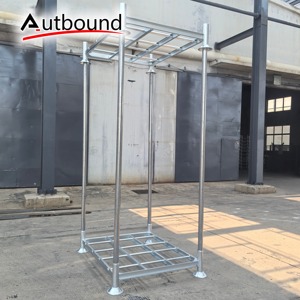
Q235 Steel Stackable Post Pallet Racks for Freight Logistics
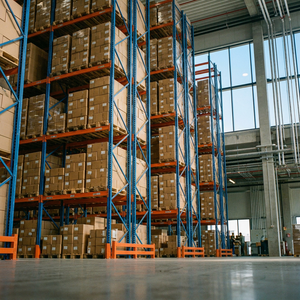
Custom Heavy-Duty Wide Span System (Factory Direct)
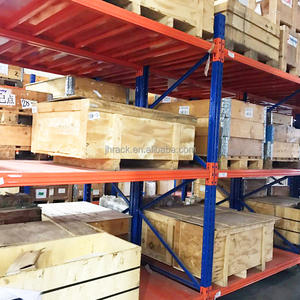
Standard Teardrop Hole Beam Wide-Span Pallet Rack
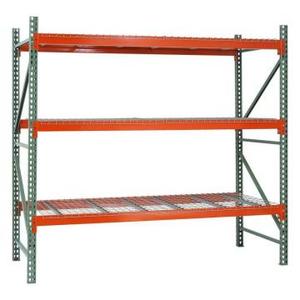
Teardrop Wide-Span Racking with Wire Mesh Decking
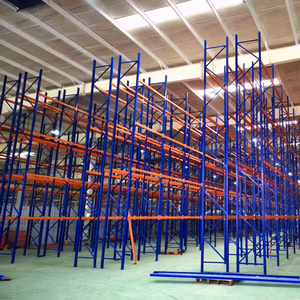
Automated Hub Heavy Load Pallet Racking System
I. Structural Engineering & Metallurgical Integrity in Chinese Racking Manufacture
Modern wide pallet racking systems require precise load calculations, strict metallurgical control, and repeatable manufacturing processes. At our Guangzhou industrial hub, raw material selection follows standard ASTM A1011 and GB/T 700 benchmarks. We use prime Q235B and cold-rolled Q355B low-alloy carbon steel, which delivers minimum yield strengths between 235 MPa and 355 MPa. The material's balanced chemistry preserves elongation tolerances of 21% to 26%, ensuring proper ductility under seismic shifts or accidental forklift contact.
Our continuous automated cold-roll-forming lines shape open omega profiles and closed-box step beams across 24 inline tooling stations. Incremental cold deformation prevents micro-fracturing along the inner radius corners. Structural upright columns are stamped on automated CNC punching arrays at 50mm or 75mm increments, maintaining a pitch variance under ±0.15mm across a 12-meter continuous span. This level of precision is necessary for multi-tier mezzanines, AS/RS setups, and tight narrow aisle (VNA) systems where small alignment errors can compromise load paths and disrupt automated equipment.
Protective finishes are applied through a multi-stage pre-treatment line that includes alkaline degreasing, clean-water rinses, zinc-iron acid pickling, and micro-crystalline phosphating. Cleaned steel profiles then pass through automatic corona electrostatic spray booths, where cross-linked thermosetting epoxy-polyester hybrid powder is applied. Curing takes place at 190°C to 200°C for 25 minutes, producing a hardened coating 60 to 90 microns thick. The finished surface complies with ASTM B117 salt spray standards beyond 500 hours, resisting scratching, peeling, and corrosion in both humid coastal distribution centers and cold-storage facilities down to -30°C.
| Structural Parameter | Standard Wide Pallet Rack | Heavy Industrial Wide-Span | AS/RS Automation Tolerance |
|---|---|---|---|
| Steel Grade & Yield Strength | Q235B (Yield ≥ 235 MPa) | Q355B High-Tensile (≥ 355 MPa) | Cold-Rolled Certified Q355B / St52-3 |
| Upright Section Profile | 80 × 60 × 1.8 – 2.0 mm | 100/120 × 70 × 2.5 mm | 120/140 × 95 × 3.0 mm Reinforced |
| Beam Type & Deflection Limit | Interlocking Twin-C (L/200) | Heavy Step Beam (L/250) | Closed Welded Box Beam (L/300) |
| Connector Hook Claws | 3-Prong Cold Stamped | 4-Prong Heavy Duty With Safety Pins | 5-Prong Heavy Lug (Zero Moment Drift) |
| Global Safety Certification | ISO 9001:2015, CE EN 15512 | RMI MH16.1, CE, AS 4084-2023 | FEM 9.831 Automated Verification |
Future Sourcing Trends in Wide Pallet Racking
The intralogistics industry is adapting to regional nearshoring, automated material handling, and corporate sustainability targets. Procurement teams must plan storage layouts that remain compatible with these changing operational demands.
1. Autonomous Compatibility
Facilities are designing beam levels to support automated guided vehicles (AGVs), autonomous mobile robots (AMRs), and semi-automated radio shuttles. Floor beams are engineered to tighter deflection limits (L/300) to keep optical and LiDAR navigation systems within sensor tolerances.
2. Low-Carbon Steel Tracing
Global logistics operators require Scope 3 emissions reporting on raw structural steel. Forward-looking manufacturers are shifting to electric arc furnace (EAF) steel and scrap-blended inputs to reduce carbon intensity while keeping tensile yield strengths certified.
3. Modular Multi-Tier Upgrades
Given the rising cost of industrial land, warehouses are specifying heavy-duty baseplates and taller initial upright frames. This built-in structural capacity lets operators convert selective ground-level racks into multi-tier rack-supported platforms later without pouring new foundations.
4. Seismic Design & Dynamic Dissipation
Seismic standards (such as ASCE 7 and EN 1998) are now frequently written into international tender specs. Racking designs incorporate seismic base plates, heavy-duty floor anchoring, and cross-bracing that dampen lateral loads during ground movement.
5. Direct Digital Manufacturing
BIM (Building Information Modeling) and structural calculation tools (STAAD.Pro, ANSYS) now connect directly to automated factory roll formers. This automated link cuts sample verification cycles from weeks down to hours and prevents detailing errors between approval drawings and shop fabrication.
6. Resilient Shipping Logistics
Volatile ocean freight rates have made container cubing efficiency a key priority. Upright geometries, nested beam brackets, and knocked-down frame assemblies are engineered to fill standard 40ft High Cube containers beyond 88% volumetric density, lowering per-unit freight costs.
II. Enterprise Advantages: Why Global EPC Contractors Choose Our Infrastructure
Operating from our modern 30,000 m² production base in Guangzhou, Guangdong, Guangzhou Heda Shelves Co., Ltd. has specialized in industrial storage solutions since 2001. Rather than functioning as a trading intermediary, we manufacture every core component in-house. Our production capacity reaches 30,000 metric tons per month across automated profiling lines, laser cutting stations, robotic welding cells, and powder-coating systems. This scale gives international buyers stable pricing, verified material quality, and dependable delivery schedules.
Our quality management system is audited under ISO 9001:2015 (Registration No. 18624Q00169R0M, valid through June 2027), and our industrial pallet racks carry full CE declaration (Certificate No. 2435-CPR-8605159) and RoHS material compliance. Every production run undergoes yield testing, weld penetration checks, and cross-hatch coating adhesion assays before leaving the factory floor.
To reduce risk for overseas buyers, our engineering team provides free 2D CAD layouts and 3D visual models based on your building drawings, slab capacity, forklift model, and pallet turnover rates. We also pack each order systematically: components are bundled and tagged to match assembly drawings, so local crews can erect racks smoothly and pass Civil Defense and building code inspections with clear documentation.
Frequently Asked Questions on Wide Pallet Racking
Detailed engineering answers covering specification reviews, international shipments, structural safety factors, and compliance requirements.
How do you calculate safe beam deflection limits?
In accordance with EN 15512 and RMI specifications, our engineers calculate allowable beam deflection using a maximum limit of L/200 for standard applications, or L/250 to L/300 where sensitive equipment like automated shuttles or picking robots operate. Each beam pair is validated under full rated load with a 1.5 to 1.67 structural safety factor against yielding.
What steel certifications and test documentation do you supply?
We provide 3.1 Mill Test Certificates (MTC) with each shipment, confirming the chemical composition (carbon, manganese, phosphorus, sulfur) and mechanical properties (yield, tensile, elongation) of the steel coils. Third-party testing reports from SGS or TÜV Rheinland can also be scheduled on request.
Can the racking system be tailored to regional seismic codes?
Yes. Our engineering department uses finite element analysis (FEA) to model seismic performance based on your site's peak ground acceleration (PGA) and soil profile. We adjust footplates, reinforce anchor bolt configurations, and integrate spine or plan bracing to satisfy local standards such as ASCE 7, Eurocode 8, or AS 4084.
How do the racks hold up in extreme heat and humidity?
All structural steel goes through a thorough pre-treatment bath (degreasing, acid pickling, phosphating) prior to powder application. This creates a uniform conversion layer that anchors the coating. For outdoor storage yards, coastal ports, or cold stores, we also provide hot-dip galvanizing with coating thicknesses up to 80 microns for extended protection.
What information do you need to prepare a 3D layout and quote?
We need your warehouse CAD file (or dimensioned floor plan), clear building height under roof beams, column grid coordinates, pallet sizes (e.g., 1200 x 1000mm or 1200 x 800mm), maximum pallet weights, forklift reach and turning radius, and your operational temperature profile.
How are components packed to prevent transit damage?
Upright frames and beams are nested, wrapped with protective film, edge-guarded with heavy corrugated board, and bound with high-tensile steel strapping. Smaller components, fasteners, and footplates are boxed and palletized. Bundles are labelled with part codes matching the installation drawings for clear inventory checks on arrival.
Optimize Your Warehouse Footprint with Factory-Direct Engineering
Connect directly with our senior application engineers. We evaluate your load profiles, coordinate structural drawings, and provide competitive factory-direct pricing for projects across the Middle East, North America, Southeast Asia, and Europe.