Engineered Warehouse Racking & High-Density Storage Systems
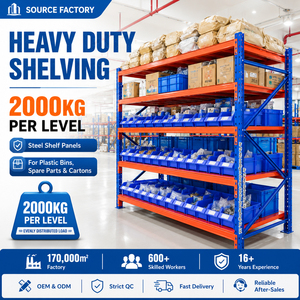
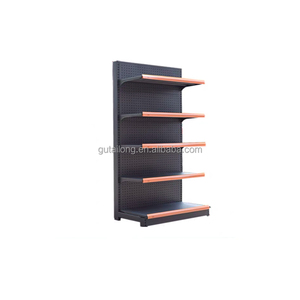
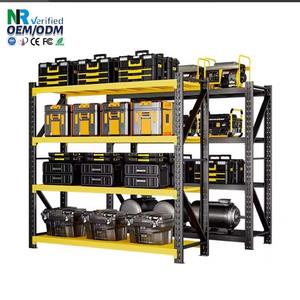
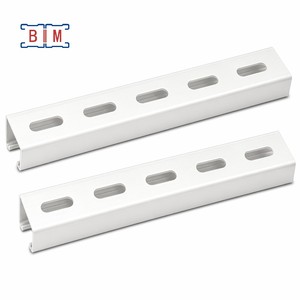
Explore our factory-direct industrial racking, gravity storage units, multi-tier platforms, and hardware profiles. Engineered with Q235B cold-rolled structural steel to maximize volumetric space utilization, streamline pallet pick rates, and ensure structural longevity in extreme working environments.
Technical Whitepaper: Engineering Back-to-Back Racking Configurations
A comprehensive engineering and metallurgical analysis of back-to-back selective pallet racking, structural push back systems, and cross-row stability dynamics under severe industrial loading.
Structural Geometry & Row Spacers
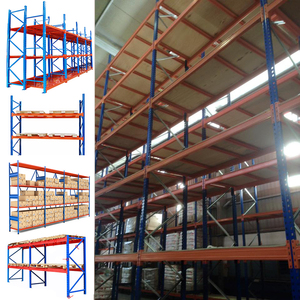
In standard warehouse logistics, back to back racking is configured by placing two parallel single rows of selective pallet racks joined via rigid steel row spacers. This layout delivers direct 100% selectivity while cutting the required operating aisles in half.
The row spacers are critical engineering components. Rather than serving simply as distance separators, they tie twin upright columns into a unified horizontal truss frame, elevating the overall frame slenderness ratio, mitigating out-of-plane lateral sway, and distributing seismic or forklift impact loads across both upright assemblies.
- Calculated longitudinal flue space (standard 200mm–300mm) compliant with NFPA 13 fire sprinkler clearance.
- Cold-formed omega upright profiles with double-riveted teardrop or slotted interlocking connections.
- Anchor-bolted floor base plates distributing vertical concentrated loads safely into the concrete slab.
TCO & Floor Space Volumetric ROI
When engineering high-volume logistics facilities, floor space rental or capital land expenditure represents the largest ongoing line item. By utilizing back to back configurations, storage density increases by 35% to 42% compared to isolated single-entry rack rows.
For operations demanding higher volumetric capacity without compromising selectivity, back-to-back layouts integrate seamlessly with Reach Trucks, Narrow Aisle (NA), and Very Narrow Aisle (VNA) turrets, reducing aisle requirements down to 1.6m–1.8m when paired with wire-guided or rail-guided steering systems.
- Reduction in forklift travel time per pick cycle by clustering identical velocity SKUs in adjacent bays.
- Flexible modular beam re-pitching (50mm / 75mm increments) accommodates seasonal pallet height changes.
- Supports heavy static capacities exceeding 1,000kg–4,500kg per beam level under safety factors ≥ 1.5.
Push Back & Dynamic Integration
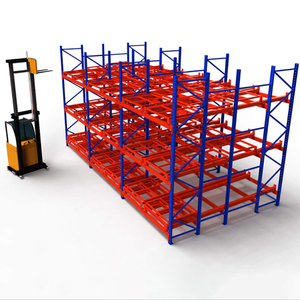
When SKU counts decrease and volume per SKU spikes, conventional selective back-to-back aisles are upgraded into nested push back pallet racking or pallet flow systems. Telescopic nested carts ride on inclined structural channels, enabling 2 to 6 pallets deep on both sides of the center spine.
Gravity feed eliminates forklift entry into the rack matrix, drastically reducing frame collision hazards. As picking operators retrieve the front pallet, trailing pallets smoothly roll forward under controlled gravitational deceleration, creating a high-throughput Last-In-First-Out (LIFO) or First-In-First-Out (FIFO) dynamic storage hub.
- Heavy-duty sealed bearings ensure cart operation down to -30°C in frozen food warehouses.
- Redundant pallet catchers and anti-slip safety locks installed on loading entry faces.
- Zero energy consumption: pure mechanical gravity acceleration with pneumatic speed controllers.
Strategic Procurement Trends & Next-Gen Racking Technology
Key procurement vectors transforming warehouse racking investments over the 2026–2030 planning cycle.
AGV, AMR & ASRS Compatibility
Global procurement teams are shifting away from manual reach-truck assumptions. Modern back to back racking layouts are designed from inception to interface with Autonomous Mobile Robots (AMRs), Automated Guided Vehicles (AGVs), and Radio Shuttle carriers.
This requires millimeter-grade structural tolerances (conforming to FEM 10.2.02 / EN 15620 classes), optimized clear aisle runouts, integrated sensor reflector brackets, and laser-guided visual positioning flags mounted directly onto structural column bases.
Advanced Anti-Corrosion Finishes
Industrial warehousing in high-humidity, marine, and chemical corridors (such as coastal Gulf ports or equatorial logistics hubs) rapidly degrades standard enamel paints. Procurement contracts now demand rigorous pre-treatment regimes.
Our production integrates automated multi-stage chemical degreasing, ultrasonic acid pickling, and zirconium-based phosphating, followed by 180°C thermosetting electrostatic powder coating. For open-air yards and severe salt-spray exposures, ASTM-grade Hot-Dip Galvanizing (HDG) ensures up to 25+ years of zero-maintenance corrosion protection.
Digital Twin & IoT Strain Monitoring
Supply chain leaders are treating pallet racking as monitored structural infrastructure rather than passive steel frames. Emerging projects integrate smart telemetry: real-time fiber Bragg grating (FBG) strain gauges, acoustic emission sensors, and deflection monitors attached to central load-bearing beams.
These arrays deliver instant operational alerts when load limits are exceeded or when an unrecorded forklift impact introduces plastic deformation into a structural column, safeguarding operational personnel and preserving asset lifespan.
Enterprise Strengths: Why Top EPCs & 3PLs Rely on HEDA Shelves
Operating a vertically integrated 30,000 square meter intelligent manufacturing plant in Guangzhou, China. We bridge structural engineering, raw coil processing, precision cold bending, automated robotic welding, and turnkey international delivery under one roof.
Complimentary 3D & CAD Layouts
Our senior structural team provides complete 2D floor plans, 3D BIM models, and structural calculation reports based on your exact warehouse footprint, column grids, and forklift turns.
CE & ISO 9001:2015 Traceability
Certified under CE No. 2435-CPR-8605159, ISO 9001:2015 No. 18624Q00169R0M, and full RoHS compliance. Mill test certificates (MTC) and QA inspection documentation accompany every export batch.
Turnkey Export & Port Shipping
Global export experience covering 120+ countries. Direct container shipping with color-coded component tagging and step-by-step assembly blueprints to Jebel Ali, Dammam, Jeddah, Singapore, Los Angeles, and Rotterdam.
High-Capacity 10-Step In-House Line
From raw uncoiling, automated high-speed CNC punching, profile roll forming, robotic seam welding, to continuous powder spraying, we ensure strict gauge uniformity and defect-free tolerances.
Frequently Asked Questions on Back To Back Racking Procurement
Direct technical answers addressing engineering parameters, civil defense certifications, slab load calculations, and global supply logistics.
What is the exact engineering difference between Single Selective Racking and Back to Back Racking?
How do row spacers contribute to overall seismic and structural stability?
What warehouse slab specifications are required before installing heavy-duty back-to-back racks?
How are surface coatings engineered to withstand coastal humidity, desert heat, and cold chain environments?
What critical input data is required to generate a complimentary 2D CAD and 3D warehouse layout?
Accelerate Your Storage Capacity with Factory-Direct Engineering
Connect with our senior logistics structural engineers today. Receive custom CAD layouts, static loading calculations, and competitive factory-direct quotations tailored to your operational specifications.