Featured Industrial Storage Racking Systems
Configured from structural cold-rolled coil profiles to resist extreme dynamic stresses, cyclic loading, and harsh warehouse environments across 3PL, e-commerce, and heavy manufacturing distribution centers.
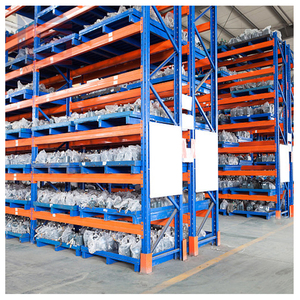
Industrial Pallet Storage Rack Steel Warehouse Racking Adjustable Shelving
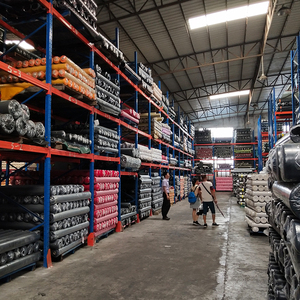
Highly Customizable Free Design Storage Rack 1000KG 2000KG 3000KG
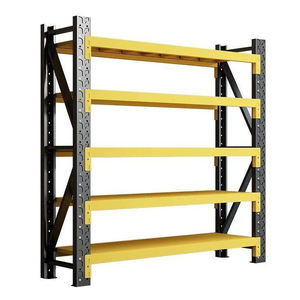
Racking Adjustable Metal Boltless Shelf And Racks Warehouse Storage
Commercial Shelving Units Heavy Duty Warehouse Rack
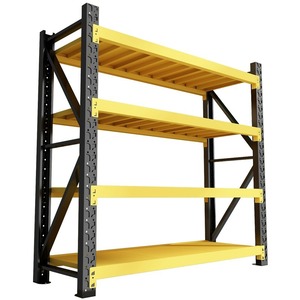
Boltless Adjustable Heavy Duty Load-Bearing 300kg/Layer Storage Shelf
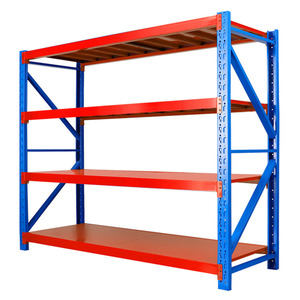
Medium/Heavy Duty Storage Equipment Warehouse Industrial Stacking Racks
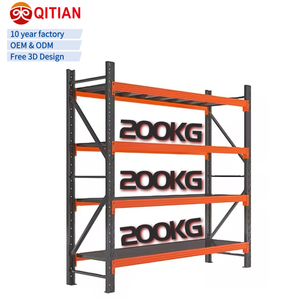
Factory Customized Steel Light Duty Industrial Storage Shelves 4 Layer
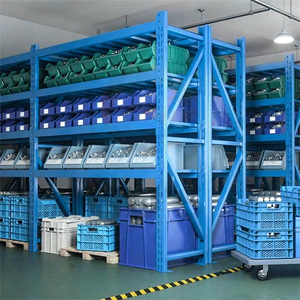
High Quality Durable Corrosion Protected Boltless Adjustable Shelving
Why Tier-1 Logistics Hubs Partner With HEDA Shelves
Founded in 2001, Guangzhou Heda Shelves Co., Ltd. has evolved from a dedicated roll-forming mill into an internationally accredited powerhouse in structural heavy-duty warehouse storage systems. Operating from our modernized 30,000 square-meter production complex in Guangzhou, China, we produce over 30,000 metric tons of precision warehouse racking per month, serving mission-critical supply chain facilities across the UAE, Saudi Arabia, Europe, North America, Southeast Asia, and Australasia.
Unlike trading intermediaries, our in-house engineering and production facility retains absolute control across the complete manufacturing life cycle: from incoming certified Q235B/Q355B steel coil inspection, automated multi-punch column profiling, to our automated 10-step surface pretreatment line featuring pickling, phosphating, and electrostatic powder coating.
Every racking system engineered by our 300+ technical personnel undergoes rigorous Finite Element Analysis (FEA) to confirm stability against seismic activity, non-uniform dynamic pallet loads, and structural forklift collision impact.
ISO 9001:2015 & CE Certified Conformity
Fully compliant with the European Construction Products Regulation (CPR). Mill certificates (MTC) accompanying every steel shipment, verifying chemical composition, yield point tensile strength, and cold bending ductile tolerance.
- CE Mark Certificate No. 2435-CPR-8605159
- ISO 9001:2015 Quality System Registration No. 18624Q00169R0M
- RoHS certification for heavy-metal-free thermosetting resin powder
Complimentary 2D CAD & 3D BIM Layout Simulation
Prior to contract signing, our senior structural engineers develop full warehouse 2D architectural CAD layouts and 3D visual space simulations to optimize working aisle clearance, forklift turning radius, and flue spaces compliant with local Civil Defense regulations.
- Civil Defense & NFPA 13 in-rack fire sprinkler aisle compliance
- Reach truck, VNA turret truck, and counterbalance turning radius verification
- Complete structural loading signs and column baseplate anchoring design
Future Procurement Trends in Heavy-Duty Warehouse Storage (2025–2030)
Global supply chain disruptions, escalating industrial real estate lease rates, and automated materials handling are fundamentally rewriting warehouse racking procurement specifications.
1. Hybrid Automation & Shuttle-Ready Racking
Procurement is transitioning away from static drive-in bays toward semi-automated four-way radio shuttle channels. Modern warehouse engineering mandates sub-millimeter beam deflection controls and specialized zinc-coated guide rails to enable seamless autonomous vehicle integration without structural retrofitting.
- Tolerances within ±1.5mm along 60-meter pallet lanes
- Direct integration with automated WCS (Warehouse Control Systems)
- Reduced forklift operating hours and zero mast impact on deep uprights
2. Vertical Cubic Optimization (VNA & Clad Racks)
With prime industrial land in metropolitan logistics corridors commanding record rents, enterprise buyers are migrating from traditional 8-meter reach truck elevations to 14 to 22-meter Very Narrow Aisle (VNA) high-bay installations, and rack-supported building structures where the racking itself supports roof purlins and wall claddings.
- Floor utilization efficiency jumping from 42% up to 85%
- Wire-guided and inductive optical rail floor tracking paths
- High-modulus upright profiles engineered for low sway deflection
3. Total Cost of Ownership (TCO) & Lifecycle Metallurgy
Procurement executives have ceased evaluating bids solely on initial steel tonnage costs. Procurement criteria now demand 15-year TCO life-cycle models factoring in cold-store corrosion endurance, impact-resistant beam connector profiles, safety locking integrity, and fast modular replacement of sacrificial column protectors.
- High-durability thermoset powder finishes resisting 500+ hr salt spray
- Reinforced Omega profile columns with internal strengthening ribs
- Pre-labeled container bundles synchronized with digital 3D assembly guides
| Racking Architecture | Pallet Density | Selectivity | Throughput Speed | Capital Investment | Primary Industrial Use Case |
|---|---|---|---|---|---|
| Selective Pallet Racking | Baseline (40-45%) | 100% Direct Access | Rapid / High SKU Variety | Low Initial Capex | FMCG, Multi-Tenant 3PL Hubs, Spare Parts |
| Very Narrow Aisle (VNA) | High (60-70%) | 100% Direct Access | Moderate to Fast | Moderate | High-bay distribution centers with premium land costs |
| Radio Shuttle System | Ultra-Dense (80-85%) | Batch / Deep Lane FIFO/LIFO | Fast Automated Shuttle | Moderate-High | Cold storage, food processing, beverage bottling |
| Drive-In / Drive-Through | Very High (75%) | Last-In, First-Out (LIFO) | Slow (Forklift enters bay) | Low-Moderate | Homogeneous bulk raw materials, seasonal storage |
| Heavy Duty Cantilever | Specialized Linear | 100% Frontal Linear Access | Fast Overhead Crane/Fork | Moderate | Steel pipes, timber packs, rebar, aluminum profiles |
Technological Breakthroughs in Heavy-Duty Racking Manufacturing
From micro-alloyed high-tensile steel cold-forming to robotic continuous welding and advanced anti-corrosion chemistry, engineering standards have advanced to meet extreme international demands.
Finite Element Analysis (FEA) Simulation
Every customized upright column geometry and beam connection claw is subjected to advanced non-linear FEA under simulated dynamic load combinations. We model load cases combining dead load, maximum pallet static weight, dynamic impact factors (minimum 1.25 factor of safety), wind shear on exterior walls, and seismic acceleration matrices matching client coordinates.
10-Step Automated Chemical Pretreatment
Surface degradation is the leading cause of premature racking failure in coastal ports and sub-zero cold facilities. Our fully automated multi-stage dip tank line performs continuous hot degreasing, clean water rinse, acid pickling to eliminate mill scale, followed by crystalline zinc phosphating. This chemically bonds a nanoscale conversion layer that magnifies electrostatic powder coat adhesion by over 300%.
Multi-Tooth Beam Hook Connectors & Lock Pins
Structural beam failures occur primarily at the connector interface under shock loading. Our patented 3 to 5-claw connectors are stamped from 4.0mm heavy steel plate with self-tightening tapered wedge slots. High-visibility spring-steel safety locking pins prevent accidental beam dislodgement when operators lift pallets rapidly.
Frequently Asked Questions by Industrial Racking Buyers
Clear, authoritative technical answers addressing load calculations, seismic certifications, steel grades, surface coatings, and overseas freight logistics.
What exact structural steel grades and thicknesses are utilized in your heavy-duty uprights and beams? +
Our heavy-duty uprights and load-bearing box beams are manufactured exclusively from prime, mill-certified Q235B and Q355B structural carbon steel (equivalent to European S235JR and S355JR under EN 10025, and ASTM A36 / A572 Grade 50). Upright profiles are precision roll-formed from cold-rolled steel coils with nominal thicknesses ranging from 1.8mm up to 3.0mm, depending on vertical bay height and total weight loadings.
Load beams utilize double-C closed interlocking profiles with wall thicknesses from 1.5mm to 2.5mm, producing superior torsional resistance and deflection limits within L/200 as specified by international storage equipment standards.
How do you guarantee racking safety under severe seismic activity or harsh marine/desert climates? +
For seismic compliance, our engineering department performs full dynamic response spectrum analyses tailored to the seismic acceleration coefficients (Ss and S1) of your project site, in compliance with Eurocode 8 or RMI seismic design provisions. We engineer enlarged baseplates, double anchor-bolt configurations with high-tensile chemical or wedge anchors, and custom horizontal and vertical cross-bracing towers.
For challenging climatic conditions such as high ambient heat, blowing silica dust, or coastal salt air in cities like Dubai, Dammam, and Singapore, our steel components undergo multi-step acid pickling and phosphating followed by an 80–120 micron electrostatic polyester powder coating cured at 180°C–200°C. For extreme humidity, sub-zero cold rooms, or outdoor yards, we supply hot-dip galvanized components certified under ISO 1461.
What technical data must buyers provide for a certified warehouse layout and quotation? +
To produce an engineered 2D CAD floor plan, 3D BIM rendering, and structural load quotation, we require:
1. Architectural building drawings (AutoCAD DWG preferred) displaying clear internal eaves height, building columns, fire doors, floor slab expansion joints, and overhead obstructions.
2. Concrete slab technical parameters (slab thickness, reinforcement details, and maximum allowable floor point load in kN/m²).
3. Pallet specifications (width, depth, overall height including cargo overhang, and gross pallet weight).
4. Material handling equipment (MHE) fleet data, including forklift model, mast collapsed and extended lift heights, turning radius (Ast), and aisle clearance requirements.
Can your racking designs pass local Civil Defense and fire authority inspections? +
Yes. All warehouse racking drawings produced by our technical design team strictly conform to international NFPA 13 (Standard for the Installation of Sprinkler Systems) and local municipal Civil Defense codes. We explicitly calculate and depict transverse and longitudinal flue spaces (minimum 75mm to 150mm clear gaps) to allow vertical heat venting and unhindered fire sprinkler water penetration.
Furthermore, main egress routes, personnel escape passages under rack cross-tunnels, heavy-duty wire mesh containment screens, and certified load capacity warning plaques are integrated into the documentation submitted for municipal permitting.
What is the typical manufacturing lead time and overseas shipping packaging method? +
Standard manufacturing lead time for full container load (FCL) orders of 1 to 5 containers (40ft HQ) ranges between 15 to 25 business days following formal approval of engineering drawings. For large-scale projects exceeding 1,000 metric tons, staggered delivery schedules are coordinated directly with your general contractor.
Export packaging is engineered specifically for long-distance maritime container shipping: upright frames and beams are grouped in rigid structural steel bands with corner edge protectors, waterproof plastic stretch wrapping, and corrugated dunnage pads to prevent friction scarring. All bundles feature weatherproof bilingual barcode labels mapped directly to your installation assembly layout drawings.
Do you provide professional on-site installation support and post-installation warranties? +
Yes. We provide complete installation documentation comprising exploded 3D assembly diagrams, bolt torque specifications, frame squaring guidelines, and baseplate leveling procedures. For regional contractors and internal maintenance crews, our engineering department provides remote video supervisory support.
For large-scale structural mezzanine floors or complex high-density radio shuttle projects, we dispatch experienced bilingual installation supervisors to direct your local site labor. All HEDA Shelves structural heavy-duty racking systems are backed by a comprehensive multi-year structural steel warranty covering structural deflection, weld integrity, and coating adherence under documented normal operating loading conditions.
Request Your Customized Storage Engineering Package
Connect directly with our senior racking structural engineering team to receive a complimentary warehouse layout optimization study, 3D CAD visualization, and itemized direct factory pricing within 24 hours.