Featured Warehouse Storage Systems & Racking Configurations
High-performance, cold-rolled structural steel solutions fabricated under ISO 9001:2015 and CE EN 15512 safety protocols. Designed for dynamic structural loads, optimal volumetric efficiency, and extreme service lifetimes.
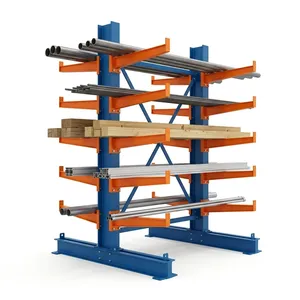
Heavy Duty Adjustable Single Sided Cantilever Rack
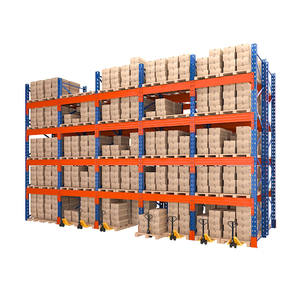
Heavy Duty Selective Pallet Racking System OEM
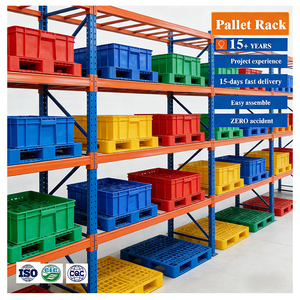
5-Layer Heavy Duty 3,000KG Triple Support Beam Rack
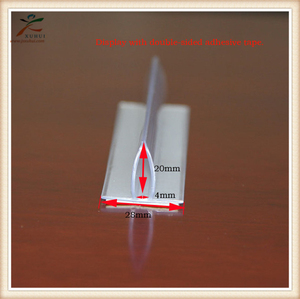
T-Shape Magnetic Shelf Divider with Spring Pusher System
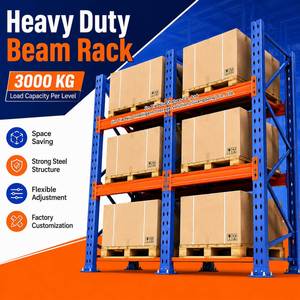
Cold-Rolled Powder Coated High Bay Logistics Pallet Rack
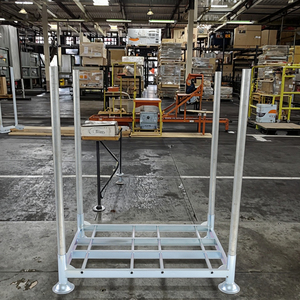
Galvanized Demountable Stacking Post Pallet Rack
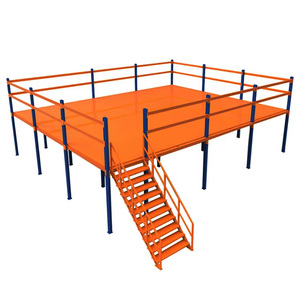
Heavy-Metal Interlayer Two-Level Platform Mezzanine
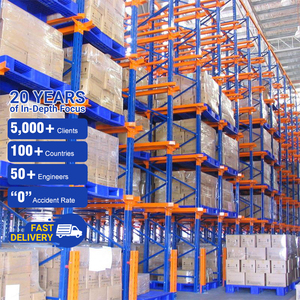
Industrial Heavy Duty Drive-In & Drive-Through Racks
Why Global Supply Chains Rely on HEDA Shelves
Founded in 2001, Guangzhou Heda Shelves Co., Ltd. has evolved into an international benchmark in warehouse storage manufacturing, merging German-calibrated roll-forming precision with holistic structural engineering services.
Rigorous Traceable Compliance
Every structural batch complies with EN 15512:2020, CE certification (No. 2435-CPR-8605159), ISO 9001:2015 quality frameworks, and RoHS non-toxicity directives. Mill test certificates (MTC) accompany all prime Q235B and Q355B coils.
Turnkey CAD & 3D Digital Twins
Eliminate project guesswork. Our structural engineers produce zero-cost 2D CAD floor plans, dynamic 3D warehouse layouts, and finite element analysis (FEA) models tailored around your building clear height, slab capacity, and forklift turning radius.
Industrial Surface Pre-Treatment
Our automated 10-stage finishing integrates acidic pickling, high-density zinc phosphating, and electrostatic epoxy-polyester powder coating cured at 200°C. Engineered to withstand high coastal humidity, extreme desert ambient temperatures, and chemical abrasion.
The Future of Heavy-Duty Pallet Racking: Engineering & Procurement Architecture
Strategic analysis for supply chain directors, industrial real estate developers, and warehouse operations executives managing modern high-throughput fulfillment assets.
The warehouse storage sector is experiencing a monumental paradigm shift. Rapid globalization, soaring industrial land valuations in tier-1 logistics corridors, and volatile fulfillment peaks are compelling facility managers to abandon uncalibrated, off-the-shelf racking. Modern warehouse infrastructure demands high structural performance, seismic safety verification, tight integration with automated material handling equipment, and lifecycle cost resilience. As a premier one-stop racking manufacturer, HEDA Shelves engineers structural systems that bridge classical static load stability with modern dynamic intralogistics workflows.
1. Technological Trends Reshaping Warehouse Storage Infrastructure
Modern intralogistics facilities are no longer passive steel frameworks; they represent tightly calibrated mechanical matrices operating in synchronization with autonomous handling fleets. Three distinct engineering trends dominate this transformation:
A. High-Density Radio Shuttle & 4-Way System Integration
While traditional drive-in racking optimizes footprint, it exposes upright frames to persistent lift-truck impact risks and restricts operational velocity. High-density semi-automated Radio Shuttle systems resolve this bottleneck by using automated battery-powered carriers that travel along internal runner tracks to deposit and retrieve pallets. This separates human forklift drivers from internal storage lanes, slashing rack collision damage by up to 88% while accelerating pallet cycle movements.
B. High-Yield Cold-Rolled Structural Geometry
Advances in continuous cold-roll forming allow the production of closed-box step beams and multi-flanged upright profiles with enhanced section moduli. Utilizing high-tensile structural steel grades (such as Q355B with minimum yield strengths exceeding 355 MPa), engineers achieve greater frame heights (often reaching 12 to 18 meters in VNA setups) while optimizing steel consumption per pallet location without compromising structural safety margins.
2. Future Procurement Trends: From CapEx to Total Cost of Ownership (TCO)
Experienced procurement executives are moving away from evaluating racking systems purely by initial price per ton of steel. Instead, forward-looking procurement models emphasize the 15-year Total Cost of Ownership (TCO), factoring in four decisive procurement metrics:
- Modularity & Rapid Reconfigurability: With SKU lifecycles contracting under omnichannel e-commerce pressures, beam tiers must adjust easily without cutting or hot welding. Teardrop or 75mm/50mm European pattern pitch punchings allow swift vertical adjustments as product packaging changes.
- Climatic Resilience & Coating Life: In coastal shipping ports (such as Dubai Jebel Ali, Dammam, Singapore, or Rotterdam) and cold storage rooms operating at -25°C, moisture condensation accelerates rust on sub-standard steel. Sourcing racking with comprehensive pickling, phosphating, and 60–90 micron dry film powder coating (or hot-dip galvanizing per ISO 1461) eliminates expensive mid-cycle refurbishment shutdowns.
- Standardized Factory Direct OEM Supply: Middlemen add substantial markups and complicate warranties. Partnering with a dedicated one-stop manufacturer guarantees single-source accountability—from raw steel coil procurement and custom punching to export packaging and on-site engineering supervision.
Comparative Matrix: Industrial Warehouse Storage Configurations
Evaluate structural parameters, operational selectivity, and density tradeoffs to match your operational throughput profile:
| Racking Architecture | Pallet Selectivity | Volumetric Density | Inventory Flow | Standard Load Rating | Optimal Vertical Application |
|---|---|---|---|---|---|
| Selective Pallet Rack | 100% Direct | Standard (40–45%) | FIFO / LIFO Flexible | 1,000–4,500 kg / level | Fast-moving FMCG, multi-SKU retail, 3PL logistics |
| Heavy Cantilever Rack | 100% Direct | High Linear Utilization | Open Manual / Crane | 500–3,000 kg / arm | Structural steel, timber, PVC piping, sheet metals |
| Drive-In / Drive-Through | Low (Lane-based) | Very High (up to 85%) | LIFO (Drive-In) / FIFO | 1,000–1,800 kg / pallet | Cold rooms, bulk beverage, seasonal batch storage |
| Semi-Auto Radio Shuttle | Medium (Channel-based) | Maximum (up to 90%) | Automatic FIFO / LIFO | 500–2,000 kg / pallet | Chilled cold chain, raw ingredients, high-volume foods |
| Rack-Supported Mezzanine | 100% Direct | 200–300% Floor Multiplier | Manual Cart / Conveyor | 300–1,000 kg / m² | E-commerce bin picking, apparel, auto spare parts |
3. Inside the Factory: The 10-Step Quality Assurance Cycle
Structural reliability begins at the manufacturing level. Uncontrolled welding joints or inadequate degreasing can lead to structural failures under static shear stresses. HEDA Shelves enforces a closed-loop 10-stage fabrication workflow:
Prime Raw Coil
Spectrometric verification of Q235B/Q355B coil metallurgy and mechanical yield tolerances.
Laser Slitting
High-precision continuous sheet slitting with laser-aligned strip tolerance controls.
CNC Punching
High-speed CNC stamping of 50mm/75mm upright pitch matrices with zero hole creep.
Roll Forming
Progressive cold-roll forming through 18–24 tooling stations for micro-stress relief.
Beam Welding
Robotic CO₂ gas-shielded automated seam welding of structural beam connectors.
Surface Polish
Deburring, shot blasting, and edge grinding to eliminate micro-burrs and slag.
Acid Pickling
Total immersion chemical rust stripping and multi-stage warm water rinsing tanks.
Phosphating
Zinc-iron crystalline phosphate bonding conversion for long-term corrosion arrest.
Powder Cure
Electrostatic coating application followed by 200°C thermal curing oven polymerization.
QC & Palletizing
Ultrasonic thickness checks, drop tests, and container bundle packing with steel strapping.
Frequently Asked Questions by Industrial Buyers & Engineers
Authoritative answers to core engineering parameters, fire code approvals, structural safety considerations, and international logistics operations.
What structural inputs are required to engineer a compliant warehouse racking layout?
To engineer an accurate, code-compliant storage layout (2D CAD floor plan and 3D stress model), our engineering team requires five core datasets:
1. Architectural Facility Drawings: CAD drawings indicating building clear height under roof joists, concrete slab thickness/reinforcement specifications, column grid locations, dock door clearances, and in-slab expansion joints.
2. Pallet Unit Load Profile: Exact pallet dimensions (Width × Depth × Height including load overhang) and maximum gross weight per pallet position.
3. Material Handling Equipment (MHE): Forklift model, minimum aisle turning radius (AST), mast staging height, and residual lifting capacity at maximum elevation.
4. SKU Velocity & Environmental Factors: Operating temperatures (ambient vs cold chain -25°C), ambient humidity, SKU counts, and required inventory rotation (FIFO vs LIFO).
5. Seismic & Wind Requirements: Local seismic zone classifications and regional civil structural building codes.
How do your racking designs comply with Civil Defense, NFPA 13, and municipal fire regulations?
Warehouse fire safety compliance revolves strictly around sprinkler water penetration and egress paths. HEDA Shelves engineers our arrays to meet NFPA 13 standards and local Civil Defense directives (including UAE Civil Defense, Saudi Civil Defense, and European regulations):
We incorporate longitudinal flue spaces (minimum 75mm to 150mm between back-to-back racks) and transverse flue spaces between pallet positions to permit unhindered downward sprinkler penetration. Furthermore, we integrate galvanised wire mesh decking with open areas exceeding 70% in lieu of solid timber or steel panels, integrate ESFR sprinkler pipe support brackets within upright frames, and preserve mandatory travel corridors to fire egress exits.
How does HEDA Shelves protect steel racking from coastal corrosion and extreme temperature swings?
Standard commercial spray paint deteriorates quickly in high-salinity coastal areas (e.g., Dubai, Dammam, Jeddah) or high-condensation cold storage hubs. We utilize a dedicated chemical pre-treatment and finishing regimen:
All steel members undergo multi-stage immersion: grease removal, acid pickling to eliminate mill scale, and micro-crystalline zinc phosphating. We then apply thermosetting TGIC-free epoxy-polyester powder via robotic reciprocating spray guns, creating a cross-linked protective barrier 60 to 90 microns thick that cures at 200°C. For aggressive exterior open-yard racks or harsh acid chemical storage, we deliver full hot-dip galvanizing conforming to ISO 1461, yielding 30+ year protection against atmospheric zinc oxidation.
What are the lead times for custom manufacturing, export packaging, and container logistics?
Standard production runs for customized warehouse orders (1 to 10 shipping containers) typically complete within 15 to 25 business days from final CAD drawing sign-off. High-bay automated projects and large-scale distribution centers (20+ containers) are scheduled in phased production batches to align with structural site readiness.
All shipments are bundled with steel bands, corner edge protectors, and waterproof plastic shrink wrap. Components are tagged with QR and alphanumeric asset tags corresponding directly with CAD installation blueprints, enabling rapid unpacking and erection by local installation contractors.
Can selective pallet racking be upgraded or converted to automated shuttle systems in the future?
Yes. Modular engineering allows flexible retrofitting. When upgrading from static selective racking to higher-density formats, existing upright frames can frequently be repurposed if original column section dimensions and footplate anchoring meet calculated load demands.
For shuttle retrofits, standard cross beams are replaced with heavy-duty galvanized shuttle runner rails, entrance centering guides, and backstops. Our engineering team conducts structural reassessments to verify that floor slab anchor loads and lateral wind/impact bracing remain within allowable deflection tolerances under dynamic shuttle acceleration cycles.
Optimize Your Warehouse Density & Throughput Today
Collaborate directly with factory structural engineers. Request a comprehensive facility assessment, complete with compliant CAD floor layouts, dynamic load calculations, and transparent factory-direct pricing.
- Free 2D CAD blueprint and 3D architectural rendering within 48 hours
- CE & ISO 9001 certified manufacturing with mill-test traceable steel
- Direct factory shipment to all GCC, European, African & American seaports
Request Custom Quotation
Connect immediately with an application engineer to evaluate your warehouse requirements.
Send an Inquiry