Heavy-Duty Warehouse Storage & Flow Racking Systems
Engineered to international FEM 10.2.02 and RMI specifications. Discover our heavy-duty industrial racks, automated shuttle matrices, dynamic flow racks, and long-span platforms manufactured directly in Guangzhou.
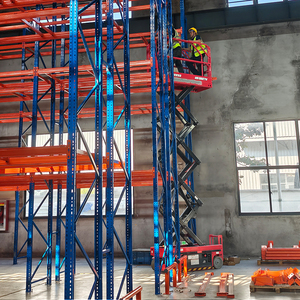
Adjustable Heavy Duty Long Span Cold Rolled Steel Storage Racks
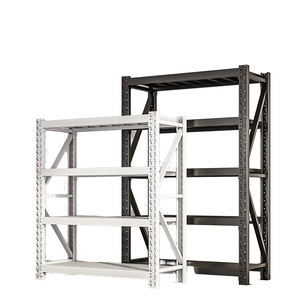
Customized Heavy-Duty 5-Layer Iron Metal Storage Rack Shelf
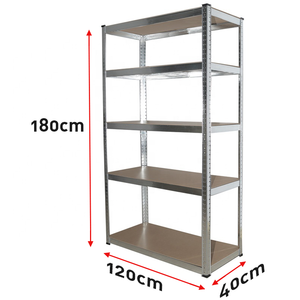
6-Tier Powder Coated Extra Tall Metal Shelving 222x90x40cm Rack
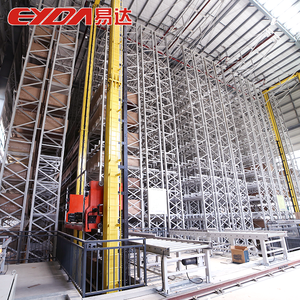
EYDA Intelligent Cold Storage ASRS Automated Shuttle Rack System
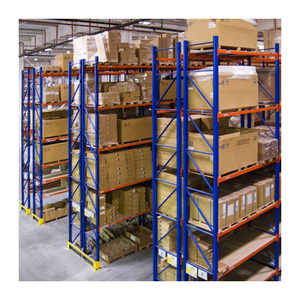
Custom Warehouse Heavy Duty Selective Pallet Racking Shelf
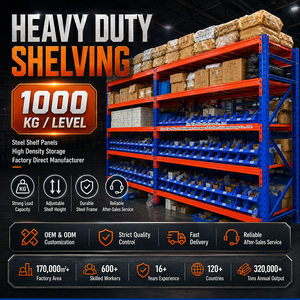
1000KG 5-Tier Beam Industrial Warehouse Rack with Steel Panels
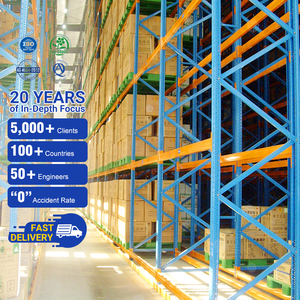
Strong Load Capacity Warehouse Narrow Aisle (VNA) Steel Rack
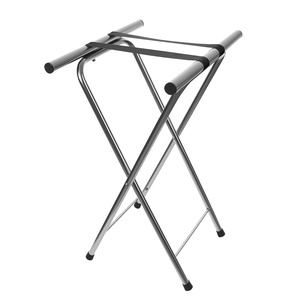
Foldable Stainless Steel Portable Luggage Rack Commercial Heavy Duty
Engineering Principles of Pallet Flow Racking (Gravity Roller Racks)
Unlike static selective racking or forklift-dependent drive-in layouts, Pallet Flow Racking Systems leverage kinetic gravity force to establish autonomous First-In, First-Out (FIFO) stock sequencing. Discover how certified manufacturers calibrate angle gradients, deceleration controllers, and separator catches.
Engineered Slope Gradient (3.0% – 3.8%)
The heart of dynamic pallet flow lies in calculating the pitch coefficient. A slope of 3.2% to 3.5% (approx. 35mm per meter) is typical for standard GMA/EUR wood pallets (up to 1200kg). Under-pitched tracks result in stall friction, while excessive inclination causes runaway pallet impact. Factory testing guarantees consistent movement regardless of pallet weight variance.
Centrifugal Speed Retarder Rollers
To prevent gravitational acceleration from reaching unsafe velocities, internal centrifugal brake rollers are spaced strategically every 1 to 2 pallet lengths down the lane. As a pallet rolls over the brake, internal planetary gearing engages dynamic resistance friction, restricting forward transit velocity to a safe maximum of 0.25 to 0.30 meters per second.
Pneumatic & Mechanical Pallet Separators
Backpressure in deep-flow lanes (accumulating 10 to 25 pallets) can exert thousands of kilograms against the front unload pallet, leading to forklift tip-over risks or product crushing. Factory-integrated mechanical pallet separators hold the secondary pallet line 6 to 12 inches back until the front pallet is completely extracted by the forklift operator.
Pallet Flow vs Competing High-Density Racking Topologies
Comparing mechanical complexity, aisle consumption, FIFO compliance, and operational lifecycle cost for warehouse managers evaluating factory direct suppliers.
| Storage Topology | Stock Rotation | Footprint Utilization | Forklift Aisle Demand | Throughput Speed | CAPEX per Pallet Position |
|---|---|---|---|---|---|
| Pallet Flow Racking (Gravity) | Strict FIFO (100%) | 85% - 92% (Maximum) | Dedicated Load & Pick Aisle Only | Extremely High (Continuous) | Moderate - High |
| Drive-In / Drive-Through Rack | Strict LIFO (Drive-In) | 70% - 78% (Moderate) | Inside-Bay Transit Required | Low (Forklift travel delays) | Low (Economy) |
| Push Back Racking (Carts) | LIFO Only | 72% - 80% (Up to 5 deep) | Single Operating Aisle | Moderate (Resistance push) | Moderate |
| Automated Radio Shuttle Racking | FIFO or LIFO | 88% - 94% (Ultra Dense) | End-Bay Loading Only | High (Battery Powered) | High (Tech & Fleet) |
| Standard Selective Pallet Rack | Selective (Manual) | 38% - 45% (Aisle Heavy) | Aisles Every 2 Racks (3.0-3.5m) | Moderate to Fast | Lowest |
Factory-Direct Engineering Excellence: Guangzhou HEDA Shelves
Founded in 2001, Guangzhou Heda Shelves Co., Ltd. controls 30,000 square meters of specialized roll-forming and electrostatic surface treatment capacity. We eliminate distributor markups and verify material integrity at every weldment.
Traceable Certification & Mill Steel
Fabricated strictly utilizing certified primary coils of high-yield Q355B (equivalent to European S355JR and ASTM A572 Grade 50) cold-rolled steel. Our compliance is backed by accredited CE Certificate No. 2435-CPR-8605159, ISO 9001:2015 registration (Cert No. 18624Q00169R0M), and full RoHS non-toxicity verification for food storage environments.
10-Step Quality Assurance Sequence
From decoiling to export packaging, every pallet flow upright frame, roll track, and cross-tie passes an uncompromising 10-step protocol: Precision Steel Slitting, Automated Column CNC Punching, Cold Bending Forming, Continuous Profile Shaping, Seam Polishing, Robot-Assisted Certified Welding, Acid Pickling & Phosphating Pretreatment, Electrostatic Powder Polymerization (60-80μm), Dimensional QA, and Heavy Bundle Container Crating.
Middle East & Harsh Climate Hardening
Standard warehouse equipment corrodes quickly under severe desert temperature swings (up to 50°C) and coastal saline humidity in Jebel Ali, Dammam, and Jeddah. Our automated 8-stage immersion pickling and phosphating lines remove all micro-oxidation, providing anti-peel adhesion. We offer hot-dip galvanization and low-temperature bearing lubricants rated down to -30°C for deep cold chain facilities.
Future Procurement & Technological Trends in Dynamic Racking
How automation synergies, material science, and circular logistics are reshaping intralogistics procurement over the coming decade (2025–2035).
1. Non-Contact Eddy Current Deceleration
Traditional centrifugal friction brake rollers suffer from mechanical pad wear, requiring periodic roller bed replacement in high-turnover lanes. The next generation of gravity flow systems incorporates magnetic eddy-current brake cylinders. Using permanent rare-earth neodymium magnets, braking resistance scales dynamically with pallet speed and weight with zero mechanical contact, completely eliminating friction maintenance and hydraulic leakage risks in food-grade facilities.
2. Autonomous Mobile Robot (AMR) Interfacing
Procurement teams are shifting away from manual reach-truck feeding toward hybrid autonomous staging. Modern flow lanes are now factory-engineered with specialized lower entry ramps, photo-electric target reflectors, and pneumatic lane-end alignment stops that allow autonomous AGVs and AMRs to load and discharge pallets seamlessly. This turns gravity racking into a zero-power automated buffer station.
3. Universal Hybrid Roller Track Systems
Historically, pallet flow racking required uniform, pristine hardwood pallets. Modern multi-tier FMCG supply chains handle a chaotic blend of euro pallets, plastic hygiene runners, metal stillages, and disposable slip-sheets. Advanced factories now manufacture staggered split-roller channels with multi-wheel polyurethane track lines that prevent warped runners or loose bottom boards from jamming midway down deep lanes.
Frequently Asked Questions (FAQ) for Pallet Flow Racking Sourcing
Essential technical, structural, and logistical answers direct from factory structural engineers.
What are the key technical parameters required to quote and engineer a custom Pallet Flow System? +
How do factory engineers prevent pallets from hanging up or stalling inside the flow lanes? +
Can Pallet Flow Racking be installed inside cold storage and blast freezing environments? +
How does HEDA Shelves support local Civil Defense, municipal, and seismic approvals? +
What is the shipping procedure, packaging standard, and export container optimization? +
What warranty, lifecycle expectancy, and post-installation support are provided? +
Ready to Optimize Your Storage Density with Pallet Flow?
Connect directly with Guangzhou Heda Shelves Co., Ltd.'s senior structural engineering department. We evaluate your warehouse architectural CAD, validate dynamic load tolerances, and deliver an optimized 2D layout and 3D simulation with guaranteed factory-direct pricing.
- Free 2D CAD Floor Plans & 3D Photorealistic Renderings within 48 Hours
- CE & ISO 9001:2015 Traceable Mill Test Reports & Load Safety Certificates
- Global Export Direct to GCC, Europe, Southeast Asia & the Americas
Request Engineering Assessment
Click below to open immediate chat with our technical intralogistics team.
Get a Quote