Standard & Automated Storage Racking Systems
Constructed from premium high-tensile structural steel profiles, every upright column is roll-formed with certified geometric tolerances to withstand extreme dynamic, seismic, and axial compressive stress.
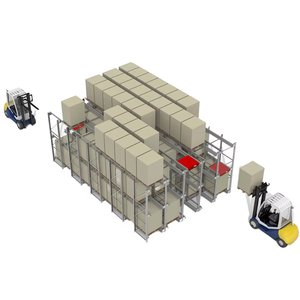
Heavy Duty Drive-In Rack High-Density Pallet Racking System FILO/FIFO
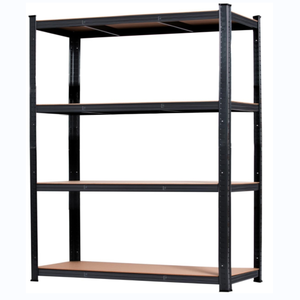
Heavy Duty Metal Shelving Unit Cold-Rolled Steel Boltless Rack System
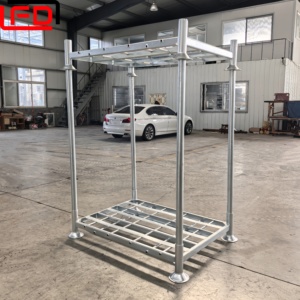
Hot-Dip Galvanized Stackable Post Pallet Metal Racking Logistic Equipment
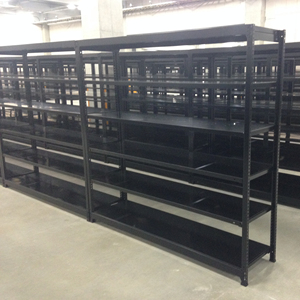
Customized Medium-Duty Rack Warehouse Steel Metal Rack Shelf
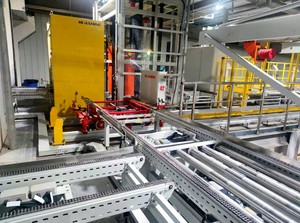
HUASHINE Intelligent Chemical Warehouse ASRS System for High Bays
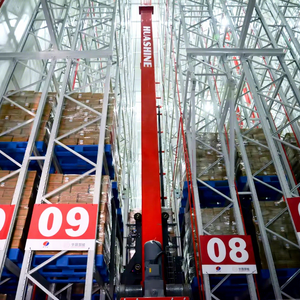
Automated Warehouse ASRS Pallet Flow Rack with Slide Roller System
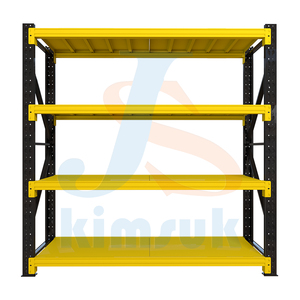
Heavy Structural Attic Loft Mezzanine Floor Platform Racking Shelves
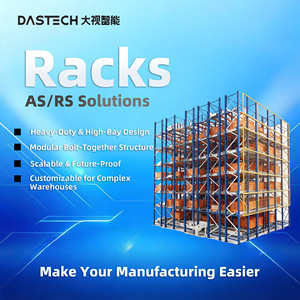
Steel Rack for Intelligent Multi-Pallet Line Feed & Lifting Equipment
The Engineering Anatomy of Industrial Pallet Rack Uprights
In modern high-density intralogistics, the pallet rack upright (also referred to as the upright frame or column assembly) functions as the principal load-bearing vertical member responsible for transmitting dead loads, dynamic seismic accelerations, live product payloads, and material handling vehicle impact forces directly to the reinforced concrete floor slab. Unlike standard structural beams subjected primarily to flexure, upright columns experience complex multi-axial states of combined axial compression, biaxial bending, and torsional-flexural buckling.
As a seasoned global supplier and exporter, our engineering philosophy is anchored in strict compliance with globally harmonized design specifications, notably the Rack Manufacturers Institute (RMI MH16.1) in North America, the European Standard EN 15512 (Steel Static Storage Systems), and FEM 10.2.02. Understanding the stress paths within roll-formed thin-walled open sections is paramount to mitigating progressive collapse risks in heavy industrial, cold-chain, and automated logistics hubs.
Material Metallurgy & Cold-Formed Steel Grades
The structural efficacy of an upright column begins at the continuous casting stage of prime steel coils. HEDA Shelves engineers utilize premium grade Q235B, Q355B (equivalent to S355JR / ASTM A572 Grade 50), and special high-yield SPCC derivatives. Upright performance is inextricably tied to the actual yield strength ($f_y$) and elongation percentage after fracture. A minimum yield strength of 355 MPa is specified for heavy-duty profiles to resist torsional warping without adding excessive self-weight that burdens sub-slab soil capacities.
| Steel Grade Benchmark | Yield Strength ($f_y$ min) | Tensile Strength ($R_m$) | Elongation ($A_5$) | Primary Industrial Application |
|---|---|---|---|---|
| Q235B / S235JR | ≥ 235 MPa | 370 - 500 MPa | ≥ 26% | Medium-duty static shelving, light-density distribution bays |
| Q355B / S355JR | ≥ 355 MPa | 470 - 630 MPa | ≥ 22% | Heavy-duty selective pallet racking, drive-in systems, seismic bays |
| ASTM A572 Grade 50 | ≥ 345 MPa | ≥ 450 MPa | ≥ 18% | North American specification high-bay warehousing, ASRS towers |
| Hot-Dip Galvanized (HDG) Q355 | ≥ 355 MPa | 470 - 630 MPa | ≥ 20% | Aggressive chemical facilities, cold storage (-30°C), outdoor sea yards |
Because upright posts feature repetitive punched perforations (such as teardrop slots, 50mm/75mm omega pitch patterns, or diamond knockouts) to allow flexible beam elevation changes, the gross cross-sectional area cannot be used for axial load calculations. Our finite-element analyses (FEA) apply rigorous stub-column compression testing according to EN 15512 Annex A to determine the actual reduction factor ($Q$). Unqualified manufacturers often neglect this perforation knock-down factor, leading to catastrophic local flange buckling under unrated seismic ground motion.
Failure Mode Mitigation in Heavy Pallet Rack Uprights
Modern racking collapses are rarely caused by spontaneous material snapping; they originate from micro-instabilities, forklift mast strikes, and sub-optimal bracing node geometry.
Flexural-Torsional Buckling
Because cold-formed upright profiles are open cross-sections (omega, C-channel, or hat shapes), the shear center does not coincide with the centroid. Under heavy axial loading, the column tends to twist while bending. HEDA engineers counteract this by integrating optimized return lips and high-rigidity diagonal bracing nodes.
Seismic Ground Acceleration ($S_s, S_1$)
In earthquake-prone regions such as the Pacific Rim and specific Middle Eastern fault zones, dynamic ground shaking induces massive horizontal base shear forces. Uprights must be calculated with ductile semi-rigid baseplates, chemical capsule anchors, and cross-aisle bracing capable of plastic energy dissipation.
Forklift Mast Impact Fatigue
Over 85% of rack damage occurs within the first 600mm of the bottom upright post due to counterbalance and reach-truck cornering errors. HEDA upright assemblies incorporate heavy-gauge wraparound column guards, polymer impact-dampening buffers, and reinforced double-upright welded leg sections.
Future Procurement & Technological Trends in Pallet Rack Uprights
As supply chain operations globally adapt to omni-channel distribution models, rapid inventory velocity, and labor cost inflation, the role of static storage infrastructure is shifting. Sourcing directors and warehouse planners must evaluate five mega-trends reshaping pallet rack upright design and procurement contracts over the coming decade.
1. The Transition to Automated Storage and Retrieval Systems (ASRS) Uprights
The boundary between warehouse racking and automated machinery has dissolved. In automated mini-load and unit-load ASRS facilities reaching vertical heights of 24 to 40 meters, the rack upright serves as the structural guide rail track for high-speed stacker cranes traveling at speeds exceeding 4 m/s. Procurement specifications for ASRS uprights require extreme geometric verticality tolerances—often restricted to within 1:2000 of the total height. Standard manual punching presses cannot achieve this precision; it demands continuous multi-axis computerized roll-forming lines with synchronized in-line optical laser gauging.
2. Digital Twin Integration & Embedded IoT Stress Monitoring
Next-generation logistics facilities are pioneering structural health monitoring (SHM) directly inside rack uprights. Micro strain-gauge sensors embedded within critical upright bottom bays detect yield deviations caused by hidden forklift impacts or uneven pallet overload before macro-deflections trigger collapse. Forward-looking RFPs now request upright profiles pre-milled to accept non-invasive sensor cabling and telemetric transponders that interface directly with Warehouse Management Systems (WMS).
3. High-Performance Coating Formulations for Harsh Climates
Global export environments present divergent atmospheric extremes. GCC facilities in Dubai, Dammam, and Shuwaikh face blistering ambient temperatures exceeding 48°C combined with saline coastal moisture and abrasive desert dust. Conversely, cold storage facilities maintain temperatures continuously at -25°C to -30°C, where steel embritlement and condensation-induced electrolytic rust present persistent risks. Modern procurement demands an exhaustive 10-step surface pretreatment process: industrial degreasing, acid pickling, zinc phosphating, followed by thermosetting electrostatic polyester-epoxy hybrid powder coating cured at 180°C-200°C to ensure zero flaking, superior scratch resistance, and minimum 500-hour salt spray endurance.
4. Decarbonization and Scope 3 Steel Sourcing
Enterprise logistics operators, retail giants, and multinational 3PLs are under corporate mandates to reduce embodied carbon. Upright fabrication is steel-intensive. Future procurement contracts increasingly mandate the reporting of steel production routes (Basic Oxygen Furnace vs. Electric Arc Furnace with high scrap ratios) and Environmental Product Declarations (EPD). Suppliers utilizing green-energy-powered roll forming and volatile organic compound (VOC)-free powder coatings capture higher vendor evaluation scores in sovereign and Fortune 500 tenders.
Price volatility in global hot-rolled coil (HRC) markets frequently tempts marginal suppliers to utilize downgraded, non-prime secondary steel coils with erratic thickness variations (e.g., selling nominal 2.0mm steel that calipers at 1.72mm). An uncalibrated 10% reduction in upright steel thickness reduces structural buckling capacity by upwards of 28% due to the cubic relation in the moment of inertia ($I = b h^3 / 12$). Insist on Mill Test Certificates (MTC) with heat numbers traceable to ISO 9001:2015 accredited foundries.
Engineered Excellence: Why Global SCM Leaders Partner with HEDA Shelves
Founded in 2001, Guangzhou Heda Shelves Co., Ltd. has developed into an internationally recognized premier designer, manufacturer, and exporter of industrial pallet racking systems, automated storage infrastructure, and structural steel mezzanines. Headquartered in Guangzhou, China, HEDA operates a world-class 30,000 square meter modernized smart manufacturing facility staffed by more than 300 experienced technical specialists, structural engineers, and intralogistics system analysts.
Traceable Certifications
Certified under CE (No. 2435-CPR-8605159), ISO 9001:2015 (No. 18624Q00169R0M), and RoHS compliant. Tender-ready verification documents provided for every production run.
30,000 Tons Monthly Output
Equipped with multi-stand computerized roll-forming lines, automated continuous laser punch presses, and robotic MIG beam connector welding bays for uncompromised delivery timelines.
Free 2D CAD & 3D Modeling
Complete structural calculations, slab load assessments, and visual 3D warehouse layouts provided prior to order commitment, supporting local civil defense and municipal reviews.
Export Logistics to 120+ Ports
Dedicated containerization protocols engineered for ocean freight. Custom nested packaging protects pre-treated coatings from sea-salt fog and transit vibration to Jebel Ali, Dammam, and beyond.
Rigorous In-House 10-Step Quality Assurance Architecture
Quality control at HEDA Shelves is not an afterthought; it is an uninterrupted chain woven through each production station. From spectral analysis of incoming hot-rolled coils to optical tolerance measurement during roll forming, automated ultrasonic weld seam inspection, continuous 10-stage phosphating, and uniform powder film thickness measurement (maintaining 60-80 microns thickness), our QA teams sign off at each operational gate. The outcome is structural uprights with zero field misalignment, eliminating costly project delays during on-site racking erection.
Frequently Asked Questions: Industrial Pallet Rack Upright Sourcing
Clear, technically rigorous answers addressing structural specifications, engineering safety factors, logistics protocols, and import requirements.
What is the standard safety factor applied to pallet rack upright structural calculations? +
How do you choose between an 80mm, 90mm, 100mm, and 120mm upright column face profile? +
Can HEDA Shelves upright profiles interface with existing teardrop or European hook systems? +
How are upright shipments protected against marine transit damage and corrosion? +
What documentation is provided to support municipal permits and Civil Defense approvals? +
What is the standard manufacturing lead time for full container load (FCL) upright orders? +
Request Your Structural Layout & Pallet Rack Upright Quotation
Send our senior engineering team your warehouse architectural CAD drawing, floor slab specifications, forklift reach limits, and pallet load parameters. We will return an optimized structural layout, certified load-capacity calculation, and container-optimized export proposal within 24 hours.