Factory-Engineered Heavy Duty Pallet Shelf Rack Systems
Explore our precision-fabricated industrial racking configurations. Each unit undergoes strict multi-pass FEA structural validation, continuous automated cold roll-forming, and high-durability electrostatic polymer finishing.
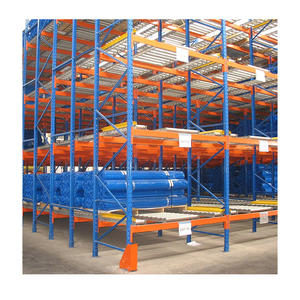 FIFO Flow System
High-efficiency Auto Industrial Logistics Transportation Gravity Roller Heavy Pallet Racking
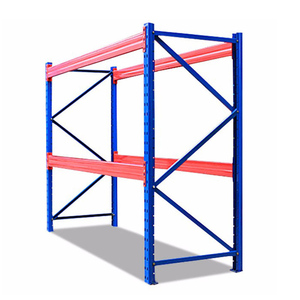 Multi-Tier Heavy
Heavy Duty Steel Multi-Level Warehouse Pallet Metal Rack System with Corrosion Protection CE Certified Powder Coated Finish
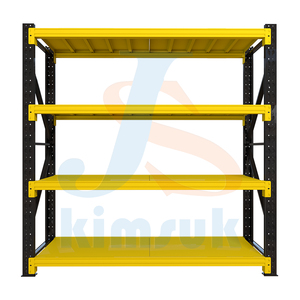 Space Multiplier
Attic Loft Mezzanine Mezzanine Rack Case OutdoorPlatform Floor for Racking Rack Shelf Shelves
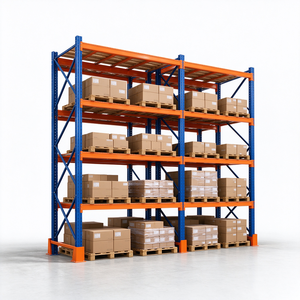 Direct Selective
Heavy-Duty Steel Selective Pallet Rack Optimized for Efficient Warehouse Racking Adjustable for Stacking Pallets
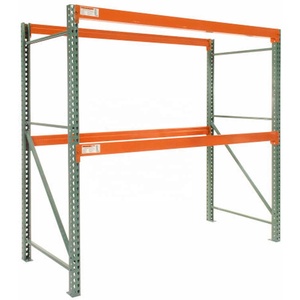 Global Universal
TearDrop Pallet Rack Teardrop Tray Heavy Duty Rack Heavy Duty Rack Warehouse Shelving Shelf Steel Storage Pallet Racking System
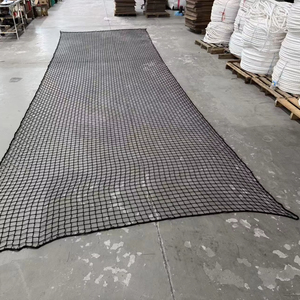 Safety Engineering
Heavy Duty Nylon Polyamide Safety Net Pallet Rack Netting Custom
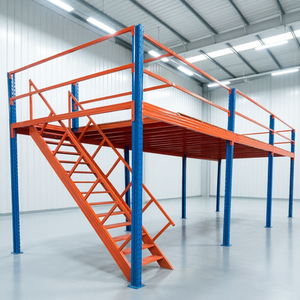 Dual-Function Rack
Competitive Price Heavy Duty Steel Mezzanine Floor Rack System Warehouse Loft Platform Storage Shelf with Pallet Racking
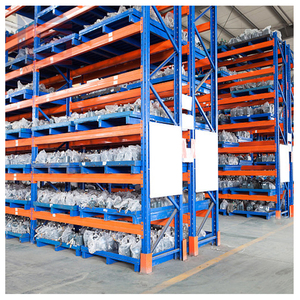 Standard Modular
Wholesale China Industrial Pallet Storage Rack Steel Warehouse Racking Adjustable Shelving
Metallurgical Specifications, Elastic Modulus, and Load-Bearing Dynamics
An authoritative technical analysis of cold roll-formed structural profiles, yield criteria, and static deflection tolerances under FEM 10.2.02 and ANSI MH16.1 design parameters.
In high-density industrial logistics facilities, the structural durability of a pallet shelf rack system relies fundamentally on the mechanical composition of prime structural steel coils, precision cold roll-forming tolerances, and advanced FEA (Finite Element Analysis) load verification under combined seismic, torsional, and dynamic impacts.
Modern heavy-duty pallet rack upright frames utilize certified hot-rolled and cold-formed high-strength structural carbon steels, predominantly Q235B and Q355B (equivalent to ASTM A36 and ASTM A572 Grade 50). The yield point elongation ($R_{eH}$) of Q355B reaches a minimum of 355 MPa, delivering an exceptional strength-to-weight ratio that optimizes frame dead-weight while guaranteeing safety factors in excess of 1.5 to 1.65 under uniformly distributed loads (UDL). During the roll-forming process, cold-worked hardening induces localized residual stresses along the bend radii; hence, precision multi-stage roll tooling with gradual radius step-downs is mandatory to eliminate micro-fracturing along column corners and punch perforations.
Upright column profiles are designed as multi-flanged, closed or open modified omega shapes ($Ω$). This geometry dramatically magnifies the cross-sectional moment of inertia ($I_x, I_y$) and torsional rigidity ($J$), effectively mitigating global Euler buckling, torsional-flexural distortion, and local web crippling under extreme vertical pallet loads. Box-welded step beams, cold-formed from twin C-sections or interlocking continuous roll-formed channels with automated continuous seam welding, are engineered to strictly abide by deflection limits not exceeding $L/200$ (where $L$ is the clear beam span between columns) under maximum rated capacity.
Micro-Alloy Metallurgy
Certified low-carbon steel coils (Q235B/Q355B) formulated with precise silicon, manganese, and sulfur fractions ensure high elongation, ultimate tensile strength up to 510 MPa, and superior Charpy V-notch impact toughness under sub-zero cold store operating environments.
5-Tooth Riveted Beam Claws
Our heavy-duty end connectors integrate high-tensile 5-tooth stamped brackets that self-lock firmly into column upright teardrop or diamond perforations, generating high moment-resisting semi-rigid beam-to-column rotational stiffness.
Seismic Anchor Dissipation
Heavy-gauge floor baseplates (thickness 6.0mm–12.0mm) anchored with multi-bolt chemical or high-shear wedge expansion anchors transfer seismic shear moments and uplift forces safely into reinforced industrial concrete slabs.
Every installation must also account for accidental forklift impact loads stipulated by EN 15512: a minimum localized force of 400 kg (4 kN) acting horizontally in any direction at a height of 400 mm above the base plate. To combat impact damage, high-impact roll-formed steel column protectors and heavy floor-mounted tubular crash rails must be integrated into all aisle corner uprights and transfer junctions.
Comparative Systems Architecture: Throughput vs. Storage Density
Evaluating structural kinematics, inventory rotation methods, and volumetric footprint efficiencies across primary warehouse racking archetypes.
Procurement engineers and supply chain directors must evaluate the trade-offs between volumetric storage density and pallet retrieval accessibility. While traditional selective pallet racking maximizes SKU selectivity to 100%, its operational floor area utilization remains around 35–40% due to dedicated forklift operating aisles. Conversely, dynamic high-density solutions such as Gravity Roller Flow, Radio Shuttle, and Drive-In configurations consolidate aisles to elevate cubic footprint utilization beyond 75–85%.
| Racking Archetype | Inventory Rotation | Cubic Volume Utilization | Pallet Selectivity | Ideal Application Scenario | Forklift Aisle Profile |
|---|---|---|---|---|---|
| Selective Pallet Racking | FIFO / LIFO | 35% – 42% | 100% Immediate Direct Access | Multi-SKU Retail, 3PL Distribution, General Staging | Standard (3.0m–3.5m) or Reach (2.6m–2.9m) |
| Drive-In / Drive-Through | LIFO (Drive-In) / FIFO (Through) | 65% – 75% | Low (Per Lane Batch Picking) | Cold Storage, Beverage Hubs, Bulk Uniform Goods | Aisles Eliminated (Forklift enters rack lane) |
| Gravity Roller Flow Racking | Strict Automatic FIFO | 70% – 82% | High per Line Loading/Picking Face | Perishable Foods, Pharmaceuticals, Expiry Critical | Dual Aisles (Loading Aisle + Picking Aisle) |
| Radio Shuttle Carrier Racking | Hybrid FIFO & LIFO | 80% – 88% | Deep-Lane Automated Retrieval | Large Batch Logistics, Cold Stores, E-Commerce Buffers | External Loading Bay Only (Autonomous Shuttle) |
| Rack-Supported Mezzanine Floor | Flexible Multi-Level | Up to 200% Floor Area | 100% Split-Level Hand Picking | Auto Spare Parts, Apparel Fulfilment, Small Carton Picking | Integrated Walkways, Staircases & Cargo Lifts |
As demonstrated in the structural kinematics matrix above, matching dynamic material handling equipment (MHE) with pallet rack layouts determines the overall throughput velocity. For example, in automated gravity flow systems, heavy brake rollers, entry guide rails, and centrifugal speed limiters are engineered to control gravity-fed pallets moving along a 3° to 4° slope, ensuring zero structural shock loads against front-end beam stops.
Future Procurement & Technological Evolution (2025–2035)
Industry analysis on autonomous vehicle (AGV/AMR) convergence, ESG-driven green steel sourcing, modular cold-chain resilience, and digital twin structural health monitoring.
ASRS & Autonomous AMR Interfacing
Next-generation pallet racking is no longer a static steel chassis. Modern procurement mandates tight manufacturing tolerances (±0.5mm) across rail levels, optical sensor brackets, and guide surfaces to seamlessly interface with AGV narrow-aisle straddle trucks and automated shuttle robots.
Decarbonized Green Steel & EPDs
Multinational industrial groups now require Environmental Product Declarations (EPDs). Sourcing certified low-embodied-carbon steel produced via Electric Arc Furnaces (EAF) with scrap-recycled inputs drastically decreases Scope 3 supply chain greenhouse emissions.
BIM Level 3 & Digital Twin Racking
Procurement teams demand parametric Revit/BIM 3D models populated with precise mechanical metadata. Real-time strain gauge sensors integrated into critical baseplates and lower uprights stream live stress data to warehouse Digital Twins to forecast maintenance needs before fatigue failures occur.
Furthermore, escalating land acquisition costs across global transshipment nodes (e.g., Dubai JAFZA, Riyadh Integrated Logistics Zone, Rotterdam, Chicago, Singapore) are pushing warehouse vertical clear heights from 9 meters to 24–40 meters. This vertical expansion accelerates the demand for Rack-Clad Buildings (High-Bay Silos), wherein the pallet racking framework functions as both the product storage matrix and the structural support skeleton for the building's external roof and wall sandwich panels, eliminating separate structural building columns.
Guangzhou HEDA Shelves: Tier-1 Manufacturing Infrastructure
With over two decades of heavy structural engineering heritage since 2001, we operate an integrated 30,000 m² smart fabrication base delivering verified industrial racking systems globally.
Engineered under strict multi-jurisdictional compliance protocols, our facility holds audited CE Certification (No. 2435-CPR-8605159), ISO 9001:2015 Quality Management System Certification (No. 18624Q00169R0M, valid to 2027), and RoHS Compliance on all industrial thermoset powder formulations.
Operating from our core manufacturing campus in Guangzhou, China, HEDA Shelves maintains complete vertically integrated control over every phase of production. We do not outsource critical slitting, roll-forming, or welding. This direct factory ownership empowers global buyers with strict dimensional tolerances, predictable delivery lead times, and comprehensive OEM/ODM structural customization tailored to unique regional seismic, wind, and floor slab load requirements.
The 10-Stage Precision Production Standard:
Raw Material Inspection
Spectrometric assay & ultrasonic flaw analysis of high-yield Q235B/Q355B coils.
High-Speed CNC Slitting
Automated rotary blade slitters sizing parent coils to micro-tolerance strip widths.
Automated Column Punching
Continuous hydraulic stamping of teardrop, diamond, and butterfly hole matrices.
Cold Roll-Forming
Continuous 22-station roll-forming lines forging closed omega and box beam geometries.
Precision Profile Cut-Off
Flying hydraulic shears cutting uprights up to 14 meters with zero burr distortion.
Mechanical Deburring
Automated abrasive wheel edging eliminating flash and sharp contact edges.
Robotic GMAW Welding
Multi-axis Panasonic robotic arm systems depositing gas-shielded fillet welds.
Pickling & Phosphating
Complete multi-tank chemical immersion eliminating scale, oil, and atmospheric rust.
Electrostatic Coating
Automatic Swiss Gema powder spray booths applying 80–120μm thermoset polymer.
Seaworthy Export Packing
Heavy steel strap bundling, corner protector padding, and moisture-barrier wrap.
Extreme macroclimates—such as the coastal humidity, extreme summer heat (exceeding 45°C), and airborne micro-fine silicate dusts typical of the Middle East and GCC (Jebel Ali, Dammam, Jeddah, Shuwaikh, Doha)—demand superior surface defense. Our chemical pre-treatment incorporates an advanced zinc-phosphate conversion micro-coating that locks the electrostatic powder coat to the steel base. This achieves verified salt-spray resistance surpassing ASTM B117 500-hour standards without blistering, delamination, or orange-peel deterioration.
Frequently Asked Procurement & Engineering Questions (FAQ)
Detailed technical resolutions to critical engineering, safety certification, Civil Defense compliance, and sea logistics queries encountered by international buyers.
What specific structural calculation data is required to generate a certified 3D CAD warehouse layout?
1. Architectural Building DWG/CAD File: Clear ceiling height beneath fire sprinkler lines/roof trusses, building column grid spans, floor slab expansion joints, and roll-up door positions.
2. Concrete Slab Capacity: Compressive strength rating (e.g., C25/30 or C30/37), total slab depth (typically 180mm–250mm), reinforcement mesh spec, and maximum permissible point load (kN per footplate).
3. Pallet Unit Load Parameters: External pallet dimensions (Depth × Width × Height including product overhang), gross maximum weight per loaded pallet, pallet bottom construction (2-way, 4-way, perimeter base, or Euro skid), and load stability profile.
4. Material Handling Equipment (MHE): Forklift model, mast collapsed and extended lift heights, turning radius, aisle width clearance tolerances (AST), and top-level lift de-rating curves.
How do HEDA rack designs satisfy local Civil Defense and NFPA fire sprinkler clearances?
• Transverse Flue Spaces: A minimum 75mm (3-inch) to 150mm (6-inch) clear vertical gap between adjacent pallet loads along back-to-back racks is maintained using heavy steel back-to-back frame spacers.
• Longitudinal Flue Spaces: Unobstructed vertical openings along the rack spine allow upward heat travel to promptly trigger ceiling sprinkler bulbs and enable unimpeded downward water penetration.
• Top Clearance: Minimum 450mm (18-inch) to 900mm (36-inch) clearance between the top of the highest pallet load and sprinkler deflector plates. In-rack intermediate sprinkler piping brackets can be integrated directly into our upright punch matrices for high-hazard storage categories.
What surface treatment is best suited for coastal, hyper-saline, or cold-storage environments?
• Deep Freeze & Cold Stores (-30°C): Powder coatings formulated with specialized flexibilizing plasticizers prevent low-temperature brittleness, combined with impact-tough Q355B steel to avert brittle ductile-to-cleavage failure transitions.
• Outdoor Yards & Coastal Marine Hubs: Hot-Dip Galvanizing (HDG) compliant with ISO 1461 / ASTM A123. Uprights, beams, and baseplates are fully submerged in molten zinc baths at 450°C to deposit a 65–85μm thick metallurgical zinc-iron alloy barrier that provides cathodic sacrificial protection even if scratched.
How are container loading capacities optimized to minimize ocean freight costs?
• Upright Frames: Uprights are nested alternately head-to-tail and banded into compact bundles using high-tensile steel straps with custom hardwood dunnage, protecting painted profiles from transit chafing.
• Beams & Shelves: Step beams are stacked systematically in modular multi-tiered pallets, while steel wire decking is bundled in tight, nested stacks.
• Container Weight Limits: A standard 40ft High Cube (40HC) container is loaded to its maximum legal payload capacity (typically 26,000 to 28,000 kg depending on target port crane limits) with clearly labeled bundle tags matching color-coded field erection drawings.
Do you provide structural calculation reports for third-party engineering audits?
Request a Factory-Direct Technical Proposal & Free 3D CAD Layout
Our experienced structural engineering division will analyze your architectural warehouse CAD drawings, calculate floor load distributions, and develop an optimized high-density storage proposal within 24 business hours.
- Zero-Cost 2D & 3D BIM Layout Design
- CE & ISO 9001:2015 Traceable Quality
- Direct 30,000 m² Factory Pricing
- Complete Seaworthy Export Loading