Precision Storage & Heavy-Duty Racking Systems
Explore our export-certified modular racking units, automated high-bay profiles, and corrosion-resistant structural storage systems customized to maximize vertical cubic capacity.
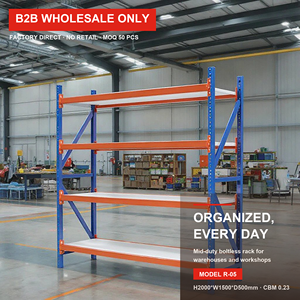
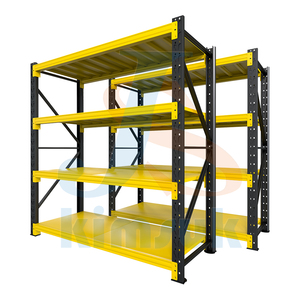
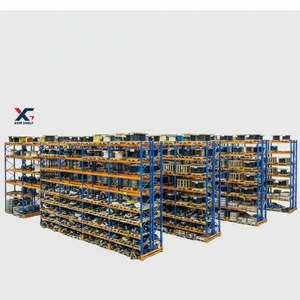
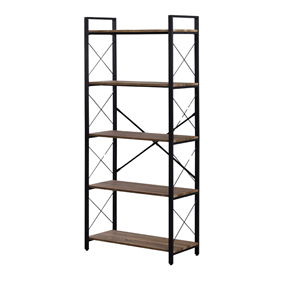
Engineering Excellence & Enterprise Manufacturing Capabilities
A comprehensive assessment of structural integrity, corrosion mitigation, and custom metallurgy for logistics directors and procurement engineers.
In modern industrial logistics, cold-chain distribution, and chemical storage, racking structures do not merely support dead-weight; they function as mission-critical frameworks that dictate volumetric efficiency, operational throughput, worker safety, and regulatory compliance. As a premier manufacturer established in 2001 with a centralized 30,000 square-meter production facility in Guangzhou, China, Guangzhou Heda Shelves Co., Ltd. delivers engineered racking solutions developed to withstand rigorous dynamic seismic stresses, heavy axle fork-truck interactions, and harsh coastal atmospheric exposure.
Our comprehensive production infrastructure integrates precision raw-material coil slitters, 400-ton automated punch presses, continuous roll-forming lines, robotic argon-arc welding workstations, and a multi-stage automated electrostatic powder coating system featuring automated zinc-phosphate pre-treatment baths. When dealing with specialized applications—such as pharmaceutical cold stores, cleanrooms, food processing plants, and marine coastal terminals—our product engineering spans from cold-formed high-tensile structural steel (Q235B, Q355B) up to grade 304 and 316 austenitic stainless steel configurations.
Advanced Chemical Pre-Treatment
Every steel component undergoes an intensive 8-stage pre-treatment: automated degreasing, twin acid pickling, rinse cycles, and fine-grain zinc phosphating. This chemically bonds an anti-corrosion barrier directly onto raw substrate before coating, achieving over 1,000 hours of continuous ASTM B117 salt spray resistance.
Precision Roll-Formed Profiles
Uprights are continuous cold-roll-formed with continuous variable-gauge profiles (1.5mm to 3.0mm wall thickness), using Omega-shaped geometries that distribute vertical axial loads uniformly while minimizing torsional buckle risks during critical forklift impact events.
Turnkey Engineering Validation
We bridge structural consulting and manufacturing. Every international racking layout is backed by verified CAD shop drawings, finite element analysis (FEA) load distribution models, and full compliance with EN 15512, RMI, and FEM storage racking safety criteria.
| Material Specification | Yield Strength (MPa) | Corrosion Resistance | Ideal Storage Environment | Maintenance Cycle |
|---|---|---|---|---|
| AISI 316 Stainless Steel | ≥ 205 (Annealed) | Superior (Chloride / Acidic) | Pharma Cleanrooms, Marine Coast, Cold Chain | Periodic Washdown Only |
| AISI 304 Stainless Steel | ≥ 205 | High (Organic Acids / Humidity) | Commercial Kitchens, Dairy Processing, Laboratories | Sanitary Clean Cycles |
| Hot-Dip Galvanized (HDG) Steel | ≥ 235 - 355 | Excellent (Barrier / Sacrificial) | Outdoor Open Yards, Freezers, Fertilizer Stores | 5 - 10 Year Inspections |
| Thermoset Epoxy-Polyester Powder | ≥ 235 (Substrate) | Standard Industrial Dry | Ambient FMCG Distribution Centers, General Warehousing | Annual Visual Inspection |
Future Procurement Trends in Industrial Storage & Stainless Racking
How evolving supply chains, automated handling, and stringent sanitation codes are transforming global warehousing acquisitions.
Procurement directors within global supply chains are adjusting storage system specifications in response to macro supply-chain disruptions, labor cost inflation, and land-lease premiums. The traditional view of racking as a low-tech capital expenditure has been replaced by calculated lifecycle total-cost-of-ownership (TCO) assessments. The following trends represent structural shifts observed across international project tenders:
TCO-Driven Metallurgy Transitions
Procurement models now account for coating failures, zinc flaking, and touch-up repainting labor in humid or refrigerated facilities. Buyers are shifting toward stainless-steel frames or pre-galvanized cold-formed uprights to eliminate five-year replacement cycles in aggressive cold-chain applications.
ASRS & High-Tolerance Integration
With the rise of autonomous mobile robots (AMRs) and high-speed pallet shuttles, static deflection tolerances must tighten from traditional 1/200 down to 1/500 limits. Procurement specifications increasingly require sub-millimeter punching accuracy and unified automated guidance rails.
Standardization for Civil Approvals
Insurance underwriters and regional civil defense bodies (such as GCC Civil Defense and EU CE inspectors) require certified structural calculations, verifiable seismic base anchors, and flue-space fire sprinkler integration directly stamped by verified factory engineers.
Product Development Trends: The Evolution of Industrial Shelving
Engineering advancements in seismic optimization, hygienic geometry, and hybrid structural assemblies.
Racking and shelving designs continue to evolve beyond generic slotted angle configurations. Modern warehouse density demands that structural components achieve higher weight-to-mass ratios while meeting specialized environmental and biological safety mandates.
Sanitary Clean-in-Place (CIP) Profiles
Conventional teardrop or keyhole upright slots collect dust, moisture, and biological residues. New stainless cleanroom racking utilizes closed-tube designs or welded standoff brackets that facilitate continuous chemical washdowns without retaining stagnant liquid pockets.
Dynamic Gravity Flow Optimization
Carton and pallet flow designs incorporate self-energized magnetic speed controllers and split-roller polymer beds. This eliminates reliance on electrical tracks while guaranteeing smooth First-In-First-Out (FIFO) replenishment for perishable grocery and pharmaceutical fulfillment.
Seismic Dissipation Footplates
Advanced baseplate geometry distributes dynamic shear energy horizontally into reinforced concrete slabs via multi-point anchoring slots. This minimizes upright crimping during earthquake events or severe dynamic rack displacement.
Verifiable International Testing & Quality Control
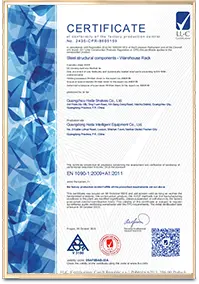
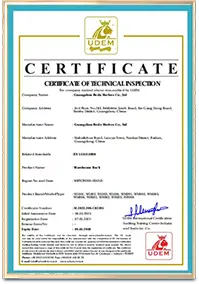
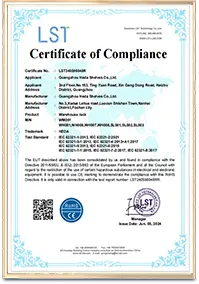
Every export shipment from Guangzhou Heda Shelves Co., Ltd. is tracked through strict ISO 9001:2015 production logs, structural static load testing, and European market safety directives.
- CE Factory Production Control: Certificate No. 2435-CPR-8605159
- ISO 9001:2015 System Certification: Register No. 18624Q00169R0M
- RoHS Surface Compliance: Lead, Cadmium, and Heavy Metal Free Coating Validation
- Mill Test Certificates (MTC): Full material traceability for all steel coil batches
Frequently Asked Questions: Technical & International Procurement
Essential guidance for inventory directors, logistics contractors, and commercial procurement teams.