Narrow Aisle
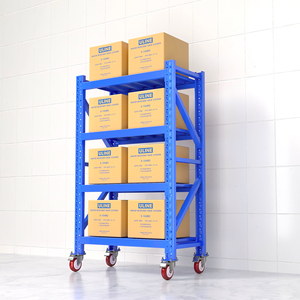
Designed for tight clearance, heavy floor loading capacities, and seamless automated warehouse integration across Osaka, Kobe, and the greater Kansai region.
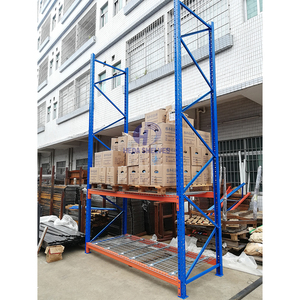
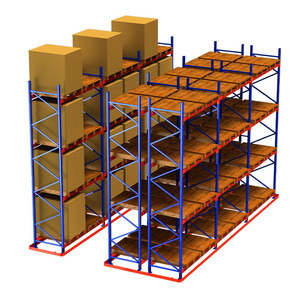
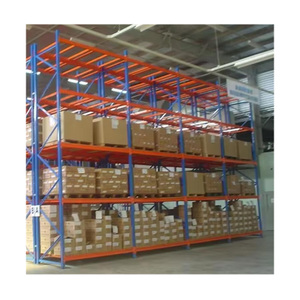
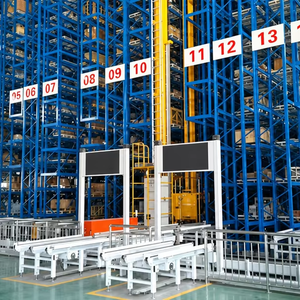
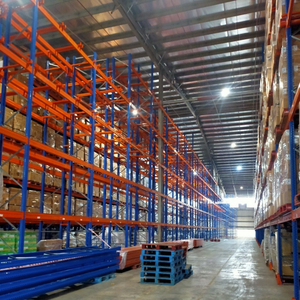
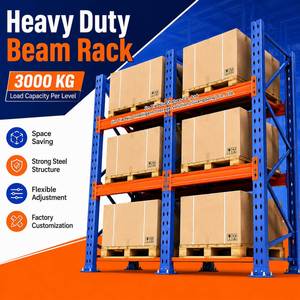
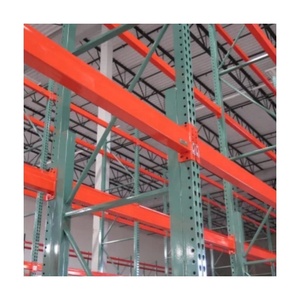
Osaka represents Japan's critical western distribution nucleus. Deploying heavy-duty high bay racking in this geography requires exact engineering adaptations to address reclaimed coastal soil, intense seismic acceleration profiles, and stringent land efficiency requirements.
Warehousing facilities positioned on Osaka's reclaimed coastal islands face distinct structural considerations: softer subsoil conditions and continuous exposure to marine salt aerosol. Our OEM configurations employ oversized, high-ductility baseplates that distribute high concentrated point loads across slab expansion joints. Furthermore, structural surfaces undergo dual-stage zinc-phosphate immersion pre-treatment followed by thick electrostatic thermoset powder curing to prevent saline creep and stress-corrosion cracking.
The inland Kansai corridor hosts dense precision electronics, industrial component distribution, and automotive replacement supply chains. Warehouses here encounter aggressive square-metre rent costs and strict ceiling clear-height boundaries. We engineer Very Narrow Aisle (VNA) and automated high-bay systems exceeding 15 meters in height, cutting aisle clearance to as little as 1,650mm while sustaining dynamic beam deflection tolerances tighter than 1/200th of the span under full 3,000kg load profiles.
Serving Kansai International Airport (KIX) and domestic temperature-controlled supply chains, high-bay installations inside cold chambers (-25°C to -30°C) demand specialized cold-resistant steels. Conventional cold-rolled steel risks low-temperature embrittlement. We utilise modified impact-tested Q355D structural alloys with ductile-to-brittle transition temperatures rated far below typical refrigeration thresholds, ensuring absolute structural tenacity during heavy pallet cycling.
Every rack system manufactured in our 30,000 m² factory is produced according to rigorous engineering standards designed to interface seamlessly with modern material handling systems.
| Structural Parameter | High Bay VNA System | Automated AS/RS High Bay | Heavy-Duty Selective Pallet |
|---|---|---|---|
| Structural Steel Grade | Certified Q235B / Q355B Cold Rolled | High-Tensile Q355B / Q355D Alloy | Q235B High-Yield Strip Steel |
| Maximum Achievable Height | Up to 18,000 mm (18 Meters) | Up to 30,000 mm (30 Meters) | Up to 12,000 mm (12 Meters) |
| Rated Load per Bay Level | 1,000 kg – 3,500 kg | 1,500 kg – 4,000 kg (Palletized) | 800 kg – 3,000 kg |
| Aisle Operating Width | 1,600 mm – 1,900 mm | Stacker Crane Interface Specific | 2,800 mm – 3,400 mm |
| Surface Pretreatment & Finish | Acid Pickling + Phosphate + 80μm Powder | Continuous Electrostatic Epoxy Polymer | Pickling + High-Adhesion Polyester |
| Deflection Limit Criteria | 1 / 200 of Clear Beam Span | 1 / 300 to 1 / 400 (Ultra-Strict Crane) | 1 / 180 of Clear Beam Span |
| Seismic Damping Compliance | Level 2 Dynamic Spectrum Ready | Top-Tie Trusses + Dynamic Base Anchorage | Floor Bolted High-Shear Anchor M12/M16 |
The logistics environment in western Japan is currently experiencing a historic structural transformation. Strategic planning for racking procurement must account for three decisive market drivers.
Enforcement of strict limits on overtime for freight transport truck drivers in Japan (the "2024 Problem") has created an urgent imperative to optimize local throughput speed and reduce driver waiting times at distribution hubs around Osaka. Warehouses are migrating from spread-out ground-level staging to dense, high-vertical buffer systems. Storing more SKUs in automated high bays allows rapid automated retrieval and staging, slashing dwell times for dispatch fleets servicing Kyoto, Kobe, and Tokyo.
Long-term municipal urban planning in Osaka prefecture requires that logistics operators build higher structural safety factors into storage fixtures due to anticipated seismic events along the Nankai Trough. High bay racking is moving away from generic static designs toward seismically certified frameworks that utilize engineered dynamic bracings, top-tie bridge gantry beams, and energy-dissipating bolted connections that prevent harmonic resonance and progressive frame collapse.
With acute labour shortages impacting the Kansai metropolitan core, third-party logistics (3PLs) and large retailers are transitioning from manned counterbalanced reach trucks to Autonomous Mobile Robots (AMR), automatic pallet shuttles, and fixed AS/RS stacker cranes. High bay racking systems are no longer treated as simple passive metal shelving; they are precision mechanical tracks where horizontal beam tolerances must be maintained within +/- 1.5mm to eliminate sensor trip-offs.
Traditional procurement routes into the Osaka logistics sector often involve multiple intermediaries, trading brokers, and trading firms, creating inflated landed capital costs and cumbersome technical coordination. Working directly with our Guangzhou manufacturing plant bridges this gap: our engineering team collaborates directly with your project managers to customize upright roll-forming dies, step-beam depths, seismic gussets, and customized finish coatings tailored to Kansai civil standards—all shipped directly container-by-container to the Port of Osaka.
Founded in 2001, Guangzhou Heda Shelves Co., Ltd. operates an integrated 30,000 square meter industrial manufacturing base, providing complete end-to-end control from certified raw steel coil processing to container loading.
Over two decades of structural rack engineering, solving structural layout challenges for more than 10,000 logistics, cold store, and distribution facility operations globally.
Equipped with 20+ automated continuous roll-forming lines, automated laser plate cutters, robotic CNC beam welding cells, and industrial electrostatic powder coating lines.
Our structural engineering office prepares comprehensive 2D CAD floor plans, dynamic clearance simulations, and 3D architectural renderings to fast-track municipal approvals before steel is cut.
Certified factory procedures (CE Cert No. 2435-CPR-8605159; ISO 9001 No. 18624Q00169R0M) assure every column, welded hook connector, and baseplate exceeds international yield safety factors.
Direct ocean route clearance out of South China ports to Osaka (Nanko container terminals). High-bay components are palletized with protective polyethylene wraps and labelled for immediate sequential site erection.
Whether demanding custom column perforation pitches, specific beam-flange thicknesses for non-standard JIS pallet sizes, or specialized anti-static decking, our factory builds precisely to project specification.
Transparent technical guidance for logistics planners, plant managers, and procurement leads sourcing high bay racking systems for Osaka facilities.
Direct factory prices, ISO 9001 certified precision, and dedicated engineering consultation for your Osaka and Kansai distribution facility expansion. Contact our structural engineering desk today for technical layouts and containerized freight estimates.