Engineered Warehouse Racking Solutions for Greater Seattle Logistics
Engineered by Guangzhou Heda Shelves Co., Ltd. for extreme dynamic reliability, space maximization, and strict Western Washington seismic standards.
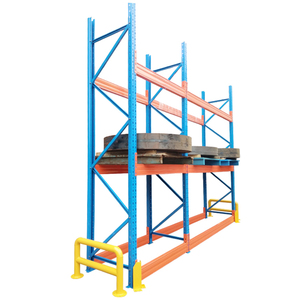 Heavy-Duty Beam
Industrial Warehouse Heavy-Duty Selective Pallet Racks
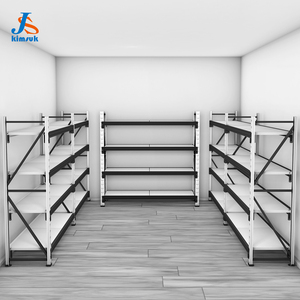 Cantilever & Beam
High-Span Cantilever & Multi-Tier Storage Systems
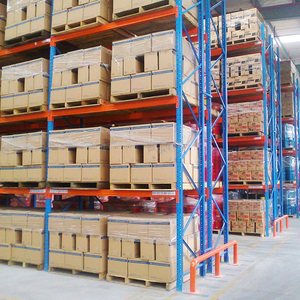 Dynamic Row Tied
Row-Connected Heavy Racking System 2000kg Q235B
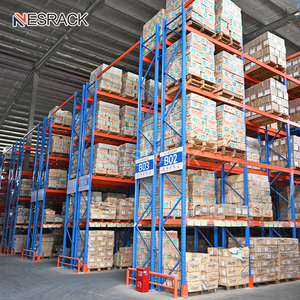 Modular Boltless
Interchangeable Teardrop / Boltless Heavy Warehouse Rack
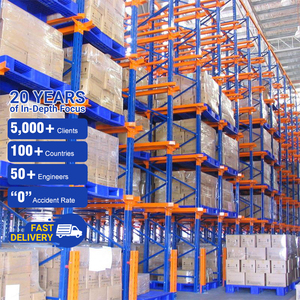 High-Density Cold
Drive-In & Drive-Through Deep Pallet Storage Matrix
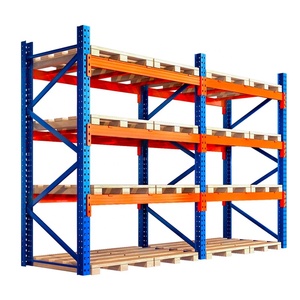 Interlock Stacking
Engineered Structural Steel Pallet Racking Units
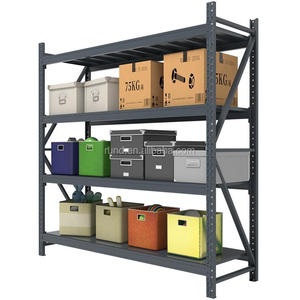 Medium Duty Tier
Medium-Duty Fall-Free Industrial Longspan Shelving
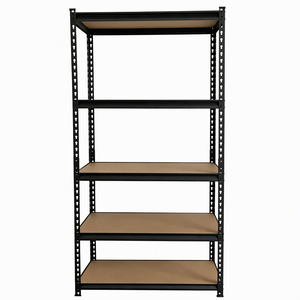 Pick-Face Rivet
5-Layer Boltless Rivet Shelving for Order Picking Hubs
Principles of High-Throughput FIFO Gravity Flow Pallet Storage
A comprehensive structural and mechanical analysis for warehouse operations managers and supply chain directors across the Pacific Northwest.
True FIFO Velocity Management
Gravity flow pallet racking (also recognized as pallet live storage) operates as a dynamic storage medium governed by gravitational potential energy. By separating loading and replenishment lanes from retrieval faces, the architecture guarantees uncompromising First-In, First-Out (FIFO) inventory rotation.
This mechanical segregation eliminates forklift cross-traffic, reduces operational cycle times by up to 45%, and prevents product obsolescence in date-sensitive supply chains.
Kinetic Speed Control Engineering
The stability of a gravity flow lane depends upon calculating the optimal pitch—typically calibrated between 3.0% and 4.0% gradient (1/4" to 7/16" per foot). HEDA integrates high-precision, eddy-current and centrifugal speed controller rollers positioned at measured intervals down each track.
Regardless of whether a pallet weighs 400 kg or 1,500 kg, these kinetic retarders cap descent speeds at an ultra-safe terminal velocity of 0.25 to 0.30 meters per second, preventing high-impact collisions.
Pallet Separators & Ramp Stops
At the discharge discharge picking face, accumulation line pressure can generate thousands of pounds of compressive force against the front pallet. Our proprietary mechanical load separator mechanism holds back the rear pallet queue by 150–200 mm.
This uncouples the front pallet from hydrostatic queue forces, enabling forklift operators to lift the load effortlessly without friction binding, component tearing, or product tilt spills.
Technical Specifications: Gravity Flow Lane Engineering
| Mechanical Component | Standard Specification | Heavy-Duty Cold Storage / Arctic Spec | Seattle / Pacific NW Regulatory Standard |
|---|---|---|---|
| Roller Track Pitch | 3.2% to 3.5% Decline | 3.8% to 4.2% Decline (Viscosity Adjusted) | RMI ANSI MH16.1 Section 6.2 |
| Cylindrical Steel Rollers | Ø50mm / Ø60mm Galvanized Steel | Ø60mm Heavy-Wall Zinc Plated Cold-Tempered | ASTM A513 / AISI 1018 Steel |
| Speed Controller Retarders | Centrifugal Brake Rollers every 2–3 pallet pos | Silicone-Sealed Low-Temp Brake Systems (-30°C) | OSHA 1910.176(b) Dynamic Safety |
| Pallet Entry Guides | Flared 4mm Folded Steel Centering Guides | Heavy Welded Shock-Absorbing Spring Stops | Safety Guard Standard ANSI MH26.2 |
| Upright Frame Metallurgy | Q235B / Q355 Cold-Formed High Tensile | Q355 High Toughness Charpy V-Notch Inspected | AISC 360-16 / IBC Seismic Design Category D |
| Baseplate & Anchor Bolts | 100x120mm to 160x180mm x 8–12mm | Over-Sized Dual Anchor Baseplates (200x200x16mm) | ACI 318-19 Chapter 17 Concrete Anchoring |
Localized Industrial Applications Across Greater Seattle & Puget Sound
From the industrial corridors of the Kent Valley to the seafood cold hubs of Fisherman's Terminal, how dynamic gravity flow solves specific local operational challenges.
Kent Valley & Sumner Cold Chain
The Kent Valley—including Kent, Auburn, and Sumner—represents the heart of industrial warehousing in Western Washington. With land constrained between the Cascade foothills and Puget Sound, local refrigerated and blast-freezer operators face industrial lease costs exceeding national averages.
HEDA gravity flow pallet systems compress 15 lanes into deep-rack footprints up to 20 pallets deep. This maximizes refrigeration efficiency, reduces chilled air loss through cubic consolidation, and accelerates rotation of sensitive Washington state agricultural harvests and Alaskan seafood landings.
NWSA Port & Transload Staging
Handling cargo moving through the Northwest Seaport Alliance (Port of Seattle and Port of Tacoma) requires lightning-fast turnarounds to eliminate costly maritime demurrage.
Configuring pallet flow lanes right behind cross-dock loading doors creates active buffer lanes for outbound sea-vans and intermodal containers. By loading pallets from the intake aisle and picking from the shipping staging lane, dock operations completely decouple inbound receipt from truck loading workflows.
Aerospace & Subassembly Buffers
In Everett, Renton, and Auburn, aerospace manufacturing supply chains demand fail-safe lot control and batch traceability. Composite materials, fasteners, structural fasteners, and precision avionics require strict FIFO management to comply with AS9100 quality guidelines.
HEDA Gravity Flow lanes serve as gravity-driven subassembly kitting banks, guaranteeing that age-sensitive sealants, pre-pregs, and fastener lots roll to production floor pickers in rigorous chronological progression without human indexing error.
Pacific Northwest Craft Beverage & FMCG
Washington State boasts one of the nation's premier concentrations of craft breweries, wineries, cider mills, and organic specialty food processors. High-speed canning and packaging lines demand continuous buffer lanes that will not fail when production peaks.
Gravity flow tracks tolerate heavy point-loads from beverage pallets (weighing upwards of 2,200 lbs) while eliminating the forklift traffic congestion common in standard drive-in configurations, ensuring kegs and cases glide directly to distributor collection doors.
Warehouse Density Drivers in the Puget Sound Commercial Real Estate Market
Why modern Pacific Northwest facilities are migrating away from static selective racking to dynamic gravity-driven pallet matrices.
1. Industrial Land Scarcity & Skyrocketing Rent
Geographic barriers—the Puget Sound to the west, Lake Washington, and the Cascade Range to the east—severely cap the available footprint for new Class A industrial building development. With vacancy rates in key submarkets like South King County consistently running tight, operators cannot simply lease more square footage.
Gravity flow pallet racks condense storage footprints by up to 60% by eliminating 75% of the intermediate aisles required by conventional selective racking. This transforms static building space into high-density storage cubes.
2. Soaring Labor Costs & Forklift Travel Distances
Seattle and King County maintain some of the highest minimum wage rates and warehouse logistics compensation packages in the United States. In a standard selective warehouse, forklift drivers spend up to 70% of their operational shift simply deadheading through aisles traveling between pick locations.
Gravity flow lanes consolidate picking to one dedicated aisle face and replenishment to another. Travel travel distance drops by 40% to 55%, allowing facilities to process double the pallet volume with fewer operators and reduced wear on electric lift trucks.
3. Zero-Carbon Passive Automation (ESG Mandates)
The City of Seattle and Washington State lead the nation in strict climate targets and Clean Buildings Performance Standards (CBPS). Warehouse tenants are incentivized to slash electrical kilowatt loads.
Unlike automated electric shuttle tracks or high-consumption automated storage and retrieval systems (ASRS), gravity flow racking requires zero kilowatt hours of electricity. Gravitational acceleration powers pallet transit down the lanes naturally, providing an inherently green, low-maintenance, failsafe dynamic picking system.
Western Washington Seismic Design Category D & E Engineering
How HEDA structures exceed Seattle Department of Construction and Inspections (SDCI) and King County permitting guidelines.
Cascadia Subduction Zone Engineering Rigor
The Pacific Northwest sits squarely in an active tectonic zone influenced by the Cascadia Subduction Zone and the Seattle Fault. Building codes in King, Pierce, Snohomish, and Thurston Counties enforce strict Seismic Design Category (SDC) D, E, and F specifications under the International Building Code (IBC) and ASCE 7-16/22.
Gravity flow racking systems present a unique seismic design challenge: unlike static racks, pallets are suspended dynamically on sloping roller beds. Under seismic ground acceleration, dynamic hydrodynamic amplification occurs as pallets shift against speed controllers and separators.
HEDA Structural Seismic Mitigation Package
- Heavy Cold-Formed Steel Uprights: Custom-engineered Omega-profile columns cold-rolled from high-yield Q355 steel with elevated section modulus.
- Oversized Baseplates & Heavy Embedment Anchors: Baseplate footprint expanded up to 200x200x16mm, designed to accommodate double 3/4" Hilti or Simpson Strong-Tie wedge anchors for maximum shear and overturning resistance.
- Reinforced K-Bracing & Diagonal Structural Trusses: Fully engineered spine and side-channel bracing engineered to damp horizontal dynamic seismic waves without ductile tear.
- PE Wet-Stamped Structural Calculations: Structural calculation packets coordinated with US licensed professional structural engineers (PE) to support prompt SDCI permit issuance.
Why Global Logistics Leaders Partner with HEDA Shelves
Factory-direct control, industrial scale, certified testing, and direct ocean freight consolidation to Port of Seattle and Tacoma terminals.
300+ Technical Engineering Specialists
Guangzhou Heda Shelves Co., Ltd. operates with an in-house team of over 300 technical production, R&D, and structural detailing professionals. We provide free 2D CAD engineering layouts and photorealistic 3D warehouse renderings within 24 to 48 hours of initial project consultation, ensuring that your operations team and facility stakeholders visualize every bay, clearance line, and flue space before steel fabrication commences.
Certified Compliance & Traceability
Every production run adheres strictly to rigorous international quality management protocols, verified by CE Certification (No. 2435-CPR-8605159), ISO 9001:2015 Quality Management Systems (No. 18624Q00169R0M), and RoHS Environmental Compliance. Mill test certificates (MTC) and steel tensile coupon test documentation are archived for absolute procurement transparency.
End-to-End Export Packing & NWSA Freight
We manage precision export container loading with specialized ocean packaging: bundle banding, edge protectors, heavy-duty waterproof shrink-wrapping, and color-coded component tagging that corresponds exactly to our step-by-step assembly drawings. We consolidate direct full container loads (FCL) to the Northwest Seaport Alliance (Seattle Terminal 18 / 5, Tacoma Husky / Washington United Terminals).
Our 10-Step In-House Quality Production Workflow
Raw Materials
Spectrographic analysis of prime high-grade Q235B & Q355 structural steel coils.
Precision Cutting
CNC high-speed automatic decoiling and precision shearing to micrometer tolerances.
Column Punching
Multi-station automated hydraulic presses punch precision 50mm pitch teardrop/diamond holes.
Cold Bending
Multi-roller forming lines shape complex upright omega-rib sections without microfractures.
Profile Forming
Continuous robotic roll-forming of interlocked box beams and roll-track side channels.
Surface Polishing
Automated shot-blasting and mechanical surface de-burring to remove scale and mill grease.
Robotic Welding
Automatic CO2 shielded welding robots fuse beam end-connectors with continuous bead strength.
Pickling & Phosphating
Multi-tank chemical bath immersion cleans metal pores and deposits a dense zinc phosphate primer.
Powder Coating
Automated electrostatic spray booths apply high-cure epoxy polyester powder at 200°C.
QC & Ocean Packing
Coating thickness, impact testing, bundle labeling matching CAD, and containerized dispatch.
Frequently Asked Questions: Procuring Racking in Seattle & the Pacific Northwest
Direct technical answers addressing permitting, fire sprinkler coordination, custom pallet tolerances, and shipping logistics.
What warehouse permitting approvals are mandatory for pallet rack installation in Seattle and King County?
How does Gravity Flow Racking coordinate with NFPA 13 in-rack fire sprinkler regulations in Washington State?
Can HEDA gravity flow lanes accommodate non-standard, plastic, or poor-quality wooden pallets?
What is the typical shipping transit time and port clearance procedure from Guangzhou to Seattle?
How do HEDA powder coatings hold up in cold storage and high-moisture Puget Sound conditions?
Does HEDA provide on-site installation support in Washington State?
Transform Your Greater Seattle Warehouse Footprint Today
Connect with HEDA's structural engineers to receive a complimentary 2D CAD facility layout, 3D rendering, and seismic load capacity calculation tailored to your building clear height.