OEM/ODM High Density Pallet Racking System Manufacturer & Suppliers in the Melbourne Market
AS 4084 Compliant Engineering, Heavy-Duty Cold-Rolled Structural Profiles, and Turnkey Storage Density Optimisation for Victoria's Strategic Logistics Corridors
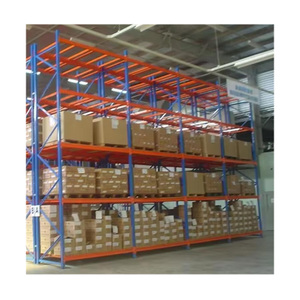
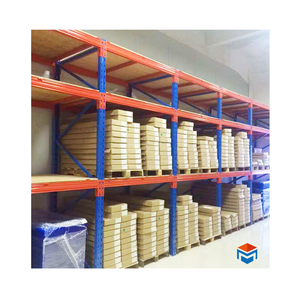
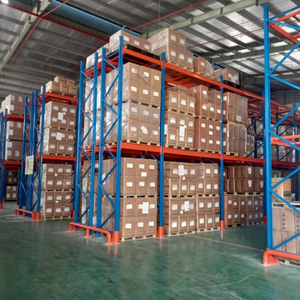
Heavy-Duty Warehouse Storage Portfolio
Engineered Racking Systems for Melbourne Warehouses
From rapid-turnaround 3PL distribution centres in Truganina to high-density cold chains in Laverton and heavy engineering sites across Dandenong South, our systems are manufactured with structural precision, certified Q235B/Q355B high-tensile steel, and custom dimensions tailored to standard Australian CHEP/Loscam pallet footprints (1165 mm × 1165 mm).
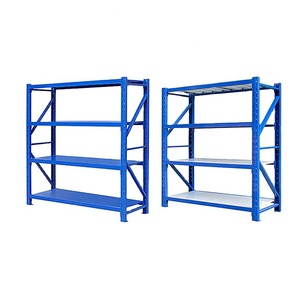
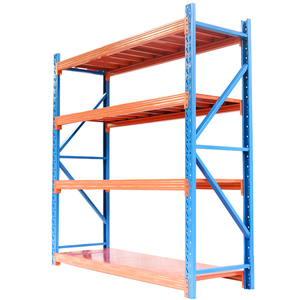
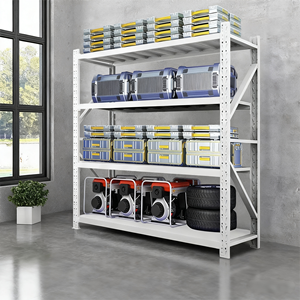
Precision step-beam profile with boltless assembly. Engineered for manual split-case picking, archive boxes, and industrial hardware distribution across Victorian e-commerce depots.
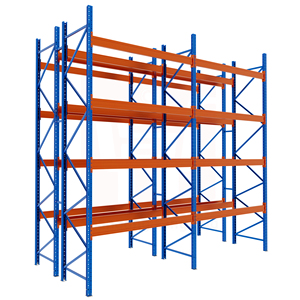
The benchmark format for multi-SKU Melbourne warehousing. 100% direct pallet accessibility, fully adjustable upright pitch, and safety-locking high-shear connector brackets.
Superior hygienic and washdown construction built for harsh industrial environments, coastal marine storage near Port of Melbourne, and specialized chemical containment facilities.
Engineered for tall clear-span distribution buildings (up to 15m). Optimised for Very Narrow Aisle (VNA) turret trucks, delivering maximum volumetric capacity per square metre.
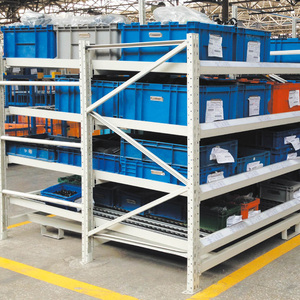
Stores two pallets deep from a single aisle, cutting aisle requirements by 40%. Engineered specifically for double-reach pantograph trucks operating across West Melbourne freight precincts.
Engineered for blast freezers and chilled facilities down to -30°C. Anti-brittle cold-treated steel formulations and heavy epoxy powder coatings resistant to condensation degradation.
Engineering White Paper: Strategic Racking Deployment Across Greater Melbourne
As Australia's dominant freight and logistics gateway handling more than one-third of the nation's container throughput via the Port of Melbourne (Swanson Dock and Webb Dock), Melbourne's industrial property landscape faces unprecedented structural evolution. Soaring industrial land lease rates across the Western and South-Eastern corridors require operations to transition from traditional low-density storage to sophisticated, high-cube structural racking systems.
Western Corridor: 3PL & Freight Hubs
Truganina, Derrimut, Laverton North & Ravenhall: Mega-footprint 3PL operations require heavy-duty selective and double-deep racking capable of enduring continuous 3-shift material handling cycles with full Loscam/CHEP compatibility.
South-East: Manufacturing & Retail
Dandenong South, Braeside, Keysborough & Carrum Downs: Tightly zoned estates with high $/m² lease values rely on structural mezzanines and narrow-aisle racking to double cubic floor capacity without requiring off-site relocation.
Northern Cold Chain & Agri-Logistics
Epping, Somerton & Tullamarine: Rapidly expanding temperature-controlled distribution centres demand dense, automated radio shuttle and pallet flow racking engineered to withstand -30°C thermal condensation cycling.
Technical Compatibility: The Australian CHEP & Loscam Footprint
A critical operational failure in imported racking across the Victorian market occurs when overseas suppliers fabricate configurations based exclusively on Euro pallets (1200 × 800 mm) or North American GMA specifications (48 × 40 inches). Australian supply chains operate overwhelmingly on the square standard footprint: 1165 mm × 1165 mm timber pallets, often loaded with significant overhang up to 1200 mm × 1200 mm.
As an OEM/ODM manufacturing powerhouse, HEDA Shelves engineers our upright frame depths (standard 840 mm to 1100 mm) and beam clear spans (specifically 2591 mm and 2743 mm clear apertures for 2-pallet bays, or 3810 mm for 3-pallet bays) to allow optimal bottom-deck board engagement, mandatory front/rear safety overhangs of 50 mm, and precise beam spacing complying with Australian safety guidelines.
Victorian Market Trends: What Melbourne Warehouse Directors Must Navigate
Specifying industrial racking in Victoria involves navigating stringent regulatory mandates, structural building requirements, and rapid shifts in automation. Decision-makers must evaluate four core forces driving the Melbourne logistics landscape:
AS 4084:2023 Structural Revision
The revised standard places rigorous engineering accountability on limit-state structural design, beam deflection criteria (L/200), upright column punch perforation efficiency, and seismic baseplate load disbursement.
WorkSafe Victoria Compliance
Victorian Occupational Health and Safety regulations require certified load capacity notices permanently displayed at bay entrances, certified post protectors on all end-frames, and documented 12-month structural inspection records.
AS 1170.4 Seismic Provision
Melbourne sits within structural seismic design zones requiring finite element analysis (FEA) modeling to verify frame ductility, shear pin shear strength, and anchor bolt tensile pull-out resistance under dynamic ground movement.
Selecting the optimal racking system requires balancing floor space footprint, capital investment, pallet turnover speed, and SKU variety. The comparative matrix below provides technical guidance for Melbourne procurement engineers:
Racking Architecture
Cubic Density
Pallet Selectivity
Inventory Rotation
MHE Requirement
Melbourne Application Fit
Selective Pallet Racking
Baseline (100%)
100% Direct Access
FIFO / Random Access
Standard Counterbalance / Reach
Multi-SKU 3PLs, Retail Distribution
Double Deep Racking
+55% to +65%
50% Direct Access
FILO / Batch FIFO
Pantograph Double Reach Truck
Dry Grocery, Paper, Building Products
Gravity Pallet Flow
+120% to +140%
Lane Picking Face Only
Strict Dynamic FIFO
Standard Reach / Counterbalance
Perishable Dairy, Fresh Meat, Cold Storage
Drive-In / Drive-Through
+100% to +130%
Last Pallet Only
LIFO (Drive-In) / FIFO
Narrow-Chassis Counterbalance
Seasonal Beverage, Cold Store Chambers
Radio Shuttle System
+140% to +180%
Lane Face Accessible
Programmable FIFO / LIFO
Standard Reach + Semi-Auto Shuttle
High-Throughput Freezers, Mega Logistics
Why Australian Enterprises Partner with Guangzhou Heda Shelves
Founded in 2001, Guangzhou Heda Shelves Co., Ltd. has established itself as an international benchmark in heavy-duty structural steel racking, industrial shelving, and high-cube mezzanine platforms. Operating from an integrated 30,000 square metre manufacturing campus equipped with over 30 precision cold-roll-forming extrusion lines and fully automated CNC laser punching units, we bridge the gap between factory-direct tier-1 pricing and rigorous compliance with Australian engineering standards.
30,000 m² In-House Production
Full manufacturing independence spanning coil slitting, cold rolling, robotic CO2 welding, phosphating, and electrostatic epoxy-polyester powder coating lines.
Certified Raw Materials
Mill-certified Q235B and Q355B structural coil sourced from tier-one steel mills, delivering high yield strengths and uniform cold-forming performance under load.
Turnkey OEM & ODM Customisation
Bespoke column section designs (Omega profiles), specific beam connector lugs matching legacy Australian systems, and custom electrostatic powder colour matching.
Complete International Auditing
Fully compliant with ISO 9001:2015 quality management systems (Certificate No. 18624Q00169R0M), CE structural certification, and RoHS coating safety approvals.
Integrated Logistics Pipeline to Port of Melbourne
Shipping large-scale structural steel across the Pacific requires meticulous packaging engineering to prevent dimensional distortion, surface abrasions, and sea-air corrosion. HEDA Shelves employs specialized export bundling procedures:
Uprights are pre-assembled or nested with protective timber Dunnage runners; box beams are grouped in steel-strapped bundles with heavy-gauge corrugated edge-guards; hardware components, baseplates, and high-tensile 8.8-grade safety bolts are sealed inside palletized wooden crates. Every container loaded at our Guangzhou dock is weight-balanced and accompanied by detailed packing slips correlated directly with client CAD assembly drawings, ensuring efficient customs clearance and fast deconsolidation at Melbourne berths.
Procurement Guidance
Frequently Asked Questions by Melbourne Buyers
Direct technical answers addressing Australian compliance standards, site engineering, freight logistics, and structural safety documentation.
Are HEDA racking systems certified to Australian Standard AS 4084:2023?+
Yes. Our structural engineering designs can be configured and structurally calculated in full alignment with AS 4084 (Steel Storage Racking) limit-state design requirements. We supply complete 2D layout drawings, 3D renderings, and structural engineering calculation reports covering yield capacity, beam deflection tolerances (L/200), and baseplate bearing stress. For Victorian clients requiring registered structural engineer sign-off (Chartered Professional Engineer / NER), our detailed component calculations integrate smoothly with local certification frameworks.
How do you accommodate the Australian standard 1165 mm × 1165 mm pallet footprint?+
Unlike standard European suppliers whose frames are built for 800 mm deep pallets, our OEM manufacturing tooling is designed around the Australian CHEP and Loscam 1165 mm × 1165 mm square pallet footprint. We commonly fabricate frame depths of 840 mm (allowing 150 mm front/back pallet overhang for secure seating) or 1050 mm/1100 mm with structural pallet support bars, wire decking, or fork-entry shoes. Our standard beam lengths (e.g., 2591 mm, 2743 mm) deliver the required 75 mm to 100 mm lateral clearances demanded by WorkSafe Victoria guidelines.
What documentation is supplied to meet WorkSafe Victoria safety mandates?+
Under Victorian Work Health and Safety regulations, pallet racking installations must display verified Safe Working Load (SWL) signage. We provide verified beam load ratings, frame capacity tables, and load plaque schematics indicating maximum unit load per pallet, maximum beam level load, and maximum total bay load based on first-beam elevation heights. We also supply and specify all necessary safety accessories, including column crash wrap guards, heavy tubular end-of-aisle barriers, frame back-mesh, and pallet back-stops.
What is the direct shipping transit time and process to the Port of Melbourne?+
Shipments originate directly from our Guangzhou manufacturing headquarters and are loaded into 40ft High Cube (HC) or Open Top shipping containers for dispatch via Nansha or Shenzhen ports. Direct ocean transit to the Port of Melbourne (Swanson / Webb Dock) typically takes 14 to 18 days. Production lead times for standard selective and high-density racking projects range from 15 to 25 days depending on tonnage. We provide full export documentation (Commercial Invoice, Packing List, Bill of Lading, Certificate of Origin, and Mill Test Certificates) for smooth customs clearance.
Can HEDA Shelves produce custom punch pitches and match existing Melbourne racking profiles?+
Yes. As a direct OEM/ODM fabricator, we maintain interchangeable tooling setups. We manufacture standard 50 mm, 75 mm, and 76.2 mm (3-inch) pitch column punch patterns compatible with common teardrop, diamond, and slotted lug styles used in Australia. If you are expanding an existing facility in Dandenong, Campbellfield, or Altona and require dimensional matching for beam elevations, baseplate patterns, or specific corporate powder coat RAL codes, our engineering department will manufacture components to your exact physical specifications.
What concrete floor slab specifications are required for high-density installations?+
High-density systems (such as high-bay VNA, double-deep, or tall drive-in configurations) transmit substantial point loads through upright baseplates to the warehouse concrete slab. For installations up to 8m, an engineered, steel-fibre-reinforced or mesh-reinforced slab with a minimum thickness of 150 mm to 200 mm and concrete compressive strength of 32 MPa to 40 MPa is typical. For high-bay VNA projects exceeding 10m, floor flatness tolerances conforming to the Concrete Society TR34 specification (DM2 or FM2) are critical. We provide exact footprint anchor hole patterns and baseplate shear/point-load tables to assist your civil structural engineer.
Transform Your Melbourne Warehouse Capacity
Submit your warehouse CAD architectural drawing, clear ceiling height, and pallet turnover profile. Our senior logistics engineering team will generate an AS 4084-aligned 2D/3D layout design, complete capacity calculations, and factory-direct pricing within 24 hours.