Heavy-Duty Racking & Dynamic Flow Storage Systems
Precision-engineered industrial racking solutions optimized for Toyota Production System (TPS) standards, automotive logistics, and high-throughput Japanese distribution centers.
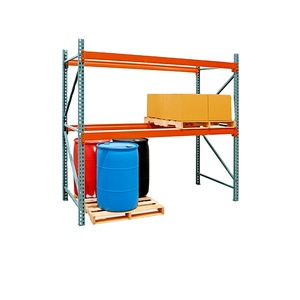
Selective Industrial Warehouse Shelving Teardrop Pallet Rack
View Details →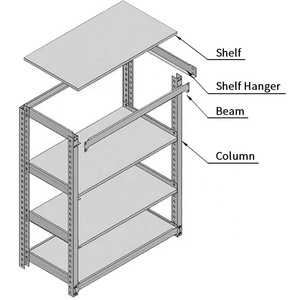
Supplier Wholesale Corrosion Protection Steel Boltless Warehouse Shelving
View Details →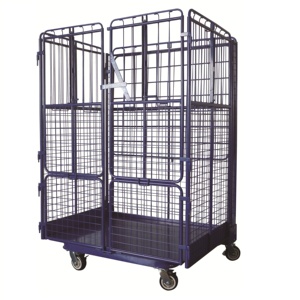
Hand Push Folding Wire Metal Rolling Pallet Cage Cart (500KG Capacity)
View Details →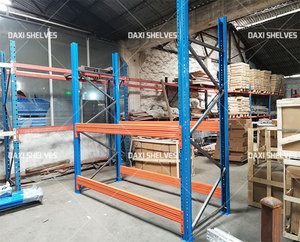
Storage Shelf Rack Pallet Rack with Steel Wire Mesh Decking
View Details →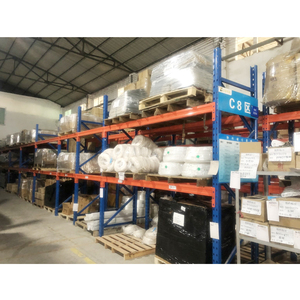
Custom Heavy Duty Industrial Steel Shelf & Roller Track Racking
View Details →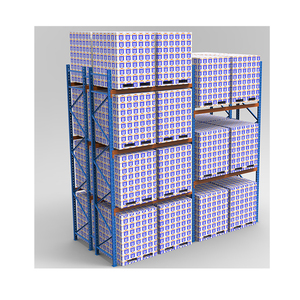
Storage Equipment Heavy Duty Metal Pallet Racking Systems
View Details →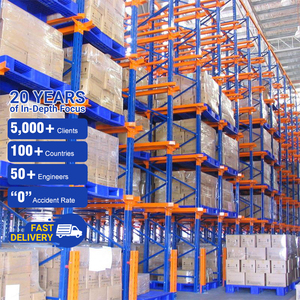
High Quality Heavy Duty Drive-In & Drive-Through Storage Racks
View Details →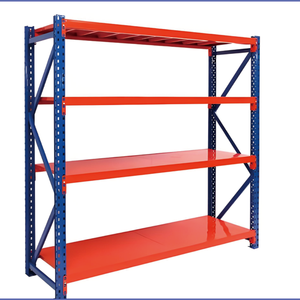
High Load Capacity 4-Layer Powder Coated Steel Warehouse Rack
View Details →Optimizing Material Flow in Greater Nagoya's Industrial Ecosystem
How dynamic roller racking and gravity flow systems solve floor space constraints, labor deficits, and strict Just-In-Time (JIT) demands in Japan’s manufacturing heartland.
The Nagoya Manufacturing Context: Kaizen, JIT & Seismic Resilience
Nagoya, the capital of Aichi Prefecture, stands as Japan's undisputed manufacturing hub. Generating a major share of Japan's industrial output, the Chubu economic region is anchored by automotive giants like Toyota, aerospace clusters, and precision machinery plants. In this high-density environment, warehouse operations cannot afford inefficient space utilization or delayed picking cycles.
Industrial logistics in Nagoya operates under two strict imperatives: Just-In-Time (JIT) material delivery and relentless waste elimination (Muda). Traditional static racking frequently fails to deliver the throughput speed needed for fast-moving assembly components. Furthermore, with Aichi’s location along Japan’s Tokai seismic corridor, structural storage systems must meet rigorous earthquake resistance criteria (JIS/BS EN standards) while maximizing vertical volume.
As a leading international roller rack manufacturer & exporter for Nagoya, we engineer tailored industrial gravity flow and roller rack solutions. These systems utilize kinetic energy to automate inventory movement, reducing forklift fuel consumption, drastically lowering labor reliance, and maintaining 100% First-In, First-Out (FIFO) stock rotation.
Key Operational Metrics in Nagoya Logistics
-
✓
Floor Area Efficiency: Gravity roller racks increase storage density by up to 65% compared to conventional selective pallet racking by eliminating intermediate aisles.
-
✓
Travel Time Reduction: Order pickers remain on designated picking faces, cutting operator travel distances by 40% to 70%.
-
✓
Zero-Energy Automation: Gravity-driven flow channels transport pallets and plastic totes (Kamban containers) without electrical power consumption.
-
✓
Seismic Compliance: Dual-anchored baseplates and cold-rolled structural steel profile designs absorb energy during seismic events in Tokai/Nankai regions.
Technical Engineering: Gravity Flow Mechanics & Physics
Deep dive into the structural componentry, brake controllers, and track dynamics that make our roller racks the primary choice for Nagoya industrial plants.
Precision Roller Track Dynamics
Our roller tracks utilize high-grade galvanized steel or UHMW polyethylene rollers mounted on precision ball bearings. Engineered with low rolling resistance coefficients, these rollers ensure smooth pallet and container flow even under lighter loads (such as plastic tote boxes used in electronics and auto parts assembly lines).
Speed Controllers & Magnetic Brakes
For heavy pallet live racking (loads from 500kg up to 1,500kg per pallet), safety is paramount. We integrate indirect magnetic centrifugal brake rollers every pallet length. These brake rollers absorb kinetic acceleration, regulating the sliding speed to a safe 0.3 m/s constant velocity regardless of total load weight.
Safety Separator & End Stop Systems
At the discharge picking face, zero-pressure pallet separators mechanically isolate the front pallet from the accumulating queue behind it. This enables forklift operators to remove the front pallet without back-pressure friction, eliminating gear wear on material handling equipment and enhancing operator safety.
Comparative Matrix: Roller Flow Racks vs. Alternative Racking Systems
| Storage System Type | Storage Density | Stock Rotation (FIFO/LIFO) | Picking Efficiency | Forklift Travel inside Racks | Ideal Application in Nagoya |
|---|---|---|---|---|---|
| Gravity Roller Flow Rack | Very High (85%+) | Strict FIFO | Maximum (Dedicated Faces) | None (Loading/Unloading at ends) | Automotive assembly, FMCG, Cold Storage |
| Selective Pallet Rack | Low (40% - 50%) | FIFO / LIFO Flexible | Moderate (High Travel Time) | High (Aisle navigation required) | Multi-SKU low volume distribution |
| Drive-In Racking | High (75% - 80%) | Strict LIFO | Low (Slow retrieval) | High (Forklift drives inside channels) | Bulk raw material homogeneous stock |
| Push-Back Cart Racking | Moderate-High (70%) | Strict LIFO | Moderate | None (Front face load/unload) | Medium-turnover 2-6 deep storage |
Targeted Deployment Scenarios in Greater Nagoya
Tailored roller rack engineering for specific industrial hubs across Aichi, Mie, and Gifu Prefectures.
1. Automotive Tier-1 & Tier-2 Supply Chains
Location Focus: Toyota City, Kariya, Anjo, and Okazaki.
Automotive parts suppliers delivering sub-assemblies to vehicle plants require immaculate sequencing. Our carton flow and pallet live roller racks integrate directly with Kanban electronic signaling systems. Parts are loaded from the rear replenish aisle and flow directly to the workstation face, guaranteeing zero component mixing and maintaining zero-inventory buffer targets.
2. Port of Nagoya Cold Storage & Food Logistics
Location Focus: Port of Nagoya, Tobishima, and Minato-ku logistics parks.
Cold chain facilities along the Nagoya port waterfront face soaring energy costs. High-density gravity roller racks allow facilities to condense frozen inventory into smaller refrigerated footprints, drastically reducing kilowatt-hour cooling requirements. All structural steel components receive hot-dip galvanizing or high-durability electrostatic epoxy powder coating to resist marine air humidity and sub-zero temperatures down to -30°C.
3. E-Commerce & Retail Fulfilment Hubs
Location Focus: Komaki, Ichinomiya, and Kasugai logistics belts.
Faced with escalating consumer delivery expectations and Japan’s acute warehouse labor shortage ("2024 Logistics Problem"), e-commerce hubs in Northern Nagoya rely on multi-tier carton flow roller racks. Integrated with pick-to-light systems and inclined roller return tracks, order pickers achieve double-digit throughput spikes with minimal human fatigue.
Future-Proofing Storage: Integration with AGVs & AMRs in Japan
As Japanese enterprises accelerate the adoption of Autonomous Mobile Robots (AMRs) and Automated Guided Vehicles (AGVs) to combat workforce aging, storage infrastructure must seamlessly interface with robotic automation. Modern roller racks exported to Nagoya are designed with custom loading funnels, sensor-compatible stop gates, and precise deck heights that allow AGVs to drop off or pick up pallets autonomously at the rack terminals. This creates a fully automated, continuous kinetic loop from receiving docks to production lines.
Why Direct Importers in Nagoya Partner with HEDA
End-to-end control from raw steel coils to certified containerized delivery at the Port of Nagoya.
-
30,000 m² Advanced Production Hub
Operating automated cold-roll profiling lines, robotic welding cells, and automated powder-coating chambers, guaranteeing high dimensional tolerance across every beam and roller frame.
-
International Quality & Safety Standards
Fully certified under CE (No. 2435-CPR-8605159), ISO 9001:2015 Quality Management Systems, and RoHS environmental compliance. Built to surpass European FEM and Japanese JIS structural engineering benchmarks.
-
Free 3D CAD Engineering & Structural Simulation
Our dedicated engineering team provides free 2D floor plans, 3D spatial renderings, and finite element analysis (FEA) dynamic load simulations prior to manufacturing approval.
Seamless Container Freight to Nagoya Port
We manage direct sea freight logistics from our manufacturing center to the Port of Nagoya (Tobishima / Garden Pier terminals). All components are packed with steel-banded bundle protection, corner guards, and water-resistant wrapping designed for ocean transit.
Frequently Asked Questions by Japanese Industrial Buyers
Addressing technical, seismic, compliance, and customs questions regarding roller rack importation to Nagoya.
How do your roller rack designs meet Japanese seismic stability requirements in Aichi Prefecture?
Aichi Prefecture is located in a seismically active zone. Our structural engineers calculate upright column profiles, horizontal/diagonal bracing patterns, and heavy-duty expansion anchor specifications based on local seismic ground acceleration coefficients. We utilize high-tensile Q235B/Q355B cold-rolled steel, seismic tie-beams, and heavy floor plate anchoring to ensure your roller rack system absorbs lateral ground motion safely without structural racking or pallet displacement.
Can the slope inclination and roller pitch be adjusted for custom plastic totes or wooden pallets?
Yes. Slope angle (typically between 2.0° and 4.0°) and roller center-to-center pitch are fully customizable based on your container bottom geometry and unit weight. For lightweight plastic totes used in auto assembly, we implement smaller diameter polyethylene rollers with fine pitch to prevent sagging. For heavy wooden or plastic pallets up to 1,500 kg, we use heavy-wall steel rollers with embedded speed controller brakes.
What documentation and certifications are provided for local Japanese plant safety inspections?
Every shipment includes detailed structural assembly drawings, load capacity certificates, material steel mill test certificates (MTC), CE certification documents, and ISO 9001 compliance sheets. These documents assist your internal environmental safety officers and third-party inspectors during facility commissioning.
What is the expected production lead time and shipping duration to the Port of Nagoya?
Standard manufacturing lead time is 14 to 21 days following CAD drawing sign-off. Direct container vessel transit from our port to Nagoya Port takes approximately 7 to 10 days. We provide labeled itemized packing lists matching installation diagrams so your local installation team or contractor can assemble the system efficiently.
How do gravity flow roller racks support Kaizen and 5S initiatives in local manufacturing plants?
Gravity roller racks directly enforce 5S visual management and FIFO inventory discipline. By separating loading aisles (rear) from picking aisles (front), stock density is maximized while floor clutter is eliminated. Workers instantly spot stock depletion levels at a glance, eliminating line-stop risks during production shifts.
Accelerate Your Logistics Efficiency in Nagoya
Contact our senior structural engineering team today for a complimentary 3D CAD warehouse layout design, seismic load calculation, and factory-direct export quotation.