Factory Direct Industrial Pallet Racking Systems for Brazilian Logistics
Engineered to handle heavy pallet loads, high turnover distribution, and versatile warehouse layouts across São Paulo, Santa Catarina, Rio de Janeiro, and Minas Gerais. Tested to strict static deflection tolerances.
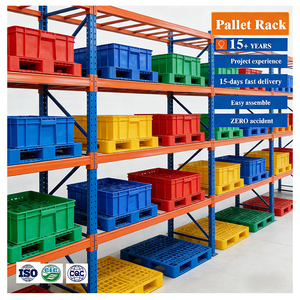
5-Layer 3000KG Triple Support Pallet Beam Rack
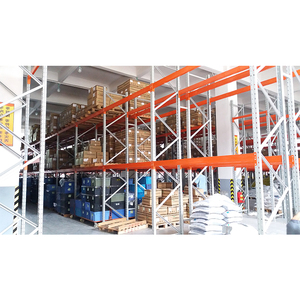
Heavy Duty Industrial Logistics Steel Pallet Rack
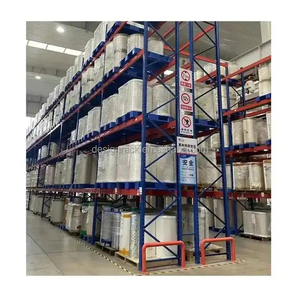
Industrial Heavy Duty Metal Stacking Pallet Shelf
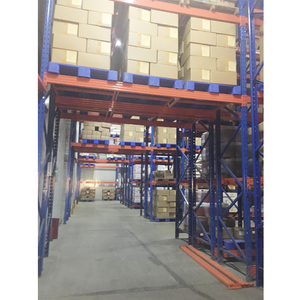
Factory Direct Adjustable Steel Beam Pallet Racks
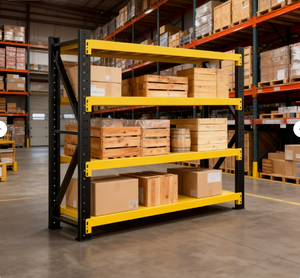
Adjustable Industrial Metal Storage & Display Racks
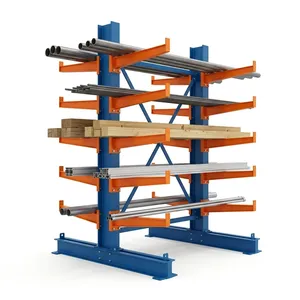
Heavy Industrial Cantilever Rack for Pipe & Lumber
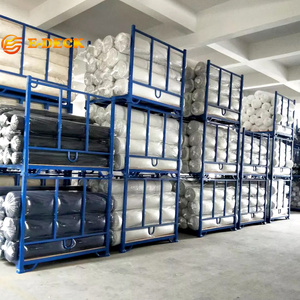
Stackable Steel Fabric Roll & Coil Pallet Racking
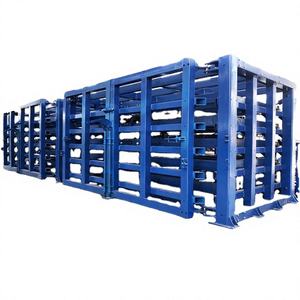
High-Density Electric Mobile Selective Pallet Racking
Brazil Logistics Transformation: Sourcing Heavy Duty Racks in 2026
Strategic analysis of industrial warehousing development across the Southeast, South, and Central-West economic axes, where demand for high-bay clear heights and automated pallet throughput is reshaping infrastructure.
The Brazilian intralogistics landscape is experiencing a structural paradigm shift. According to recent surveys by ABRALOG (Associação Brasileira de Logística), modern logistics condominiums (condomínios logísticos classe A+) across Greater São Paulo—specifically clustered around the Cajamar, Barueri, Louveira, and Guarulhos corridors—are reaching record occupancy rates surpassing 92%. Driven by explosive omnichannel retail demand from players like Mercado Livre, Amazon Brasil, and Magazine Luiza, warehouse operators are moving away from traditional block-stacking and archaic low-span storage to vertical high-bay installations that leverage building clear heights of 12 to 15 meters.
However, importing heavy-duty industrial pallet racking systems into Brazil involves navigating significant engineering challenges, intricate regulatory requirements, and rigorous maritime shipping standards. Unlike generic Asian suppliers who deliver standardized European (800 × 1200 mm) or American GMA (40 × 48 in) dimensions, an authoritative factory exporter must engineer structural systems strictly tailored to the Brazilian Standard Pallet format (PBR-1: 1000 mm × 1200 mm), while calculating load structural safety factors according to ABNT NBR 15524-1 and 15524-2.
In addition, Brazilian macro-logistics is contending with harsh environmental parameters. Coastal supply chain nodes operating around the Port of Santos (São Paulo), Port of Itajaí / Navegantes (Santa Catarina), and Port of Paranaguá (Paraná) suffer from continuous exposure to saline marine aerosols and relative humidity regularly exceeding 85%. Steel racking structures lacking comprehensive chemical pre-treatment and industrial powder coating rapidly suffer from micro-blistering, subsurface oxidation, and catastrophic structural degradation at upright-to-beam connection points.
Structural Compliance: ABNT NBR 15524 vs. International Norms
A rigorous comparative review of cold-formed structural steel profiles, safety factors, and seismic design rules for Brazilian industrial engineering tenders.
| Engineering Parameter | Brazilian Standard (ABNT NBR 15524) | European Norm (EN 15512) | American Standard (RMI ANSI MH16.1) | HEDA Shelves Factory Standard |
|---|---|---|---|---|
| Primary Steel Grade | SAE 1020 / ASTM A36 equivalent | S235JR / S355JR | ASTM A1011 / A653 | Q235B / Q355B High-Yield Cold Formed |
| Beam Deflection Limit | L / 200 maximum vertical deflection | L / 200 under design load | L / 180 of span length | L / 250 (Conservative 25% Safety Margin) |
| Upright Profile Geometry | Omega 8 to 12 cold-bent fold ribs | Omega multifold section | Open C-channel or teardrop | 90mm–120mm Omega 10-Fold Ribs |
| Pallet Format Accommodation | Strictly PBR-1 (1000 × 1200 mm) | EUR 1 (800 × 1200 mm) | GMA (40 × 48 in) | Dedicated PBR 2300mm / 3400mm Bay Spans |
| Corrosion Resistance Class | ABNT NBR 6323 / Coastal C3-C4 | EN ISO 12944-2 | ASTM B117 salt spray | 10-Step Phosphating + 75μm Electrostatic Powder |
When selecting a Chinese factory partner for Brazilian projects, the critical failure point in structural procurement is beam connector shearing and upright buckling under dynamic forklift impact. HEDA Shelves addresses this through certified structural analysis. Our cold-roll-formed upright sections feature our proprietary 10-fold Omega geometry, which significantly increases the radius of gyration ($r_x, r_y$) and enhances torsional-flexural buckling resistance under excessive dead loads.
Furthermore, our beam end connectors utilize high-precision 3-prong and 4-prong robotic welded claws that engage seamlessly into column teardrop/diamond slots, anchored with spring-loaded, zinc-plated safety pins rated to withstand upward accidental dislodgement forces exceeding 5,000 N, fully complying with both NR-11 (Transporte, Movimentação, Armazenagem e Manuseio de Materiais) and NR-12 safety requirements in Brazil.
Engineered Storage Across Brazil's Strategic Economic Zones
Tailored structural configurations engineered to overcome regional humidity, seismic soil conditions, and specific inventory characteristics across the country.
Greater SP & Campinas
Omnichannel & Fast FMCG: Selective pallet racking up to 14 meters high integrated with multi-tier carton flow pick modules. Optimizes high-throughput SKU rotation for the Cajamar e-commerce cluster.
South & Central-West Cold Chain
Agro-Industry & Protein Exporters: High-density Radio Shuttle and Drive-In systems for refrigerated warehouses in Paraná, Santa Catarina, and Mato Grosso, resisting sub-zero temperatures down to -30°C.
ABC Paulista & Curitiba
Automotive & Heavy Machinery: High-capacity structural beam racks and cantilever systems carrying heavy stamped automotive components, engine blocks, and coiled raw materials up to 4,500 kg per beam level.
Manaus Free Trade Zone (ZFM)
Electronics & Sub-Assembly: Electrostatic Discharge (ESD) protected racking and high-density mobile storage that optimizes restricted, high-cost warehousing along the Amazon industrial river network.
Guangzhou Heda Shelves: 25 Years of Factory-Direct Engineering Authority
Founded in 2001, Guangzhou Heda Shelves Co., Ltd. is a vertically integrated Chinese manufacturing powerhouse specializing in high-load heavy-duty warehouse storage solutions. Operating from our 30,000 square meter intelligent manufacturing base with over 300 experienced technicians, we control the entire lifecycle—from raw carbon steel coil slitting and automated cold profile bending to CNC robotic punching, welding, multi-stage chemical pretreatment, and worldwide containerized logistics.
10-Stage In-House Manufacturing for Marine-Export Quality
Every structural pallet rack exported to Brazil undergoes an uncompromising 10-step production workflow to guarantee structural integrity across 40-day transpacific container voyages.
1. Prime Steel Verification
Mill-certified high-tensile Q235B and Q355B cold-rolled structural steel coils checked for chemical composition and yield tensile strength.
2. Precision CNC Punching
High-speed hydraulic punching dies ensure consistent 50mm or 75mm pitch hole patterns with zero slot deformation or burrs.
3. Automated Roll-Forming
Progressive 16-stand roll-forming lines shape multi-angle Omega profiles with zero residual internal strain, preventing structural twisting.
4. Robotic CO2 Welding
Japanese OTC robotic arms weld beam connectors with deep penetration fillets, eliminating cold weld defects and brittle beam joints.
5. Pickling & Phosphating
Full-immersion chemical tanks remove all scale, oil, and rust, establishing an insoluble crystalline phosphate conversion layer.
6. Curing at 200°C
Electrostatic thermoset powder coat baked at 200°C for superior adhesion, tested to 500+ hours ASTM B117 salt-spray standards.
Navigating the Brazilian Import Flow: Siscomex, NCM & Ports
A step-by-step roadmap to streamline customs clearance, minimize import tariffs, and optimize drayage from Brazilian ocean container terminals.
RADAR & Proforma
Validation of buyer's RADAR license in Siscomex; drafting Brazilian-compliant Proforma Invoices showing detailed NCM classification (NCM 7308.90.10 - Steel Racking Systems).
CAD Approval & FEA
Engineering sign-off on 2D floorplans, 3D renders, and finite element calculations. Bay spans configured to Brazilian PBR-1 pallets (2300mm/3400mm) and sprinkler flue clearance.
Container Packing
Dunnage-free steel strap bundling with moisture-absorbing VCI barrier film in 40ft High Cube containers. Every package color-coded to match erection drawings.
Port Discharge & DI
Ocean passage from Nansha/Yantian to Santos (approx. 32-38 days). Release of Bill of Lading (B/L) and Packing List for instant registration of the Declaração de Importação (DI).
Experienced Brazilian supply chain managers understand that importing steel structures requires meticulous fiscal planning. The standard tariff classification for warehouse pallet racking falls under NCM 7308.90.10. Importers can frequently leverage Ex-Tarifário regimes where specialized automated picking or mobile components lack direct domestic Brazilian manufacturing equivalents, significantly reducing the Imposto de Importação (II) from standard rates down to 0% - 2%.
Additionally, selecting the correct discharge port makes a decisive difference in total landed cost. While the Port of Santos serves the primary industrial belt of São Paulo, routing shipments through the Port of Itajaí or Navegantes enables companies to utilize state tax benefits (such as Santa Catarina's TTD - Tratamento Tributário Diferenciado), dramatically mitigating the burden of ICMS on interstate transfers.
Frequently Asked Questions by Brazilian Procurement Teams
Concrete engineering, logistics, and regulatory answers addressing the core concerns of Brazilian warehouse directors, logistics consultants, and purchasing managers.
Are your pallet racking systems engineered specifically for the Brazilian PBR-1 pallet?
Yes, absolutely. Unlike suppliers who offer generic European (800 × 1200 mm) racks, HEDA Shelves specifically designs beam lengths, frame depths, and wire decking for the official Brazilian PBR-1 pallet (1000 mm depth × 1200 mm width). Our standard selective beam lengths are manufactured at 2,300 mm (for two PBR pallets per level) and 3,400 mm / 3,450 mm (for three PBR pallets per level).
Upright frame depths are systematically set to 1,000 mm or 1,100 mm, ensuring the required 50 mm pallet overhang front and rear as mandated by Brazilian safety standard ABNT NBR 15524 for secure forklift positioning and fire suppression water penetration.
Can your engineering drawings and calculations support Corpo de Bombeiros (AVCB) approval?
Yes. To obtain the Auto de Vistoria do Corpo de Bombeiros (AVCB) in São Paulo or equivalent state fire department approvals across Brazil, warehouse layout drawings must clearly define transverse and longitudinal flue spaces (typically minimum 75 mm to 150 mm), main egress corridors (minimum 2.5m to 3.0m depending on occupancy), and clear positioning of in-rack sprinkler lines.
HEDA Shelves supplies detailed 2D AutoCAD layout plans, aisle elevation drawings, and structural capacity tags that your local registered Brazilian engineer (CREA / ART) can readily incorporate into the formal fire safety filing.
How do HEDA Shelves racks withstand high humidity in coastal Brazilian ports like Santos and Paranaguá?
Our surface protection utilizes an advanced 10-stage automated pre-treatment and powder-coating process. Following laser cutting and punching, all components undergo continuous acid pickling to strip microscopic scale, followed by a dense zinc-phosphate conversion coating that chemically seals the steel surface.
We then electrostatically apply a 70 to 90 micron dry film thickness (DFT) of premium thermosetting polyester powder cured in high-temperature ovens at 200°C. For extreme open-air coastal yards or sub-zero blast freezers, we provide continuous hot-dip galvanized finishes meeting ISO 1461 and ABNT NBR 6323 standards for multi-decade rust immunity.
What documentation do you provide for Brazilian customs clearance under Siscomex?
We provide a complete, error-free shipping documentation package tailored to Brazilian customs (Receita Federal) requirements. This includes:
1. Original Commercial Invoice in English with exact NCM classifications (7308.90.10), manufacturer details, and signed declarations.
2. Detailed Packing List categorizing every bundle, net/gross weights, and volume.
3. Clean on-Board Ocean Bill of Lading (B/L) issued strictly matching commercial parties.
4. Mill Test Certificates (MTC) verifying raw material mechanical and chemical properties.
5. CE, ISO 9001:2015, and RoHS quality compliance certificates.
What is your production lead time and typical ocean transit time to Santos or Itajaí?
Standard factory production lead time for a 5 to 10 container project (approximately 250 to 500 tons) is 20 to 25 working days from drawing confirmation and deposit receipt. Ocean container transit from our local ports (Guangzhou / Nansha / Shenzhen) to the Port of Santos or Port of Itajaí/Navegantes typically takes 32 to 38 calendar days on direct liner services.
Do you provide installation supervision or assembly guidance in Brazil?
Every export order is accompanied by an exhaustive installation manual, 3D structural exploded views, and color-coded package labels corresponding exactly to the erection blueprint. Our structural engineers provide comprehensive remote video technical support for your chosen Brazilian assembly team.
For large-scale projects, including multi-tier mezzanine floors or automated radio shuttle warehouses, HEDA Shelves can deploy experienced English/Spanish-speaking site supervisors directly to your facility in Brazil to oversee anchoring, torque tightening, and laser alignment testing.
How does HEDA Shelves prevent cargo damage during long-distance transpacific ocean shipping?
We enforce rigorous container stuffing engineering. Upright frames are nested in heavy-duty bundles strapped with high-tensile steel banding and protected by heavy-wall corner edge boards. Beams are palletized in matched pairs with protective foam cushioning between layers.
All packaging materials are completely non-timber or compliant with ISPM-15, eliminating risk of MAPA (Ministério da Agricultura e Pecuária) phytosanitary detention at Brazilian customs terminals.
Can you manufacture custom upright and beam colors to match corporate branding?
Yes. We offer full OEM and ODM custom color configuration using the standard international RAL color matching system. The classic combination of RAL 5015 (Sky Blue) for upright columns and RAL 2004 (Pure Orange) for load-bearing beams is available at zero extra cost, as are client-specific corporate corporate hues (such as yellow, dark slate, or green).
Ready to Engineer Your Brazilian Warehouse Storage System?
Submit your architectural CAD drawing, building clear height, and pallet load specifications. Our engineering department will deliver a compliant 2D CAD layout, 3D visualization, and comprehensive export cost breakdown within 24 hours.