Industrial Storage Systems Engineered for Austria's Logistics Hubs
Precision cold-rolled profiles, seismic-rated upright frames, and space-multiplying mezzanine systems built with premium high-yield steel coils for Austrian distribution networks across Vienna, Upper Austria, Styria, and Tyrol.
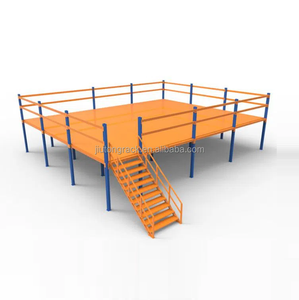
Heavy-Duty Steel Structure Mezzanine Floor Platform
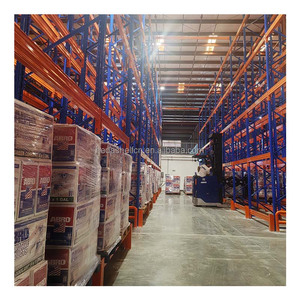
Heavy Duty Industrial Warehouse Pallet Racking System
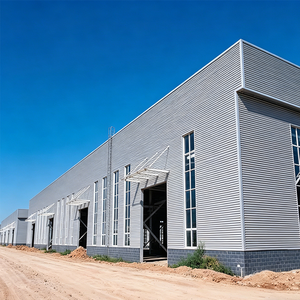
High Bay Racking Depot for Automated Sorting Centers
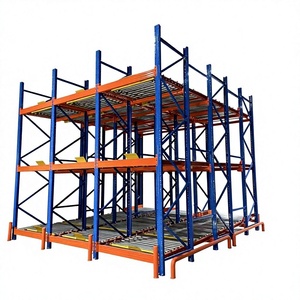
FIFO Gravity Roller Pallet Flow Racking System
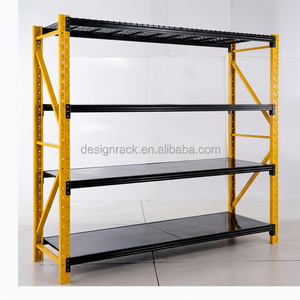
High-Density Powered Mobile Base Storage Racking
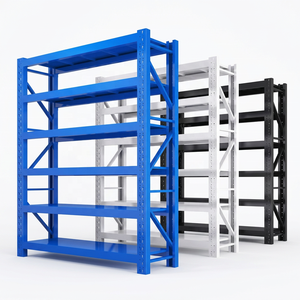
Heavy Duty Wire Mesh Shelving & Drop-in Decks
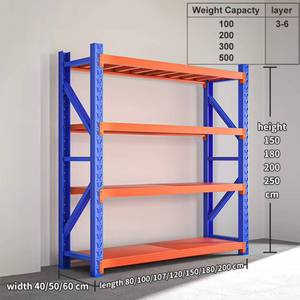
Boltless Adjustable Industrial Steel Shelving System
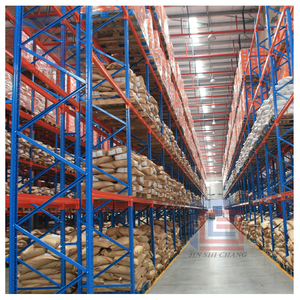
Selective Euro-Pallet Adjustable Storage Racks (APR)
Optimizing Warehouse Pallet Racking in the Austrian DACH Logistics Corridor
Austria’s geographic position as the premier gateway between Western industrial economies and emerging Central-Eastern European (CEE) markets mandates exacting intralogistics performance, absolute compliance with European safety standards, and maximized cubic space utilization.
Operating modern distribution centers in Austrian commercial nodes—from the Logistik Center Austria Süd (LCAS) in Carinthia and the Port of Enns tri-modal corridor to the critical Vienna-Schwechat logistics artery—presents unique structural and financial imperatives. With prime industrial land prices escalating and regional zoning ordinances strictly regulating building footprint expansion, warehouse executives can no longer rely on conventional horizontal expansion. The imperative is vertical cubic density, seismic and dynamic load compliance according to EN 15512, and flawless compatibility with standard European load carriers (EPAL 1, EPAL 2, and industrial wire mesh containers).
As a verified tier-one manufacturer holding factory-direct certifications including CE (No. 2435-CPR-8605159) and ISO 9001:2015 (No. 18624Q00169R0M), our engineering division supports Austrian facility planners, 3PL providers, and general procurement teams. We deliver end-to-end engineered racking solutions—from preliminary static calculations in accordance with Eurocode 3 (EN 1993-1-3) to containerized sea-and-rail delivery via the Port of Koper directly into Austrian rail terminals and distribution parks.
Targeted Racking Architectures Across Austria's Key Economic Sectors
Vienna & Lower Austria: High-Velocity E-Commerce
Multi-tier rack-supported mezzanine floors and Very Narrow Aisle (VNA) racking systems designed for rapid single-item picking and multi-tier carton sorting, serving fast-growing urban B2C and grocery supply chains along the Danube axis.
Upper Austria & Styria: Heavy Industrial & Automotive
Custom-engineered heavy-duty pallet racking and cantilever systems built for steel coils, automotive powertrain components, and machinery assemblies across the Linz industrial heartland and Graz automotive cluster.
Tyrol, Salzburg & Carinthia: Alpine Cold Chain Storage
Ultra-dense semi-automated radio shuttle and gravity flow FIFO pallet racking systems operating at sub-zero temperatures down to -30°C, drastically minimizing energy expenditure per stored pallet for dairy, meat, and frozen food distributors.
Racking Architecture Comparison for Austrian Facilities
Selecting the optimal pallet storage configuration based on warehouse throughput requirements, SKU concentration, space utilization, and investment efficiency.
| Storage System Type | Floor Space Utilization | Selectivity & Access | Rotation Principle | EPAL 1 Load Capacity | Austrian Operational Suitability |
|---|---|---|---|---|---|
| Standard Selective (APR) | 40% - 45% (Aisle dependent) | 100% Direct Selectivity | FIFO / LIFO Flexible | Up to 1,500 kg / pallet | Ideal for diverse SKU distribution centers & general 3PL hubs |
| Very Narrow Aisle (VNA) | 55% - 65% (Aisle ~1.7m) | 100% Direct Selectivity | FIFO / LIFO Flexible | Up to 1,200 kg / pallet | High clear-height facilities in Vienna logistics parks |
| Semi-Automated Radio Shuttle | 75% - 85% (Continuous lanes) | Channel Selectivity | Programmable FIFO / LIFO | Up to 1,500 kg / pallet | Deep-freeze storage & high-volume food and beverage manufacturing |
| Gravity Pallet Flow | 70% - 80% (Dynamic rollers) | Lane Selectivity | Strict Mechanical FIFO | Up to 1,200 kg / pallet | Perishable goods, dairy distributors, pharmaceuticals, date-critical stock |
| Heavy-Duty Cantilever | Variable / Open Span | Direct Column Selectivity | Manual Batch Handling | Up to 3,000 kg / arm | Timber processing, aluminum profiles, steel pipes, building materials |
| Rack-Supported Mezzanine | 180% - 280% (Multi-level) | Integrated Pick Selectivity | Multi-Tier Flexible | 300 - 1,000 kg / m² | Automotive spare parts, e-commerce fulfilment, manual pick modules |
Austrian Warehouse Trends & Safety Mandates (ÖNORM / EN Standards)
1. Structural Safety & Seismic Engineering (ÖNORM EN 15512)
Austrian commercial construction authorities enforce strict seismic analysis (Eurocode 8 / ÖNORM EN 1998) even in moderate seismic zones such as the Mur-Mürz Valley, the Vienna Basin, and the Inn Valley. Upright frames and column-to-beam connectors must be structurally verified with specific finite element analysis, including ultimate limit state (ULS) and serviceability limit state (SLS) testing under continuous live loads.
2. Mandatory Racking Inspections (ÖNORM EN 15635)
Under the Austrian Employee Protection Act (ASchG) and Austrian General Accident Insurance Institution (AUVA) guidelines, all industrial pallet racks require recurring annual inspections by qualified racking experts. Clear load capacity signage, upright impact column guards (compliant with EN 15512 section 8.4), and safety beam lock clips are strictly inspected on-site.
3. Fire Protection & Sprinkler Interfacing (TRVB 128 S)
Fire regulations in Austrian storage facilities are governed by the Technical Guidelines for Preventive Fire Protection (TRVB 128 S). Large-scale pallet racks over 7.5 meters in height or storing combustible goods require exact open flue space calculation (transverse and longitudinal flues of 100mm minimum) and drop-in wire mesh decking with open areas exceeding 70% to facilitate in-rack sprinkler discharge.
4. Brownfield Densification Over Greenfield Expansion
Austrian municipal spatial planning policies strongly disincentivize soil sealing (Bodenversiegelung). Consequently, acquiring new industrial land in Salzburg or Innsbruck is cost-prohibitive. Warehouses are maximizing existing interior cubic dimensions via high-bay installations, narrow aisle retrofits, and high-load structural steel mezzanines that expand floor space without enlarging footprint.
5. Decarbonization & Green Cold Chain Logistics
With Austria's national pledge to achieve climate neutrality, refrigerated and frozen warehouse operators are redesigning thermal storage layouts. High-density shuttle systems reduce the air volume that requires active refrigeration by up to 40% compared to conventional wide-aisle layouts, significantly curbing electricity consumption.
6. Hybrid Multi-Shuttle & AGV Integration
High labor costs in Central Europe are accelerating the transition from standard forklift fleets to automated guided vehicles (AGVs) and autonomous mobile robots (AMRs). Racking systems require tightened manufacturing tolerances in beam straightness (L/200 deflection limit according to EN 15620) and optical guide wire channel integration.
Our 10-Stage Precision Production Line Serving Austrian Importers
Complete traceability from hot-rolled steel raw coils to automated cold-roll forming, robotic laser welding, non-toxic chemical treatment, and automated powder coating.
Certified Raw Coils
Premium Q235B and Q355B (S355JR equivalent) structural steels verified with mill test certificates for yield and tensile strength.
CNC Precision Slitting
Automated uncoiling and slitting ensure exact cross-sectional dimensional tolerances across all column and beam blanks.
Automated Pitch Punching
Multi-station mechanical presses punch teardrop and butterfly slots on precise 50mm and 75mm pitches with zero deviation.
Continuous Roll Forming
Multi-roller forming lines shape specialized omega and box profiles, ensuring structural rigidity and residual stress reduction.
Robotic Connector Welding
Automated carbon dioxide shielded robotic welding joins beam end connectors with deep penetration and zero weld spatter.
Shot Blasting & Polishing
Mechanical surface abrading strips away mill scale, rust, and surface grease, preparing a high-adhesion substrate.
Pickling & Phosphating
Full 4-stage chemical pre-treatment forms a dense zinc-phosphate barrier for superior corrosion prevention.
Electrostatic Coating
Automated GEMA electrostatic powder booths apply thermosetting epoxy-polyester coatings baked at 180°C - 200°C.
Deflection & Load QC
Sample assemblies undergo rigorous destructive and static deflection testing under 1.5x nominal design loads.
Containerized Export Packing
Custom steel dunnage, protective corrugated interleaves, and strapping configured specifically for maritime-to-rail transit.
Frequently Asked Questions by Austrian Logistics & Facility Managers
Key information regarding European compliance, customs tariffs, shipping logistics to Austria, and on-site assembly verification.
Are your pallet racks compliant with Austrian and European Norms?
Yes. All of our industrial warehouse racking systems are manufactured strictly in alignment with EN 15512 (Racking structural design principles), EN 15620 (Tolerances, deformations and clearances), and EN 15635 (Steel static storage system maintenance). Our factory holds verified CE Certification (No. 2435-CPR-8605159) and ISO 9001:2015 accreditation, allowing Austrian engineering consultants and civil authorities to review and approve static calculation submittals without friction.
How do you ship containerized racking to landlocked Austria?
Austria benefits from highly optimized intermodal transport links. Sea-freight containers departing from our export ports (Nansha/Shenzhen/Guangzhou) are shipped directly via maritime trade lanes to the Port of Koper (Slovenia) or the northern ports of Hamburg/Rotterdam. From Koper, regular block trains transport containers to Austrian dry ports and intermodal hubs in Vienna, Enns, Linz, and Graz within 24 to 48 hours of vessel discharge, offering significantly lower freight transit times than traditional inland trucking.
Can your beams support standard EPAL 1 (800x1200 mm) Euro pallets?
Yes. Our beams are engineered specifically for standard European pallet handling. For standard 3-pallet wide bays holding EPAL 1 pallets (800 x 1200 mm stored depth-wise), we supply 2,700 mm standard box beams with structural beam safety lock pins. For 4-pallet bays or heavy industrial EPAL 2 pallets (1,000 x 1,200 mm), beam spans of 3,600 mm or custom configurations are supplied, complete with integrated pallet support cross-bars or galvanized drop-in wire decking.
What static documentation is provided for local Austrian building approval?
For every customized warehouse project, our engineering department delivers a comprehensive documentation package. This includes 2D CAD architectural placement drawings, 3D structural spatial models, steel grade test reports, connection moment-rotation stiffness curves, and structural static calculation sheets according to Eurocode 3 (EN 1993-1-3 / EN 15512) for verification by local Austrian structural engineers (Ziviltechniker).
How do you manage import customs clearance into Austria?
We work flexibly under Incoterms including FOB, CIF, and DDP (Delivered Duty Paid). Under CIF Koper or CIF Hamburg, your local customs agent executes the clearance under the EU common transit procedure (T1) into Austria. When requested, our international logistics desk handles DDP delivery directly to your Austrian warehouse gate, including all customs documentation, import duties, and land freight coordination.
Do you provide on-site installation support in Austria?
Each shipment is packed with detailed assembly plans, exploded-view component maps, and color-coded structural part labels corresponding directly to the CAD layout. While local Austrian clients frequently utilize local certified assembly crews for physical erection, our engineering team provides full remote technical oversight via video conferencing, and can deploy experienced bilingual site supervisors to oversee large-scale mezzanine and high-bay racking projects.
What are the factory lead times for customized warehouse installations?
Standard selective pallet racking components and standard box beams generally require 15 to 25 production days from final CAD layout sign-off. Larger custom orders involving multi-tier structural mezzanines, radio shuttle systems, or specialized powder coat color schemes (RAL matching corporate identity) ship within 30 to 35 production days. Maritime transit to the Port of Koper typically spans 24 to 28 days.
What warranty and structural guarantees are provided?
We provide a comprehensive 5-year to 10-year structural warranty on upright frames, longitudinal beams, baseplates, and structural mezzanine steel elements against manufacturing defects and material failure, provided the system is operated within rated load parameters and inspected periodically in compliance with EN 15635 standards.