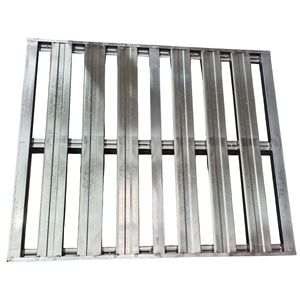
Featured Industrial Warehouse Storage Systems
Engineered from premium Q235B cold-rolled steel, designed to withstand rigorous daily forklift handling and certified for high-clearance distribution facilities across Greater Los Angeles.
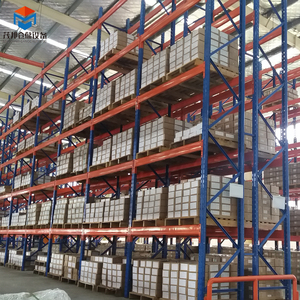
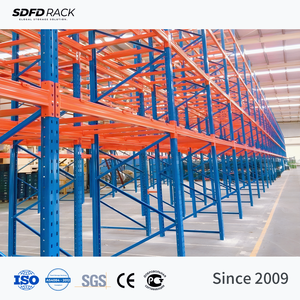
Navigating Industrial Racking Economics Across Southern California
The Greater Los Angeles warehousing sector—stretching from the South Bay drayage corridors and the City of Industry to Ontario, Jurupa Valley, and the larger Inland Empire West submarket—operates under some of the most capital-intensive industrial dynamics in North America. With commercial industrial lease rates commanding historic premiums and industrial land at an absolute minimum, logistics operators, e-commerce 3PLs, and cross-docking distribution hubs cannot afford unoptimized vertical cubic footage.
However, procuring and implementing warehouse shelving in Los Angeles entails technical constraints far more complex than standard commercial shelving. Southern California rests in one of the most volatile earthquake fault complexes globally, meaning structural racking cannot be treated simply as freestanding equipment. In Los Angeles, warehouse racking constitutes an engineered structural system strictly regulated by the Los Angeles Department of Building and Safety (LADBS), the 2022 California Building Code (CBC Title 24), and ANSI/RMI MH16.1 specifications.
30,000 m²
In-House Manufacturing Area
30,000 t
Monthly Fabrication Output
10,000+
Global Industrial Deployments
120+
Countries & Ports Served
Critical Structural Realities for Los Angeles Warehouse Facilities
Operating across the Port of Los Angeles and Port of Long Beach freight nodes means dealing with rapid multi-tiered transloading. Racking systems deployed here require calibrated baseplates, engineered anchor embedment depths, and reinforced column cross-sections designed to dissipate seismic energy without catastrophic ductile failure. When selecting shelving solutions, facility directors must calculate not only static shelf weight capacity, but also dynamic horizontal shear values under high Seismic Design Category (SDC) D, E, and F designations.
Localized Application Scenarios in Southern California
How tailored racking and shelving configurations solve specific physical throughput and spatial bottlenecks in key regional submarkets.
High-Velocity Port Drayage & Transload Hubs
Primary Hubs: South Bay, Wilmington, Carson, Rancho Dominguez.
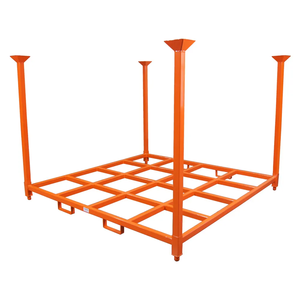
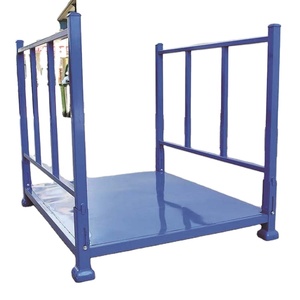
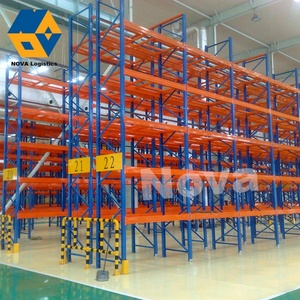
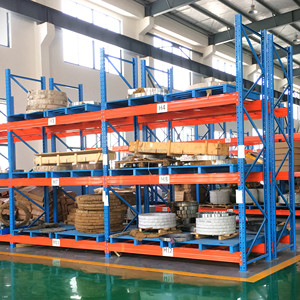
High-throughput selective pallet racking and stackable heavy-duty steel pallets accommodate 40-foot intermodal shipping container unloads. Designed for quick inventory turnover, standard GMA 48x40 pallets, and instantaneous forklift accessibility.
Omnichannel & E-Commerce Fulfillment
Primary Hubs: City of Industry, Santa Fe Springs, Chino, Ontario.
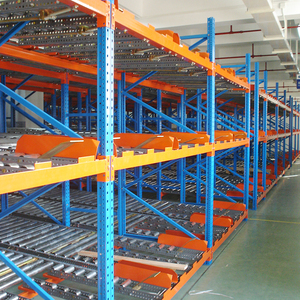
Carton flow racking combined with multi-tier pick modules and rack-supported mezzanines. Maximizes cubic picking density for rapid B2C piece-picking, high SKU counts, and integrated gravity conveyor belt interfaces.
Apparel, Fashion & Lifestyle Import Hubs
Primary Hubs: Downtown LA Fashion District, Vernon, Commerce.
Longspan industrial shelving and inverted post stack racking. Modular storage allows rapid seasonal re-profiling of boxed inventory, hanging garments, and bulk textiles without requiring permanent building alterations.
Cold Chain, Perishables & Food Distribution
Primary Hubs: Vernon Cold Storage Corridor, Long Beach.
High-density drive-in and gravity pallet flow systems utilizing rust-proof galvanized components. Engineered to optimize expensive sub-zero cubic refrigeration volume and uphold rigorous FIFO stock rotation protocols.
Aerospace, Defense & Precision Heavy Hardware
Primary Hubs: El Segundo, Hawthorne, Torrance, San Fernando Valley.
Extra heavy-duty adjustable pallet storage racks with 2,000kg+ beam capacities, wire mesh safety decks, and structural cantilever racks designed for raw billet alloys, extrusions, and aircraft tooling.
Automotive Spares & Building Supply Logistics
Primary Hubs: Santa Fe Springs, Fontana, Riverside.
High-capacity cantilever and specialized pallet racks engineered for oversized lumber, PVC piping, sheetrock, and structural automotive body panels with integrated safety bollards and impact guards.
Key Trends Reshaping Southern California Warehousing
1. The Flight to Clear Height: With Inland Empire class-A industrial developments routinely offering 36-foot to 40-foot clear heights, operators are moving away from traditional low-profile static shelving. The primary objective is vertical density through tall selective uprights paired with Very Narrow Aisle (VNA) wire-guided reach trucks, effectively doubling pallet positions without expanding building footprints.
2. Stringent Seismic Upright Upgrades: Following updated United States Geological Survey (USGS) fault maps across the Newport-Inglewood and San Andreas systems, city plan-checkers are rejecting legacy light-gauge warehouse racking. Southern California buyers now require full structural calculations including baseplate thickness calculations (frequently exceeding 3/8-inch thickness), oversized anchor bolting, and third-party laboratory tensile certifications.
3. Integration with Semi-Automation: In response to regional labor costs and tight fulfillment windows, facilities are progressively retrofitting manual racking bays with dynamic carton flow lanes and radio-shuttle high-density storage channels, reducing picker travel time across 500,000-square-foot facilities by up to 45%.
Factory-Direct Engineering Excellence
Direct Manufacturer Advantages for LA Importers & Contractors
Founded in 2001, our 30,000 m² heavy-manufacturing complex produces over 30,000 metric tons of precision racking profiles every month. By operating our own automated rolling lines, automated robotic punching, and closed-loop electrostatic powder coating facilities, we eliminate third-party supply chain margins, delivering commercial shelving at factory cost directly to Long Beach and Los Angeles harbor gates.
- Certified Structural Integrity: Fully certified under ISO 9001:2015 quality management and CE standards.
- Engineered Seismic Resilience: Customized upright geometries and high-tensile cold-rolled steel meeting stringent US structural criteria.
- Free 2D CAD & 3D Conceptual Layouts: Our internal engineering department provides precise warehouse floor configurations within 48 hours.
- Complete Surface Treatment: Pickling, phosphating, and electrostatic polymer coating providing lasting resistance against coastal humidity and heavy wear.
Traceable 10-Step Production Standard
Every production cycle adheres to strict factory process governance:
01. Raw Coil Metallurgy QC
02. Precision CNC Slitting
03. Auto Upright Punching
04. Cold Roll Forming
05. Robotic Connector Weld
06. Weld Seam Ultrasonic Insp.
07. Acid Pickling & Phosphate
08. Electrostatic Powder Coat
09. Load Deflection Testing
10. Export Palletized Bundling
Frequently Asked Questions for Los Angeles Buyers
Essential technical, regulatory, and permitting information for facility managers, logistics executives, and procurement teams in Southern California.
Do warehouse shelving systems in Los Angeles require seismic building permits?
Yes. Under the California Building Code (CBC Title 24) and municipal regulations such as LADBS (City of Los Angeles) and local county fire/building codes, any industrial storage rack system where the top storage level exceeds 8 feet (or 5.9 feet in higher seismic zones) requires a dedicated building permit. Submissions must include structural engineering calculations stamped by a California-licensed Professional Engineer (PE), showing compliance with ASCE 7 seismic anchor embedment and upright force dissipation criteria.
What is high-pile combustible storage permitting, and does my racking configuration affect it?
In California, high-pile storage refers to the storage of combustible materials exceeding 12 feet in height (or 6 feet for high-hazard items such as group A plastics and aerosols). Your shelving layout directly dictates fire sprinkler system requirements. Local fire departments (such as LAFD or LACoFD) inspect aisle widths, transverse and longitudinal flue spaces (typically 6 inches clear between back-to-back racks), and maximum rack depths to determine whether Early Suppression Fast Response (ESFR) ceiling sprinklers or in-rack fire suppression sprinklers are legally mandatory.
Can you supply stamped engineering calculations and CAD drawings for City Plan Check?
Yes. We provide complete 2D layout schematics, beam load capacity ratings, upright steel metallurgical reports, and anchor shear values. Our technical team works collaboratively with California structural engineering firms and project expediters to provide the structural documentation required to facilitate smooth municipal review and plan-check approvals.
How does ocean freight shipping directly to the Port of Los Angeles / Long Beach work?
Because of our high production scale, orders ship via factory-direct container loads (FCL) directly from Guangzhou to the Port of Los Angeles (POLA) or Port of Long Beach (POLB). Racking components are bundle-packed with steel straps, corner guards, and labeled tags that correlate directly with project erection drawings. Standard direct ocean transit to Southern California ports averages 14 to 18 days on the water.
What warehouse slab specifications are required before anchoring industrial racks?
Industrial racking anchors typically require a minimum reinforced concrete slab thickness of 6 inches, with compressive strengths of at least 3,000 to 4,000 PSI. In higher seismic categories in Greater Los Angeles, anchor bolting depths (often utilizing heavy Hilti or Simpson Strong-Tie wedge anchors) must avoid internal rebar and sub-slab post-tension tendons. A slab core test or radar scan is recommended prior to final installation.
What is the difference between roll-formed steel and structural steel racking for LA distribution centers?
Roll-formed racking uses cold-rolled sheet steel formed into C-channels with teardrop or slotted holes. It is highly versatile, cost-effective, and easy to adjust, making it the standard for 90% of retail, grocery, and 3PL distribution centers. Structural racking uses hot-rolled structural steel channels and bolted beams; it is exceptionally durable, resistant to forklift impact, and commonly deployed in heavy manufacturing, outdoor yards, and high-abuse freezer environments.
Design Your Los Angeles Warehouse Racking System
Submit your warehouse CAD floor plan, ceiling clear heights, and pallet specifications. Our engineering team will produce an optimized 2D CAD layout, 3D structural rendering, and factory-direct project quotation within 24–48 hours.