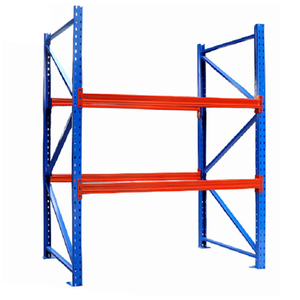
Industrial Shelving & Heavy-Duty Racking Portfolio for Mexican Enterprises
Standardized, seismic-certified configurations engineered to handle the inventory velocity of automotive corridors, e-commerce fulfilment, and heavy industrial yards across Mexico.
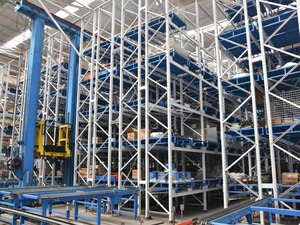
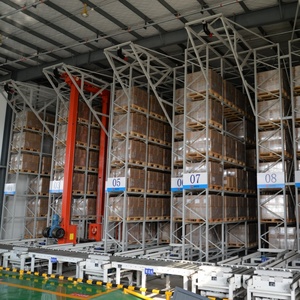
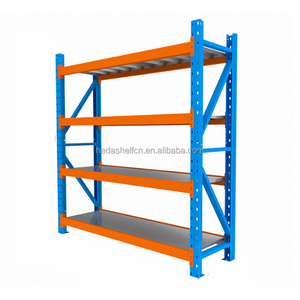
Mexico’s Nearshoring Dynamics: Strategic Shelving Engineering Requirements
The acceleration of nearshoring in Mexico has triggered unprecedented demand for Class-A industrial real estate across northern corridors including Monterrey, Saltillo, Reynosa, and Tijuana, as well as the Bajío central manufacturing zone. For international procurement managers, plant directors, and supply chain operators, sourcing warehouse shelving units supplier & suppliers for the Mexico market is no longer a transactional purchase; it is a long-term capital engineering decision governed by stringent seismic standards, floor-load mechanics, and customs speed.
1. Seismic Load Engineering under CFE & RCDF Standards
Much of Mexico—specifically the Valley of Mexico (CDMX, Estado de México) and the Pacific tectonic fault zones (Guerrero, Oaxaca, Michoacán, and parts of Jalisco)—falls under Zone C and Zone D seismic classifications according to the Manual de Diseño de Obras Civiles de la Comisión Federal de Electricidad (CFE) and the Reglamento de Construcciones para el Distrito Federal (RCDF). Storage racks are not static structures; when loaded with thousands of metric tons of dynamic payload, they behave as flexible multi-degree-of-freedom structural frames.
- Ductility Design & Base Plate Anchoring: Standard commercial upright frames will shear under longitudinal and transverse seismic accelerations. Our factory configures cold-rolled Q235B profiles with cold-punched omega upright geometries, heavy-gauge baseplate distribution shoes, and chemical or mechanical wedge anchoring engineered to resist base overturn forces up to 0.4g horizontal seismic coefficients.
- Dynamic Bracing Topologies: Diagonal and horizontal bracing panels utilize heavy-gauge continuous tube sections welded to structural standards, avoiding the premature buckling common in thin roll-formed open braces.
2. Localized Regulatory Framework: NOM-006-STPS Compliance
Mexican labor inspectors strictly enforce NOM-006-STPS-2014 (Storage and Handling of Materials - Safety and Health Conditions at Work). This official standard mandates that industrial racking must:
- Exhibit certified safe working load (SWL) capacity plates legible on every aisle extremity.
- Incorporate positive beam-to-column safety locking pins capable of resisting an upward mechanical extraction force of at least 5,000 N without failure.
- Feature structural column protectors (protectores de puntal) anchored directly to the slab to absorb unavoidable counterbalanced forklift and reach truck collisions.
3. Maritime Routing to Mexican Ports of Entry
To eliminate transshipment bottlenecks and protect supply continuity, our logistics team ships directly from our coastal factory via specialized breakbulk and container fleets arriving at primary Mexican commercial terminals:
- Manzanillo, Colima: Serving the Bajío corridor (Querétaro, Guanajuato, San Luis Potosí) and Guadalajara metropolitan trade.
- Lázaro Cárdenas, Michoacán: Optimal multi-modal rail dispatch via Kansas City Southern de México (KCSM) directly into CDMX dry docks.
- Veracruz & Altamira: Fast Gulf connections for eastern industrial clusters and petrochemical manufacturing plants in Veracruz and Tamaulipas.
Localized Application Scenarios Across Mexican Hubs
Tailoring structural capacity, picking velocity, and clear-height efficiency to the regional economic realities of Mexico.
Tier-1 Automotive & Maquiladoras
Regions: Monterrey, Saltillo, Silao, Toluca, Hermosillo
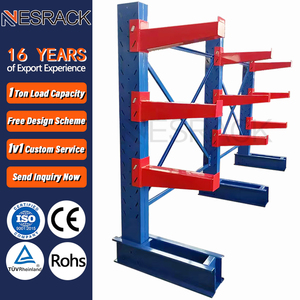
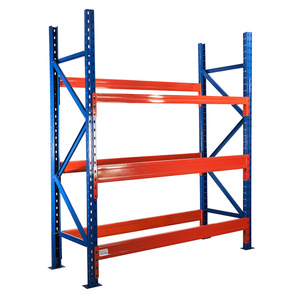
Automotive assembly demands specialized high-density cantilever units for body stamping coils, heavy structural pallet racks for engine cast blocks, and dynamic carton flow tracks engineered for Just-In-Time (JIT) and Kanban feeder assembly lines.
E-Commerce & CTT Omnichannel Hubs
Regions: Cuautitlán Izcalli, Tepoztlán, Tepotzotlán (CTT Zone)
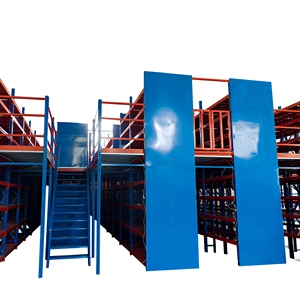
With the explosion of Mercado Libre, Amazon México, and retail logistics across Mexico State, our multi-tier rack-supported mezzanines integrate longspan shelving, chute slides, and picking walkways that increase cubic inventory capacity by up to 300% without expanding ground footprints.
Cold-Chain Agro-Export Logistics
Regions: Michoacán, Sinaloa, Sonora, Guanajuato
Storing perishables such as avocados, berries, and meats requires specialized radio shuttle racking and gravity pallet flow systems that guarantee First-In, First-Out (FIFO) turnover while maximizing thermal efficiency within high-cost refrigerated chambers.
Why Direct-from-Factory Engineering Gives Mexican Buyers a Decisive Advantage
Guangzhou HEDA Shelves Co., Ltd.: Complete in-house structural verification, ISO-governed production, and bespoke engineering since 2001.
100% In-House Roll Forming
No outsourcing. From raw Q235B cold-rolled steel coils to automated punching, cold-roll profile shaping, and robotic welding, we maintain strict dimensional tolerances.
Pickling & Phosphating Line
Surface degradation is eliminated via our 10-step automatic chemical pretreatment line, ensuring powder coat adherence resistant to coastal humidity in Manzanillo and Veracruz.
Bespoke 3D Layout & Calculation
Our engineering team delivers full 2D CAD warehouse layouts and 3D architectural renders within 48 hours, detailing aisle clearances, truck turning radiuses, and structural load distributions.
Traceable International Accreditations
Every batch conforms to rigorous standards: CE Certification (No. 2435-CPR-8605159), ISO 9001:2015 Quality Management, and full compliance with RoHS directives.
10-Stage High-Precision Manufacturing Cycle
To eliminate field assembly problems in Mexico, every rack component undergoes a traceable, standardized fabrication procedure:
Step 1: Raw Coil Tensile Inspection
Step 2: Precision CNC Laser Slitting
Step 3: Continuous Automated Upright Punching
Step 4: Continuous Roll Cold-Forming
Step 5: Profile Straightness Calibration
Step 6: Robotic Beam-Connector Welding
Step 7: Shot Blasting & Pickling Pretreatment
Step 8: Phosphating Adhesion Treatment
Step 9: Electrostatic Powder Coating & Curing
Step 10: Bundle Packaging with Steel Strapping
Every export container bound for Mexico includes numbered component packages linked to comprehensive bilingual installation drawings, assembly checklists, and hardware packs.
Frequently Asked Questions (FAQ) for Mexican Procurement Teams
Addressing the practical, financial, legal, and operational questions facing Mexican purchasing managers.
What import tariffs, duties, and IMMEX / Regla 8va provisions apply to shelving from China into Mexico?
Industrial racking and shelving components generally classify under HS Code 9403.20 (Metal furniture and parts thereof) or 7308.90 (Structures and parts of structures of iron or steel). While standard imports incur import duties (General Import Duty - IGI) plus 16% Mexican Value Added Tax (IVA), foreign-invested companies operating under an active IMMEX (Maquiladora) program can import storage systems under temporary importation regimens, deferring or exempting IVA and general tariffs through certified VAT/IEPS certifications. Additionally, our documentation supports Regla Octava (Rule 8) applications for large industrial capital installations where equipment is not domestically available.
Can your engineering layouts be stamped by a Mexican Perito Corresponsable en Seguridad Estructural?
Yes. Our structural calculations provide full engineering parameters—including steel grade certifications (mill test certificates for Q235B cold-rolled steel), section modulus, moment of inertia for beam and upright profiles, and dynamic load stress diagrams. This comprehensive packet provides local Mexican structural engineers (Peritos Corresponsables en Seguridad Estructural) and Civil Protection authorities (Protección Civil) with the required technical validation for structural permits and insurance approvals.
What are the typical sea freight transit times to Manzanillo, Lázaro Cárdenas, and Veracruz?
Direct maritime transit from southern China ports (Guangzhou / Nansha / Shenzhen) to Mexico's Pacific ports (Manzanillo and Lázaro Cárdenas) typically ranges from 18 to 25 days depending on the shipping line (e.g., Cosco, Maersk, MSC, Evergreen). Freight routed to Gulf ports (Veracruz or Altamira) transits via the Panama Canal, averaging 28 to 35 days. We arrange container loading to optimize cube utilization, ensuring maximum tonnage per 40ft High Cube container while preventing structural profile deformation during ocean transit.
How does HEDA handle custom seismic and heavy-duty load engineering requirements?
We configure frame depths, steel gauges (from 1.5mm up to 2.5mm and 3.0mm structural cold-formed steel), and footing plates specifically for your warehouse location's seismic zone. For Mexico City or Guadalajara, our engineers integrate cross-braced frame towers, oversized floor shims, chemical resin anchoring studs, and heavy-duty seismic baseplates to ensure the racking frame complies with local lateral deflection drift limits.
Do you provide on-site assembly supervision and installation services across Mexico?
Yes. We provide two operational models for Mexican deployments: First, we supply complete bilingual assembly manuals, exploded CAD diagrams, part-numbered bundles, and 24/7 video supervision for your local assembly crew. Second, for complex automated ASRS projects or massive multi-tier mezzanine platforms, we can dispatch senior factory installation engineers directly to your job site in Monterrey, Querétaro, Tijuana, or elsewhere in Mexico to manage alignment, laser verticality leveling, and torque verification.
Scale Your Logistics Real Estate in Mexico with Engineered Reliability
Whether you are developing a 50,000 m² distribution center in Nuevo León or modernizing an automotive distribution warehouse in Guanajuato, our engineering team is ready to deliver customized CAD plans, seismic assessments, and factory-direct proposals.