Featured Industrial Pallet Racking Systems
Robust, precision-engineered warehouse storage frameworks certified for international heavy-duty distribution hubs and automated logistics parks.
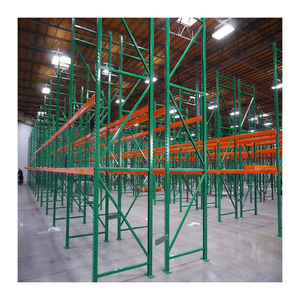
Mracking Custom Heavy Duty Teardrop Pallet Racking
View Specifications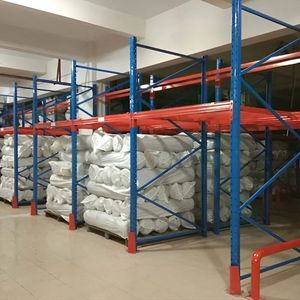
Adjustable Industrial Steel Warehouse Pallet Racking System
View Specifications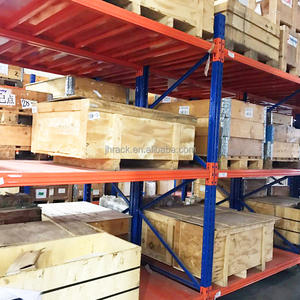
Heavy Duty Teardrop Hole Beam Selective Pallet Rack
View Specifications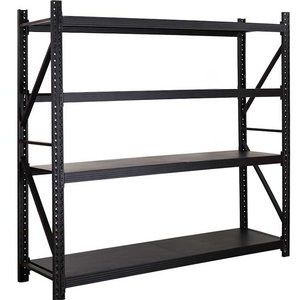
Heavy Duty Industrial Warehouse Pallet Storage Rack
View Specifications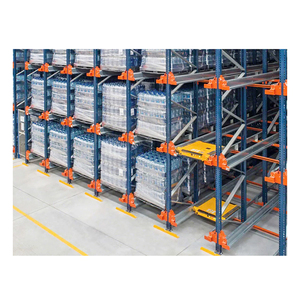
Heavy Duty Automated Pallet Shuttle Rack System
View Specifications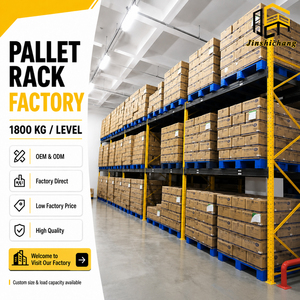
3000KG Heavy Duty Warehouse Pallet Storage Rack
View Specifications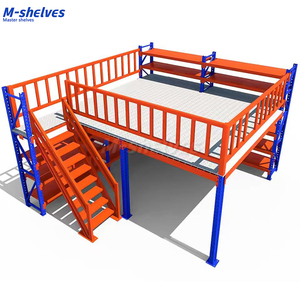
Heavy-Duty Steel Mezzanine Warehouse Storage Shelving
View Specifications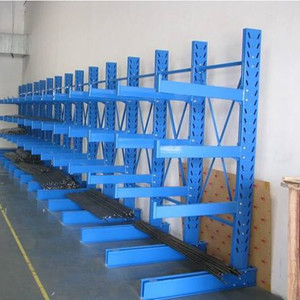
Warehouse Heavy Duty Industrial Cantilever Rack
View SpecificationsEngineering Principles & Market Dynamics of Flow Rail Racking
In modern high-throughput logistics facilities, optimizing floor footprint while safeguarding operational cycle time constitutes a critical engineering objective. Flow rail racking systems—incorporating gravity-fed live pallet flow mechanisms, dynamic rail tracks, and precision braking assemblies—represent the peak of high-density dynamic storage engineering. Operating predominantly on FIFO (First-In, First-Out) material movement protocols, flow rail designs utilize inclined roller tracks or rail channels that harness gravitational force to advance palletized unit loads smoothly from loading faces to dedicated retrieval portals.
1. Precision Structural Safety and CE Standards Execution
Procuring flow rail and dynamic pallet storage assemblies necessitates stringent compliance with harmonized European standards, notably EN 15512 (Steel static storage systems - Adjustable pallet racking systems - Principles for structural design) and the European Machinery Directive principles where dynamic braking apparatuses interface with automated guidance. CE Certification (such as CE No. 2435-CPR-8605159) guarantees that structural upright profiles, beam connector brackets, inclined skate wheels, and deceleration rollers have undergone calculated finite element analysis (FEA) and cycle-fatigue verification.
Dynamic flow rails operate under constant momentum forces. Consequently, material integrity requirements exceed those of static racking. Low-alloy high-tensile structural steel (e.g., Q235B and Q355B grades) undergoes automated continuous cold-roll forming, automated structural punching, and standardized multi-stage surface pretreatment. When exposed to harsh industrial atmospheres or coastal logistics zones characterized by high relative humidity and saline dust (prevalent across major transit hubs), pre-treatment encompassing alkaline degreasing, acid pickling, and microcrystalline zinc phosphating before electrostatic polyester powder baking becomes paramount to arrest sub-surface oxidation creep.
2. Future Procurement Trends in Flow Rail and Dynamic Racking (2025–2030)
The global procurement paradigm for high-density storage infrastructure is witnessing a profound shift driven by supply chain volatility, labor economics, and extreme real estate valuation escalation:
- Hybridization of Gravity Flow with AGV/AMR Interfacing: Traditional manual picking faces are rapidly yielding to autonomous mobile robots (AMRs) and automated counterbalanced forklifts. Procurement specifications increasingly require sub-millimeter level engineering tolerances at rail discharge points, integrated optical sensor channels, and pneumatic dynamic end-stops to permit frictionless robotic pallet extraction without operator intervention.
- Climate-Adaptive Material Metallurgy for Cold Chain Expansion: With the explosive demand for global cold chain logistics across food distribution and temperature-sensitive biologicals, flow rail systems are progressively tailored for deep-freeze operational thresholds (-30°C). Buyers increasingly demand specialized low-temperature impact-tough steels that resist ductile-to-brittle transitional shifts, coupled with self-lubricating, sealed cryogenic bearing assemblies within speed-controller rollers.
- Total Lifecycle Costing Over Initial Capital Expenditure: Procurement teams at major third-party logistics (3PL) conglomerates are discarding low-bid transactional purchasing models. Evaluation matrices now emphasize lifecycle endurance metrics: mean time between overhauls (MTBO) of centrifugal brake rollers, track abrasion resistance under polymer vs. wooden pallet friction, and availability of traceable mill test certificates according to EN 10204 3.1 standards.
3. Structural Technological Evolution: The Next Generation of Flow Track Design
Technological advancement within the flow rail domain centers upon dynamic velocity regulation and fail-safe design architecture. Classical gravity flow runs suffered from pallet speed runaway hazards if pallet weights varied significantly across identical lanes. Modern flow rail design resolves this via variable-resistance magnetic eddy-current controllers and modular inertia dampers embedded directly into the rail profile without external power demands.
Furthermore, structural optimization algorithms now allow thinner structural gauges without sacrificing ultimate load ratings. Through selective work-hardening during specialized roll-forming and rib-stiffened profile designs, modern uprights achieve load capacities exceeding 30,000 kg per bay frame while simultaneously curbing overall embodied steel weight—a key criterion for enterprise sustainability reporting and logistics ESG metrics.
Why Global Supply Chains Trust Our Engineering
Operating since 2001, we deliver complete, vertically integrated industrial storage installations across 120+ international markets with strict quality verification.
In-House Manufacturing Scale
Equipped with a modern 30,000 m² heavy-industrial manufacturing base housing automated continuous profile roll-forming mills, automated robotic welding cells, and continuous powder-coating processing tunnels.
Audited International Compliance
Every fabrication batch conforms strictly to ISO 9001:2015 quality management standards and holds verified European CE marking (No. 2435-CPR-8605159) alongside comprehensive RoHS surface compliance.
3D Modeling & Static Calculations
Our senior engineering office provides exhaustive 2D CAD architectural plans, full-motion 3D spatial renderings, and rigorous civil-defense-compliant structural load calculations prior to steel cutting.
Frequently Asked Questions by Industrial Buyers
Authoritative engineering clarity addressing procurement parameters, dynamic testing, safety certifications, and international shipping protocols.
How does flow rail racking differ structurally from push-back and standard drive-in configurations?
Flow rail (gravity flow) utilizes continuous pitched roller lanes (typically at a 2.5% to 4% incline) operating on true First-In, First-Out (FIFO) mechanics. Pallets load from an upper charge aisle and advance automatically to a discharge pick aisle via controlled gravitational descent. In contrast, push-back racking uses nested wheel carts along a shared access face on a Last-In, First-Out (LIFO) basis, while drive-in racking necessitates forklifts driving physically inside structural bays, resulting in higher frame collision vulnerability and lower pallet turnover rates.
What parameters are mandatory to compute the accurate gradient and brake roller configuration for a flow rail system?
Designing dynamic flow runs requires precise inputs: minimum and maximum pallet gross weight (e.g., 500 kg to 1500 kg), pallet structural design (two-way, four-way, GMA, Euro-pallet, or perimeter base), bottom runner continuity, pallet deflection characteristics under full load, operating temperature range (ambient vs. -30°C cold storage), and maximum continuous lane depth. These metrics determine roller spacing, skate wheel metallurgy, and the frequency of speed-retarder brake rollers to prevent acceleration impacts at discharge.
What specific CE documentation accompanies dynamic flow rail shipments for customs and safety clearance?
Our export documentation package includes traceable CE Conformity Declarations under Construction Products Regulation (CPR No. 2435-CPR-8605159), ISO 9001:2015 quality audit registers, mill test certificates (MTC) detailing steel yield and elongation metrics, static structural load rating certificates signed by registered structural engineers, and detailed assembly drawings cross-referenced with pallet beam loading charts.
How are oversized steel uprights and roller beds protected against transport corrosion and mechanical deformation during deep-sea transit?
Uprights and horizontal beams are systematically bundled using protective non-marking heavy-gauge timber dunnage and heavy-duty polyester strapping to eliminate metal-on-metal friction during maritime transport. Structural cold-formed uprights are protected with multi-layer bubble wrap and reinforced corner guards. Flow tracks, rollers, and mechanical deceleration modules are securely boxed in moisture-barrier crates containing industrial desiccant bags to prevent salt fog oxidation and transit humidity condensation.
Can our local structural engineers or contractors modify layout tolerances to satisfy municipal fire regulations?
Yes. Our engineering department works in tandem with clients' local civil design contractors. All initial layout designs incorporate necessary longitudinal and transverse flue spaces (ranging typically from 75 mm to 150 mm) to permit uninterrupted vertical sprinkler plume penetration according to NFPA 13 and local Civil Defense fire suppression dictates. CAD revisions are executed without charge prior to production lock-in.
Ready to upgrade your warehouse throughput with CE certified flow rail racking?
Contact Us