High-Throughput Flow Through Racking & Industrial Storage Units
Explore our export-certified carton flow shelves, gravity roller beds, and pallet sliding systems manufactured in compliance with international CE and ISO benchmarks.
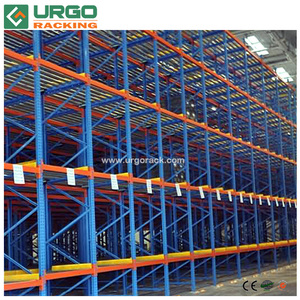
Industrial Stainless Steel Rolling Shelf Carton Flow Rack
View Specifications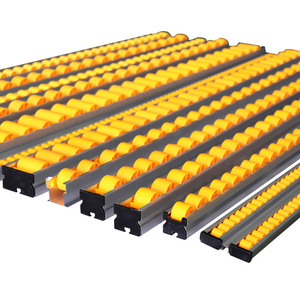
PE/ABS Wheel Gravity Roller Track FIFO Sliding Shelf
View Specifications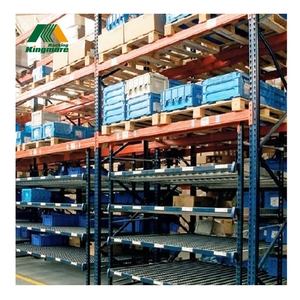
Fabric Roll Pallet Carton Flow Racking for Stacking
View Specifications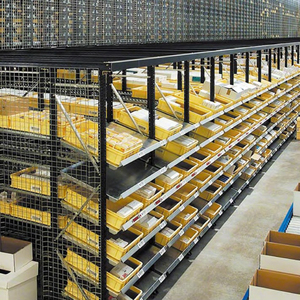
Warehouse Gravity Flow Rack FIFO Dynamic Storage System
View Specifications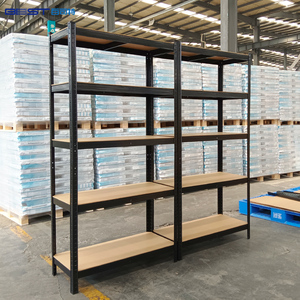
Powder-Coated Detachable Upright Heavy Duty Shelving
View Specifications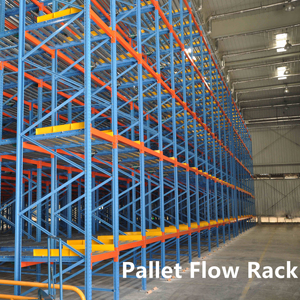
Custom Heavy-Duty Gravity Pallet Flow Roller Rack
View Specifications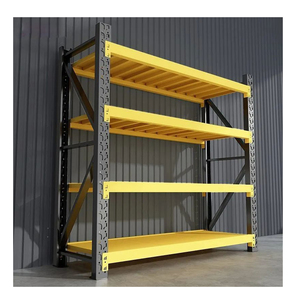
Corrosion-Protected 4-Tier Modular Metal Storage Shelving
View Specifications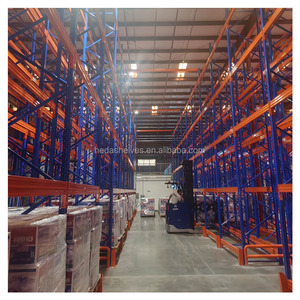
Conventional Heavy-Duty Pallet Racking Storage System
View SpecificationsHigh-Density Gravitational Dynamics: The Technical Physics of Flow Through Racking
Flow through racking—often classified interchangeably as Gravity Pallet Flow or Carton Flow Racking—is an engineered, dynamic compact storage solution operating strictly on gravitational energy. Designed to satisfy rigorous EN 15512 and FEM 10.2.02 design standards, these systems establish a physical separation between replenishment loading faces and order-picking unloading faces. In high-velocity distribution centers handling fast-moving consumer goods (FMCG), pharmaceuticals, and multi-temperature cold chains, flow through architectures eliminate up to 75% of forklift travel time compared to conventional static selective racking while guaranteeing absolute First-In-First-Out (FIFO) batch control.
As an internationally acknowledged leader in intralogistics manufacturing, Guangzhou Heda Shelves Co., Ltd. (HEDA Shelves) provides factory-direct fabrication governed by validated certifications: CE Certification No. 2435-CPR-8605159, ISO 9001:2015 Quality Management (No. 18624Q00169R0M), and RoHS compliance. Backed by 300+ technical personnel and automated roll-forming and electrostatic coating production lines, every flow lane is dynamically tested for critical gradient angles, deceleration friction tolerances, and cyclical load capacities.
Anatomy of a CE-Certified Flow Through Racking System
A breakdown of the precision-calibrated mechanical assemblies engineered to ensure fail-safe pallet conveyance, controlled descent speed, and ergonomic picking interfaces.
Calibrated Gradient Slope
The roller bed is installed at a calculated decline angle (typically 1.5° to 2.5° for pallet flow, 2.5° to 4.0° for carton flow) calibrated against carton bottom rigidity or pallet runner deflection to achieve continuous spontaneous descent without stall.
Centrifugal Speed Retarders
Heavy-duty steel roller systems incorporate internal centrifugal brake rollers spaced at calculated intervals along deep lanes (up to 20 pallets deep), ensuring runaway velocities never exceed the safe kinetic limit of 0.3 m/s regardless of pallet load variations.
Automatic Pallet Separators
Integrated mechanical separator devices isolate the discharge-face pallet from the accumulated line behind it. This eradicates line pressure, allowing forklift operators to extract front pallets cleanly without experiencing hazardous wedging or binding friction.
Full-Width vs. Twin-Track Rollers
Available in heavy steel tube rollers (galvanized finish for sub-zero cold stores) for poor-quality wooden GMA/Euro pallets, or modular high-impact PE/ABS plastic wheel tracks engineered for uniform tote boxes and corrugated cartons.
Automated Upright Punching & Beams
Cold-formed high-tensile Q235B and Q355B structural steel uprights featuring CNC 50mm / 75mm pitch punching, enabling swift vertical repositioning of flow beds to adapt to changing product packaging and SKU heights.
Sub-Zero & Harsh Climate Coatings
Multi-stage chemical pre-treatment comprising acid pickling and immersion phosphating, capped with multi-layer electrostatic polyester powder baking (60-80μm) resilient against coastal humidity and -30°C freezing conditions.
Future Procurement Trends in Flow Through Racking Systems
Strategic purchasing insights for supply chain executives, warehouse developers, and EPC contractors modernizing materials handling footprints.
Cold Chain Energy Densification
With escalating cold storage utility tariffs, operators in the GCC, North America, and Europe are transitioning from selective racks to multi-tier pallet flow racks, compressing refrigerated cubic space by up to 60% per stored pallet position.
Total Cost of Ownership (TCO) Shift
Global procurement teams prioritize zero-power gravity systems over automated shuttle racking (ASRS) in fast-turning SKU zones due to zero electrical wiring costs, near-zero mechanical maintenance, and rapid 12-to-18 month CAPEX amortization.
Integration with Pick-to-Light & AMR
Modern flow through racks are being specified with factory-punched wireway channels, LED pick-to-light clip bars, and cantilevered discharge trays configured for direct Autonomous Mobile Robot (AMR) case extraction.
Structural Compliance Verification
Tier-1 3PLs and institutional logistics REITs mandate structural engineering calculation sheets stamped according to local building seismicity, Civil Defense flue-space mandates, and CE Factory Production Control (FPC) audit trails.
Comparative Performance: Flow Through Racking vs. Alternative High-Density Systems
A data-backed engineering matrix comparing space utilization, FIFO fidelity, picking velocity, and structural Capex.
| Storage System Type | Space Utilization | Inventory Rotation | Picking Productivity | Forklift Damage Exposure | Energy Dependence |
|---|---|---|---|---|---|
| Pallet Flow Through Racking | Up to 85% | 100% Strict FIFO | Exceptional (Split Aisles) | Minimal (Exterior Entry Only) | 0 kWh (Pure Gravity) |
| Carton Flow Racking | Up to 75% | 100% Strict FIFO | Highest (Walkway-Optimized) | Zero (Manual/Tote Level) | 0 kWh (Pure Gravity) |
| Drive-In Racking | Up to 80% | LIFO (Last-In-First-Out) | Low (Single Access Aisle) | High (Masts Enter Rack) | 0 kWh (Manual Lift) |
| Push Back Racking | Up to 70% | LIFO (Last-In-First-Out) | Moderate | Moderate | 0 kWh (Spring/Gravity Push) |
| Radio Shuttle Racking | Up to 88% | FIFO or LIFO | High (Automated Carriage) | Low | Rechargeable Lithium Batteries |
| Conventional Selective Racking | Only 40% - 50% | Unrestricted Access | Standard (High Travel Time) | Moderate | 0 kWh (Forklift Fuel Only) |
Integrated Global Exporter & Racking Manufacturer
Combining 25+ years of structural steel precision with localized logistical compliance across the Middle East, Europe, Southeast Asia, and the Americas.
Verified European CE Standard
Certified under CE EN 1090 / Construction Products Regulation CPR 2435-CPR-8605159, with strict material traceability sheets and load test reports supplied for Civil Defense and insurance approvals worldwide.
Container-Optimized Bundling
All upright columns, dynamic roller tracks, and load beams are bundled with marine-grade steel strapping, protective polymer edge guards, and barcode labels synchronized with 2D assembly blueprints for efficient customs handling.
Global Gateway Experience
Regular export volumes shipped via major hubs including Jebel Ali, Khalifa Port, King Abdulaziz Port Dammam, Jeddah Islamic Port, Hamad Port, Rotterdam, Hamburg, and Long Beach, backed by full ocean transport documentation.
Frequently Asked Questions on Flow Through Racking Procurement
Authoritative technical solutions resolving slope mathematics, pallet specifications, brake roller intervals, and international seismic safety standards.
Q What determines the optimum inclination angle of a flow through roller lane?
The declination angle generally ranges between 1.5° and 2.5° (approximately 3% to 4.5% grade) for pallet flow and 2.5° to 4° for carton flow. The exact calculation depends on pallet bottom contact area, bottom runner orientation, total package weight (from 250 kg up to 1500 kg per pallet), and operating temperature (cold store environments require higher pitch angles due to grease viscosity).
Q How do brake rollers prevent pallet impact shocks in deep flow systems?
Centrifugal speed controllers engage progressively based on rotational acceleration. As the pallet rolls over the brake roller, internal planetary gears trigger braking shoes against the roller drum, restricting pallet speed to a safe maximum of 0.3 m/s (18 m/min) regardless of whether the pallet is carrying 300 kg or 1200 kg.
Q Can poor-quality wooden pallets or plastic skids be used in gravity flow racks?
Pallets must feature sound bottom runners with minimal deflection (span deflection must not exceed 1/200th under load). Weak, cracked, or missing bottom deckboards can catch on rollers. For plastic pallets or inconsistent runners, we engineer continuous triple-track steel rollers or full-width roller beds fitted with guide flanges to eliminate drift.
Q What is the functional role of an automatic pallet separator mechanism?
When pallets accumulate in a lane, line back-pressure builds significantly (a 10-pallet lane can transfer tons of pressure onto the front pallet). An automatic mechanical separator holds the second pallet 150 mm back, allowing the forklift operator to safely lift and clear the front pallet without dangerous drag resistance.
Q How does flow through racking comply with warehouse fire suppression codes?
NFPA 13 and European sprinkler norms require vertical flue spaces between storage lanes to permit rapid water penetration. In pallet flow racks, continuous flue gaps of 150 mm to 300 mm are maintained between double-bay modules, and perforated structural decking or open roller spans are integrated to preserve sprinkler integrity.
Q How do HEDA Shelves flow racks resist rust in coastal Middle East & GCC climates?
All structural steel members undergo hot alkaline degreasing, acid pickling, and micro-crystalline zinc phosphating prior to electrostatic polyester powder coating. The resulting 70μm cured coating passes ASTM B117 salt spray testing, guarding against humidity in coastal ports like Dubai, Jeddah, Dammam, and Sohar.
Q What primary dimensional data is required to generate an engineering layout?
We require the clear internal warehouse height under joists, slab compressive rating, column grid spacings, exact pallet dimensions (length, width, overhang, and runner orientation), minimum and maximum load weights, SKU velocity profiles, and forklift operational mast heights.
Q What certifications accompany every export shipment?
Each container project is shipped with a CE Declaration of Performance (DoP) referencing CPR 2435-CPR-8605159, ISO 9001:2015 mill test certificates, static structural calculation calculation notes matching EN 15512 parameters, and complete assembly shop drawings.
Consult Our Logistics Systems Engineering Team
Send us your building drawings and pallet handling specifications. HEDA Shelves will provide an optimized 2D CAD floor plan, 3D structural rendering, and a competitive factory-direct quote within 24 hours.
Send an Inquiry