Precision Engineered Smart Warehouse Racking Portfolio
Certified under European Harmonized Standard EN 15512 and CE Construction Products Regulation (CPR). Designed for seamless interoperability with Automated Guided Vehicles (AGV), Warehouse Management Systems (WMS), and dynamic multi-level pallet shuttle mechanisms.
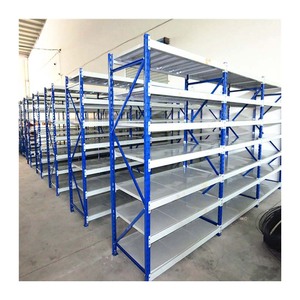
Mracking Light Duty Selective Warehouse Boltless Racking
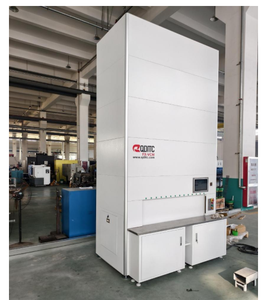
Vertical Rotating Storage Automated Smart Carousel System
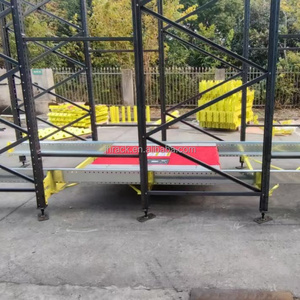
Smart Heavy-Duty Radio Pallet Shuttle Racking System
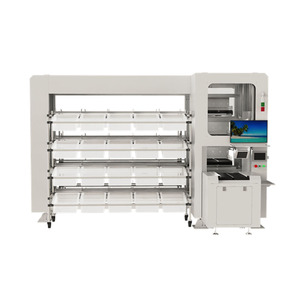
Omnistorage Mini-Load 3D High-Speed Intelligent ASRS
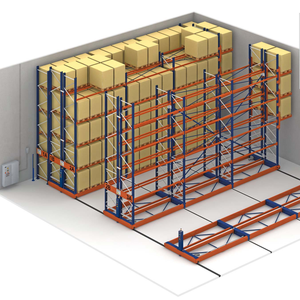
Automated Electric Motorized High-Density Mobile Racking
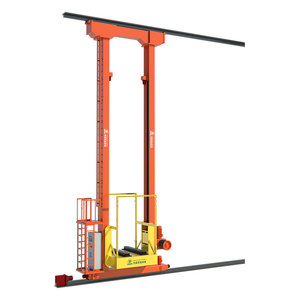
Automatic Pallet Stacker Crane Clad High-Bay System
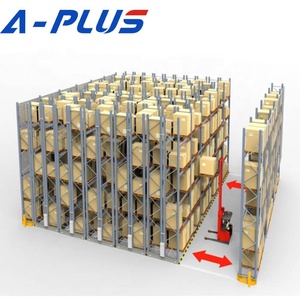
Intelligent Automatic Mobile Warehouse Shelving System
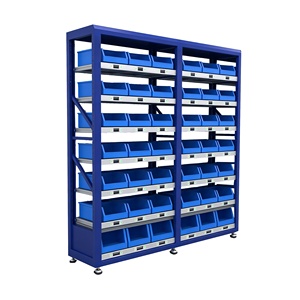
SMT Precision Weighing Intelligent Line-Side Storage Shelf
Direct-From-Factory Engineering & Global Export Credibility
Founded in 2001, Guangzhou Heda Shelves Co., Ltd. controls over 30,000 square meters of modern manufacturing infrastructure, offering end-to-end structural engineering, automated roll forming, surface chemical passivization, and rigorous containerized logistics to more than 120 countries worldwide.
Certified Conformity
Fully certified under European Construction Product Regulation (CPR) CE Certificate (No. 2435-CPR-8605159), ISO 9001:2015 Quality Management Standard (No. 18624Q00169R0M, valid to 2027), and RoHS environmental standards. Designed to withstand extreme dynamic and static load spectra.
Anti-Corrosive Metallurgy
Automated 10-stage pre-treatment protocol including multi-tank pickling, chemical phosphating, and electrostatic high-adhesion powder coating. Tested to deliver long-term structural integrity in GCC high-humidity, coastal salinity, and extreme 45°C desert thermal gradients.
Free 3D & BIM Engineering
Our 300+ technical personnel provide turnkey 2D architectural CAD, 3D structural visual simulations, dynamic deflection finite element analysis (FEA), and building code calculations within 48 hours to secure immediate Civil Defense and municipal structural permits.
Global Procurement Trends in Smart Warehouse Racking (2025–2035)
The global logistics architecture is experiencing an unprecedented structural transition. Escalating industrial land acquisition costs, coupled with widespread shortages of warehouse labor and the exponential expansion of cross-border e-commerce, have fundamentally altered the evaluation metrics for warehouse storage investments. Supply chain directors and procurement executives are no longer evaluating industrial storage merely as static steel fabrications. Instead, smart warehouse racking is procured as an integrated capital asset directly tied to volumetric throughput efficiency, dynamic return on investment (ROI), and Total Cost of Ownership (TCO).
Historically, procurement departments focused almost exclusively on ex-factory steel tonnage price ($/ton). However, modern engineering standards necessitate an architectural perspective that accounts for life-cycle durability, automated machine interfacing tolerances, and seismic safety compliance. As global distribution hubs adapt to complex regional demands—such as Saudi Arabia's Vision 2030 logistics zones, the UAE's major free-zone distribution nodes (Jebel Ali, Khalifa Port), and European automated omnichannel hubs—procurement protocols are consolidating around four transformative trends:
Shift from Static Storage to High-Density Automation
Conventional selective pallet racking yields a land utilization rate of merely 35–40%, with the remainder consumed by wide operating aisles. Progressive procurement strategies prioritize radio shuttle systems, electric mobile racking, and automated stacker crane ASRS, achieving volumetric utilization exceeding 85% within identical warehouse envelopes.
Direct-From-Factory Engineering & Modular Sourcing
Mid-tier intermediaries are being phased out in favor of factory-direct partnerships with certified manufacturers. Direct factory engagement guarantees transparent metallurgical grade verification (certified Q235B / Q355B coils), custom roll-forming tolerances, and customized packaging modularity that minimizes field sorting costs during site installation.
| Structural Storage Topology | Floor Footprint Utilization | Operating Labor Dependency | Pallet Access Selectivity | 10-Year TCO Index |
|---|---|---|---|---|
| Standard Selective Pallet Racking | 35% – 42% | High (Manual Forklifts Required) | 100% Immediate Direct Access | Baseline High Labor Overhead |
| Drive-In Storage System | 60% – 68% | Moderate (Risk of Upright Collisions) | Strict LIFO / Low Selectivity | Moderate Maintenance Costs |
| Radio Pallet Shuttle Automation | 75% – 85% | Low (Automated Lane Navigation) | Flexible FIFO / LIFO Batch | Optimal ROI within 24–36 Months |
| Automated High-Bay ASRS (Stacker Crane) | 85% – 92% | Minimal (Lights-Out Automation) | 100% Computerized High-Speed Access | Lowest Operational Cost / Pallet |
Furthermore, risk mitigation has emerged as a cornerstone of strategic sourcing. Global procurement directors are enforcing strict factory qualification criteria. Factory verifications mandate that manufacturers perform continuous quality assurance—encompassing laser optical hole-pitch punching accuracy (±0.1 mm), ultrasonic weld penetration inspections, and salt spray corrosion testing exceeding 500 hours (ASTM B117 standards).
Technological Trajectories in Smart Racking & Cyber-Physical Intralogistics
The boundary separating passive mechanical steel racking from active robotic automation has dissolved. The modern distribution facility operates as an interconnected cyber-physical ecosystem where the physical racking superstructure serves as the foundational skeleton for intelligent automation hardware, Internet of Things (IoT) sensors, and algorithmic warehouse orchestration.
Autonomous 4-Way Multi-Directional Shuttles
Unlike traditional 2-way shuttles limited to straight-line depth channels, 4-way intelligent shuttle robots traverse both longitudinal and transverse cross-aisles. Integrated with high-speed vertical reciprocating lifts, these vehicles dynamically balance warehouse workload peaks, reallocating computing and handling capacity across 3D coordinates.
IoT Embedded Sensing & Line-Side Weighing
Micro-storage environments, such as SMT electronics assembly and high-value pharmaceutical warehousing, are integrating localized strain-gauge sensors directly into shelf levels. Intelligent weighing cabinets continuously track discrete component inventory levels by mass variance, automatically triggering supplier replenishment via MQTT/JSON APIs.
A crucial frontier in smart warehouse engineering is structural Digital Twin modeling. By integrating physical structural health monitoring sensors—such as triaxial accelerometers on lower uprights and strain transducers along load-bearing connector beams—operators gain real-time visibility into dynamic cyclic loading, seismic deflection, and accidental forklift impacts. This continuous data stream informs predictive maintenance schedules, precluding catastrophic structural rack failures before yield thresholds are breached.
Concurrently, surface chemical engineering has advanced to address the hostile micro-climates inside refrigerated cold storage and petrochemical facilities. The convergence of ambient condensation and cryogenic temperatures in automated cold stores (-25°C to -30°C) demands micro-alloyed structural steels that prevent low-temperature ductile-to-brittle transitions, alongside zinc-nickel plating or specialized polyurethane hybrid powder formulations that inhibit sub-surface oxidation.
Frequently Asked Questions (Technical & Commercial)
Detailed technical, structural, and regulatory responses addressing the critical requirements of commercial EPC contractors, logistics architects, and procurement authorities.
Design & Source Your Custom Smart Racking Infrastructure
Connect directly with our senior structural intralogistics engineers. We provide full architectural analysis, 3D structural modeling, and direct factory-gate pricing tailored to your exact facility dimensions and pallet throughput requirements.