Featured High-Density Racking & Intralogistics Hardware
Direct from China's premier racking manufacturer. Fully verified load bearing, dynamic automated compatibility, and factory-direct pricing for international EPC contractors, 3PL distributors, and industrial developers.
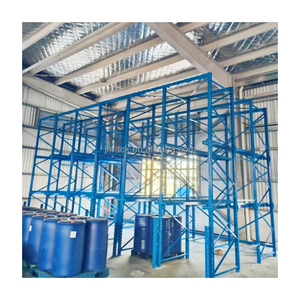
Hot Selling Q355B Steel Beam Heavy-Duty Metal Warehouse Storage Stacking Racks Drive-In Pallet Racking System For Industry
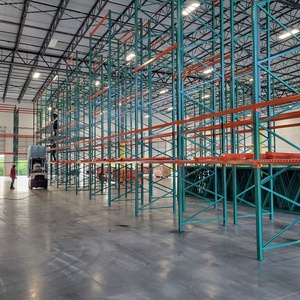
US Teardrop Pallet Racking Q235B Steel Heavy Duty Adjustable Warehouse Storage Shelving Galvanized Powder Coated Outdoor
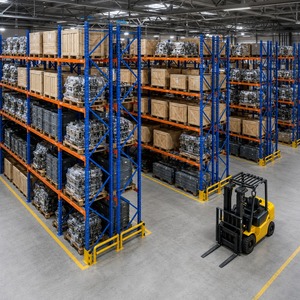
Selective Pallet Racking System Steel Storage Rack Q235B Heavy Duty Warehouse Industrial Racks Powder Coated
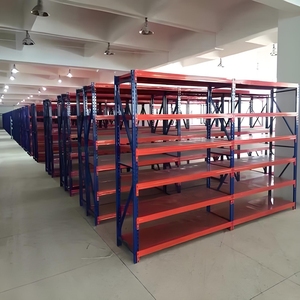
Adjustable 5-Layer Steel Metal Stacking Racks & Shelves Anti-Rust Efficient Warehouse Storage Solution
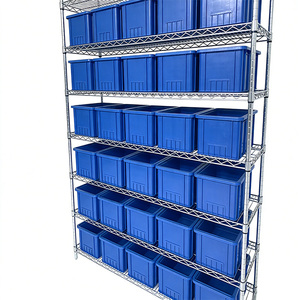
High Quality 7 Layers 250kgs Heavy Duty Factory Warehouse Metal Storage Rack Shelving
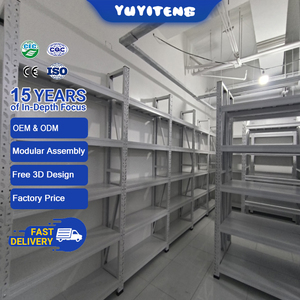
Commercial Shelving Units Heavy Duty Warehouse Rack
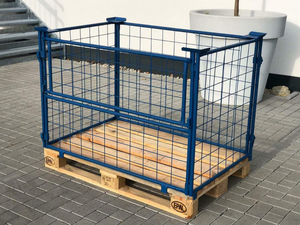
Durable Foldable Heavy Duty Powder Coating Wire Mesh Storage Box Pallet OEM Pallet Rack
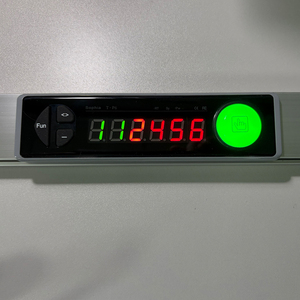
Sophia 6 Digit Display Pick to Light Picking Tag Electronic TagT- P6 for Warehouse Rack
The Strategic Paradigm Shift: Why High-Density Racking Systems Dominate Global Supply Chains
In the contemporary post-pandemic logistics landscape, the cost per cubic meter of industrial real estate has surged exponentially across North America, the GCC (UAE, Saudi Arabia, Qatar), and Western Europe. Logistics operators, regional cold chain distributors, and third-party logistics (3PL) conglomerates are no longer evaluating warehouse efficiency purely through square-meter floor footprints; rather, the standard benchmark has transitioned toward volumetric cubic utilization ($V_{util}$). Traditional selective pallet racking layouts waste upwards of 55% to 65% of warehouse volume on working aisles designed to accommodate wide-turning counterbalance lift trucks.
As the undisputed global leader in heavy-duty intralogistics manufacturing, China best high density racking system exporter partners provide the critical structural engineering, advanced metallurgy, and precision roll-forming required to implement compact, deep-lane storage methodologies. By consolidating travel lanes into dynamic or static dense blocks—such as Drive-In/Drive-Thru, Radio Shuttle semi-automation, Push-Back dynamic carts, and Pallet Flow gravity systems—modern industrial facilities achieve a 60% to 180% surge in storage capacity within identical exterior building envelopes.
Structural Architecture: Cold-Formed Steel Metallurgy & Dynamic Seismic Deflection
High-density systems experience concentrated horizontal and vertical stress vectors drastically higher than conventional single-bay selective racks. When designing drive-in systems or multi-level pallet shuttle channels reaching 16 to 24 meters in height, upright column perforations, connection node moment stiffness ($M_k$), and baseplate ground-anchoring require rigorous finite element analysis (FEA).
High-Tensile Metallurgy
Utilizing premium hot-rolled carbon steel coils, specifically high-yield Q355B (equivalent to ASTM A572 Grade 50 / European S355JR) for primary cantilever arms, guide rails, and heavy-duty upright frames, ensuring superior elastic recovery and zero brittle deformation under peak warehouse operational loads.
Pre-Treatment & Adhesion
Our 10-stage automated surface treatment features rigorous automated acid pickling and zinc-phosphating preceding electrostatic polyester powder spraying. This delivers 100+ microns of durable barrier protection resistant to 500+ hours of ASTM B117 salt spray, essential for high-humidity coastal ports.
Global Structural Codes
Full geometric conformance with European FEM 10.2.02 (Racking Design Code), EN 15512, American RMI MH16.1, and Australian AS4084-2023. Layout engineering accommodates dynamic ground acceleration coefficients ($S_s, S_1$) for major earthquake fault corridors worldwide.
In deep-lane drive-in installations, forklift trucks must physically enter the storage bays. Because these structures lack traditional horizontal beam ties within the access bays, secondary top-tie portal frames, rear cross-bracing diaphragms, and floor-anchored guide channels become mandatory to absorb lateral sway caused by truck braking dynamics. HEDA Shelves engineers utilize custom rolled Omega-profile uprights featuring 11 to 13 structural bends per section, delivering unparalleled torsional rigidity compared to standard 7-bend profiles on the generic market.
Engineering Matrix: Comparative Analysis of High-Density Storage Methodologies
Choosing the right high-density system requires matching SKU counts, stock turnover philosophy (FIFO vs. LIFO), and operational throughput velocity. The comprehensive decision matrix below breaks down the technical and financial variables:
| Racking Typology | Space Utilization | Stock Rotation | SKU Selectivity | Damage Risk Index | Pallet Throughput/Hr | Optimal Industry Application |
|---|---|---|---|---|---|---|
| Drive-In Racking | 75% – 85% | LIFO (Strict) | Low (Batch SKUs) | Moderate to High | 20 – 35 pallets/hr | Cold Stores, Beverage Bottling, Raw Chemicals |
| Radio Shuttle Racking | 80% – 90% | FIFO or LIFO | Medium per Lane | Minimal (Zero truck entry) | 50 – 75 pallets/hr | FMCG, Pharmaceutical Cold Chain, Meat Processing |
| Push-Back Carts (2-6 Deep) | 70% – 80% | LIFO | Medium (1 SKU per lane) | Low | 35 – 45 pallets/hr | Food Distribution, Buffer Logistics, Retail Warehouses |
| Gravity Pallet Flow | 85% – 92% | FIFO (Guaranteed) | Medium to High | Very Low | 60 – 90 pallets/hr | Dairy, Perishable Produce, Expiry-Sensitive Goods |
| Automated AS/RS Crane | 90% – 95% | Dynamic Programmed | 100% Computerized | Virtually Zero | 120+ pallets/hr | Giga Logistics Hubs, Mega E-Commerce Fulfillment |
Future Procurement Trends: Where Strategic B2B Buyers Are Investing
International procurement officers, supply chain VPs, and logistics engineering consultants are fundamentally changing how they contract Chinese high-density racking manufacturers. Over the coming 5 to 10-year horizon, three key macro trends are dictating procurement specifications:
1. Hybridization with Automation
Pure manual racking is rapidly declining in tier-one distribution centers. Global buyers are procuring racking systems that are "Automation Ready." This means upright profiles and horizontal beam punchings are manufactured with sub-millimeter tolerances capable of supporting autonomous shuttle robots, stacker cranes, and pick-to-light electronic displays without costly retrofitting.
2. Lifecycle Cost Over Initial Capex
B2B buyers are moving away from selecting suppliers based solely on the lowest initial tender bids. The total cost of pallet ownership over a 15-year lifecycle—accounting for frame replacement costs, rack protection hardware, corrosion degradation in damp environments, and installation downtime—proves that robust, heavy-gauge steel provides substantially superior long-term ROI.
3. Modular Multi-Tier Expansion
Flexibility is replacing rigid warehousing. High-density structures are increasingly designed with integrated mezzanine platforms and multi-tier picking towers. This gives operations the tactical agility to process bulk pallet storage on lower tiers while managing high-density manual order sorting on upper structural steel floors.
Technological Evolution: Smart Intralogistics, IoT & Cold-Chain Durability
The high-density storage sector is witnessing a digital and metallurgical renaissance. China's top exporters are no longer purely metal fabricators; they have evolved into comprehensive intralogistics system innovators.
Cold-Chain Thermal Optimization (Down to -30°C)
In refrigerated and deep-freeze logistics—such as meat processing facilities in Saudi Arabia, pharmaceutical buffers in Germany, or seafood handling in Southeast Asia—cooling energy is the primary operating expense. High-density shuttle systems consolidate cubic volume, allowing cooling units to operate at maximum thermodynamic efficiency. HEDA Shelves utilizes specialized low-temperature alloy steels that resist brittle grain boundary fractures at sub-zero temperatures, paired with anti-condensing epoxy coatings.
- Eliminates thermal leakage through ultra-dense storage clustering
- Automated lithium-iron-phosphate shuttle batteries designed for continuous deep-freeze operation
- Galvanized guide channels and stainless fasteners to withstand extreme condensation cycles

Furthermore, the implementation of IoT sensor tags—such as the Sophia 6-Digit Display Pick-to-Light electronic module featured in our product lineup—bridges the physical structural rack with modern Warehouse Management Software (WMS). Operators are guided by dynamic LED indicators and real-time SKU digital prompts, reducing picking error rates to under 0.01% while quadrupling throughput velocity in dense e-commerce picking zones.
Enterprise Authority: Why Leading Exporters Trust Guangzhou HEDA Shelves
Founded in 2001, Guangzhou Heda Shelves Co., Ltd. has established an unrivaled reputation as China’s leading factory-direct engineering powerhouse for warehouse racking, industrial shelving, and heavy-duty mezzanine floors. Spanning a state-of-the-art 30,000 square meter manufacturing footprint with over 300 experienced technical specialists, our facility manages an extraordinary 30,000-ton monthly capacity, ensuring seamless fulfillment for enterprise giga-projects.
25+ Years Proven Track Record
Over two decades of structural design mastery, having deployed 10,000+ completed warehouse installations across the GCC, Africa, Europe, Australia, and North America.
Verified Quality System
Accredited with CE Certification (No. 2435-CPR-8605159), ISO 9001:2015 Quality Management (No. 18624Q00169R0M), and full RoHS compliance across all coatings.
Free 2D CAD & 3D Modeling
Our in-house structural engineering department provides free detailed CAD layouts, load deflection calculations, and realistic 3D renderings within 24 to 48 hours.
Export-Ready Ocean Crating
Every upright, beam, and carton flow channel is precision-bundled, bubble-wrapped, and barcoded to perfectly match site assembly drawings for effortless port clearance.
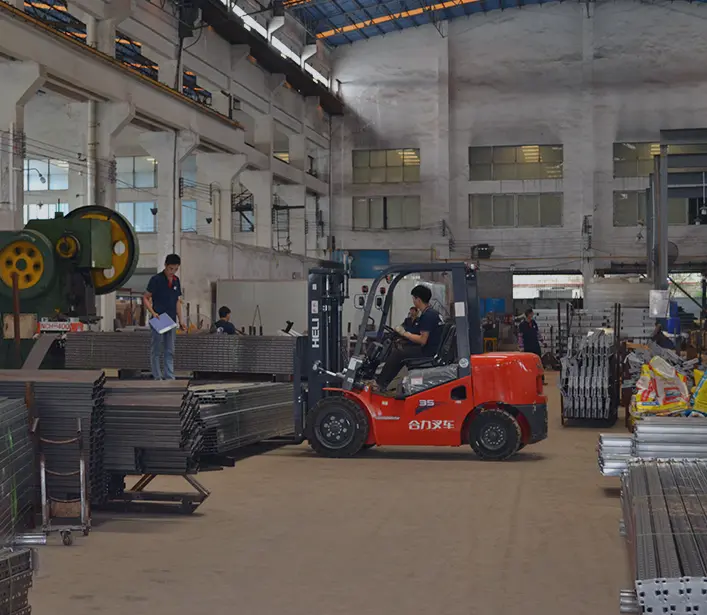
Precision Manufacturing & Global Compliance
From automated coil unwinding, high-speed multi-station rolling punching, and CNC plate cutting to robotized welding and dual continuous electrostatic spray booths, HEDA Shelves guarantees exact profile dimensional consistency. Our racking systems are deployed directly to major global transit hubs including Jebel Ali (UAE), Dammam & Jeddah (KSA), Hamad Port (Qatar), Rotterdam, Los Angeles, and Singapore.
Frequently Asked Questions by International Buyers
Straightforward, technically rigorous answers covering structural engineering, international customs compliance, fire protection guidelines, and delivery logistics.
How does HEDA Shelves verify load capacity and structural safety?
Every racking system engineered by HEDA Shelves undergoes rigorous Finite Element Analysis (FEA) using ANSYS and SAP2000 to determine maximum beam deflection limits (typically 1/200th of span length under full static load, adhering to EN 15512 and FEM 10.2.02). Furthermore, physical destructive testing is carried out on upright frames, beam connector welds, and baseplate anchor assemblies to ensure a minimum safety factor between 1.65 and 1.95 against structural yield.
What specific input data is required to generate a free warehouse layout?
To deliver an optimized 2D CAD floor plan and 3D architectural rendering, our engineering team requires: (1) Warehouse architectural drawings detailing clear height under roof beams, column spacing grids, and slab thickness; (2) Pallet specifications (dimensions WxDxH, bottom runner direction, and gross load weight); (3) Forklift fleet details (truck mast reach height, turning radius, and aisle requirements); and (4) SKU turnover profile (FIFO vs. LIFO preference and daily throughput goals).
How do high-density racks comply with warehouse fire protection & NFPA codes?
High-density storage—particularly double-deep, drive-in, and pallet flow racking—must comply with strict National Fire Protection Association (NFPA 13) standards. Our design layouts calculate and incorporate mandatory longitudinal and transverse flue spaces (typically 150mm to 300mm wide) ensuring early suppression fast response (ESFR) ceiling sprinklers can penetrate deep pallet arrays. For extreme height installations, we incorporate intermediate in-rack sprinkler pipe support brackets.
How does your electrostatic powder coating handle extreme heat, sand, and humidity?
Unlike low-cost fabricators who paint directly over untreated steel, all HEDA Shelves steel components pass through a 10-step pre-treatment cycle including degreasing, hot alkaline rinse, acid pickling (to remove all mill scale), and nano-ceramic zinc phosphating. Electrostatic polyester powder is cured at 200°C, producing an abrasion-resistant, UV-stable coat of 80 to 120 microns. For extreme outdoor or coastal yards in Dubai or Jeddah, hot-dip galvanizing per ISO 1461 is available.
What are the differences between Q235B and Q355B steel in racking applications?
Q235B possesses a nominal yield strength of 235 MPa and is the standard industry choice for medium-duty beams and light-load warehouse shelving. Q355B (yield strength of 355 MPa, roughly 50% stronger) is utilized in heavy-duty upright frames, high-bay cantilever arms, and heavily loaded drive-in pallet rails. Utilizing Q355B allows us to reduce raw steel tonnage while delivering identical or superior structural load bearing, directly saving on ocean container freight costs.
What is your ocean freight packaging protocol to prevent transit damage?
Racking components endure significant dynamic shocks during long-haul container shipping. We pack all upright columns and horizontal beams into tightly bound steel-strapped bundles cushioned with corrugated fluting and heavy-gauge shrink wrap. Small connecting brackets, baseplates, and hardware bolts are sealed in reinforced wooden crating. All bundles feature durable, weatherproof labels corresponding directly with the numbered erection drawings.
Can HEDA Shelves coordinate installation supervision for overseas projects?
Yes. Every shipment is accompanied by comprehensive step-by-step CAD isometric assembly guides and 3D exploded view manuals. For enterprise logistics facilities and multi-tier mezzanine floors across the GCC, Europe, and Southeast Asia, we provide remote real-time video engineering support or dispatch experienced on-site bilingual erection supervisors to guide local contracting teams.
What is the typical production and delivery lead time for enterprise orders?
Standard enterprise orders comprising 5 to 20 full container loads (40ft HQ) typically take 15 to 25 calendar days for precision manufacturing and quality control inspection. Ocean transit times vary by port: approximately 15 to 20 days to Middle East GCC hubs (Jebel Ali, Dammam), 20 to 28 days to Western Europe (Rotterdam, Hamburg), and 18 to 24 days to the US West Coast.
Accelerate Your Warehouse Capacity: Partner with China's Premier Exporter
Connect directly with senior structural racking engineers at Guangzhou Heda Shelves. We will evaluate your facility's architectural CAD drawing and deliver a customized, high-density storage layout, FEA structural calculation, and comprehensive quote within 24 hours.