Factory Direct
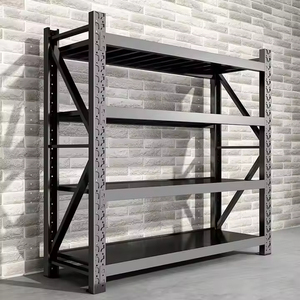
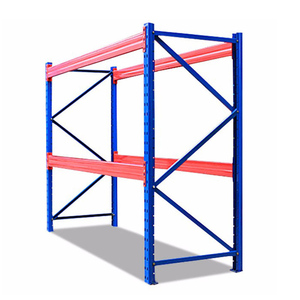
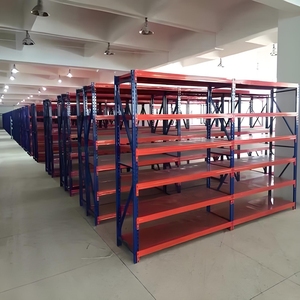
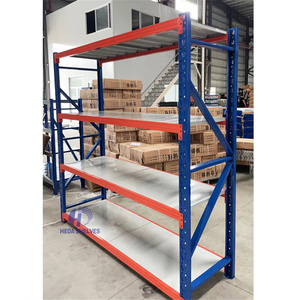
Light-Duty Steel 5-Layer Drive-In Pallet Rack Warehouse Storage Shelf
5-Tier High Bay
Filo / LIFO
Cold Store Safe
Precision-fabricated in our 30,000 m² Guangzhou production facility, fully tested to CE (No. 2435-CPR-8605159) and ISO 9001:2015 global durability standards.
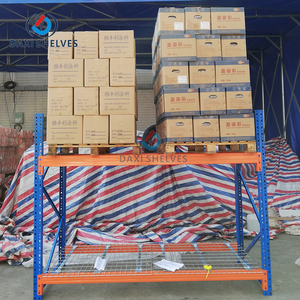
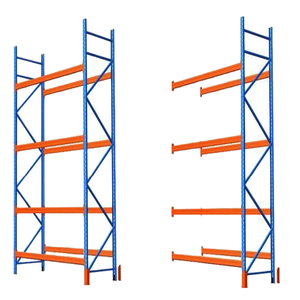
A detailed examination of roller bed mechanics, gravitational incline gradients, wheel-bed friction coefficients, and order consolidation velocity in modern FIFO architectures.
Carton flow racking—often designated in supply chain architecture as gravity feed flow racking—operates on an engineered dynamic inclined plane. Unlike static shelving, carton flow utilizes integrated roller tracks or aluminum/plastic skate-wheel beds that harness gravity to feed split-case picking faces automatically. Units loaded on the replenishment charge end travel downward at a controlled kinetic velocity toward the discharge retrieval face, establishing an inherent First-In, First-Out (FIFO) stock rotation schedule crucial for fast-moving consumer goods (FMCG), pharmaceutical distribution, automotive sub-assemblies, and multi-tier e-commerce fulfillment hubs.
Modern production facilities across industrial China utilize advanced Cold Bending Roll Forming machinery to produce continuous cold-rolled steel channels (SPCC / Q235B grade) that serve as flow bed side stringers and intermediate guide tracks. The rollers themselves incorporate high-impact polypropylene or polyethylene polymers containing anti-static compounds and ultraviolet inhibitors, mounted on cold-drawn galvanized steel axles. For extreme environmental configurations—such as deep-freeze cold storage or humid Gulf logistics zones—precision sealed bearings and zinc-electroplated steel wheels replace plastic wheels to sustain radial dynamic loads exceeding 25 kg per roller axle without flat-spot deformation.
Configured with variable-pitch brackets allowing fine gradient adjustments between 2.5° and 5.0°. Roller track spacing matches carton base rigidity to prevent sag deflection.
Direct mechanical channels integrated into front beam extrusions allow seamless wiring conduits, digital display mounts, and optical sensor modules for paperless picking.
Heavy-duty welded end stops absorb deceleration impact energy. Auxiliary centrifugal speed controllers are embedded within long-span tracks exceeding 6 meters.
| Technical Parameter | Standard Light-Duty Flow Rack | Heavy-Duty Industrial Roller Bed | High-Density Shuttle / Hybrid Flow |
|---|---|---|---|
| Target Load Per Level | 100 kg – 350 kg / Layer | 400 kg – 1,200 kg / Layer | 1,000 kg – 3,000 kg / Pallet Flow Base |
| Wheel / Roller Diameter | Ø 28 mm – Ø 38 mm High-Impact Polymer | Ø 50 mm Full-Width Galvanized Roller | Ø 60 mm – Ø 80 mm Triple Steel Rollers |
| Frame Material & Steel Grade | Cold-Rolled Steel Q235B / SPCC | Heavy Duty Structural Steel Q235B | High-Tensile Cold Formed Structural Channel |
| Surface Chemical Pretreatment | Phosphating + Electrostatic Powder | 10-Step Acid Pickling + Hybrid Epoxy | Hot-Dip Galvanized / Heavy Powder Coat |
| Primary Fulfillment Application | E-commerce split-case piece picking | Automotive assembly lines & spare parts | Cold storage food distribution & buffer staging |
Established in 2001, Guangzhou Heda Shelves Co., Ltd. combines quarter of a century of structural engineering experience with vertically integrated fabrication power.
In global industrial supply chains, procurement security hinges on direct manufacturing oversight. HEDA Shelves eliminates trading intermediaries, deploying an in-house team of 300+ technical craftsmen and automated CNC production lines located in Guangzhou, China. Our facilities control every phase of manufacturing—from raw steel coil slit inspection, automated multi-head CNC column punching, and precision cold-bending roll forming, to robotic gas-shielded seam welding and continuous tunnel electrostatic powder coating.
Our engineering portfolio exceeds 10,000+ completed international warehousing installations across North America, Europe, Australia, Southeast Asia, and the Gulf Cooperation Council (GCC) markets—including high-profile installations across the UAE, Saudi Arabia, Qatar, and Oman. When designing carton flow beds, HEDA’s engineers provide free comprehensive 2D CAD layout diagrams, structural seismic load calculations, and photorealistic 3D warehouse simulations, allowing your engineering team to verify pick-face ergonomics, travel distances, and building column clearances prior to steel extrusion.
Certified under CE No. 2435-CPR-8605159, ISO 9001:2015 (Certificate 18624Q00169R0M, valid through 2027), and compliant with European EN 15512 and FEM standard racking regulations.
Our automated chemical line subjects all steel to multi-stage degreasing, acid pickling, and phosphating before powder curing, ensuring unmatched corrosion resistance in humid tropical or high-salinity marine zones.
Standardized international export bundle nesting prevents maritime container abrasions. Every structural bundle carries barcoded tags correlating precisely with engineering installation blueprints.
How carton flow racking is transitioning from passive manual shelving to an active, cyber-physical node in smart automated logistics ecosystems.
The global warehousing landscape is undergoing massive operational reconfiguration driven by labor shortages, soaring industrial land rents, and the exponential expansion of same-day omnichannel delivery. Carton flow racking systems—traditionally viewed as static mechanical gravity racks—are evolving into intelligent dynamic sub-systems tightly integrated with automated warehouse management systems (WMS). Global supply chain executives must assess several pivotal trends defining carton flow procurement over the coming decade:
In next-generation fulfillment centers, the rear replenishment charge face of carton flow lanes is no longer serviced solely by human manual labor. Automated guided vehicles (AGVs) and collaborative autonomous mobile robots (AMRs) fitted with robotic articulation arms are being deployed to replenish totes directly onto roller beds. This requires manufacturers to design funnel-shaped entry guides with tighter dimensional tolerances (±1.0 mm) and reinforced rear bumper beams capable of withstanding repetitive robotic docking strikes.
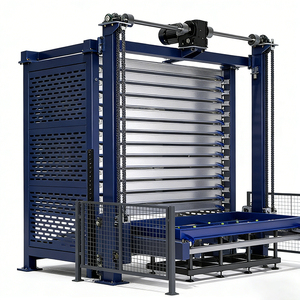
IoT sensor arrays embedded within individual roller track channels allow real-time monitoring of lane depth, inventory depletion velocity, and carton motion tracking. Piezoelectric sensors calculate remaining stock volume dynamically, triggering automatic replenishment requests to upstream AS/RS vertical sheet metal systems or bulk pallet racks long before stockouts occur. This transition closes the visibility gap between bulk storage and active picking faces.
Due to the skyrocketing cost per square meter of urban distribution real estate, carton flow systems are increasingly integrated into 3-tier and 4-tier rack-supported mezzanine platforms. By combining high-density pallet storage on top levels with carton flow gravity lanes on lower floors, operators multiply usable floor space by 300% without expanding the warehouse's physical building footprint.
To reduce embodied carbon and container freight shipping costs, Chinese metallurgical engineering is advancing cold-formed micro-alloyed steels. By utilizing high-yield strength steels with higher tensile capacity, upright frames achieve equivalent or superior load-bearing safety margins with reduced profile wall thickness, lowering raw material expenditure and environmental impact.
Protect your capital expenditure by verifying critical manufacturing criteria before signing procurement contracts with Chinese exporters.
Demand Mill Test Certificates (MTC) adhering to EN 10204 Type 3.1 verifying chemical composition (Carbon, Manganese, Silicon) and yield strength exceeding 235 N/mm² for uprights and beams.
Reject factories utilizing primitive solvent wipe-down cleaning. Ensure automated immersion pickling and phosphating lines capable of passing 500+ hours of ASTM B117 salt spray testing without rust bleed.
Uprights and beams must be packed with shock-absorbing corrugated separators, edge corner guards, and high-tensile PET strapping to ensure zero transit deformities during sea freight voyages.
Authoritative answers to the most common engineering, commercial, and operational questions asked by international project directors.
The inclination angle typically ranges between 2.5° and 4.0° (approx. 4.5% to 7% slope gradient). Calculating the ideal incline requires balancing package bottom rigidity against roller friction. Rigid plastic distribution totes with flat, reinforced ribs roll efficiently at a shallow 2.5° slope. Conversely, corrugated fiberboard cartons carrying variable loads (especially in humid environments where paper absorbs moisture and softens) experience carton deflection and require a steeper 3.5° to 4.0° angle. HEDA’s engineers provide test-run video verifications using your actual carton samples prior to final bracket stamping.
Skate-wheel tracks utilize staggered rows of small plastic or steel wheels mounted on galvanized metal channels. They offer exceptional flexibility for multi-width carton lanes where full divider re-spacing is frequent, and are highly economical for lightweight split-case operations under 25 kg/box. Full-width cylindrical steel or PVC rollers provide a continuous, unbroken contact plane across the carton base. Full-width roller tracks are essential for irregular carton bottoms, wooden cases, wire baskets, or heavy industrial automotive component boxes up to 80 kg, distributing weight evenly and avoiding wheel indentation into soft carton bases.
Yes. HEDA manufactures universal universal-mount adapter brackets compatible with all major international upright punch patterns (including 50mm pitch, 75mm pitch, teardrop patterns, and European hexagonal punchings). The existing beam levels can either be replaced or supplemented by our drop-in carton flow shelf beds. This flexibility allows facility owners to transform standard bulk storage ground levels into dynamic carton picking faces without replacing the primary structural upright columns.
All HEDA cold-rolled steel profiles pass through an automated 10-step surface treatment line. Following robotic welding and mechanical shot-blasting, components undergo chemical degreasing, multi-stage acid pickling to eradicate microscopic scale, and phosphate conversion coating. Components are immediately transferred into an environmental clean-room tunnel where an electrostatic powder coating (epoxy-polyester hybrid) is applied at 60–80 microns thickness and heat-cured in a 200°C oven. For open yards, high-salinity ports, or blast-freezer cold storage (-30°C), hot-dip galvanized finishes conforming to ISO 1461 are provided.
To generate an accurate engineering proposal within 24 hours, our engineering design team requires: (1) A warehouse architectural layout or DWG drawing indicating clear ceiling heights, building columns, fire exits, and floor flatress data; (2) Detailed carton specifications: Minimum, average, and maximum length, width, height, and gross loaded weight; (3) Carton base material (virgin plastic tote, recycled paperboard, wooden box); (4) Number of unique SKUs and required picking faces per SKU; (5) Desired pick interface (drop-shelf presentation tray or flush front beam).
Every international export order is backed by full regulatory verification. HEDA maintains European CE Certification (Certificate No. 2435-CPR-8605159), ISO 9001:2015 Quality Management Certification (Certificate No. 18624Q00169R0M, valid through 2027), and RoHS environmental material compliance. On demand, we issue certified Raw Steel Mill Test Reports, Coating Adhesion Test Certificates (Cross-Cut / Impact Test), and third-party inspection sign-offs from SGS or Bureau Veritas.
Partner directly with Guangzhou Heda Shelves Co., Ltd. for factory-direct engineering, customized 3D CAD system modeling, and verified structural integrity. Connect with our senior intralogistics engineering team today.