Comprehensive Engineering Guide: Wholesale Back To Back Pallet Racking Systems
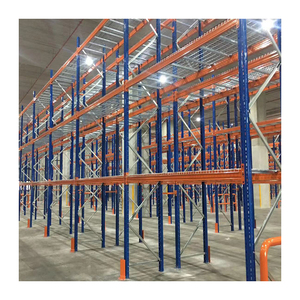
In modern supply chain infrastructures, maximizing volumetric cube efficiency while preserving 100% selective stock accessibility represents the primary operational benchmark. Back-to-back pallet racking systems—also known as double-run selective pallet racks—constitute the backbone of contemporary intralogistics distribution hubs. By interconnecting two standard single-entry pallet racking rows through engineered structural row spacers, back-to-back configurations eliminate unnecessary operating aisles, condense overall structural footprints by up to 40% compared to isolated single rows, and significantly lower the civil engineering investment per stored pallet unit.
Structural Anatomy and Mechanical Integrity
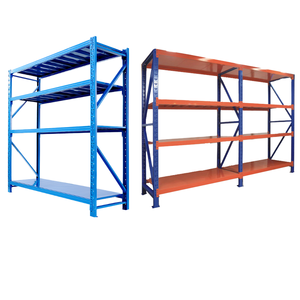
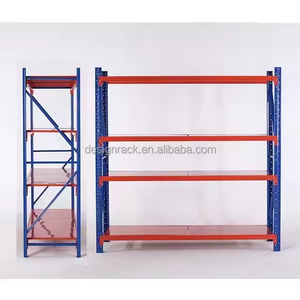
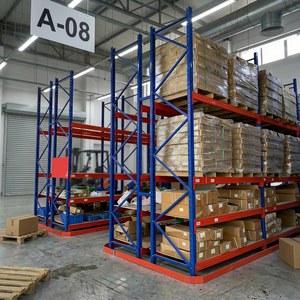
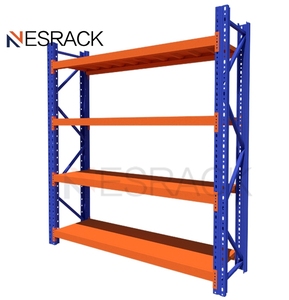
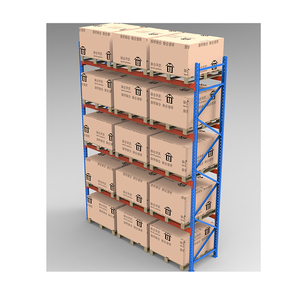
A certified back-to-back pallet racking system depends on harmonic interaction among vertical upright frames, horizontal boxed or step beams, and structural row spacers:
- Omega Upright Profiles: Precision roll-formed from cold-rolled steel coils, our upright columns feature 11-to-13 cold-fold profiles that maximize torsional rigidity and resistance against lateral mechanical buckling under asymmetric loading scenarios. Pitch perforations (typically 50mm, 75mm, or 76.2mm teardrop/diamond patterns) enable rapid vertical level modification without compromising yield resistance.
- Interlocking Beam Assemblies: Heavy-duty beams utilize interlocking welded box profiles engineered from two matching C-sections or roll-formed step designs. Triple or quadruple hook bracket connectors engage the upright punches snugly. High-visibility zinc-coated safety pins guarantee positive mechanical locking, neutralizing accidental dislodgement caused by vertical forklift mast slippage.
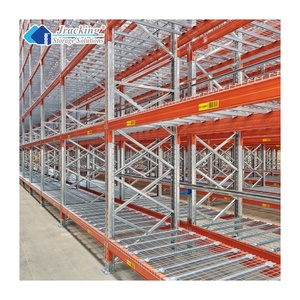
- Structural Row Spacers: Back-to-back configurations rely heavily on fixed tubular or channel row spacers bolted directly across adjacent upright columns. These spacers unify two rows into an integrated double-bay structural skeleton, drastically increasing the moment of inertia along the cross-aisle direction, mitigating seismic drift, and stabilizing the entire high-bay installation.
- Flue Space Regulations & Safety Accessories: Critical for NFPA 13 and local civil defense compliance, standardized row spacers create rigid longitudinal flue spaces (typically 150mm to 300mm), ensuring vertical fire sprinkler water penetration can quench bottom-tier thermal emergencies without obstruction. Column guards, heavy-duty frame end barriers, and back-stop mesh further protect structural members from continuous reach-truck and counterbalance vehicle strikes.
Technical Benchmark: Selective vs. High-Density Racking Systems
Selecting the appropriate pallet racking topography demands a rigorous analysis of SKU velocity, total inventory volume, and mechanical handling fleets:
| Evaluation Parameter | Selective Back-to-Back | Drive-In Racking | Radio Shuttle Racking | Push-Back Carts |
|---|---|---|---|---|
| Direct Pallet Access | 100% Immediate Selectivity | Last-In, First-Out (LIFO) | FIFO or LIFO Automated | LIFO Lane Dependent |
| Warehouse Cube Utilization | 60% – 70% Floor Utilization | 75% – 85% High Density | 80% – 90% Ultra High | 70% – 75% Medium-High |
| SKU Diversity Suitability | Unlimited Multi-SKU | Low SKU / High Bulk | Medium SKU / Deep Lane | Moderate SKU Diversity |
| Forklift Aisle Requirements | 3.0m – 3.8m Standard Reach | Requires Inside-Rack Drive | Aisle Only / Remote Fleet | Standard Reach Front Aisle |
| Capital Expenditure Index | Lowest Capital Investment | Moderate Initial Capex | Higher (Automated Shuttle) | Moderate to High (Rollers) |
Future Procurement Trends in Industrial Back-To-Back Racking
The global logistics landscape is undergoing an accelerated structural transformation. Procurement managers must navigate these evolving dynamics:
- Integration with Autonomous Mobile Robots (AMRs) and AS/RS: Standard back-to-back racking is increasingly designed with tight structural tolerances to accommodate autonomous narrow-aisle forklifts and vision-guided AGVs. Deflection thresholds are tighter (L/200 down to L/350), ensuring autonomous optical guidance sensors maintain millimeter accuracy without mechanical jamming.
- Climatic Resilience and Surface Finishing Upgrades: As global logistics expansion shifts toward extreme geographic zones—such as the GCC Middle East corridor, coastal Southeast Asia, and tropical Latin America—standard cosmetic paint finishes fail rapidly. Future-ready procurement mandates comprehensive multi-stage pickling, iron/zinc phosphating pretreatments, and thermosetting epoxy-polyester powder coats rated for over 500 hours of continuous salt-spray testing.
- Modular Hybrid Conversions: Forward-thinking distribution hubs are buying back-to-back base configurations that can be transformed into multi-tier rack-supported mezzanines or fitted with carton live roller tracks on bottom tiers for split-case picking, accommodating fluctuating e-commerce seasonal demand without discarding base steel investments.
Engineering Evolution: 2026 and Beyond
From Finite Element Analysis (FEA) computer-simulated load optimizations to low-carbon green steel certifications, Chinese manufacturers are driving structural engineering innovations. Upright geometries are being refined to shave surplus structural steel weight while amplifying cold-work hardening across perimeter punch flanges. Furthermore, automated cold-roll forming lines equipped with continuous digital eddy-current flaw detection and high-speed robotic welding cells guarantee weld penetration uniformity that eliminates microscopic internal fissures across load connector nodes.