China Wholesale Push Back Warehouse Racking Manufacturer & Suppliers
Precision-Engineered Heavy Duty Storage Architectures, High-Density Space Optimization, and Direct Factory Supply Chain Reliability.
Engineered Industrial Racking Systems: Direct Manufacturer Portfolio
Custom structural configurations manufactured from high-yield Q235B/Q355B cold-rolled steel, designed for rigorous ISO 9001 and CE certified warehouse safety standards.
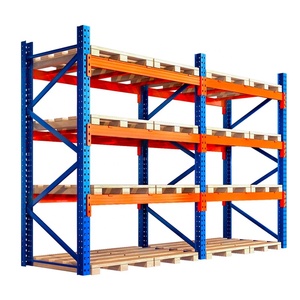
High Density Selective
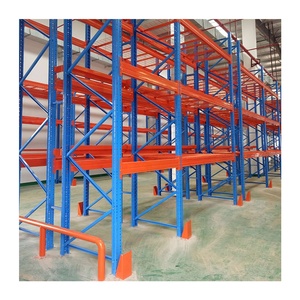
Heavy Duty Industrial Double Deep Stacking Selective Pallet Racking
Engineered for high-throughput logistics requiring a balanced compromise between high storage density and direct SKU selectivity, doubling bay depth efficiently.
Heavy Duty Pallet Storage Rack With Side Safety Mesh
Equipped with modular electro-galvanized anti-spill back and side wire mesh decking to maximize plant personnel safety against loose carton displacement.
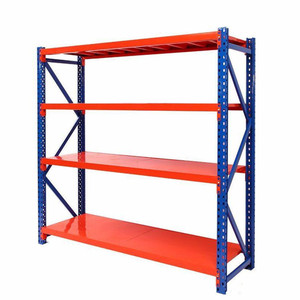
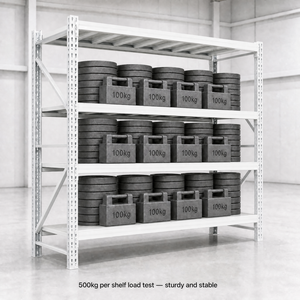
Custom Heavy-Duty Metal Rack Storage Shelf High Quality Iron Equipment
Reinforced upright geometries designed to sustain variable unit-load footprints, heavy tooling dies, and non-standard palletised configurations up to 4,000 kg.
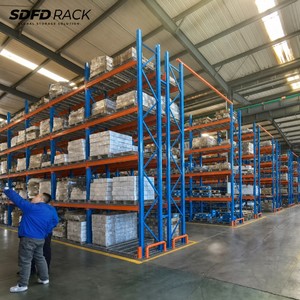
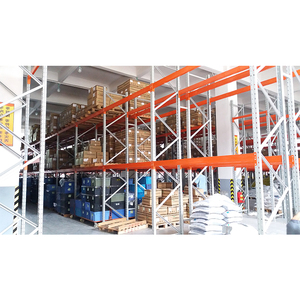
Heavy Duty Industrial Storage Rack Steel Pallet System For Logistics
Heavy dynamic frame stabilization rated for intense counterbalance and reach-truck interface, fully treated with anti-corrosion chemical pickling pre-treatments.
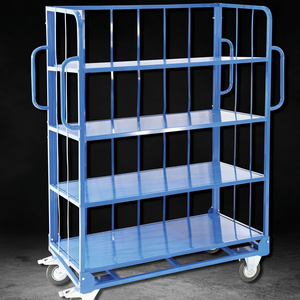
4 Layer Customizable Heavy Duty Metal Shelf Trolley Order Picking Cart
Heavy duty internal logistics picking cart configured with polyurethane brake casters and reinforced decking trays to bridge fixed racking and final dispatch sorting.
Strategic Architecture: Push Back Racking Kinematics & Volumetric Efficiency
Push back warehouse racking systems bridge the operational divide between maximum volumetric storage utilization and SKU accessibility. Unlike conventional Drive-In racking configurations that require the lift vehicle to physically enter the storage bay structure—introducing operational hazards and slowing machine operating cycles—a precision-engineered Push Back Racking System utilizes a series of nested, inclined structural carts that glide effortlessly along sloped steel guide rails.
Operating on a Last-In, First-Out (LIFO) inventory logic, the forklift operator places the initial pallet onto the top rolling nested cart. When loading subsequent pallets into the designated lane, the vehicle front-end load physically and safely pushes the already-stowed pallet backwards along the gravitational gradient slope (typically set at an exact 2% to 3% angle to avoid unguided inertial acceleration). Upon pallet retrieval, controlled gravitational feed smoothly guides remaining pallets forward to the picking face, offering critical structural and economic advantages:
Volumetric Space Reclamation: Reclaims up to 75% of otherwise dormant aisle surface footprint compared to standard single-selective layouts.
Reduced Forklift Transit Time: Because operators interface exclusively at the outer aisle face, load/unload cycle durations drop by an average of 40% per pallet cycle.
Structural Asset Longevity: Elimination of internal bay travel directly prevents rack impact accidents, ensuring structural column integrity and drastically reducing warehouse MRO costs.
Flexible Multi-SKU Channeling: Unlike standard drive-in racks where an entire deep bay must be dedicated to a single SKU, each distinct lane in a push back system operates as an independent functional channel.
Engineering Performance Metrics & Material Standards
Comparative mechanical breakdown for structural design validation and warehouse consultant review.
Hot-Dip Galvanizing (HDG) to ASTM A123 specification
Salt Spray Resistance > 500 hrs (Powder)
Safety Accessories
Floor column anchors, beam safety clips, lane stops
Heavy wrap-around aisle-end impact bollards, mesh panels
CE Mark (No. 2435-CPR-8605159), RoHS Verified
Strategic Procurement Trends: The Next Horizon in Warehouse Systems
How progressive supply chain executives and distribution center planners evaluate long-term capital expenditure in racking infrastructures.
Total Cost of Floor Space Ownership (TCO)
Global industrial real estate lease prices continue upward trajectories. Buyers now prioritize volumetric cubic foot monetization over initial purchase price per ton, shifting capital to dense dynamic systems like push back and radio shuttles.
Hybrid Automation Architecture
Racking designs now must integrate seamlessly with Automated Guided Vehicles (AGVs) and Autonomous Mobile Robots (AMRs). Modern layouts require micro-tolerance engineering on floor anchor points and structural lane clear-zones.
Severe Climate Engineering
Cross-border sourcing demands robust resilience against harsh operating environments, such as the GCC region's 45°C ambient heat and marine salinity, making 8-stage phosphated powder coatings a non-negotiable procurement specification.
Verifiable Certification Traceability
Institutional logistics developers, civil authorities, and insurance underwriters demand verified structural compliance. Direct mill-test material certificates and third-party CE certifications take precedence during global wholesale supplier audits.
Technological Evolution in Racking Systems Engineering
The manufacturing of industrial push back and heavy-duty storage frameworks is shifting from traditional manual structural fabrication to digital precision engineering. The integration of Parametric CAD/CAM Roll-Forming Lines enables continuous inline stamping of column profiles without inducing micro-fractures in high-tensile steel coils.
Furthermore, digital twin simulation tools allow structural engineers to simulate seismic accelerations, static live-load deflections, and fork truck shear forces before raw coils ever feed into the production floor. On the dynamic hardware front, advanced cart chassis incorporate encapsulated polyurethane-coated radial bearings that minimize rolling friction, ensuring that push back systems operate smoothly even when loaded with non-uniform wooden or composite pallets.
Factory-Direct Manufacturing Superiority: Why Partner with HEDA
Headquartered in Guangzhou with over two decades of technical manufacturing mastery, our facilities deliver scalable, engineered storage infrastructure worldwide.
Traceable Certified Excellence
Backed by certified CE compliance (No. 2435-CPR-8605159) and ISO 9001:2015 Quality Management (No. 18624Q00169R0M), our components undergo meticulous tensile testing and weld inspections to ensure absolute structural dependability.
Free 3D & CAD Engineering Layouts
Eliminate layout risk before fabrication. Our in-house engineering team converts your building CAD, clear height, column matrices, and pallet details into precise 2D plans and 3D operational spatial renderings within 24 to 48 hours.
Containerized Global Export Packaging
Every component bundle is systematically packed, strapped, and coded to correspond exactly with installation structural drawings, accelerating local assembly and eliminating offloading demurrage in international ports.
Precision 10-Stage Manufacturing Workflow
From prime cold-rolled steel coils to ocean-container staging, our end-to-end quality control ensures unmatched structural consistency.
01
Raw Material QC
Prime coil spectroscopic analysis ensuring compliance with Q235B/Q355B physical yield points.
Bundle banding with protective angle guards, barcoded tagging, and container weight balancing.
Wholesale Procurement & Engineering FAQ
Direct technical answers addressing system integration, containerized transit, and facility compliance.
What are the structural criteria for selecting Push Back Racking over Drive-In Racking?
Push back racking is fundamentally selected when an operation requires high storage density (2 to 6 pallets deep per lane) combined with higher SKU selectivity than drive-in racking can deliver. In push back systems, every level and lane operates independently on heavy-duty nested rolling carts, allowing different SKUs to reside in adjacent bays. Furthermore, because forklifts never enter the rack bay, pallet travel times are shortened by up to 40%, and equipment collision risks with structural columns are practically eliminated.
How does your manufacturing ensure coating performance in high-humidity or coastal warehouse sites?
Every structural component manufactured in our 30,000 m² facility undergoes an automated multi-stage chemical pretreatment consisting of acid pickling, degreasing, and zinc phosphating prior to finish application. This critical chemical passivation ensures deep chemical bonding of the high-durability electrostatic thermoset powder coat. For open-yard or severe coastal environments, we provide hot-dip galvanization according to ISO 1461/ASTM A123 standards.
What data inputs are required from a buyer to generate a free 2D/3D warehouse layout?
To generate an engineering CAD plan and structural calculation, our engineering team requires: (1) Architectural CAD building floor plan indicating column grids and clear height to lowest roof obstructions; (2) Pallet specifications including overall dimensions (length, width, height) and total gross weight; (3) Operational forklift model specifications, mast height, and minimum right-angle stacking aisle requirements; (4) Total active SKU count and required inventory turnover frequency.
Are your racking systems certified for international building codes and fire safety reviews?
Yes. Our systems are certified under CE No. 2435-CPR-8605159 and ISO 9001:2015 standards. Layout drawings explicitly define transverse and longitudinal flue spaces (typically 150mm clear minimum), sprinkler clearance zones, load rating capacities, and egress pathways required to support documentation submissions to local Civil Defense and industrial insurance inspection bodies.
What is the typical manufacturing lead time and container packing logic for export?
Standard project lead times range from 15 to 25 operational days depending on tonnage and custom color profiles. Packing is engineered via container-loading simulation software to balance volume and axle weight for 20GP/40HQ containers. Component packages are bundled with corner protection and tagged with alphanumeric marks that match the supplied installation assembly blueprints.
Transform Your Warehouse Volumetric Efficiency Today
Speak directly with our industrial racking engineering team in Guangzhou. Receive a complimentary 2D CAD layout, 3D visualization, and comprehensive wholesale factory quotation for your upcoming storage expansion project.