Engineering Whitepaper
Standard Industrial Pallet Racking: Engineering Rigor & Global Sourcing
A comprehensive analysis of heavy-duty structural steel profiles, automated roll forming tolerances, surface finishing chemistry, and total cost of ownership (TCO) benchmarks for global supply chain leaders.
In modern industrial intralogistics, selecting a standard pallet racking system transcends basic square-footage calculation. Facility operators, tier-1 3PL logistics networks, and automated distribution hubs face increasing SKU diversity, volatile SKU velocity, and stringent seismic-code liabilities. Sourcing directly from verified tier-1 China wholesale standard pallet racking factories unlocks critical competitive advantages—bridging the gap between certified metallurgical integrity (conforming to EN 15512, RMI, and AS 4084 standards) and substantial capital expenditure efficiencies.
Whether deploying low-profile single-selective frameworks or deep-lane satellite storage matrices, your structural architecture dictates operational throughput, mechanical safety buffers, and automation readiness. This intelligence brief evaluates physical component tolerances, cold-roll manufacturing protocols, supply chain life cycles, and strategic procurement methodologies governing commercial warehouse racking in 2026 and beyond.
Certified Heavy-Duty Solutions
High-Performance Pallet Racking Systems
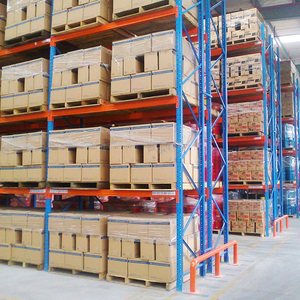
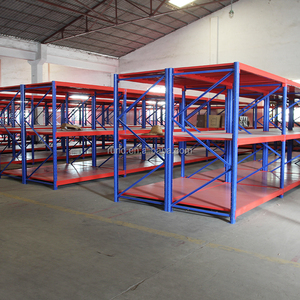
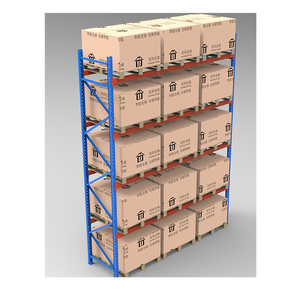
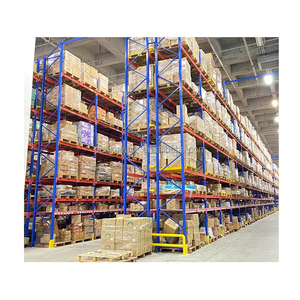
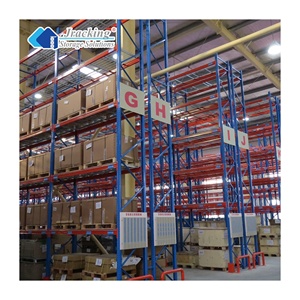
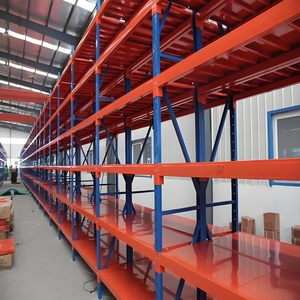
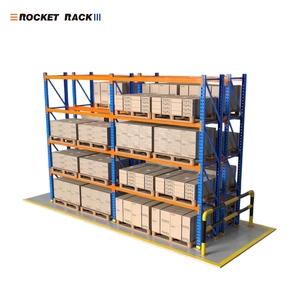
Factory-direct storage matrices engineered from certified Q235B and Q355B structural coil steel, validated under dynamic cycling and vertical static deflection limits.
30,000+
Square Meters Facility
30,000 t
Monthly Steel Output
10,000+
Global Projects Built
120+
Export Destinations
Strategic Industry Outlook
Future Procurement Trends in Industrial Pallet Storage (2026–2030)
How macroeconomic pressures, regional compliance frameworks, and autonomous material handling transform supplier qualification protocols.
Metallurgical Traceability & CBAM Compliance
Global supply chains now penalize unverified carbon intensities. Global enterprises increasingly specify Mill Test Certificates (MTC) matching EN 10204 Type 3.1, tracing scrap ratios, blast-furnace emissions, and exact tensile strength from raw coil to finished rack frames.
Pre-Engineered Automation Readiness (AGV/AMR)
Procurement teams are moving away from manual-forklift tolerance racking. Modern designs demand millimetric vertical plumb tolerances and specialized floor anchoring arrays ready to interface seamlessly with autonomous counterbalanced trucks and visual guidance systems.
Container-Optimized Nesting Systems
With volatile maritime container freight, advanced Chinese manufacturing hubs utilize computer-modeled upright nesting and standardized bolt-together frame packs, increasing cubic container utilization from 62% to over 91%, lowering per-pallet ocean transit costs.
Engineering Innovations
Evolutionary Shifts in Pallet Racking Architecture
Comparative structural matrix detailing performance deviations between traditional and modern manufacturing iterations.
| Evaluation Parameter | Legacy Industry Standard (Pre-2020) | Next-Gen Engineered Architecture (Current HEDA Standard) | Operational Impact & ROI |
|---|---|---|---|
| Raw Material Specification | Commercial grade Q195 / re-rolled hot band | Certified prime continuous-cast Q235B & Q355B coil | Eliminates micro-cracks along profile bend lines; preserves yield strength |
| Upright Forming Accuracy | Discontinuous hydraulic punch & manual feed | Continuous multi-stage CNC cold roll lines with servo-punching | Ensures pitch precision (±0.1mm) across 12-meter clear spans |
| Pre-Treatment Chemistry | Simple solvent wipe-down or manual rinse | Automated 8-stage immersion/spray pickling & phosphating | Exceeds 500-hour ASTM B117 salt spray testing without surface delamination |
| Beam End-Connector Geometry | 3-claw stamped brackets with loose pins | 4-claw cold-stamped integral wraps with self-locking spring clips | Distributes rotational moment forces efficiently under seismic vibration |
| Digital Verification | Static hand calculations | Finite Element Analysis (FEA) dynamic deflection modeling | Optimizes deadweight-to-load ratios; eliminates redundant steel costs |
Direct Factory Value
Guangzhou HEDA Shelves: Enterprise Strengths
Combining 25+ years of precision manufacturing heritage with comprehensive international turnkey delivery.
ISO 9001 & CE Validated
Certified under stringent European standard EN 15512 (CE No. 2435-CPR-8605159) and ISO 9001:2015 quality frameworks, providing verified civil and industrial approval compliance.
30,000 Ton Monthly Scale
Spanning 30,000 m² of specialized production floor in Guangzhou, our automated profile rolling mills and robot welding arrays consistently turn out over 30,000 metric tons every month.
Free 2D CAD & 3D Modeling
Our senior in-house structural logistics engineers supply tailored AutoCAD floor plans, pallet loading charts, and full-color 3D architectural renderings before purchase commitment.
Harsh-Climate Pre-Treatment
Every beam and upright profile receives industrial-grade chemical pickling, surface passivating, phosphating, and electrostatic epoxy coating suited for high heat, coastal salinity, and extreme dust.
Procurement Knowledgebase
Frequently Asked Questions: Global Racking Procurement
In-depth responses covering international standards, structural durability, lead times, and on-site integration.
How does Q235B steel compare with European S235 or American ASTM A36 for pallet racking?
Q235B is metallurgical equivalent to European S235JR (EN 10025-2) and American ASTM A36 in chemical composition and mechanical properties, possessing a minimum yield strength of 235 MPa and ultimate tensile strength of 370–500 MPa. China wholesale manufacturers like HEDA use certified hot-rolled coils from top-tier state-owned mills. Each batch undergoes impact testing, chemical analysis, and elongation verification, meeting EN 15512 safety deflection criteria (≤ L/200 for beams under nominal safe working load).
What specific technical parameters are necessary to engineer a certified warehouse layout?
To produce an authoritative structural layout and firm quotation, our design team requires:
- Building Envelope: Detailed architectural CAD drawing showing slab clear height, column spans, overhead MEP services, and emergency egress routes.
- Unit Load Specs: Pallet dimension (W × D × H including overhang) and true gross pallet weight.
- MHE Dynamics: Model, lift height, collapsed mast profile, and minimum right-angle aisle stacking turning radius (Ast) of your forklift fleet.
- Floor Slab Integrity: Concrete slab thickness, compressive strength (e.g., C25/30), and rebar reinforcement layout.
How are surface finishes treated to resist humidity, ambient chemicals, and corrosion?
Our automated finishing lines employ an 8-stage pre-treatment regimen. The steel components pass through immersion degreasing, scale-removing acid pickling, neutralizing rinses, and zinc phosphating. This chemically converts the surface, ensuring superior bond adhesion for high-impact electrostatic thermosetting powder coating (cured at 180°C–200°C). For outdoor coastal yards, cold-storage facilities, or chemical containment zones, we offer hot-dip galvanizing conforming to ISO 1461, guaranteeing over 65 microns of protective zinc coating.
What is the standard manufacturing turnaround, packaging protocol, and export transit timeline?
Standard containerized orders (1 to 5 × 40ft HQ) average 15 to 25 production working days from CAD engineering approval. For transit protection, frames are nested with corrugated edge boards, cross-strapped with heavy-duty steel bands, and wrapped in thermal protective film. Beams are bundled on dedicated timber skids with protective corner cushions to prevent vibration abrasion during ocean freight. Direct ocean transit times from our domestic loading ports (Guangzhou, Shenzhen, Foshan) run 14–22 days to Middle East hub ports (Jebel Ali, Dammam, Jeddah) and 20–32 days to European or North American ports.
Do you offer on-site assembly supervision and structural layout engineering certification?
Yes. Every order is accompanied by detailed assembly manuals, piece-by-piece packing manifests matching component labels, and 3D step-by-step erection diagrams. We supply real-time technical video guidance for local installation contractors. For complex multi-tier mezzanines, structural cantilevers, or deep-lane shuttle integrations, HEDA Shelves deploys experienced structural project managers on-site to direct installation, calibrate vertical plumbness, and ensure anchor torque conforms to structural engineering specifications.
Request an Engineered Layout & Factory-Direct Quote
Consult with our senior logistics engineers today. Receive a certified warehouse layout proposal, structural static calculation review, and competitive factory-direct supply schedule within 24 hours.