Flagship Heavy-Duty Storage Rack Configurations
Engineered with cold-rolled Q235B/Q355B structural steel, high-durability electrostatic thermoset finishes, and certified deflection resistance conforming to international FEM 10.2.02 and EN 15512 standards.
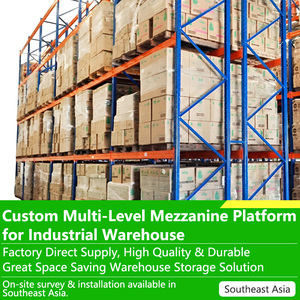
Heavy Duty 3-Layer Epoxy Coated Pallet Racking Cold Rolled Steel Selective Pallet Rack Clip Type Storage Shelving Card Slot Rack
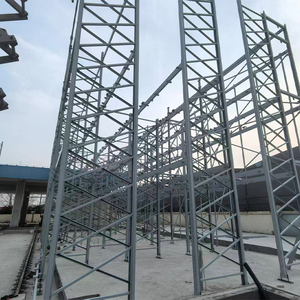
Mine Bulk Materials Anti-pressure Piling Heavy Duty 5 Layer Corrosion Protection Metal Warehouse Rack 1000-4000kg Load Capacity
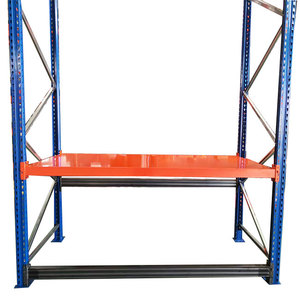
CE ISO Certified Factory Direct Sales Pallet Storage Rack Heavy Duty Shelving for Warehouse Equipment Garage Shelves
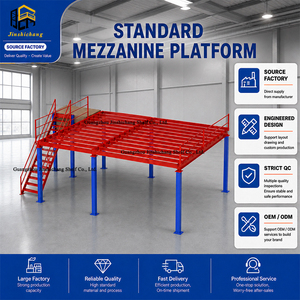
OEM Customized Steel Mezzanine Floor Manufacturer For Warehouse Storage And Factory Projects
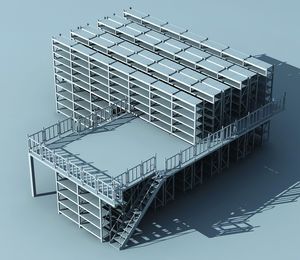
Light Mezzanine Rack Storage System with Adjustable Steel Floor Panels for Warehouse Storage and Factory Use
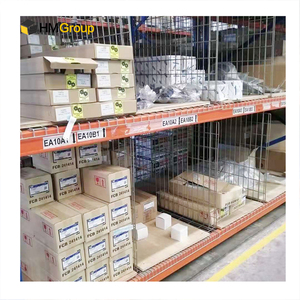
Galvanized Steel Pallet Rack Hanging Metal Wire Mesh Shelf Dividers
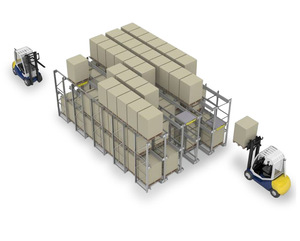
Drive-Through Racking Is a High-density, FILO (First-In, First-Out) Storage Solution Designed for High-turnover Products
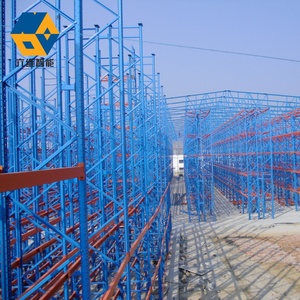
Clad-rack Warehouse Construction Rack Clad Building Commercial Warehouse Rack Numbering System
Structural Mechanics & OEM Engineering Standards for Heavy-Duty Storage Systems
Heavy-duty industrial storage racks are foundational structural assets subjected to severe static loads, intermittent dynamic impact from material handling equipment (MHE), and lateral seismic excitation. Choosing the right Custom OEM manufacturer requires deep verification of metallurgy, cold-roll profile geometry, joint moment-rotation behavior, and surface chemical conversion processes.
Certified High-Tensile Metallurgy
We strictly source prime continuous cast coil steel in Q235B and Q355B (equivalent to ASTM A36 and ASTM A572 Grade 50). Minimum guaranteed yield strength ranges from 235 MPa to 355 MPa, providing superior ductility, structural dampening during seismic events, and zero micro-fissuring during multi-station roll-forming operations.
Closed-Box Interlocking Profiles
Unlike open-channel beams prone to torsional buckling under eccentric loading, HEDA utilizes continuous seam-welded step beams and dual-C interlocking box beams. These profiles achieve maximum section modulus ($W_x$) while minimizing tare steel weight, delivering optimal weight-to-load efficiency across spans reaching 3,900 mm.
Thermal & Coastal Pretreatment
Racking installations in challenging climates (such as the GCC's high humidity and abrasive airborne sand) undergo an automated 4-stage chemical immersion pretreatment: hot alkaline degreasing, acid pickling, zinc phosphating, and deionized water rinsing before electrostatic thermoset powder application (60–90 μm thickness).
Our 10-Stage Precision Production Architecture
From prime raw steel coil uncoiling to container-modular crating, each production phase operates under ISO 9001:2015 process controls to eliminate dimensional variance and weld anomalies.
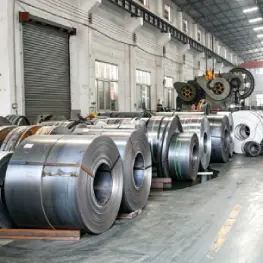 Step 01
Raw Materials Metallurgical Inspection
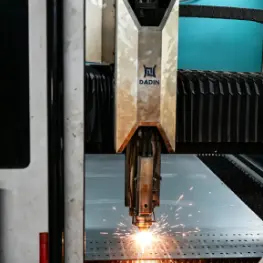 Step 02
CNC High-Speed Slitting & Blanking
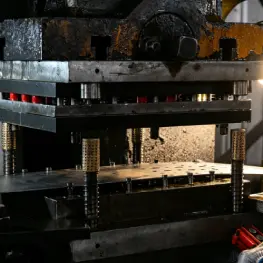 Step 03
Automated CNC Upright Punching
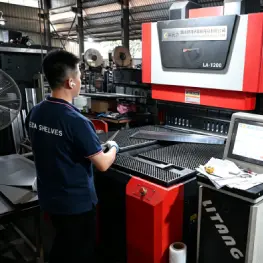 Step 04
Multi-Pass Progressive Cold Roll Forming
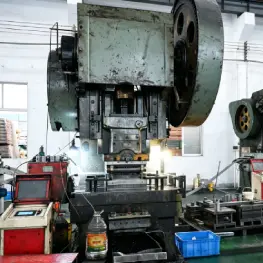 Step 05
Profile Calibration & Cut-to-Length
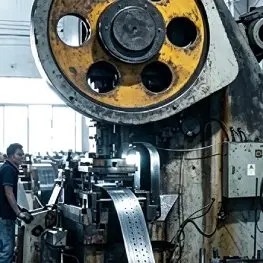 Step 06
Robotic Shot Blasting & Surface Deburring
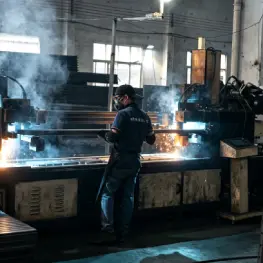 Step 07
Shielded MIG/MAG Connector Robotic Welding
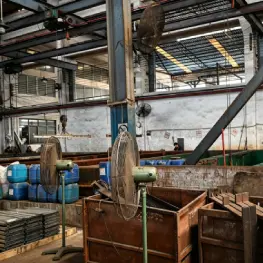 Step 08
Chemical Pickling & Phosphating Pretreatment
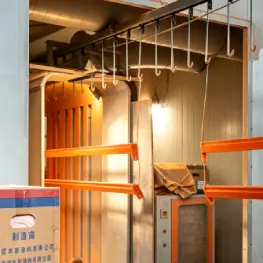 Step 09
Automated Electrostatic Powder Coating
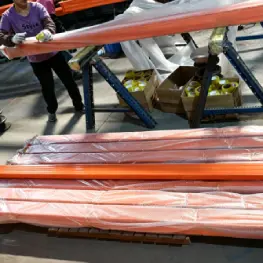 Step 10
Full-Batch QC Load Testing & Export Stowing
Integrated Engineering Capabilities & Manufacturing Superiority
Founded in 2001, Guangzhou Heda Shelves Co., Ltd. has spent over two decades evolving from a regional fabrication facility into a premier global OEM and ODM powerhouse. With complete in-house control across CAD/FEA simulation, roll forming, welding, and surface finishing, we eliminate third-party markup and maintain total traceability for global supply chain leaders.
25+ Years Industrial Mastery
Two and a half decades of real-world structural problem solving. Over 10,000 global logistics hubs, 3PL distribution centers, and high-density industrial cold stores safely deployed.
Free 2D CAD & 3D Digital Simulation
Prior to steel uncoiling, our senior structural engineers produce complete 2D architectural warehouse layouts, forklift turning radius simulations, and 3D FEA stress models at zero upfront cost.
Verified International Compliance
Certified under European CE Machinery/Construction Directives (Certificate No. 2435-CPR-8605159), ISO 9001:2015 Quality Management (No. 18624Q00169R0M), and full RoHS compliance.
High-Cube Container Optimization
Custom computerized nesting algorithms pack up to 26–28 tons of steel profiles per 40ft High Cube container, fully banded with protective angle boards and color-coded tags matching local erection diagrams.


Industrial Storage Procurement Trends Shaping 2025–2030
As logistics operations scale to meet omnichannel demands, corporate buyers and EPC contractors are prioritizing lifecycle durability, automation readiness, and structural sustainability over short-term capital expense.
AS/RS Hybridization & Tolerance Tightening
Conventional manual forklift aisles are being re-engineered for automated guided vehicles (AGVs) and Autonomous Mobile Robots (AMRs). OEM procurement specifications have tightened beam deflection tolerances from standard L/200 down to L/350 to ensure micro-millimeter precision for robotic shuttle sensors.
Clad-Rack Architecture Dominance
Industrial land acquisition costs have catalyzed the surge in rack-clad structures (silo warehouses). By using the racking framework as the vertical structural columns of the facility itself, industrial enterprises compress building timelines by 35% and eliminate independent pre-engineered building (PEB) structural steel costs.
Decarbonized Steel & Eco-Coatings
ESG reporting mandates across North America, the EU, and GCC are reshaping vendor selection. Tier-1 buyers demand zero-emission cold-forming and heavy metals-free thermoset powder formulations that generate negligible VOCs while exceeding 500-hour ASTM B117 salt-spray corrosion requirements.
Predictive Structural Health & Digital Twins
Next-generation upright frames are engineered with pre-machined sensor housings for wireless impact detection and load-deflection telemetry. Facilities integrate rack asset performance directly into their ERP and WMS platforms, preempting structural fatigue before catastrophic failure occurs.
Technological Frontiers: Cold-Forming Geometry & Seismic Load Dissipation
The transition from simple bolted angle-iron shelving to high-density, multi-tier industrial racking systems represents a major leap in structural mechanics. Contemporary high-density warehousing requires finite element analysis (FEA) to predict harmonic vibrations, seismic base shear forces, and rotational stiffness in beam-to-column semi-rigid connections.
Optimized Multi-Bend Upright Geometry
Modern HEDA upright profiles incorporate up to 12 distinct mechanical cold-formed bends along the cross-section. These continuous longitudinal facets dramatically increase the radius of gyration, elevating structural resistance against local torsional-flexural buckling under concentrated axial loads without adding unnecessary dead steel weight.
Seismic Dissipation & Baseplate Engineering
In seismically active zones, rack foundations must dissipate dynamic shear forces into the reinforced slab without concrete breakout. Our OEM baseplates utilize heavy-gauge ductile steel with dual-anchor expansion or chemical epoxy stud slots, calibrated under Eurocode 8 and RMI MH16.1 guidelines to prevent brittle joint fractures.
Integrated Fire Safety Hydraulic Compliance
As vertical high-bay heights surpass 12 to 30 meters, conventional ceiling-level fire sprinklers become insufficient. HEDA's custom storage engineering incorporates pre-punched transverse and longitudinal flue channel clear pathways, facilitating precision drop-in hanging for NFPA 13 in-rack ESFR sprinkler lines.
Frequently Asked Technical & Procurement Questions
Comprehensive answers to the structural calculations, regulatory approvals, and logistical criteria required by supply chain directors, warehouse managers, and project procurement teams.
What specific structural data is required to generate a certified 2D CAD layout and load calculation?
To produce an actionable, engineering-grade proposal, our engineering team requires:
1. Architectural Building CAD Drawing: Indicating clear internal roof height under rafters, building column grid centers, warehouse door positions, dock levellers, and floor slab expansion joints.
2. Unit Load Characteristics: Pallet dimensions (Length × Width × Height including product overhang), gross pallet weight (average and maximum allowable), and pallet entry orientation (Euro 1200×800 mm or Industrial 1200×1000 mm).
3. Material Handling Equipment (MHE): Make and model of forklifts (Reach truck, Counterbalance, VNA turret truck, or Articulated forklift), mast collapsed height, maximum lift height, and minimum right-angle stacking aisle width requirement ($A_{st}$).
4. Geotechnical & Seismic Criteria: Concrete slab thickness, compressive strength ($f'_c$, minimum 20–25 MPa recommended), and the local seismic zone acceleration factor ($S_s, S_1$).
How do HEDA heavy-duty racks prevent structural corrosion in coastal and extreme heat climates?
Warehouses situated in coastal hubs (such as Dubai, Jeddah, Dammam, or coastal ports globally) face high ambient humidity, elevated salinity, and abrasive sand. HEDA solves this through an automated multi-stage surface conversion:
• Degreasing & Acid Pickling: Removes all surface mill scale, grease, and oxidation residues from raw steel profiles.
• Zinc Phosphate Passivation: Creates a crystalline non-metallic zinc phosphate layer that mechanically bonds to the steel substrate, preventing sub-surface oxidation creep.
• Electrostatic Powder Curing: High-grade thermoset polyester powders are electrostatically deposited and baked at 180°C–200°C for 20 minutes to form an impenetrable, UV-stable shell (60–90 μm). For harsh chemical or outdoor yard environments, hot-dip galvanizing (HDG) conforming to ISO 1461 is available.
What is the allowable beam deflection limit for selective pallet racking under full load?
According to FEM 10.2.02 and EN 15512 specifications, the maximum allowable vertical deflection ($\delta$) of a pallet rack beam under full rated design load must not exceed $L/200$, where $L$ is the clear span distance between upright columns (e.g., for a 2,700 mm beam span, maximum deflection cannot exceed 13.5 mm). For automated crane systems or sensitive automated shuttle lanes, HEDA designs down to $L/300$ or $L/350$ to prevent robotic sensor misalignments.
Can HEDA structural drawings support Civil Defense and municipal building permit approvals?
Yes. Our structural engineering department provides comprehensive CAD drawings showing clear aisle widths, NFPA-compliant transverse and longitudinal flue spaces (typically 75 mm to 150 mm), escape path distances, and certified load capacity plaques. These technical calculation sheets can be stamped and submitted through your local structural engineering consultant or civil contractor for official Civil Defense and insurance carrier underwriting approvals.
What are the primary differences between Drive-In, Radio Shuttle, and Selective Racking?
• Selective Pallet Racking: Provides 100% individual pallet selectivity. Ideal for facilities managing high SKU counts with varying turnover rates. However, it requires significant floor space for working forklift aisles (utilizing roughly 35–45% of total warehouse volume).
• Drive-In Racking: Eliminates access aisles by having forklifts drive directly into deep multi-level lanes. Increases volumetric utilization up to 75%, operating on a LIFO (Last-In, First-Out) stock basis. Ideal for cold storage and uniform SKUs, though operating at slower handling speeds with higher risk of upright impact.
• Radio Shuttle Racking: Utilizes autonomous motorized shuttle carts running inside deep rails. Forklifts deposit pallets at the aisle face, and the shuttle maneuvers them inside the lane. It achieves up to 85% volumetric density, supports both FIFO and LIFO, reduces forklift cycle times by 40%, and eliminates rack collision damage inside storage channels.
How does HEDA guarantee traceability and structural quality across high-volume container exports?
Every production batch is assigned a unique production tracking code linked to the original raw steel mill certificate (MTC). Throughout manufacturing, quality assurance technicians perform dimensional cross-checks, ultrasonic testing on beam end-connector welds, and automated salt-spray cross-hatch adhesion testing on coated samples. Prior to container dispatch, bundles are wrapped in industrial corrugated paper and waterproof poly film, steel-strapped with edge guards, and labeled with bilingual part numbers matching the supplied assembly manuals.
What are the typical manufacturing lead times for a 500-ton to 2,000-ton warehouse project?
Thanks to our 30,000 m² integrated plant and a continuous cold-forming throughput of 30,000 metric tons per month, typical production lead times range between 20 to 30 calendar days following final CAD drawing and color sign-off. High-volume orders can be shipped in rolling container batches to allow local installation teams to commence erection on-site while subsequent bays are still in transit.
Do you provide on-site installation supervision and assembly guidance?
Every shipment arrives with comprehensive 3D step-by-step installation blueprints, torque tensioning tables, and part cross-reference documentation. Furthermore, we provide direct video engineering support to local contracting teams. For large-scale multi-tier mezzanines, complex AS/RS racks, or projects exceeding 2,000 pallet positions, HEDA can deploy certified senior installation project managers to your job site to supervise leveling, plumb alignment, torque verification, and final safety handover.
Accelerate Your Warehouse Project with Certified OEM Manufacturing
Consult directly with HEDA's structural engineering team. Submit your warehouse architectural layout, pallet data, or tender specification documents today to receive a comprehensive 2D CAD floor plan, 3D rendering, and factory-direct quotation within 24 hours.