Specialized Industrial Racking & Modular Shelving Systems
Precision-fabricated slotted structural frames, heavy-gauge beam sections, and automated storage architectures custom designed for heavy warehouse loads.
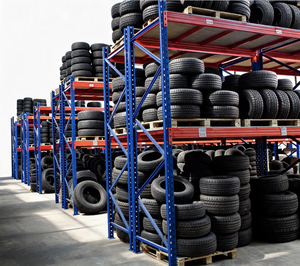
Yueyang Heavy Load Multi Layer Industrial Storage Racking
Inspect Solution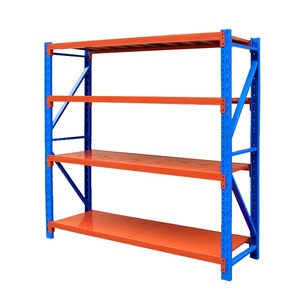
HUAWU Steel Boltless Shelving Rack 4-Layer System
Inspect Solution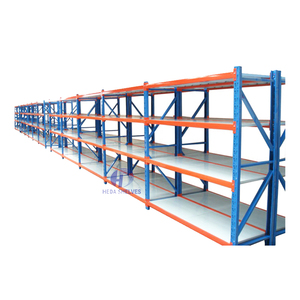
Adjustable Pallet Steel Stacking & Storage Racks
Inspect Solution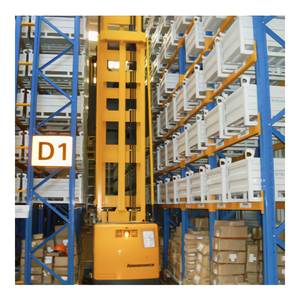
High Capacity VNA Narrow Aisle Pallet Racking
Inspect Solution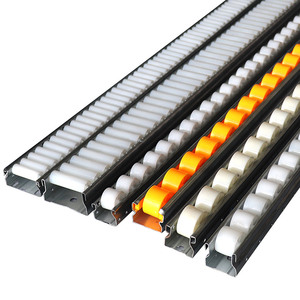
Industrial Rolling Rails Pallet Dynamic Flow Racks
Inspect Solution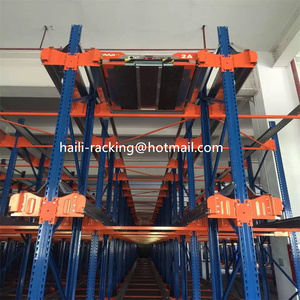
Industrial Robot Automation & Smart Shelve Racking
Inspect Solution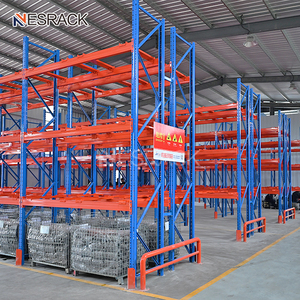
Multi-Level Electrostatic Coated Heavy-Duty Shelving
Inspect Solution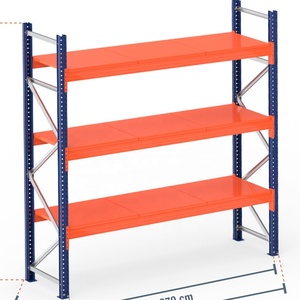
High Density Heavy Duty Warehousing Racking Systems
Inspect Solution1. Engineering Slotted Angle Racks: Cold-Rolled Structural Mechanics & Industrial Scalability
In modern industrial warehousing, material handling efficiency is governed by the structural integrity and spatial adaptability of storage infrastructure. As global supply chains encounter escalating footprints and volumetric costs, slotted angle racks and modular industrial racking serve as the foundational backbone for high-density, easily configurable warehousing. Custom OEM/ODM slotted angle shelving architectures bypass the rigid constraints of traditional, welded framework by integrating precision-punched cold-rolled steel (SPCC/Q235B) profiles that allow infinite adjustment intervals along 50mm and 75mm pitches.
From an applied mechanics perspective, the engineering of high-load slotted steel frameworks hinges upon optimizing the moment of inertia ($I_x$, $I_y$) and section modulus ($Z$). Cold bending forming produces uniform angle cross-sections—typically dimensioned from 40×40mm up to 80×50mm with gauge thicknesses spanning 1.5mm to 3.0mm—designed to resist combined compressive and torsional buckling modes. When deployed across multi-tier mezzanine floors or dense manual-picking archives, these profiles undergo stringent finite element analysis (FEA) to confirm elastic stability under localized concentrated loads and uniform distributed loads (UDL).
Furthermore, surface longevity in high-throughput environments necessitates rigorous metallurgical pretreatment. Our 10-step automated finishing line incorporates continuous degreasing, multi-stage acid pickling, zinc-phosphating conversion coating, and electrostatic epoxy-polyester powder baking (cure temperature 180°C–200°C). This process produces an impact-resistant polymeric barrier (60–90µm DFT) capable of withstanding extreme thermal cyclical stress (temperatures exceeding 45°C), high humidity, and atmospheric saline corrosion in coastal logistics hubs such as Dubai, Jeddah, and Jebel Ali.
Cold-Formed High Tensile Steel
Engineered utilizing high-yield Q235B and Q345B steel grades, offering exceptional tensile thresholds up to 510 MPa to prevent torsional deflection under dynamic load spikes.
Automated Multi-Axis Punching
CNC punched slot patterns guarantee hole center tolerance within ±0.1mm, ensuring instant beam engagement, zero field-drilling, and rigid mechanical corner bracing.
Epoxy-Polyester Hybrid Coating
Thermo-hardened electrostatic powder finishing provides continuous passivation against chemical corrosion, atmospheric oxidation, and abrasion during heavy daily loading.
2. Global Procurement Dynamics & Future Technological Trajectories (2025–2030)
The global procurement market for slotted angle racks, multi-level platforms, and high-bay racking systems is experiencing a paradigm shift. Historically procured merely as static commodity storage, enterprise buyers now treat racking infrastructure as an integrated technological component of warehouse execution systems (WES). Modern logistics infrastructure investments are shaped by distinct technological disruptions and strict regulatory standards.
A. Convergence of Modular Slotted Framing with Automated Guided Vehicles (AGVs) & AMR Systems: Traditional manual picking aisles are shrinking. Modern facility designs combine modular slotted framing and boltless steel decks with autonomous mobile robots. Racks must now feature tight manufacturing tolerances (<1.0mm cumulative variance per bay) to enable robotic lifting mechanisms, automated shuttles, and vision-guided pallet insertion arms to interface without calibration errors.
B. Lifecycle Costing (LCC) and Resilient Supply Chain Nearshoring: Tier-1 contractors, third-party logistics (3PL) providers, and pharmaceutical distribution networks prioritize total cost of ownership over initial capital expenditure. Procurement criteria require comprehensive seismic engineering analysis, compliant with FEM 10.2.02 (European Design Code) and RMI (Rack Manufacturers Institute) standards. Galvanized and specialized powder-coated materials that resist salt spray degradation over 500 hours are now baseline expectations for supply chains operating in challenging coastal and industrial climates.
Parametric Specification Matrix: Industrial Storage Classifications
| Structural System | Standard Profile (mm) | Safe Load Limit (UDL) | Primary Handling Mode | Corrosion Resistance Rating |
|---|---|---|---|---|
| Slotted Angle Shelving | 40×40 to 60×40 (1.5–2.5mm) | 100 – 350 kg / Level | Manual Hand Picking / Totes | Epoxy Powder: ASTM B117 > 400 hrs |
| Medium Duty Boltless Rack | 55×47 P-Beam (1.5–2.0mm) | 200 – 800 kg / Level | Manual / AGV Integrated Cart | Phosphated + Polyester Powder Coat |
| Heavy-Duty Pallet Racking | 80×60 to 120×95 Upright | 1,000 – 4,500 kg / Level | Counterbalance / Reach Forklifts | Hot-Dip Galvanized / Dual-Coated |
| Narrow Aisle (VNA) Architecture | 100×70 to 140×100 Upright | Up to 5,000 kg / Level | Turret Trucks / Guided ASRS | Electrostatic Powder Coated (High DFT) |
| Rack-Supported Mezzanine | Heavy Box Columns & C-Joists | 300 – 1,200 kg / m² Floor | Forklifts to Gate / Pedestrian Floor | Anti-Slip Steel Decking / Poly Coated |
C. Carbon Footprint Tracking & Circular Metallurgy: In alignment with green building mandates (such as LEED Gold and Estidama Pearl certifications), major industrial developers mandate the use of scrap-optimized, electric arc furnace (EAF) commercial coils. As an export manufacturer, Guangzhou Heda Shelves applies lean production protocols that eliminate material over-specification while preserving high dynamic safety factors (typically $\gamma = 1.65$).
3. Enterprise Manufacturing Strengths: Why Institutional Buyers Partner with HEDA Shelves
Operating a state-of-the-art 30,000-square-meter modern manufacturing facility in Guangzhou, China, Guangzhou Heda Shelves Co., Ltd. has led industrial racking design, fabrication, and worldwide distribution for over 25 years. Since our establishment in 2001, our direct factory-to-market structure removes intermediary layers, providing procurement managers, logistics consultants, and import distributors with clear accountability and direct access to design engineers.
Our monthly output exceeds 30,000 metric tons, supported by an engineering team of more than 300 experienced technical specialists. Every slotted angle profile, upright column, stepped beam, and structural baseplate is produced on automated roll-forming and CNC continuous-stamping production lines. Our manufacturing operations comply with certified quality systems, including ISO 9001:2015 (Certificate No. 18624Q00169R0M), CE Certification (EN 1090 / No. 2435-CPR-8605159), and full RoHS regulatory compliance.
For custom OEM/ODM engagements, our structural engineering department offers complimentary warehouse CAD layout design and structural 3D load simulation modeling. We design storage layouts tailored to your clear building heights, concrete slab load capacities, and forklift maneuvering radiuses. We coordinate every project phase—from initial architectural review through container-optimized packing and maritime export to key global ports such as Jebel Ali, Khalifa, Dammam, Jeddah, Sohar, and Hamad.
4. Procurement FAQ: Slotted Angle Racks & Industrial Storage Engineering
What steel specifications and profile thicknesses are standard for OEM slotted angle racks?
We primarily utilize high-grade, cold-rolled carbon steel conforming to Q235B (comparable to ASTM A36) and SPCC standards. Profile thicknesses range between 1.5mm and 3.0mm depending on targeted load classifications. Leg dimensions are fully customizable, including classic 38×38mm, 40×40mm, and heavy-duty asymmetric 60×40mm or 80×40mm angle sections, slotted precisely along automated CNC lines for dynamic structural stability.
How do slotted angle and pallet racking systems resist high ambient heat, humidity, and coastal salt environments?
Every steel component undergoes an automated multi-stage chemical pretreatment: immersion degreasing, acid descaling/pickling, cold water rinsing, and zinc-iron phosphating. This is followed by an electrostatic application of thermoset epoxy-polyester powder, thermally bonded at 190°C. This ensures continuous passivation against micro-cracking and salt spray corrosion in demanding desert or coastal regions such as Dubai, Dammam, and Jeddah. Hot-dip galvanization is also available for outdoor yard storage or cold storage facilities.
What data is required from our engineering team to receive a complimentary 2D CAD layout and 3D structural model?
To produce an accurate engineered layout, our design team requires: (1) Architectural floor drawings (CAD or dimensioned PDF) detailing column grids, clear heights beneath rafters, and ingress/egress doorways; (2) Unitized load metrics—pallet or storage box dimensions ($L \times W \times H$), tare and gross weights; (3) Forklift or material handling equipment (MHE) minimum aisle turning clearance and maximum lift elevations; and (4) Throughput requirements and rotation method (FIFO vs. LIFO).
Do HEDA Shelves structural layouts support Civil Defense, fire safety, and industrial insurer approvals?
Yes. Our engineering drawings provide clear dimensional data for transverse and longitudinal flue spaces (typically 75mm–150mm), maximum bay capacities, aisle clear paths, upright deflection calculations, and integrated drop-in wire decking options that allow in-rack fire sprinkler penetration. These engineering submissions are configured for your local project consultants or structural contractors to present to municipal planning and Civil Defense authorities.
Which formal certifications accompany export orders of your racking systems?
Guangzhou Heda Shelves Co., Ltd. holds verifiable, traceable credentials including European CE certification (No. 2435-CPR-8605159), ISO 9001:2015 Quality Management accreditation (No. 18624Q00169R0M, valid through June 2027), and RoHS material test certificates. Complete mill test certificates (MTC) documenting steel chemical composition and tensile performance can be provided with every export container load.
How does HEDA handle export packaging to prevent transit damage during sea freight?
All upright columns and heavy beams are packed in rigid, palletized steel frames wrapped with high-gauge moisture-barrier polyethylene film. High-friction areas are cushioned with corrugated protective profiles. Fasteners, corner plates, and precision hardware are cataloged in clearly labeled, heavy-gauge wooden crates that mirror the bill of materials (BOM) and installation layout drawings, ensuring efficient, error-free assembly on site.
Transform Your Warehouse Efficiency With Custom Engineering
Discuss your operational requirements directly with HEDA Shelves' technical team. Receive custom architectural CAD plans, structural load calculations, and competitive OEM/ODM export pricing for your next warehouse storage project.
Get a Quote