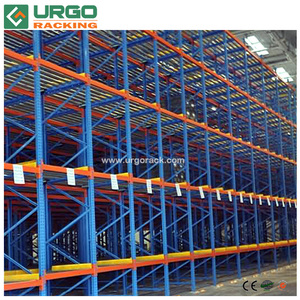
Direct Factory Catalogue
Engineered High-Bay & High-Density Pallet Storage Systems
Selected structural configurations certified to FEM, CE, and ISO 9001 standards for demanding intralogistics, cold storage, and narrow aisle high-throughput facilities.
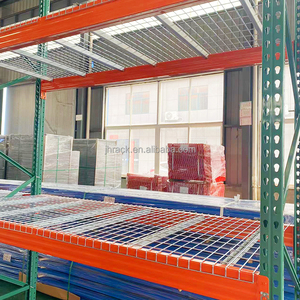
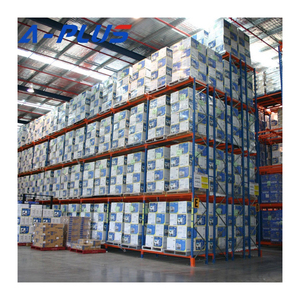
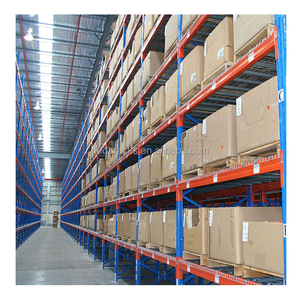
Heavy Duty Selective
Heavy Duty Bolt-Free Teardrop Selective Pallet Racking
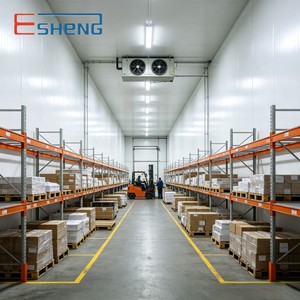
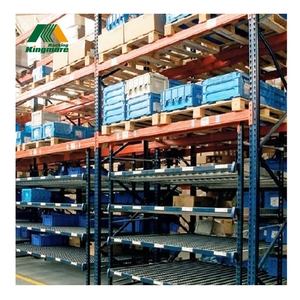
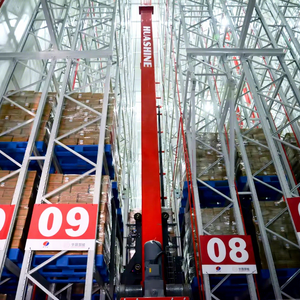
Intelligent AS/RS
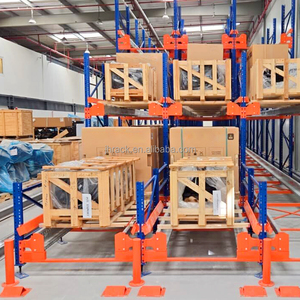
AS/RS Integrated Pallet Package Flow Rack with Roller MES
Executive Whitepaper: Strategic Optimization via Very Narrow Aisle (VNA) Architecture
In modern distribution logistics and supply chain optimization, land procurement costs and warehouse lease premiums have intensified the demand for cubic volume maximization. Very Narrow Aisle (VNA) racking systems represent the ultimate structural convergence between selective pallet accessibility and ultra-dense volumetric storage. By reducing working aisle clearances from conventional selective dimensions (typically 3,200 mm to 3,800 mm) down to an aggressive 1,500 mm to 1,800 mm, facility operators routinely achieve an immediate 40% to 55% elevation in total pallet capacity across existing building envelopes.
However, narrowing operational clearance introduces critical structural, kinematic, and geotechnical variables. Unlike wide-aisle configurations where mast deflection tolerances remain forgiving, VNA operations utilizing high-lift turret trucks or automated guided trilateral cranes operating at structural heights exceeding 14 to 18 meters demand exacting structural stiffness, tight profile tolerances, and absolute compliance with international floor flatness classifications (DIN 15185, VDMA 26870, and ASTM E1155 F-min 75 to 100). The selection of a premier manufacturing partner is not merely a component acquisition decision; it is a critical structural engineering alignment.
50%+
Storage Density Gain
18 m
Max Operable Height
100%
Direct SKU Selectivity
±1.0 mm
Profile Roll Tolerance
Industry Benchmark
Top 10 Global Very Narrow Aisle Racking Manufacturers & Suppliers
A rigorous comparative assessment of engineering depth, cold-formed roll forming capabilities, project delivery scale, and international certification compliance.
01
Guangzhou HEDA Shelves Co., Ltd.
China • Global Operations (UAE, KSA, GCC & 120+ Countries)Established in 2001, HEDA Shelves commands an integrated 30,000 m² advanced manufacturing facility delivering over 30,000 tons monthly. Renowned for its fully automated 10-step production line, specialized pickling/phosphating surface treatment, and customized VNA engineering supporting both mechanical guide rail and wire-guided turret truck systems. Direct engineering design teams provide complimentary 2D/3D BIM CAD layouts and verified structural calculation books compliant with CE and ISO 9001:2015 frameworks.
Factory Area:30,000 m² (In-House)
Monthly Capacity:30,000 Metric Tons
Certifications:CE (2435-CPR-8605159), ISO 9001, RoHS
Guiding Systems:Low-Profile Rail, Wire-Guided, Magnetic
02
SSI SCHAEFER Group
Neunkirchen, GermanyA world-leading intralogistics conglomerate known for extreme precision high-bay VNA racks, clad-rack silo buildings, and integrated software platforms. SSI delivers robust vertical racking structures engineered to microscopic structural deflection standards for fully automated and semi-automated distribution hubs.
Primary Focus:Turnkey High-Bay Automation
Structural Heights:Up to 40+ Meters (Rack Clad)
Key Standards:FEM 10.2.02, EN 15512
03
Mecalux, S.A.
Barcelona, SpainMecalux is a dominant European and North American manufacturer specializing in VNA racking structures that bridge manual turret truck operations with automated stacker crane integrations. Their high-tensile steel cold-roll profiling ensures rigorous verticality and structural equilibrium across extreme spans.
Global Footprint:11 Production Plants Worldwide
Specialty:Clad-Rack Silos & Turret Aisle Layouts
Key Markets:Europe, North America, LATAM
04
Jungheinrich AG
Hamburg, GermanyDistinctive for its unified systems approach, Jungheinrich designs VNA racking structures tightly coupled with its own proprietary line of EKX series man-up trilateral turret order pickers, providing end-to-end resonance analysis, floor interface consulting, and digital warehouse mapping.
Synergy:Integrated Truck & Rack Engineering
Aisle Widths:Down to 1,450 mm
Key Standards:VDMA 26870, DIN 15185
05
Stow Group
Spiere-Helkijn, BelgiumStow is recognized as one of the fastest-growing structural racking manufacturers across EMEA, offering optimized bolted upright frames and specialized roll-formed column designs that sustain heavy dynamic load cycles in high-throughput 3PL logistics facilities.
Manufacturing Plants:9 Automated Production Sites
Automation Wing:Moviax & Stow Robotics
Steel Grades:High Yield S355 / S420 Certified
06
Dexion (Gonvarri Material Handling)
Norway / GermanyWith decades of structural heritage, Dexion delivers precision-engineered VNA racking frameworks compliant with stringent European safety protocols. Their systems feature versatile modular connector brackets and cold-rolled upright sections designed to minimize horizontal sway under full dynamic braking loads.
Group:Gonvarri Material Handling
Engineering Base:EN 15512 & EN 15620 Compliance
Highlights:Seismic-Resistant VNA Configurations
07
Daifuku Co., Ltd.
Osaka, JapanAs a titan in global material handling automation, Daifuku manufactures ultra-high precision narrow aisle steel structures primarily geared toward automated high-bay facilities, semiconductor cleanroom warehousing, and automated unit-load handling networks.
Specialization:Automated Unit Load AS/RS
Seismic Design:Advanced Dampener Technologies
Primary Reach:Asia-Pacific, North America, Europe
08
Frazier Industrial Company
Long Valley, New Jersey, USAFrazier stands out in the narrow aisle market through its structural steel channel designs. Rather than cold-formed gauge profiles, Frazier emphasizes heavy hot-rolled structural steel, delivering superior resistance to forklift impact in abusive manufacturing environments.
Material:100% Structural Steel (C-Channels)
Standard:RMI (Rack Manufacturers Institute)
Durability:Maximum Impact Resistance
09
AR Racking (Grupo Arania)
Biscay, SpainAn industrial heavy-weight utilizing advanced automated roll-forming and welding processes, AR Racking excels in high-bay VNA systems designed through finite element analysis (FEA). Their research and development collaboration with top European structural institutes ensures exceptional load-bearing performance.
Steel Traceability:100% Certified European Steel
Finishes:Automated Epoxy Powder Coating
Quality Control:EN ISO 3834-2 Certified Welding
10
BITO-Lagertechnik Bittmann GmbH
Meisenheim, GermanySpecializing in high-precision racking and order picking architectures, BITO delivers high-bay narrow aisle systems with a strong emphasis on multi-tier integration, ergonomic pick bays, and rapid boltless beam assembly. Their engineering protocols excel in e-commerce fulfillment environments where picking speed and narrow footprint density must operate in unison.
Product Range:PRO Narrow Aisle Pallet Racks & Dynamic Picking
Manufacturing Hub:Germany & Central Europe
Engineering Matrix
Structural & Operational Comparison: VNA vs. Alternative High-Density Systems
A rigorous data-driven comparison to assist procurement directors, facility engineers, and warehouse operations heads in selecting the appropriate storage density topology.
| Storage Topology | Aisle Width (mm) | Floor Area Utilization | SKU Selectivity | Max Elevation | Handling Equipment Type |
|---|---|---|---|---|---|
| Very Narrow Aisle (VNA) | 1,500 – 1,800 | Up to 60% – 65% | 100% Direct | 18+ Meters | Man-Up / Man-Down Turret Truck, AGV |
| Standard Selective Rack | 3,200 – 3,800 | 35% – 40% | 100% Direct | 10 – 12 Meters | Standard Counterbalance, Reach Truck |
| Double Deep Pallet Rack | 2,900 – 3,400 | 50% – 55% | 50% Immediate | 10 – 12 Meters | Pantograph Reach Truck |
| Radio Shuttle System | 2,800 – 3,200 | 75% – 85% | LIFO / FIFO by Lane | 15 – 22 Meters | Autonomous Shuttle Carrier + Forklift |
| Drive-In / Drive-Through | Continuous Lane | 65% – 75% | LIFO (Batch SKU) | 10 – 12 Meters | Standard Forklift entering rack lane |
Industry Horizon
Future Procurement Trends for VNA & Automated Racking (2025–2030)
Macroeconomic pressures, volatile steel commodities, and autonomous handling systems are fundamentally altering how global procurement directors approach racking capital expenditure.
Dynamic Steel Indexation & Total Tonnage Contracting
Procurement teams are moving away from fixed lump-sum bidding toward transparent raw material index hedging (e.g., Shanghai Steel Futures or London Metal Exchange tracking). Direct partnerships with high-tonnage factories allow buyers to lock hot-rolled coil (HRC) baselines, decoupling structural engineering value from commodity market volatility.
AGV/AMR Ready Modular Tolerances
The acceleration of autonomous mobile robots and unmanned narrow aisle turret AGVs necessitates millimetric tolerances far stricter than manual truck operations. Buyers now demand roll-forming verticality of ±1.0 mm per 10 meters and pre-machined optical reflector or inductive wire-track mountings direct from the manufacturing line.
Green Logistics & Low-Carbon Eco-Steel
Scope 3 carbon emission disclosures in corporate ESG reporting are pushing tier-1 logistics developers in Europe, the Americas, and the Middle East to specify electric arc furnace (EAF) steel, lead-free powder finishes, and energy-efficient roll-forming processes that carry Environmental Product Declarations (EPD).
Technology & Engineering
Technological Innovations Shaping High-Bay Very Narrow Aisle Architecture
From advanced mechanical guidance to seismic dynamic load simulation and IoT telemetry, engineering innovations are driving safety, throughput, and operational longevity.
Wire Guidance vs. Low-Profile Mechanical Floor Rails
While mechanical structural guide rails (typically 100mm × 50mm unequal angle or continuous channel bolted every 500mm) remain the gold standard for high-speed mechanical stability and rack frame collision protection, ultra-high frequency inductive wire guidance is gaining rapid traction. Embedded 15mm under the slab, wire guidance eliminates tripping hazards, simplifies slab cleaning, and permits narrower floor clearances.
Nonlinear FEA Dynamic Load & Seismic Modeling
Modern high-bay VNA racks often exceed 15 meters in height, turning the rack frame into a complex vertical beam-column subject to P-Delta second-order lateral sway effects. State-of-the-art factories employ finite element analysis (FEA) software compliant with EN 15512 and FEM 10.2.02 codes to model beam-to-column connector rotational stiffness, soil-foundation dynamic spring constants, and live seismic harmonics.
IoT Structural Strain Telemetry & Impact Sensor Hubs
Smart rack telemetry is becoming integral to modern industrial facilities. Digital strain gauges embedded within bottom upright sections and column end-frame protectors continuously monitor structural deflection, overload occurrences, and accidental forklift impact. Data feeds directly into facility Warehouse Management Systems (WMS) to prevent catastrophic progressive collapse.
Why Partner with Us
Guangzhou HEDA Shelves: Engineered Excellence Direct from the Factory
Combining 25+ years of structural storage manufacturing heritage with a dedicated 30,000 m² production base, serving logistics leaders across 120+ nations with verifiable engineering rigor.
30,000 m² Production Base
A massive, vertically integrated industrial facility located in Guangzhou, housing specialized roll-forming lines, automated punching clusters, and electrostatic powder coating plants.
CE & ISO 9001:2015 Verified
Traceable material certificates and internationally documented quality accreditations including CE (No. 2435-CPR-8605159) and ISO 9001:2015 quality control systems.
10-Step Precision Processing
Every structural member passes raw inspection, laser cutting, automated punching, continuous cold bending, welding, immersion pickling & phosphating, and powder curing.
Harsh Climate & Anti-Corrosion
Extensively proven in demanding environments including the Middle East (Jebel Ali, Dammam, Jeddah) where extreme coastal humidity and +45°C ambient heat demand superior pre-treatment adhesion.
Technical Due Diligence
Frequently Asked Procurement & Engineering Questions
Comprehensive answers addressing slab tolerances, civil defense protocols, guidance mechanics, and seismic safety for industrial project managers.
Q
What floor flatness specification is mandatory for VNA racking installations?
VNA operations require specialized superflat slabs. The international baseline standard is DIN 15185 (Table 3), or the American Concrete Institute ACI 117 / ASTM E1155 F-min 75 to F-min 100 profile along the wheel tracks. When operating turret trucks over 12 meters high, transverse inclination (tilt across the track) must not exceed 1.5 mm per meter to eliminate magnified mast tipping sway.
Q
How do mechanical guide rails compare with inductive wire guidance in VNA aisles?
Mechanical guide rails (typically L100×65×8 or L125×75×10 steel angles anchored every 500mm) act as physical collision barriers protecting bottom pallet loads and rack uprights while ensuring absolute steering safety. Inductive wire guidance relies on a 5–10 kHz signal wire saw-cut into the slab, permitting flush floors for easy order picking across aisles, but requiring dedicated column protector guards at aisle entrances.
Q
How are fire suppression and in-rack sprinklers coordinated in VNA designs?
Because VNA configurations concentrate combustible volume, local Civil Defense and NFPA 13 regulations require precise longitudinal and transverse flue spaces (typically 150 mm nominal clearance between pallets). For rack heights exceeding 9.1 meters, multi-level in-rack sprinkler pipework must be structurally integrated through the upright bracing plane with seismic pipe hangers to protect structural steel from thermal yield during a fire incident.
Q
What maximum beam deflection is structurally allowable under FEM and EN standards?
Under FEM 10.2.02 / EN 15512, standard pallet racking beam deflection under safe working load (SWL) must not exceed L/200 (where L is the clear span). However, in automated VNA and turret crane setups where tight mast tolerances are present, engineering teams frequently design to an elevated stiffness limit of L/300 (typically max 4.0 mm) to prevent the handling forks from binding during high-elevation pallet extraction.
Q
Can HEDA Shelves coordinate local civil defense calculations and engineer approvals?
Yes. HEDA Shelves provides comprehensive structural calculation packages detailing live dead loads, anchor shear and pull-out forces, wind/seismic dynamic analysis, and escape route egress widths. These engineering packages are formatted specifically to assist local structural consultants and main contractors in achieving rapid statutory municipal approvals across GCC municipalities and global jurisdictions.
Q
What is the typical manufacturing lead time and export container packing protocol?
Standard production lead times range between 20 to 30 days depending on project tonnage. Heavy components (uprights, beams, rails) are bundle-packed with corrugated buffers and reinforced steel strapping, labeled with unique alphanumeric piece-marks matching the approved structural erection drawings. This modular packing prevents transit deformation and accelerates site assembly during offloading.
Transform Your Warehouse Volumetric Capacity Today
Submit your warehouse CAD architectural drawing, clear height limits, and pallet profile details. Our senior racking structural engineers will return an optimized 2D/3D BIM layout and comprehensive tonnage quote within 24 hours.