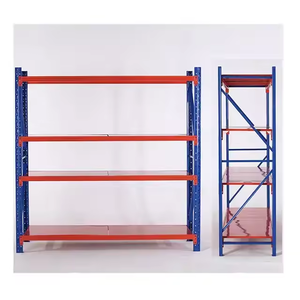
 Modular Assembly
Engineered Racking Solutions
High-Performance Dynamic & Static Racking Systems
Direct factory engineering from Guangzhou: certified structural steel arrays, pallet live roller tracks, high-bay automated architectures, and heavy cargo racking built for intensive warehouse operations.
Modular Assembly
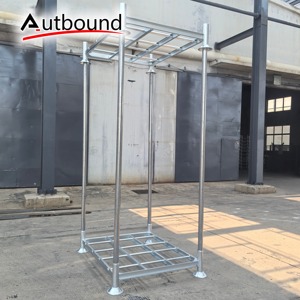 Payload 1500kg/Unit
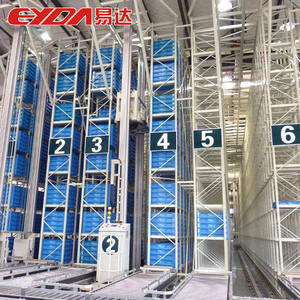 ASRS Automated
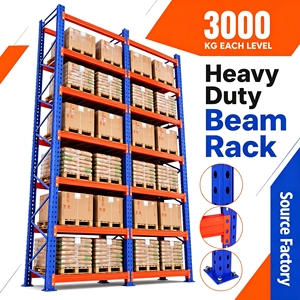 3000kg Ultra-Load
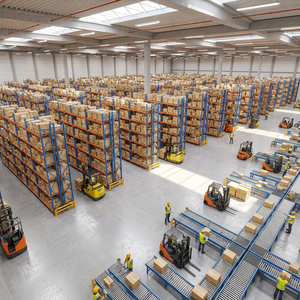 Heavy Section Steel
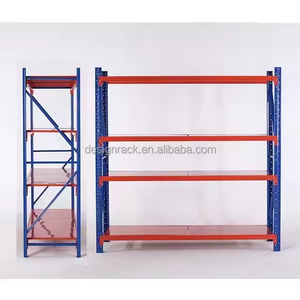 Powder Coated
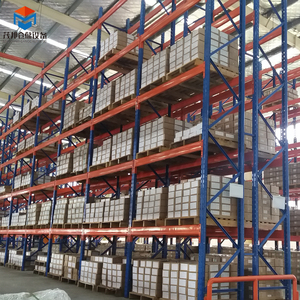 100% Selective Access
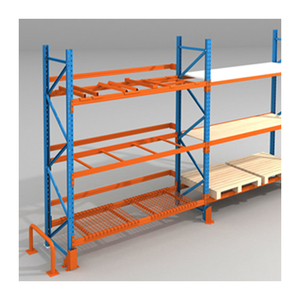 5-Tier High Cube
Engineering Roller Racking Systems: The Science of High-Density Kinetic Storage
Roller racking systems—commonly referred to in international material handling literature as Pallet Flow Racking, Gravity Roller Beds, or Live Storage Systems—represent the mechanical pinnacle of non-powered high-density intralogistics. While standard static racking relies solely on forklift aisle navigation, roller racking utilizes slight gravitational gradients (typically 3.5% to 4.2% slope inclination) paired with heavy-duty galvanized cylindrical steel rollers to autonomously move palletized goods from the replenishment (loading) face to the extraction (picking) face.
Information Gain Principle: Unlike static drive-in or selective racking where operating aisle floor loss exceeds 45% of total warehouse surface area, an engineered roller racking bay reduces aisle count to strictly two corridors (one loading aisle, one picking aisle). This dynamic format delivers up to a 75% reduction in internal forklift transit time, achieves deterministic First-In, First-Out (FIFO) batch tracking, and drives cube footprint utilization toward 85% of total structural warehouse volume.
Kinetic Braking Mechanics & Centrifugal Speed Control
The primary engineering bottleneck in gravity roller flow systems is uncontrolled acceleration. When a 1,200 kg wooden or composite GMA/Euro pallet traverses a 25-meter deep lane, kinetic energy accumulates exponentially according to Newtonian gravity: Ek = m · g · Δh. Without integrated speed regulation, terminal velocities at the discharge face cause catastrophic collisions, product shedding, frame deformation, and personnel safety hazards.
To eliminate this failure mode, our engineered roller track configurations embed internal magnetic and mechanical centrifugal brake rollers calibrated every 1.5 to 2.0 meters along the roller bed channel. These specialized brake rollers monitor pallet linear velocity. When velocity exceeds 0.25 to 0.30 meters per second, internal planetary gear governors engage copper friction pads or eddy-current magnetic resistance against the inner cylinder wall, gently throttling the pallet back into safe hydrodynamic glide velocity regardless of whether the pallet weighs 250 kg or 1,500 kg.
Separator Mechanisms
Automatic mechanical separators isolate the lead pallet at the picking face from accumulated rear lane back-pressure, enabling zero-resistance forklift disengagement.
- Eliminates up to 10 tons line force
- Mechanical auto-reset upon lift
- Cold-resistant damping springs
Dynamic Roller Metallurgy
Heavy-gauge zinc-electroplated steel rollers equipped with dual-sealed precision 6204/6205 bearings ensure maintenance-free glide over millions of rotation cycles.
- Roller diameters: Φ50mm, Φ60mm, Φ76mm
- Wall thickness: 1.5mm to 3.5mm steel
- Static capacity: up to 350kg/roller
Entry Impact & Alignment Trays
Reinforced steel funnel entry bays absorb vertical shocks from rough forklift placement, centering pallets accurately into roller wheel track lanes.
- Full-width heavy flared entry guides
- Heavy structural steel bumper angles
- Customized floor anchored guards
Structural Steel Selection: Q235B vs. Q355B Under Dynamic Fatigue
Roller racking upright frames and load beams endure cyclic dynamic harmonic vibrations absent in static racking. As pallets glide and periodically meet brake rollers, alternating shear and bending moments transmit into beam-to-column connector clips. Guangzhou Heda Shelves Co., Ltd. specifies high-tensile hot-rolled steel strip converted into closed Omega upright profiles via automated multi-station cold-roll forming lines.
By default, structural frame uprights are formed from Q235B micro-alloyed carbon steel for ambient warehouses, offering a yield strength (ReH) of ≥235 MPa and elongation at break of ≥26%. For high-bay seismic installations exceeding 12 meters clear height or deep-freeze cold storage complexes (-30°C), we deploy Q355B/Q355D structural steel, engineered with silicon and manganese deoxidation to maintain impact toughness (≥34 Joules at -20°C), completely eliminating brittle fracture hazards.
| Storage Architecture | Space Density (%) | Inventory Rotation | Throughput Speed | Energy / Power Cost | Forklift Damage Risk |
|---|---|---|---|---|---|
| Gravity Roller Racking (Pallet Flow) | 80% – 85% | Deterministic FIFO | High (Continuous Flow) | Zero (Passive Gravity) | Extremely Low (Aisles Separated) |
| Drive-In / Drive-Through Racking | 65% – 75% | Strict LIFO / Limited FIFO | Low (Forklift Enters Lanes) | Zero (Manual) | High (Frequent Upright Impact) |
| Push-Back Trolley Racking | 70% – 75% | LIFO Only | Moderate (Forklift Pushes) | Zero (Gravity Return) | Moderate |
| Radio Shuttle Cart Racking | 85% – 90% | Flexible FIFO / LIFO | High (Automated Cart) | Medium (Battery Charging) | Low |
| Standard Selective Pallet Racking | 35% – 45% | Arbitrary / Manual | Moderate (100% Selectivity) | Zero | Moderate to High |
Intralogistics Evolution
Future Global Procurement Trends in Roller Racking (2025–2035)
As warehouse real estate costs climb globally and labor availability tightens across Europe, North America, and the Middle East, procurement parameters for dynamic racking are shifting rapidly.
Automation Synergy
AMR & AGV Mechanical Handshakes
Modern live roller picking faces are transitioning from human-operated reach trucks to Autonomous Mobile Robots (AMRs) equipped with hydraulic mast forks, demanding tighter millimeter fabrication tolerances at roller discharge stops.
IoT Telemetry
Smart Sensor Speed Governors
Integration of low-power wireless vibration, friction, and stall-detection sensors directly into critical brake rollers allows predictive maintenance alerts through warehouse execution software (WES) before a lane block occurs.
Extreme Cold Chain
Sub-Zero Cryogenic Roller Bearings
Rapid growth in pharmaceutical cold-chain and frozen food e-grocery hubs demands specialized synthetic low-viscosity greases and polymer damper rings functional down to -35°C without fluid congealing or roller seizure.
Decarbonization
Green Metallurgy & Circular Systems
Major global 3PL operators now mandate environmental product declarations (EPD), requiring steel suppliers to verify low carbon footprints via electric arc furnace (EAF) processing and VOC-free powder electrostatic curing.
Why Partner With Us
Guangzhou Heda Shelves: World-Class Engineering & Export Scale
Established in 2001, Guangzhou Heda Shelves Co., Ltd. has grown from a specialized steel fabrication facility into an international logistics equipment manufacturer serving clients in over 120 nations.
01
Direct Factory Scale (30,000 m²)
We operate 30,000 square meters of specialized production area in Guangzhou, housing state-of-the-art multi-pass CNC roll forming lines, robotic column punching, automated seam welding, and fully closed continuous electrostatic powder-coating plants.
02
Massive Capacity (30,000 Tons/Mo)
With a reliable monthly conversion capacity reaching 30,000 metric tons of finished structural steel components, our facility easily fulfills large-scale multi-thousand-pallet-position turnkey distribution center tenders with tight project handover timelines.
03
Rigorous International Certifications
Every batch of steel tubing, dynamic roller, beam connector, and column profile conforms strictly to ISO 9001:2015 Quality Management standards (Cert No. 18624Q00169R0M), European Conformity CE Factory Production Control (Cert No. 2435-CPR-8605159), and RoHS environmental standards.
04
Complimentary 2D CAD & 3D Modeling
Our in-house team of structural calculation and CAD engineers provides full warehouse space layouts, 3D structural visual simulations, and FEM deflection calculations free of charge within 24 to 48 hours of receiving your building architectural drawings.
05
Surface Pretreatment & Anti-Corrosion
Components pass through an automated 8-stage pickling, hot phosphating, and passivating chemical wash before epoxy-polyester electrostatic powder coating. This prevents micro-flaking and rust even in harsh, high-humidity port zones and unconditioned tropical warehouses.
06
Container-Optimized Export Bundling
Long-haul overseas freight demands rigorous logistics packaging. Frames, beams, and dynamic roller track cassettes are packaged with heavy steel bands, corrugated perimeter protection, and numbered bundle labeling synchronized precisely with onsite erection blueprints.
Buyer Technical Advisory
Frequently Asked Questions on Roller Racking Procurement
Direct engineering answers addressing pallet specifications, slope physics, speed regulation, and civil safety compliance for international project managers.
What pallet specifications and base conditions are required for roller racking?
Roller racking performance depends heavily on the surface quality, stiffness, and bottom runner layout of the pallets. Conventional wooden GMA (48×40 inch), Euro pallets (1200×800 mm), and industrial ISO pallets (1200×1000 mm) must feature uninterrupted bottom skids running parallel to the direction of flow. Broken, splintered, severely warped, or soft plastic pallets with uneven hollow bottoms can deflect between rollers, causing hang-ups. For operations utilizing mixed or non-standard pallets, we engineer full-width continuous heavy cylindrical rollers rather than segmented dual-track skate wheels to ensure broad, consistent surface contact.
How is the track gradient determined, and can it be adjusted after installation?
The standard engineering slope for dynamic pallet flow racking ranges between 3.5% and 4.2% (an elevation change of approximately 35 to 42 mm per linear meter of track). The exact angle is calculated based on pallet material, minimum and maximum load mass (e.g., 300 kg light load versus 1,200 kg heavy load), roller bearing rolling resistance coefficient, and ambient temperature. Our heavy-duty beam connector brackets and roller bed suspension clips incorporate slotted pitch adjusters, allowing field technicians to fine-tune track inclination by ±0.5% during initial commissioning tests.
How do centrifugal speed controller brakes prevent pallets from accelerating dangerously?
Brake rollers are passive mechanical devices placed at calculated intervals (typically every 1 to 2 pallet lengths along the lane). When a descending pallet drives across the brake roller, internal gearing steps up the rotation to an internal centrifugal governor. As rotational speed reaches preset threshold limits, weighted centrifugal shoes expand against a heavy internal steel drum lining, generating resistance directly proportional to the incoming speed. Lighter pallets pass with negligible resistance, while heavy loads trigger robust braking friction, enforcing a uniform terminal descent speed of 0.25 to 0.30 m/s.
Why is a pallet separator mechanism essential at the picking discharge face?
In deep gravity flow lanes (such as 10 to 20 pallets deep), cumulative gravitational pressure pushing toward the discharge face can reach several thousand kilograms: Fpush = Σ(m · g · sin θ). If this pressure bears continuously against the front pallet, extracting it with a forklift becomes hazardous, often causing the pallet to bind, drag the mast, or damage upright frames. A mechanical pallet separator trips automatically upon arrival of the lead pallet, latching and holding the entire trailing line 150 mm behind. Once the lead pallet is lifted away, the separator resets, gently releasing the queue to advance one position.
Can roller racking systems operate reliably in cold storage and blast freezing environments?
Yes, but cold chain deployment requires specialized component engineering. Standard ball bearings and standard grease seize when temperatures drop below freezing. For temperatures between 0°C and -30°C, we install zinc-plated precision steel rollers equipped with 2RS low-temperature nitrile seals and high-purity synthetic hydrocarbon lubricants (PAO). Upright frames are rolled from Q355D structural steel with high notch impact energy toughness to resist low-temperature embrittlement. In addition, brake rollers feature moisture-resistant internal clutches to prevent condensation freeze-up.
How do roller racking systems comply with Civil Defense, NFPA 13, and warehouse fire codes?
Because dynamic roller flow racks sit back-to-back with zero operating aisles over substantial lane depths, fire protection engineers must account for longitudinal and transverse flue spaces to satisfy NFPA 13 sprinkler penetration standards. We incorporate engineered structural flue gaps (typically 150 mm to 300 mm wide) between dual-lane modules, outfitted with drop-down safety wire meshes or vertical sprinkler barrier brackets. This ensures early water containment access from in-rack sprinkler heads directly to fire hotspots inside deep bays.
What is the typical lifespan, maintenance requirement, and spare parts schedule?
The structural static steel frames (uprights, beams, bracing) have an operational design lifespan exceeding 20 to 25 years under standard loading cycles. The dynamic roller components (bearings, brake drums, separator linkages) have an operational lifespan of 8 to 12 years depending on daily throughput velocity. Maintenance is straightforward: a bi-annual visual inspection of roller free-spin, cleaning of wood splinters or plastic debris from the track channels, and testing of separator release springs. All roller tracks are manufactured in modular, bolt-in cassette sections, allowing single-roller or single-brake replacement in under 15 minutes.
What technical data must buyers supply to receive an accurate engineering drawing and quotation?
To prepare an accurate structural calculation, 2D CAD layout, and price breakdown, our engineering team requires:
(1) Architectural warehouse CAD drawing indicating clear building height under truss, column grid locations, and slab concrete load capacity;
(2) Pallet dimensions (width, depth, overall height including cargo) and pallet bottom skid configuration;
(3) Pallet gross weight distribution (minimum, average, maximum);
(4) Required pallet depth per lane (e.g., 5-deep, 10-deep, 20-deep);
(5) Forklift model, maximum lift mast height, and turn-radius specifications;
(6) Warehouse operating temperature regime (ambient, air-conditioned, or deep freeze).
Accelerate Your Warehouse Intralogistics Efficiency
Consult directly with our senior structural engineers in Guangzhou. Receive a tailored 2D CAD floor plan, dynamic load simulation, and competitive factory-direct pricing for your next roller racking or warehouse storage installation.
Send an Inquiry
Direct Engineering Support • Fast Technical Response