Featured Industrial Rack Storage Systems
Engineered from premium cold-rolled structural steel (Q235B / Q355B), precision roll-formed to international safety tolerances, and customized to your clear height, pallet dimensions, and seismic site classes.
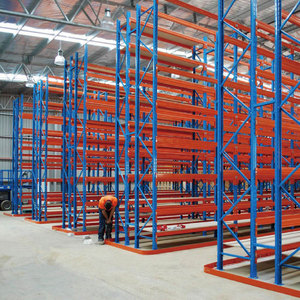
Factory Supply Cold Rolled Steel Heavy Duty Adjustable Narrow Aisle Racks Stable Bearing Design for Tight Passage Warehouse
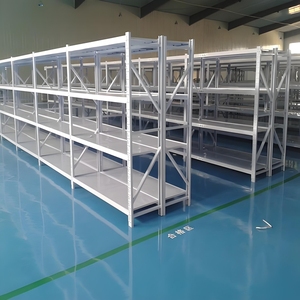
Medium Duty Industrial Metal Shelving Rack For Storage Warehouses Stacking Racks & Shelves
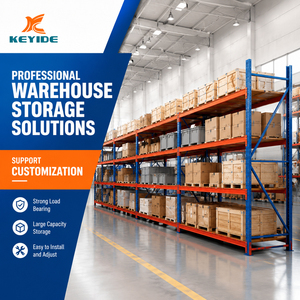
Heavy Duty Pallet Storage Rack With Side Safety Mesh Warehouse Adjustable Beam Type Pallet Racking System
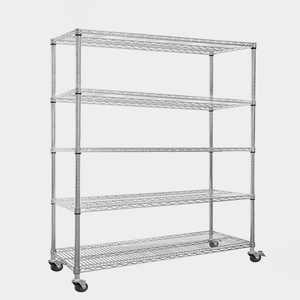
Racks Heavy Duty Metal Steel Storage Shelves 5 Layer Wire Shelf for Sale Racks Shelves
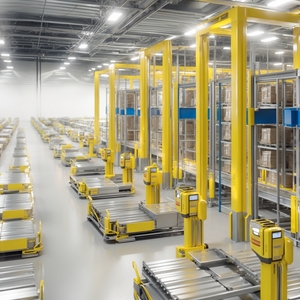
Pteris ASRS Shuttles Pallet Racking System Smart Warehouse Forklift Automation with Radio Control Cargo & Storage Equipment
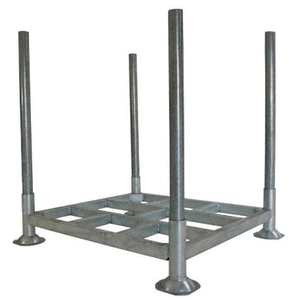
Factory Direct Sale Durable Warehouse Heavy-duty Stainless Steel Galvanized Surface Roller Pallet Rack Snap-In Installation
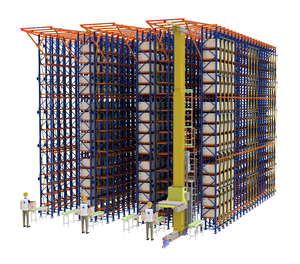
Labor Saving ASRS Customized Automatic Storage Retrieval Racking Systems
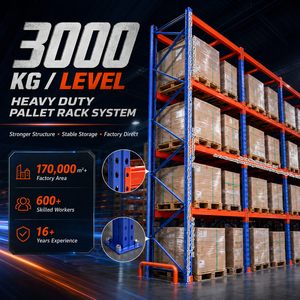
4 Storage Levels Durable Heavy Duty Pallet Rack for Factory and Warehouse Storage 3000KG
Global Structural Standards & Racking System Selection Matrix
Navigating structural deflection thresholds, steel metallurgy, and footprint volumetric efficiency across modern international distribution centres.
Specifying industrial rack storage systems for high-throughput distribution centres and heavy manufacturing warehouses requires exact adherence to international structural engineering codes. As a premier global exporter, our engineering designs conform strictly to FEM 10.2.02 (European Racking Federation), EN 15512:2020, ANSI MH16.1 (Rack Manufacturers Institute - RMI), and AS 4084-2023 (Steel Storage Racking).
Every racking structure must account for both static dead loads and dynamic material handling stresses. Upright frame designs utilize continuous cold-rolled Omega (Ω) profiles fabricated from high-yield Q235B and Q355B structural steel, providing optimal strength-to-weight ratios and high torsional rigidity. Beam connectors incorporate 3-claw or 4-claw stamped steel hooks engineered with precision taper angles that produce a wedge-locking action under pallet loads, preventing accidental beam dislodgement under forklift impact.
System Architecture & Volumetric Efficiency Benchmarks
Selecting the optimal storage topology requires balancing land cost, SKU accessibility, operational throughput speed, and capital equipment expenditures. The following technical matrix provides an authoritative comparison across primary industrial racking configurations:
| Racking Topology | Floor Utilization (%) | Volume Utilization (%) | Pallet Selectivity | Rotation Mode | Forklift Equipment Match | Max Load Rating (kg/Tier) |
|---|---|---|---|---|---|---|
| Selective Pallet Racking | 35% – 40% | 40% – 50% | 100% Direct | FIFO / LIFO | Standard Counterbalance / Reach | 1,000 – 4,500 kg |
| Very Narrow Aisle (VNA) | 50% – 60% | 65% – 75% | 100% Direct | FIFO / LIFO | VNA Turret Truck / Man-Up Crane | 1,000 – 3,500 kg |
| Radio Pallet Shuttle | 70% – 85% | 80% – 88% | Lane Dependent (30%) | FIFO & LIFO Flexible | Standard Counterbalance / Reach | 1,500 – 2,000 kg |
| Drive-In / Drive-Through | 60% – 75% | 70% – 80% | Low (15% – 20%) | Strict LIFO (Drive-In) / FIFO | Counterbalance / Reach (Narrow Body) | 1,000 – 2,500 kg |
| Gravity Pallet Flow | 65% – 75% | 75% – 85% | Lane Face (40%) | Strict FIFO Gravity-Driven | Standard Counterbalance | 1,200 – 2,500 kg |
| Push-Back Cart Racking | 55% – 65% | 60% – 70% | Lane Face (35%) | Strict LIFO (2–6 Pallets Deep) | Standard Counterbalance / Reach | 1,000 – 1,500 kg |
| High-Bay AS/RS System | 85% – 95% | 90% – 96% | 100% Automated | Algorithmic WMS (FIFO/FEFO) | Automated Stacker Crane / Shuttle | 1,500 – 3,000 kg |
Structural Mechanics: Deflection Thresholds & Seismic Dynamic Analysis
Under rigorous European and American testing protocols, beam deflection under full Uniformly Distributed Load (UDL) must not exceed L/200 (where L equals the clear span between uprights). For automated retrieval systems (AS/RS) and VNA high-bay installations, deflection is restricted to L/300 or L/400 to prevent optical sensor misalignment on stacker cranes and articulated guide turrets.
For installations in active seismic zones (e.g., Pacific Rim, Mediterranean, and Middle East active fault lines), our structural calculations calculate P-Delta effects, second-order frame sway, and baseplate anchor bolt tension capacity using finite-element modeling (FEM). Enlarged, heavy-gauge baseplates (10mm to 16mm thickness) distribute concentrated point loads safely across the concrete slab, while heavy anchor bolts resist concrete breakout and shear failure.
Future Procurement Trends in Industrial Rack Storage Systems
How global supply chain volatility, urban real estate appreciation, and robotic automation are transforming capital expenditure and warehouse racking design.
Convergence with AMR & Shuttle Robotics
Procurement is transitioning from pure static storage toward hybrid racking architectures engineered to interface directly with Autonomous Mobile Robots (AMRs), automated 4-way shuttles, and robotic palletizers, requiring micro-millimeter tolerance control on beam punches.
Total Cost of Footprint (TCF) Optimization
With urban industrial real estate costs increasing at 8-12% annually across logistics corridors, buyers prioritize vertical volume utilization over ground area. Facilities are deploying high-bay structures exceeding 18m to 30m, demanding precision roll-formed upright sections.
ESG-Driven Sustainable Metallurgy
Corporate procurement mandates require suppliers to audit Scope 1, 2, and 3 carbon footprints. Demand is surging for high-yield, cold-rolled steel produced via Electric Arc Furnace (EAF) with fully recyclable TGIC-free electrostatic powder coatings and zero VOC emissions.
Extreme Climate & Corrosion Resilience
Global logistics expansions in desert climates, coastal port zones, and refrigerated sub-zero pharmaceutical cold chains demand multi-stage pre-treatment (pickling, phosphating, nano-zirconium) and hot-dip galvanization capable of surviving 1,000+ hours in ASTM B117 salt spray tests.
Engineering Evolution: From Static Steel to High-Performance Structures
Key metallurgical, geometric, and manufacturing milestones shaping modern industrial rack engineering over the last decade.
High-Tensile Cold Roll-Forming
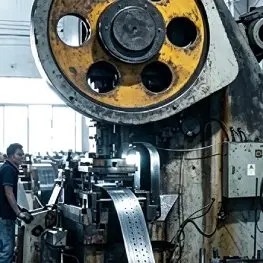
Transitioning from traditional hot-rolled structural channels to computerized 24-station cold roll-forming lines. This process produces multi-ribbed upright cross-sections that increase torsional stiffness by up to 28% without increasing steel weight or ocean freight costs.
Automated Robotic Beam Welding
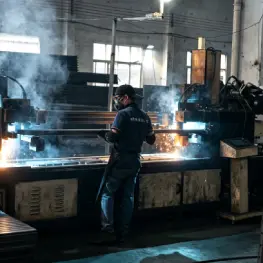
Eliminating manual welding variability via multi-axis robotic welding cells with automated seam tracking. Full-penetration fillet welds across beam end connectors ensure dynamic fatigue resistance against repetitive forklift placement impacts.
Intelligent Sensor & Impact Telemetry
Integrating embedded IoT load cells, optical deflection sensors, and vibration-sensitive impact tags directly into critical column protectors. Racking systems can now report structural overload and forklift collisions to WMS platforms in real-time.
Why Global Procurement Leaders Partner with HEDA Shelves
From single-bay installations to 100,000-pallet mega logistics hubs, Guangzhou Heda Shelves delivers true factory-direct control, customized structural engineering, and verified international compliance.
30,000 m² Integrated Facility
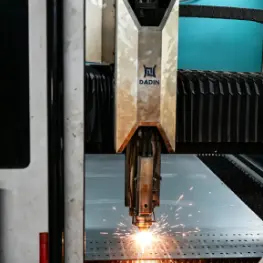
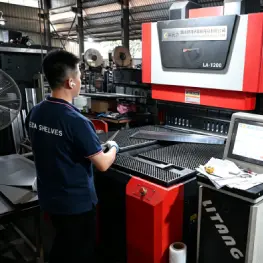
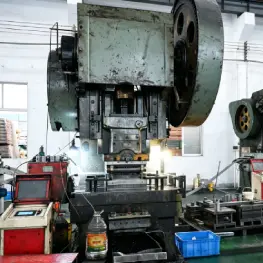
Headquartered in Guangzhou, our heavy-industrial manufacturing center houses precision automated roll-forming lines, laser cutting, robotic welding cells, and continuous powder coating tunnels with over 300 experienced technical employees.
30,000 Tons Monthly Output
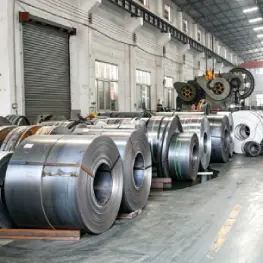
Our volume steel processing infrastructure guarantees short production lead times (15 to 25 days) even during peak global supply cycles, ensuring high-capacity multi-container deliveries arrive on schedule at any major port.
Free 2D CAD & 3D BIM Layouts
Our in-house structural engineers evaluate your architectural building drawings, column grids, forklift aisle widths, and municipal fire suppression codes (Civil Defense / NFPA 13) to deliver free 2D/3D layouts and structural calculations.
Export Container Packaging
Components are bundled in steel-strapped, moisture-protected, color-coded packs with detailed bill-of-lading markings matching erection drawings, eliminating onsite unpacking confusion and reducing shipping damage to 0%.
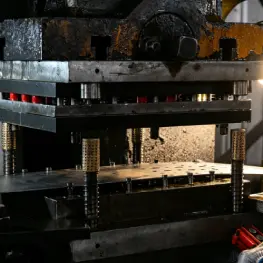
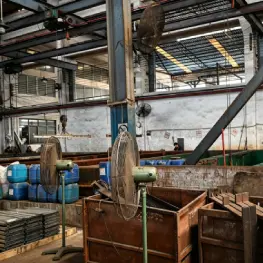
10-Step End-to-End In-House Manufacturing Control
Internationally Validated Certifications
Our manufacturing lines operate under audited ISO 9001:2015 and European CE safety regimes, ensuring tender documents, structural filings, and insurance approvals pass smoothly.


Frequently Asked Questions for Industrial Racking Exporters
Clear, engineer-level answers addressing technical specifications, structural load testing, international shipping protocols, and municipal compliance.
1. How do you engineer and calculate rack loading capacities for seismic zones and variable floor slabs? +
Our structural engineering team employs finite element modeling (FEM) software in compliance with EN 15512 and ANSI MH16.1. When calculating beam and upright capacity, we require: (1) Unit pallet gross weight, dimensions, and center of gravity; (2) Warehouse slab concrete compressive strength (minimum 25–30 MPa recommended); (3) Subgrade modulus of reaction ($k$-value); and (4) Site-specific seismic spectral acceleration parameters ($S_s, S_1$).
For seismic regions across the Middle East, California, Turkey, and Japan, we incorporate baseplate moment connections with heavy expansion anchors (e.g., M12 to M16 Hilti or Fischer anchors), engineered diagonal spine bracing, and increased upright wall thickness to absorb lateral ground acceleration forces without buckling.
2. How do your finishes withstand high heat, saline coastal humidity, and sub-zero cold storage? +
All carbon steel components undergo an automated 10-stage chemical pre-treatment process comprising alkaline degreasing, acid pickling to eliminate mill scale, and micro-crystalline zinc phosphating. This prepares the steel substrate for an electrostatic application of TGIC-free polyester powder, cured in continuous baking ovens at 180°C–200°C to achieve a durable film thickness of 80–120 μm.
For high-humidity coastal ports (Dubai, Jeddah, Singapore, Rotterdam) or outdoor lumber and pipe yards, we provide Hot-Dip Galvanizing (HDG) per ISO 1461 / ASTM A123, yielding a metallurgical zinc coating exceeding 65–85 μm that resists red rust for decades. For blast freezer cold stores operating down to -30°C, our specialized cold-resistant powder formulation eliminates brittle paint peeling and prevents micro-fracturing under low-temperature impact.
3. What is the typical lead time, and how do you optimize ocean freight container stuffing? +
Standard export orders average 15 to 25 business days from approved CAD shop drawings to container gate-in at Guangzhou, Shenzhen, or Nansha ports. Our monthly production capacity of 30,000 tons allows us to process 50+ shipping containers simultaneously without bottlenecks.
To minimize ocean freight costs per pallet position, our logistics software runs 3D container stuffing simulations before manufacturing. Long uprights (up to 11.8m for 40' High Cube containers) are nested horizontally on customized steel dunnage, beams are interlocked in dense rectangular bundles, and small hardware parts (locking pins, anchor bolts, levelling shims) are packed in heavy-duty wooden crates. This achieves 92–98% container cubic volume utilization, saving buyers thousands of dollars in ocean freight expenses.
4. Can HEDA Shelves engineering drawings support municipal approvals and Civil Defense / NFPA 13 compliance? +
Yes. We routinely coordinate structural and layout submittals with third-party engineering consultants, local fire departments, and civil defense agencies across the UAE, Saudi Arabia, Qatar, Europe, and the Americas. Our drawing packages include comprehensive plans indicating:
• Clear longitudinal and transverse flue spaces (minimum 6 inches / 152 mm) matching NFPA 13 in-rack sprinkler hydraulic criteria.
• Forklift aisle turn radii compliant with truck manufacturer operating manuals.
• Safe structural egress pathways, fire door clearances, and certified maximum tier load capacity signs mounted on each aisle entry frame.
5. What are the European (EN 15635) and American inspection criteria for rack damage and maintenance? +
Under EN 15635 (Steel Static Storage Systems - Application and Maintenance of Storage Equipment), warehouse operators must conduct regular safety audits categorized by damage severity:
• Green Level: Deformation within permissible limits (under 3mm on an upright frame over a 1m length span). Operational without immediate repair.
• Amber Level: Permanent deflection exceeding limits up to 2x (3mm to 6mm). Offloading required within 4 weeks; repaired with original factory components.
• Red Level: Severe localized buckling (exceeding 6mm). Immediate unloading and isolation of the bay. We supply complete replacement upright frames, heavy-duty floor-mounted column protectors, and wraparound rubber guards to mitigate impact risks proactively.
6. What is the Total Cost of Ownership (TCO) calculation when evaluating Selective vs AS/RS systems? +
While Selective Pallet Racking requires the lowest initial capital investment ($40–$75 per pallet position), it demands significantly larger warehouse footprints and higher recurring labor and forklift operating expenses. High-density semi-automated solutions such as Radio Shuttle Racking ($110–$180 per position) or fully automated AS/RS High-Bay Systems ($350–$700+ per position) reduce required building square footage by 40% to 60% and trim forklift operator labor costs by up to 75%.
For operations with high throughput, expensive real estate, or high temperature control costs (cold storage), automated systems routinely achieve full capital payback within 2.5 to 4 years.
Request a Free 2D/3D Warehouse Layout & Engineering Quotation
Connect directly with our senior structural racking engineers. Submit your building footprint, ceiling clearance heights, pallet specifications, and throughput targets to receive complete CAD drawings, static load calculations, and competitive factory-direct pricing within 24 hours.
- Free 2D CAD & 3D Visual Model
- CE & ISO 9001 Certified Quality
- Direct Factory Pricing (Zero Agent Markup)
- Global Ocean Port Delivery & Erection Support