Featured Pallet Shelving Racks & Industrial Storage Solutions
Explore our factory-engineered, structural-grade pallet shelving and racking configurations. Precision roll-formed using premium Q235B/Q355B structural steel, tailored for high-bay intralogistics, cold storage facilities, and heavy-duty e-commerce distribution centres.
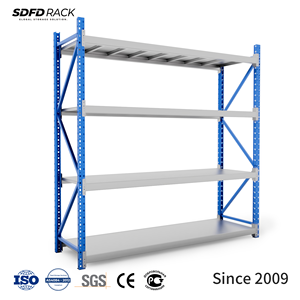
Custom 200kg 300kg 500kg Adjustable Pallet Racks Steel Heavy Duty Shelf Long Span Warehouse Shelving for E-commerce Storage
View Specifications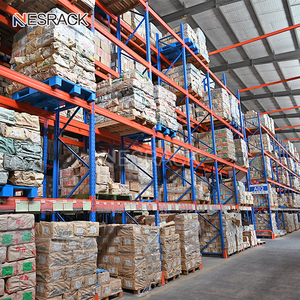
Pallet Multilevel Racking Heavy Duty Warehouse Storage Shelf System Warehouse Stacking Pallet Rack
View Specifications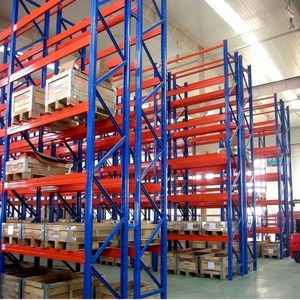
Boltless Storage Industrial Shelf Rack Metal Shelving Pallet Racking System Multi Tier Storage Racking
View Specifications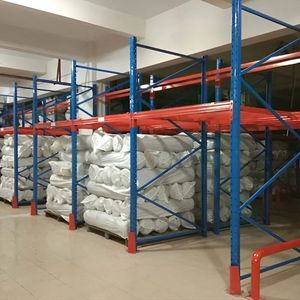
Industrial Shelves System Adjustable Steel Warehouse Racking Pallet Rack Shelving Durable Warehouse Pallet System
View Specifications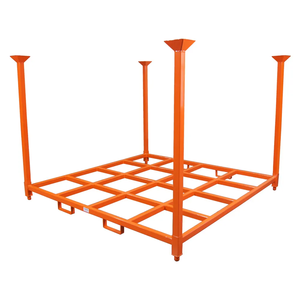
Factory Direct Customized China Supplier Warehouse Storage Inverted Style Rack Metal Pallet Stack Rack with Good Quality
View Specifications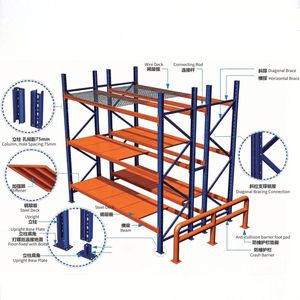
1000-5000 Kg Heavy Duty Anti-Rust Pallet Racking System Warehouse Storage Rack Adjustable Industrial Steel Shelving For Forklift
View Specifications
Gondola Shelving Supermarket Display Rack Heavy Duty Single Sided Retail Store Grocery Shop Metal Wall Shelving Unit Adjustable
View Specifications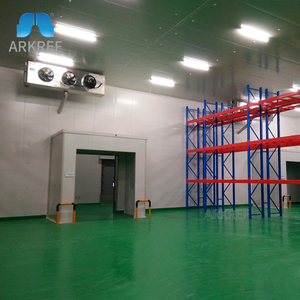
Arkref Warehouse Shelves Heavy-duty Cold Storage Shelves Selective Narrow Aisle Metal Industrial Shelf R744 System
View SpecificationsStructural Integrity, Seismic Design, and Global Intralogistics
In an era of automated logistics, skyrocketing land acquisition costs, and complex global supply chains, industrial pallet shelving racks have transitioned from static storage steel into sophisticated structural systems that dictate facility throughput and operational safety.
When evaluating high-capacity warehouse operations across diverse climatic conditions—ranging from the high-temperature, humid coastal environments of Dubai, Dammam, and Singapore to the freezing conditions of advanced pharmaceutical cold stores—procurement leaders cannot rely on generic commercial racking. Pallet shelving racks must be subjected to stringent structural calculations conforming to EN 15512 (Steel static storage systems), RMI (Rack Manufacturers Institute) ANSI MH16.1, and regional seismic safety standards. A failure in structural engineering does not merely cause inventory loss; it can trigger catastrophic progressive collapse across an entire facility.
Information Gain: Cold-Formed Steel Yield Strength vs. Deflection Limits (L/200)
Premium industrial shelving must balance structural elasticity with torsional rigidity. Under full design payload, the allowable vertical deflection of load-supporting beam pairs must never exceed 1/200th of the clear span (L/200), with 1/250 being the optimal benchmark for automated AGV/turret truck interfaces. Utilizing cold-formed high-tensile structural steel (minimum yield strength $f_y = 235 \text{ to } 355 \text{ MPa}$) coupled with multi-claw connector brackets dramatically reduces rotational slip at upright-to-beam joints.
Furthermore, modern high-density distribution frameworks demand precise spatial planning. Factors such as clear height under roof beams, column grids, forklift turning radii, and pallet overhang (typically 50 mm front and rear) determine the exact spacing of upright frames. In regions regulated by strict municipal codes, such as GCC Civil Defense or NFPA 13 guidelines in the Americas and Europe, transverse and longitudinal flue spaces (typically 75 mm to 150 mm) must be strictly maintained across back-to-back rows to allow immediate fire-suppression penetration.
Pallet Racking Architectures Compared: Engineering Benchmarks
Select the optimal storage infrastructure matching your SKU profiles, inventory turnover rates, and handling equipment capabilities.
| Racking Architecture | Direct Accessibility | Floor Utilization | Stock Management | Handling Equipment Required | TCO & CapEx Tier |
|---|---|---|---|---|---|
| Selective Pallet Racking | 100% Immediate | 35% – 45% | FIFO / LIFO Flexible | Standard Counterbalance / Reach Truck | Low / Highly Economical |
| Double Deep Racking | 50% Immediate | 50% – 60% | FILO | Deep-Reach Pantograph Forklift | Low-Medium |
| Drive-In / Drive-Through | Low (Batch Access) | 65% – 75% | LIFO (Drive-In) / FIFO (Drive-Thru) | Standard Counterbalance (Narrow Chassis) | Medium |
| Radio Shuttle Automation | High (Lane Controlled) | 75% – 85% | Automated FIFO or LIFO | Shuttle Carrier + Conventional Forklift | Medium-High |
| Gravity Pallet Flow | Moderate (Face Access) | 70% – 80% | Strict Automatic FIFO | Standard Reach / Counterbalance | Medium-High |
| Very Narrow Aisle (VNA) | 100% Immediate | 60% – 70% | Strict Individual SKU FIFO | Specialized Man-Up / Man-Down Turret Truck | High (Requires Wire Guidance) |
| Rack-Supported Mezzanines | Hybrid (Pallet + Bin) | 100% – 200% (Multi-Tier) | Multi-Zone SKU Picking | Pallet Infeed Gate + Manual / Conveyors | Medium (High Spatial ROI) |
Why Global Logistics Leaders Partner with Our Manufacturing Hub
Operating continuously since 2001, Guangzhou Heda Shelves Co., Ltd. delivers vertically integrated, factory-direct industrial storage solutions engineered for resilience, certified quality, and international freight efficiency.
Fully Certified Quality Systems
Rigorous structural manufacturing compliant with European CE Certification (No. 2435-CPR-8605159), ISO 9001:2015 Quality Management (Certificate No. 18624Q00169R0M), and environmental RoHS standards for all powder formulations.
30,000 m² Direct Mega-Plant
Our Guangzhou industrial hub integrates 300+ skilled engineers and operators with automated roll-forming lines, automated laser-guided punching machines, robotic beam welders, and in-house electrostatic powder coating tunnels producing 30,000 tons monthly.
Free 2D CAD & 3D BIM Layouts
Before project sign-off, our technical engineering office provides full turnkey architectural calculations, AutoCAD load-density schematics, and high-fidelity 3D renderings to streamline local Civil Defense, municipal, and insurance verifications.
Harsh-Climate Metallurgy
Engineered to withstand extreme environments, our 10-stage automated surface treatment utilizes acid pickling, zinc phosphating, and thermo-cured polymer powders, guaranteeing superior corrosion resistance across coastal, desert, and cold-store operations.
Future Global Procurement Trends in Industrial Pallet Shelving
Procurement directors in 2025 and beyond are shifting from transactional equipment purchasing toward holistic lifecycle modeling, dynamic nearshoring buffers, and automated readiness.
1. Total Cost of Ownership (TCO) vs. CapEx
Forward-looking enterprises prioritize beam longevity, upright impact resistance, and standardized connection geometries over initial steel purchase price. Investing in factory-installed column protectors, heavy-duty floor anchors, and high-durability electrostatic coatings reduces annual rack maintenance expenditures by up to 64% over a 15-year facility lifecycle.
2. Giga-Logistics Hubs & Regional Decoupling
Strategic economic transformation initiatives—such as the massive industrial expansions in the UAE, Saudi Arabia's Vision 2030 logistical parks, and European nearshore hubs—require rapid-turnaround container shipments. Standardizing on modular racking profiles enables enterprises to reallocate, expand, and dismantle steel structures between regional nodes with zero fabrication waste.
3. Traceable Mill Certification & Green Steel
Multinational corporate governance now demands strict verification of environmental impact and metallurgy provenance. Procurement tenders routinely mandate EN 10204 Type 3.1 chemical analysis inspection certificates, scrap-recycled steel content validation, and lead-free non-toxic epoxy coatings that support LEED-certified facility accreditations.
Next-Gen Technology Trends in Pallet Shelving Engineering
The integration of automation, real-time sensing, and advanced metallurgical science is reshaping the physical parameters of warehouse storage systems worldwide.
Automation-Ready Hybrid Profiles
Traditional pallet racking is evolving into hybrid structures capable of supporting high-speed Autonomous Mobile Robots (AMRs), Automated Guided Vehicles (AGVs), and AS/RS crane top-tie loads. Modern profiles feature millimeter-level roll-forming tolerances ($\pm 0.5 \text{ mm}$) to prevent laser navigation errors in automated optical tracking forks.
IoT Structural Health Telemetry
Smart warehouses are integrating IoT strain gauges, multi-axis tilt sensors, and impact accelerometers directly into critical upright frames. These telemetry nodes deliver real-time alerts if a forklift collision exceeds structural thresholds or if floor settlement induces dangerous out-of-plumb vertical deviations exceeding $H/500$.
Seismic Base-Plate Damping Technology
To comply with seismic codes (such as Eurocode 8 or US IBC/RMI criteria), structural engineers are implementing friction-pendulum baseplates and sacrificial ductile energy-dissipation links at ground anchoring junctions. These systems isolate pallet payloads from lateral earth acceleration forces, preventing harmonic sway collapses.
Frequently Asked Questions: Industrial Pallet Shelving Racks
Authoritative technical and logistical answers to critical questions encountered by warehouse operators, industrial engineers, and procurement directors.
Turnkey Delivery: From Concept Design to Loaded Container
Our systematic four-stage engineering workflow ensures complete transparency, absolute dimensional accuracy, and on-time global site delivery.
Phase 01: Audit & Data Input
Comprehensive review of warehouse floor plans, slab load-bearing capacity, forklift models, SKU turnover profiles, and pallet dimensions to define baseline engineering parameters.
Phase 02: 3D Layout & Calculations
Generation of optimized 2D CAD spatial plans, high-fidelity 3D renderings, and finite element structural calculations validating static and dynamic loads under local building regulations.
Phase 03: Automated Roll-Forming
Precision fabrication in our 30,000 m² facility utilizing high-yield prime steel coils, automated punching, robotic seam welding, 10-stage phosphating, and electrostatic powder coating.
Phase 04: Global Container Dispatch
Container-optimized grouping with custom strapping and protective packaging. Direct maritime shipping to GCC, Americas, European, and Asian ports with comprehensive assembly manuals.