Direct Factory White Paper & Specification Standard
Top Trusted Shelving Longspan Factories & Factory
Engineering-grade industrial longspan shelving, multi-tier mezzanine frameworks, and heavy-duty selective storage systems directly manufactured for enterprise warehousing and supply chain efficiency.
Verified Engineering Catalogue
Featured Longspan & Heavy-Duty Storage Systems
Manufactured strictly to international load benchmarks (FEM 10.2.02, SEMA, AS4084, and ISO 9001:2015). Explore our flagship direct-from-factory solutions engineered for severe environments and maximum volumetric yield.
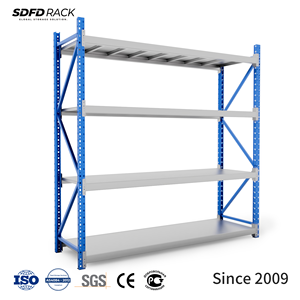
Configurable medium-to-heavy metal shelving designed for multi-tier carton distribution, automotive retail, and modular workshop storage with toolless beam spacing.
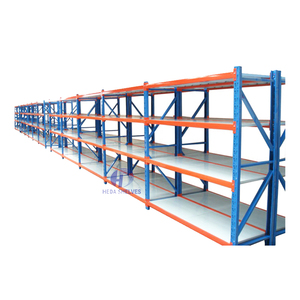
Custom 200kg 300kg 500kg Adjustable Pallet Racks Steel Heavy Duty Long Span Warehouse Shelving
True longspan shelving architecture engineered with step-beam profiles and galvanized or timber deck inserts for high-density e-commerce split-case order picking.
Clear Spans to 2700mm300-800 kg/UDLE-Commerce Ready
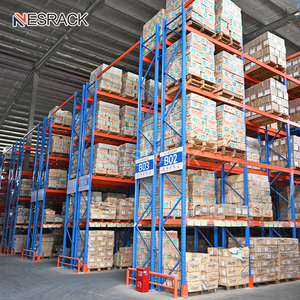
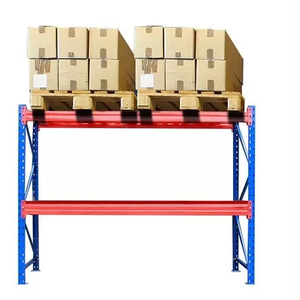
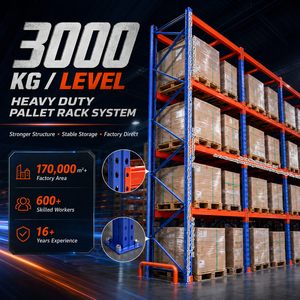
Heavy Duty Racking System - Selective Pallet Racking System for Industrial Operations
Engineered for direct reach truck access, high-cube stacking, and fast-moving industrial commodities with heavy structural roll-formed upright sections.
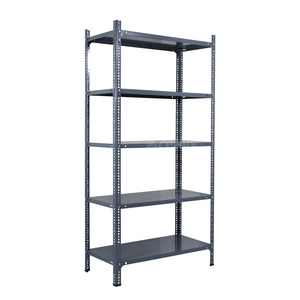
Factory Direct Light Duty Metal Storage Slotted Iron Angle Shelving With Adjustable Rack
Cost-efficient, bolt-assembled or click-together slotted angle racking for archive record rooms, spare parts cages, and light maintenance supply cribs.
80-150 kg/shelfElectrostatic CoatRapid Field Assembly
Regular supply to UAE, Saudi Arabia, Qatar, Europe, Africa, and the Americas
The Definitive Engineering Guide to Longspan Shelving & Industrial Storage Production
In high-velocity logistics infrastructure, warehouse spatial engineering dictates operating profitability. While standard commercial shelving collapses under uneven point-loading and pallet racks often underutilize vertical cube space for hand-picked stock, longspan shelving acts as the structural linchpin of modern multi-tier fulfillment centers, e-commerce staging facilities, and industrial parts depositories. As global supply chains accelerate decentralized inventory deployment across regional transit hubs—notably in the GCC, Europe, and North America—understanding the mechanical integrity, steel metallurgy, and factory fabrication tolerances of top-tier longspan factories becomes an indispensable engineering imperative.
Core Information Gain Benchmark: Unlike retail-grade clip shelving made from non-certified scrap stamping sheets, certified industrial longspan shelving utilizes continuously cold-rolled structural strip steel conforming to European EN 10025 (Grade S235JR / S355JR) and Chinese GB/T 700 (Q235B / Q355B). Its deflection ratio must remain within strict elasticity thresholds ($L/200$ to $L/250$) under full Uniformly Distributed Load (UDL) without structural micro-fissuring or connector lug shear fatigue.
1. Structural Anatomy & Engineering Differentiators of Longspan Shelving
Industrial longspan shelving bridges the functional deficit between light slotted-angle frames and heavy pallet racking. It is defined by wide clear spans—ranging typically from 1,200 mm to 2,700 mm per shelf level—allowing unobstructed horizontal staging of bulky cartons, non-palletized inventory, automotive replacement components, and archive storage totes.
The structural load path of an engineered longspan frame consists of four critical, precision-punched components:
Roll-Formed Upright Profiles: Cold-profiled omega or modified C-section columns with multi-stage cold bending to introduce stiffening return ribs. The perforation geometry uses precision 50mm or 75mm teardrop/butterfly pitch slots punched via automated optical-sensor press tooling to maintain pitch precision within ±0.1mm.
Step-Beam and Z-Beam Geometries: High-yield box-step beams or roll-formed Z-profiles engineered with recessed internal shoulders. These shoulders seat steel shelf panels, flush wire mesh decks, or high-density timber particle boards completely flush with the beam top edge, eliminating snag points during rapid hand-picking.
Multi-Claw Interlocking Connectors: Heavy-gauge welded end-connectors featuring 3 to 4 precision-stamped hook claws. Unlike bolted frameworks that loosen under structural vibration, interlocking longspan beam connectors leverage gravity and beam loading to seat tighter into the column slots, reinforced by zinc-plated safety spring pins to prevent accidental dislodgement from upward forklift impact.
Diagonal & Horizontal Truss Bracing: Bolted lattice bracings engineered across the frame depth to resist longitudinal shear, operational sway, and asymmetric torsional forces generated during active manual picking runs.
Technical Specification Matrix: Longspan Systems vs. Pallet Racking
Performance Parameter
Light Duty Slotted Angle
Industrial Longspan Shelving
Heavy Duty Pallet Racking
ASRS Automated High-Bay
Target Load Capacity
50 – 150 kg / Shelf
200 – 1,000 kg / Shelf (UDL)
1,000 – 4,500 kg / Beam Pair
1,000 – 2,500 kg / Pallet Unit
Primary Steel Substrate
Commercial Cold Sheet (Q195)
Certified Structural Q235B / Q355B
Structural High-Tensile Q235B/Q355B
Precision Calibrated Q355B Alloy
Clear Span Widths
900 – 1,200 mm
1,200 – 2,700 mm
2,300 – 3,900 mm
Custom Pallet Width Envelopes
Standard Upright Depths
300 – 600 mm
400 – 1,200 mm
800 – 1,500 mm
1,000 – 1,400 mm
Handling Methodology
Manual light pick
Manual hand-pick, trolley, conveyor
Counterbalance / Reach Forklifts
Automated Stacker Crane / Shuttle
Structural Connection
Bolted gusset plates
Boltless interlocking claw + clip
3-4 Pin welded end-connector
Bolted heavy structural torque node
Surface Pretreatment
Basic degreasing
Phosphating + Electrostatic Coat
Multi-stage pickling & phosphating
Automated zinc phosphate + Epoxy coat
2. Future Procurement Trends: How Enterprise Buyers Are Shifting Strategies
Procurement heads and logistics consultants are navigating a radical transformation in warehouse architecture. Analysis of recent international warehouse infrastructure tenders reveals four major structural shifts shaping the purchasing dynamics of longspan shelving and industrial racking systems:
Vertical Cube Maximization
Rising industrial land costs across prime freight corridors (such as Dubai South, JAFZA, Riyadh Logistics Zone, and European intermodal hubs) make single-tier shelving obsolete. Buyers now prioritize rack-supported multi-tier mezzanines built upon heavy longspan uprights, quadrupling picking density without requiring additional building square footage.
Severe Climate Durability
Procurement requirements in coastal regions (Jeddah, Dammam, Gulf ports) mandate corrosion resistance against high ambient humidity (90%+) and thermal swings (-5°C to 50°C). Buyers reject generic spray paint in favor of continuous automated hot-phosphating pretreatment and outdoor-grade thermosetting polyester powder coating exceeding 500-hour salt spray tests.
Direct-Factory Verification
Intermediary trading companies often conceal manufacturing origin, resulting in non-traceable steel batch variations and catastrophic failures. Large-scale procurement now enforces factory-direct audits, demanding ISO 9001:2015 certification numbers, CE declaration of conformity (EN 1090-1 / CPR 305/2011), mill test certificates (MTC), and 3D FEA load stress simulation reports.
3. Technology & Engineering Evolution: What Modern Shelving Factories Build
The manufacturing of longspan shelving has evolved from labor-intensive punching and manual welding to high-precision robotic fabrication cells. Top-tier factories have instituted major technological paradigms:
Cold-Roll Forming with Inline Computer Numerical Control (CNC): Traditional press-brake manufacturing induces residual tensile stresses at the fold radii, leading to premature cracking under dynamic cyclic loading. Modern factories employ multi-station continuous roll-forming lines (with 16 to 22 forming passes). Steel strip coils are progressively bent at room temperature with micro-incremental deformation, maximizing yield strength through work hardening while ensuring straightness within 1 mm per 1,000 mm of column length.
Robotic Connector Welding Cells: The beam-to-connector junction is the highest stress concentration point in any shelving structure. Automated dual-torch Panasonic/Yaskawa robotic arms deliver continuous metal inert gas (MIG/MAG) welding along the full vertical seam. This eliminates cold lap, gas porosity, and undercut flaws, guaranteeing 100% penetration and consistent fatigue resistance across millions of structural joints.
Guangzhou HEDA Shelves: 10-Step In-House Production Process
Every metric ton of steel manufactured in our 30,000 m² Guangzhou facility undergoes an unyielding 10-stage quality lifecycle under ISO 9001:2015 management before container dispatch:
Step 01
Raw Coil Inspection
Spectrometric steel verification of Q235B/Q355B coils for carbon, manganese, and sulfur purity.
Step 02
Precision Slitting
High-speed rotary shear cutting to exact master strip widths with minimal burr margin (<0.05mm).
Curing at 180°C–200°C in high-temperature ovens to cross-link the finish for scratch and impact durability.
Step 10
Export Container Stowing
Padded strapping, custom crate packing, and color-coded component tagging aligned with CAD erection plans.
4. Enterprise Capabilities: Why Guangzhou Heda Shelves Co., Ltd. Leads the Industry
Founded in 2001, Guangzhou Heda Shelves Co., Ltd. has evolved into one of Southern China's preeminent direct manufacturers of heavy-duty industrial racking, automated cold storage frameworks, and versatile longspan shelving systems. Spanning a dedicated 30,000 square meter facility staffed by over 300 experienced technical specialists, Heda maintains an immense monthly production capacity exceeding 30,000 metric tons of fabricated steel structures.
Unlike trading companies that broker third-party orders with unpredictable steel tolerances, Heda Shelves delivers comprehensive end-to-end project lifecycle ownership:
Free Comprehensive CAD & 3D Engineering Layouts: Our internal architectural department prepares complete 2D warehouse CAD layout drawings, column grid coordination, and photo-realistic 3D rendering perspectives before material cutting begins—allowing structural sign-off from fire civil defense and warehouse insurance bodies.
Rigorous Verifiable Quality Certifications: Full adherence to European Conformity standards with CE Certification (No. 2435-CPR-8605159), ISO 9001:2015 Quality Management (Certificate No. 18624Q00169R0M, valid through 2027), and full RoHS compliance across all powder coat formulations.
Extensive Global Export Track Record: Having successfully deployed over 10,000 turnkey warehouse installations across 120+ countries, Heda specializes in custom shipping solutions to GCC primary ports (Jebel Ali, Khalifa Port, Jeddah Islamic Port, King Abdulaziz Port Dammam, Hamad Port, Sohar, and Shuwaikh) as well as European, African, and Southeast Asian distribution terminals.
Turnkey OEM & ODM Customization: Custom column heights up to 12 meters, bespoke beam profile depths, hot-dip galvanized finishes for cryogenic freezers or outdoor yard staging, and fully customized corporate RAL color schemes.
Request an Engineering Review & 3D Warehouse CAD Layout
Provide your facility floor plan, clear under-beam height, pallet or carton handling dimensions, and required loading capacities. Our senior storage systems engineers will deliver a verified CAD proposal and cost calculation within 24 hours.
Detailed, technical answers addressing the structural calculations, regulatory clearances, steel chemistry, and export operations critical to procurement teams.
How do engineers calculate Uniformly Distributed Load (UDL) vs. concentrated point loads for longspan shelving?
+
Uniformly Distributed Load (UDL) assumes the total weight of stored cargo is evenly distributed across the entire surface area of the beam level or shelf deck. In accordance with FEM 10.2.02 and SEMA standards, the structural deflection limit of longspan horizontal beams under full UDL must not exceed 1/200th of the clear span length ($L/200$). For example, a 2,000mm beam carrying 800kg UDL is permitted a maximum vertical deflection of 10mm at its center point.
When storage involves concentrated point loads (such as heavy steel dies, machinery motors, or wheeled picking carts placed directly onto the shelf), the bending moment doubles compared to an equivalent UDL. For such applications, HEDA Shelves engineers integrate structural cross-support hat channels underneath the steel shelves or upgrade to heavy-gauge formed step-beams with reinforced welded bridge stiffeners to prevent local elastic buckling.
What is the metallurgical difference between Q235B and Q355B structural steel in racking fabrication?
+
Both Q235B and Q355B represent certified Chinese national standard (GB/T 700 and GB/T 1591) carbon structural steels, equivalent respectively to European EN 10025 S235JR and S355JR:
Q235B: Has a guaranteed minimum yield strength ($R_e$) of 235 MPa and a tensile strength of 370–500 MPa. It delivers exceptional ductility and formability, making it the industry benchmark for standard longspan shelving components, step-beams, horizontal bracing, and standard selective uprights.
Q355B: Is a low-alloy high-strength steel offering a minimum yield strength of 355 MPa (over 50% stronger than Q235B) and a tensile strength of 470–630 MPa. HEDA Shelves specifies Q355B for high-bay upright columns exceeding 8 meters in height, heavy-duty automated cold storage racks, high-load cantilever columns, and structural mezzanine primary support pillars where cross-sectional material thickness must be minimized without sacrificing structural safety margins.
Can longspan shelving frameworks support multi-tier mezzanine floors, and what are the building requirements?
+
Yes. Shelving-supported and rack-supported mezzanines utilize the upright columns of the lower longspan frames as vertical structural columns to carry the intermediate walkway levels, access staircases, pallet drop gates, and handrail systems. This provides an extraordinarily cost-effective method to construct 2-tier or 3-tier manual picking towers without erecting standalone structural I-beam columns.
Building prerequisites include:
Concrete Slab Compressive Strength: The warehouse ground slab must have a minimum characteristic compressive cylinder strength of $f_{ck} \ge 25\text{ N/mm}^2$ (C25/30) and an uncracked thickness of at least 150mm to 200mm to support anchor bolt pullout and concentrated baseplate loads.
Clear Overhead Height: A minimum building clear height under roof joists of 4.5 meters for a two-tier mezzanine (leaving roughly 2.1m clear headroom per deck level) or 6.8+ meters for a three-tier configuration.
Fire Clearance & Egress: Compliance with fire regulations (such as GCC Civil Defense or NFPA 13), requiring open wire mesh decking or perforated steel grating (typically 50% open area) to ensure fire sprinkler water penetration to lower picking tiers.
How does HEDA Shelves ensure coating longevity in Middle East desert heat and coastal humidity?
+
Warehouse operations in Gulf coastal hubs like Jebel Ali, Jeddah, Dammam, and Hamad face extreme environmental stresses: ambient summer temperatures exceeding 45°C coupled with airborne marine salts and fine abrasive sand particles. Ordinary painting methods suffer rapid oxidation, blistering, and rust-creep.
HEDA Shelves enforces an industrial automated 5-stage chemical pretreatment line prior to powder application:
Hot alkaline immersion degreasing to dissolve all residual rolling oils and mill lubricants.
Sulfuric/hydrochloric acid pickling to eliminate mill scale and microscopic surface oxides.
High-pressure dual cascade water rinsing.
Dense zinc/iron chemical phosphating to create an insoluble, microcrystalline conversion layer on the raw steel substrate.
Automated electrostatic spraying of high-grade thermosetting polyester powder coating cured at 190°C.
This process achieves a cross-linked coating thickness of 60 to 90 microns with 0-grade cross-hatch adhesion (ISO 2409) and salt-spray resistance validated past 500 hours, eliminating chipping and corrosion.
What structural data and inputs are required to produce a complimentary 3D warehouse layout?
+
To enable our engineering department to issue an optimized 2D CAD layout and structural stress calculation report, clients should provide:
Facility Architectural Drawings: CAD (.dwg/.dxf) or dimensioned PDF floor plans showing building perimeter, structural column grids, clear height under low roof trusses, roll-up door locations, and fire exit doors.
Storage Unit Profiles: For longspan shelving: carton/bin dimensions ($L \times W \times H$), unit weights, and manual picking methodologies. For pallet racking: pallet style (EUR 1200x800mm, ISO 1200x1000mm), total load height including pallet, and maximum weight per pallet.
Material Handling Equipment (MHE): Forklift models, mast collapsed height, maximum lift reach, and required right-angle stacking aisle width (AST).
Seismic and Environmental Factors: Project geographic coordinates for regional seismic acceleration coefficient calculations ($S_s, S_1$) in compliance with local structural codes.
How are longspan components bundled and protected for long-haul maritime container shipping?
+
Maritime transit involves extreme vibration, humidity fluctuations, and container shifting. HEDA Shelves utilizes a systematic export packing regimen developed over two decades of global logistics:
Upright columns and longspan beams are nested face-to-face with corrugated board and protective foam interlayers to eliminate metal-on-metal rubbing. Bundles are strapped with heavy-gauge polyester or steel strapping secured through wooden dunnage blocks that allow forklift tines easy entry during destuffing. Small hardware items (baseplates, row spacers, shims, beam safety clips, drop pins, anchor bolts) are vacuum-sealed in heavy-duty polyethylene bags and packed inside reinforced, export-grade plywood crates. Each bundle carries an indelible weatherproof barcode tag cross-referenced to the installation blueprint for rapid field sorting.
What on-site installation support and engineering certification does HEDA Shelves provide?
+
Every shipment is accompanied by comprehensive engineering documentation: signed structural layout plans, elevation drawings, detailed 3D exploded connection assemblies, torque specification tables for anchor bolts, and step-by-step installation manuals.
For enterprise projects across the Middle East, Southeast Asia, Africa, and Europe, HEDA offers three tiers of installation support:
Remote Digital Supervision: Real-time high-definition video engineering audits to verify frame plumbness, diagonal squaring, connector locking clip placement, and anchor bolt expansion torque.
On-Site Lead Engineer Dispatch: Direct deployment of experienced factory project managers to direct, train, and supervise local contractor labor teams.
Third-Party Structural Sign-Off: Provision of mill test certificates (MTC), CE Declaration of Conformity documents, and engineering calculation sheets to facilitate sign-off from municipal civil defense authorities and building control officers.
Ready to Upgrade Your Industrial Storage Density?
Connect directly with Guangzhou HEDA Shelves engineering specialists. Obtain factory-direct pricing, custom CAD layout proposals, and structural load certificates for your upcoming facility installation.
 Multi-Tier Ready