Engineered Industrial Storage & Warehousing Systems
Standardized, certified, and custom-engineered heavy-duty storage configurations designed to maximize volumetric efficiency, ensure occupational safety, and withstand high-turnover logistics environments.
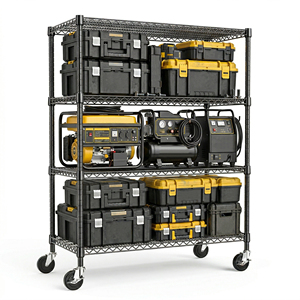 USA Stock
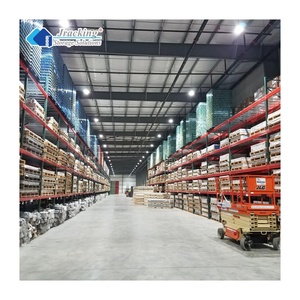 RMI Standard
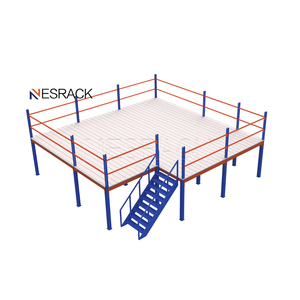 Structural
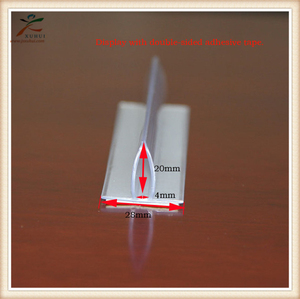 Inventory Flow
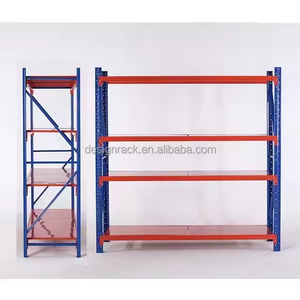 Powder Coated
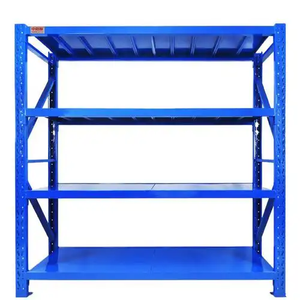 Longspan
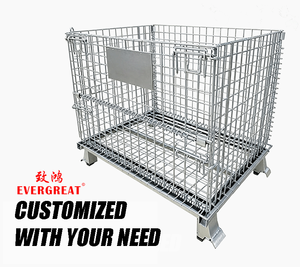 Logistics Unit
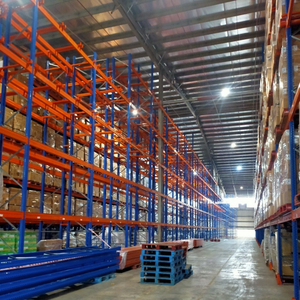
Engineering Strengths of an Integrated OEM/ODM Exporter
Direct supply chain control eliminates broker markups, prevents technical discrepancies, and ensures full adherence to global building and safety codes (CE, ISO 9001:2015, RMI, AS4084, and FEM 10.2.02).
Full In-House Roll-Forming Lines
Equipped with continuous automated roll-forming lines, automated punching machines, and CNC high-precision cutting stations. We manufacture uprights with complex omega-profile cross sections designed to mitigate torsional deformation under full structural yield limits.
Corrosion Pretreatment & Finishing
Every piece undergoes chemical pickling, surface degreasing, and zinc phosphating prior to the application of thermosetting architectural-grade polyester powder. Cured at 180°C–200°C, the finish resists mechanical impact, chemical corrosion, and micro-cracking in extreme ambient temperatures.
Comprehensive Structural Analysis
Our in-house design engineering department executes full finite element analysis (FEA) on every custom installation. We evaluate static point loads, seismic ground acceleration spectra, slab deflection, and wind shearing (for external clad racks) prior to bill-of-materials generation.
Container Nesting & Bundling
Export packaging is engineered for direct 40ft High Cube container nesting without loss of internal volume. Structural members are bundled with reinforced steel straps, edge-board guards, and moisture-barrier polymer films, labeled sequentially to align with site erection drawings.
Full Compliance & Traceability
We provide full structural certification documentation, mill test reports (MTR) verifying Q235B/Q355B yield points, CE declarations under EN 1090-1 execution classes, and third-party laboratory verification for commercial tenders and municipality safety clearance.
Direct Engineering Consultation
Procurement directors liaise directly with structural design engineers rather than third-party distributors. This direct channel slashes lead times, guarantees custom fabrication tolerances, and ensures immediate CAD/3D rendering revisions during the layout phase.
Warehouse Shelving & Racking Evolution: Strategic Trends (2026–2030)
The industrial warehouse infrastructure sector is undergoing a profound paradigm shift. Accelerating fulfillment velocity demands, surging industrial real estate costs, and severe labor shortages are forcing logistics executives to transform passive storage assets into active, highly integrated automation nodes. When planning greenfield facilities or brownfield retrofit projects, corporate procurement directors must prioritize systemic adaptability and structural resilience over low-bid initial capital outlay.
1. Automated Material Handling Integration & Structural Tolerances
Modern distribution centers no longer rely exclusively on counterbalance forklifts. High-velocity supply chains integrate Autonomous Mobile Robots (AMRs), Automated Guided Vehicles (AGVs), and Automated Storage and Retrieval Systems (AS/RS). These technologies impose strict manufacturing tolerances on racking systems:
- Deflection Ratios: Automated crane systems require beam deflection under maximum live load to remain strictly under L/300 to L/400 (compared to standard manual forklift tolerances of L/200), preventing optical sensor misalignment.
- Plumbness & Leveling: High-Bay Very Narrow Aisle (VNA) and AS/RS systems operating above 12 meters demand out-of-plumb vertical upright tolerances tighter than 1:1000, requiring precision shim plates and heavy-duty mechanical floor anchoring.
- Dynamic Fatigue: Acceleration and deceleration cycles from automated shuttle systems introduce cyclic lateral harmonics into the upright frames, necessitating cross-bay bracing systems built from structural tubular hollow sections rather than thin-gauge formed channels.
2. Advanced Metallurgy and Sustainable Coating Solutions
Decarbonization mandates across tier-one manufacturing and logistics networks are fundamentally altering raw material procurement criteria:
Procurement frameworks are rapidly shifting toward ultra-high-yield low-alloy steels (such as Q355B and structural hot-rolled HSLA grades). By utilizing higher tensile steels, roll-forming manufacturers achieve structural capacities matching heavy profiles while reducing total steel mass by up to 12% to 18%. This volumetric and weight reduction directly decreases maritime freight emissions, improves container cubic utilization, and mitigates project embodied carbon.
Simultaneously, surface chemistry formulations are phasing out conventional solvent-heavy primers. Advanced electrostatic powder coating lines employ multi-stage silane and polymer-composite pretreatments that run at lower thermal cure temperatures without emitting volatile organic compounds (VOCs). These coatings deliver over 500 to 1,000 hours of ASTM B117 salt spray resistance—essential for unconditioned industrial structures and coastal warehouses subject to high ambient humidity.
3. Comparative System Structural Specifications
| Storage System Type | Primary Application | Typical Beam/Deck Load | Pallet Accessibility | Floor Space Utilization |
|---|---|---|---|---|
| Selective Pallet Racking | General Warehousing, Multi-SKU, 3PL | 1,000 kg – 4,500 kg / level | 100% Immediate Direct Access | 35% – 45% (Aisle-Heavy) |
| Teardrop Racking (US Spec) | Logistics Centers, Fast-Assembly Distribution | 1,000 kg – 4,000 kg / level | 100% Direct Access | 35% – 45% (Standard Aisles) |
| High Bay VNA Systems | High-Density Fulfillment, Central Hubs | 1,500 kg – 4,000 kg / level | 100% Direct (via Man-Up Turret) | 60% – 70% (Very High Vertical) |
| Drive-In / Drive-Through | Cold Storage, Homogeneous Bulk Goods | 1,000 kg – 1,500 kg / pallet | LIFO / FIFO by Batch | 70% – 80% (Dense Block) |
| Multi-Tier Mezzanines | E-commerce Picking, Spare Parts, Modular Office | 300 kg – 1,200 kg / m² | 100% Manual / Cart Access | 100% – 200% Usable Floor Area Gain |
4. Next-Gen Procurement Directives: Total Lifecycle Cost Analysis
Savvy global enterprise buyers have transitioned from evaluation matrices focused merely on "Price Per Ton" or "Cost Per Pallet Location" toward Total Cost of Ownership (TCO). This procurement approach factors in:
1. Interchangeability & Modular Expansibility: Proprietary beam-to-frame connector profiles create vendor lock-in. Sourcing standardized teardrop (US domestic compatibility) or universal 50mm/75mm pitch European connectors allows facilities to reconfigure bay elevations or integrate third-party wire decks and pallet supports as operational needs evolve.
2. Structural Impact Resistance & Safety Accessories: Unscheduled structural failures represent catastrophic operational liabilities. Modern procurement contracts specify heavy-duty cold-formed upright column guards, wrap-around baseplate protectors, guide rails for turret trucks, and rear mesh containment screens upfront. Investing 5% of total capital expenditure into impact mitigation extends structural service life by more than a decade in high-throughput facilities.
Frequently Asked Questions: Global Industrial Shelving Sourcing
Direct, technically verified answers addressing structural calculations, international testing standards, logistics clearance, and operational deployment.
What specific technical data must procurement supply for an engineered CAD layout?
To produce an actionable, code-compliant 2D architectural CAD plan and 3D rendering, our engineering team requires: (1) Clear architectural warehouse layout drawings showing building column grids, clear ceiling height to the bottom of the lowest structural beam or fire sprinkler header, and dock door locations; (2) Detailed pallet load profiles, including length, depth, height, and gross maximum load weight (including pallet tare); (3) Forklift fleet technical data, specifically maximum mast lift height, minimum turning radius, and clear aisle width requirements; and (4) Site seismic data or target municipal building code standard (e.g., IBC, Eurocode 3, AS4084).
How do factory-direct Chinese exporters assure structural steel quality?
Reliable tier-one factories procure hot-rolled and cold-rolled steel coils exclusively from certified state-owned domestic primary mills (such as Baosteel or Shougang Group) accompanied by original Mill Test Reports (MTR) confirming chemical composition and mechanical properties. Physical properties—specifically yield strength (minimum 235 MPa for Q235B up to 355 MPa for Q355B), tensile elongation, and dimensional thickness tolerances—are validated in-house using automated tensile test benches and ultrasonic thickness gauges prior to profile roll-forming.
What are the differences between US Teardrop Racking and European Standard Racking?
The primary differentiation lies in beam-to-column connector mechanical geometry and hole pitch. The US Teardrop system relies on an inverted teardrop hole pattern on a standard 2-inch vertical pitch, allowing tool-free boltless insertion of pin connectors with an automatic secondary safety spring lock. It is the dominant standard across North America, facilitating cross-brand interoperability. Conversely, European and international designs typically utilize rectangular or diamond slot geometries on a 50mm or 75mm pitch, utilizing wrap-around connector hooks locked into position via steel safety lock pins. Both satisfy international stability criteria when properly calculated for load capacity.
How does the factory prevent corrosion during ocean container transit?
Ocean shipping exposes steel structures to marine micro-climates, extreme salt humidity, and temperature variations that induce condensation ("container sweat"). Professional export packing employs a multi-tiered protocol: First, high-adhesion zinc phosphate and thermosetting electrostatic powder coatings seal the underlying steel. Second, roll-formed profiles are bundled on heavy-duty timber dunnage runners with high-density poly-foam spacers to prevent metal-to-metal abrasive friction. Finally, bundles are wrapped in industrial-grade, UV-stabilized waterproof stretch wrap and packed with container-grade calcium chloride desiccants.
Can custom mezzanine floors be engineered for seismic zones and local building codes?
Yes. Structural steel mezzanines and rack-supported multi-tier platforms undergo custom load calculations based on site-specific seismic parameters (Peak Ground Acceleration and site soil classification). Our structural engineers specify column profiles (universal beams or structural square hollow sections), primary support joists, bracing configurations, and slab anchor embedment depths to ensure compliance with IBC Chapter 16 or local seismic regulations, providing stamped calculation reports for local building control approvals.
What is the typical production and shipping lead time for volume orders?
Standard fabrication time for an order of 2 to 5 full container loads (FCL) ranges from 15 to 25 business days from final CAD sign-off and color confirmation. Production time for highly customized structures, multi-level mezzanines, or heavy automated AS/RS racking can extend to 30 to 40 business days. Transit times vary by global shipping lane: typically 12 to 18 days to Southeast Asia and the Middle East, 20 to 28 days to the US West Coast, and 30 to 40 days to US East Coast and European destination ports.