Featured Industrial Storage & Pallet Racking Systems
Manufactured using Q235B/Q355B high-tensile cold-rolled steel, each system is engineered with finite element analysis (FEA) to maximize cubic storage volume while guaranteeing operational safety under extreme seismic and dynamic loads.
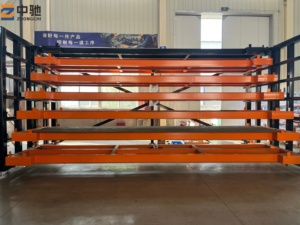
High Load Capacity 8-Layer Anti-Rust Powder Coated Steel Rack Heavy Duty Warehouse Storage System
- Load Capacity: 1,000–4,500 kg/level
- Finish: Electrostatic Epoxy-Polyester
- Vertical Pitch: 75mm/50mm adjustable
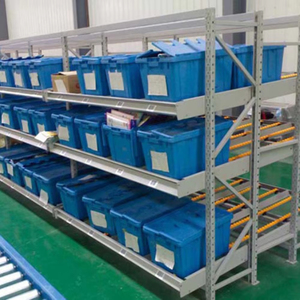
Customized Gravity Pallet Flow Rack Shelf Heavy Duty Selective Rack Steel Carton Rack
- Rotation Mode: Strict FIFO operation
- Slope Incline: 3–4% gravity track
- Safety: Speed controllers & end-stops
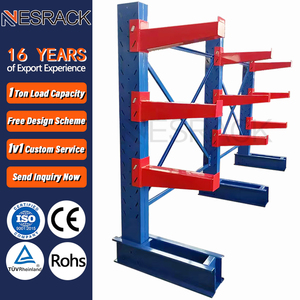
Heavy Duty Steel Metal Storage Shelf Single Size Adjustable Cantilever Rack
- Arm Capacity: 500–1,800 kg/arm
- Profile: Single or double sided
- Application: Timber, rebar, steel tubes
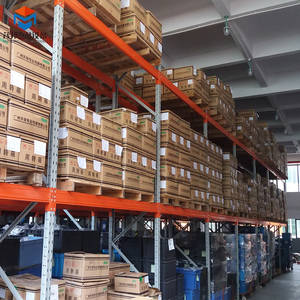
Adjustable Selective Pallet Racking Heavy Duty Warehouse Storage Shelf System
- Selectivity: 100% immediate SKU access
- Deflection Standard: FEM L/200 limit
- Forklift: Counterbalance / Reach trucks
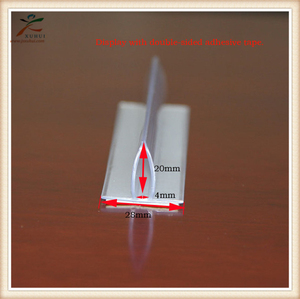
Transparent T-Shape PVC Acrylic Pusher Retail Racks Magnetic Shelf Divider
- Type: Automatic facing coil pusher
- Base: Magnetic locking extrusion
- Application: Convenience, pharma, retail
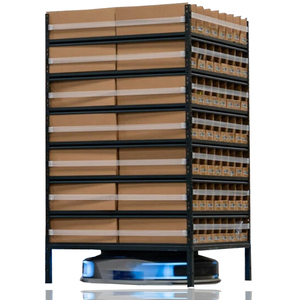
Heavy Duty Industrial Steel Customized 5 Layer AMR Robot Supporting Shelf AGV Applicable Racks
- Automation: AMR & AGV QR-matrix ready
- Tolerances: CNC tight milling ±0.5mm
- Structural: Anti-vibration base plates
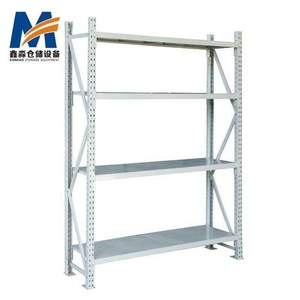
Mracking 200kg-500kg Light Duty Warehouse Supermarket Goods Cargo Shelf Rack
- Capacity: 200–500 kg per shelf tier
- Assembly: Boltless butterfly hole lock
- Decking: Galvanized steel / MDF
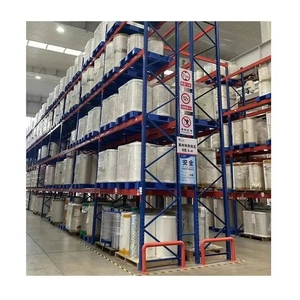
Metal Racking Adjustable Heavy Duty Rack System Warehouse Storage Steel Warehouse Pallet Shelving
- Structural: Cold-rolled box beams
- Safety Locking: 5-pin claw connectors
- Seismic: Baseplate dynamic anchoring
Pallet Racking Architecture & Selection Matrix
Choosing the right industrial racking system requires balancing storage density against throughput cycle times. The table below delineates critical operational tradeoffs according to FEM 10.2.02 and RMI MH16.1 design parameters.
| Racking System Type | Floor Utilization | SKU Selectivity | Stock Rotation | Handling Equipment | Structural Load Limit | Relative CAPEX / ROI |
|---|---|---|---|---|---|---|
| Selective Pallet Racking | 35% – 45% | 100% (Instant) | FIFO or LIFO | Standard Counterbalance / Reach | Up to 4,500 kg / beam pair | Lowest Initial CAPEX / Rapid ROI |
| Drive-In / Drive-Through | 65% – 75% | 20% – 30% | LIFO (Drive-In) / FIFO (Drive-Thru) | Reach Truck / Specialized Narrow | Up to 2,000 kg / pallet slot | Moderate CAPEX / High Volume Density |
| Gravity Pallet Flow Rack | 70% – 85% | By Lane (FIFO) | Strict FIFO Automation | Standard Counterbalance Forklift | Up to 1,500 kg / pallet position | Higher CAPEX / Exceptional Labor ROI |
| Radio Shuttle Automation | 80% – 90% | Channel Indexed | Software Selectable FIFO/LIFO | Remote Shuttle + Standard Lift | Up to 2,500 kg / shuttle unit | Advanced Automation / Lowest Labor Cost |
| Heavy-Duty Cantilever | Linear Optimization | 100% Open Access | Continuous Placement | Side Loaders / Multi-Directional | Up to 1,800 kg / cantilever arm | Specialized CAPEX for Long/Bulky Goods |
| AMR / AGV High-Bay Grid | 85% – 95% | Dynamic 100% WCS | Intelligent Algorithmic FIFO | Autonomous Mobile Robots (AMR) | Engineered per Autonomous Carrier | High CAPEX / Lowest TCO Over 10-Yr Lifecycle |
Future Procurement Trends in Industrial Storage (2026–2030)
Procurement executives are shifting from transactional hardware purchasing to total cost of ownership (TCO) modeling. Discover the four mega-trends driving modern warehouse structural engineering.
AMR & AGV Kinematic Integration
Modern enterprise procurement demands racking uprights engineered with tight deflection criteria (≤ L/300) and laser-guided base plates. Floor-level cross-ties must accommodate autonomous guided vehicles and LiDAR floor mapping without sensor occlusion or chassis impact.
Green Steel & Scope-3 ESG Compliance
Global supply chain tenders now audit carbon footprints per metric ton of roll-formed steel. Leading facilities source low-carbon recycled EAF (Electric Arc Furnace) structural coils finished with non-toxic, TGIC-free powder coatings that emit zero volatile organic compounds (VOCs).
Climate-Resilient Surface Passivation
With giga-warehouses expanding rapidly in coastal hubs like Jebel Ali, Jeddah, and Southeast Asian ports, procurement contracts enforce stringent anti-corrosion testing. Requirements include hot-dip galvanizing (>65μm) and multi-stage zinc phosphating exceeding ASTM B117 500-hour salt spray durability.
Digital Twin & Structural Health IoT
Enterprise logistics operators are piloting IoT strain-gauge sensors embedded directly inside beam end connectors. These telemetric networks provide real-time overload alerts and impact detection, syncing operational rack integrity directly with cloud Warehouse Management Systems (WMS).
Racking Engineering & Design Breakthroughs
How engineering innovations in cold-formed steel sections, seismic modeling, and thermal resistance are transforming storage racking performance.
High-Strength Q355B Steel Cold-Forming
Advances in multi-station CNC roll-forming lines permit continuous processing of high-yield Q355B steel. By engineering optimized rib configurations and cold-rolled return flanges into upright columns, structural dead-weight decreases by 12% while bucking resistance increases by up to 22%.
Sub-Zero Cold Chain Metallurgical Ductility
In blast-freeze cold rooms operating down to -30°C, ordinary carbon steel suffers brittle ductile-to-brittle transitions. Specialized structural alloys with controlled manganese-to-carbon ratios maintain charpy V-notch impact toughness ≥27 Joules at sub-zero temperatures, preventing catastrophic weld crack propagation.
Nonlinear Seismic Performance Engineering
Modern rack framing utilizes semi-rigid beam-end connectors whose moment-rotation characteristics are verified through cyclic load testing. By calculating dynamic energy dissipation parameters, engineers ensure structural stability against ground accelerations exceeding 0.3g in seismic-active zones.
Industrial Manufacturing Power & Technical Capabilities
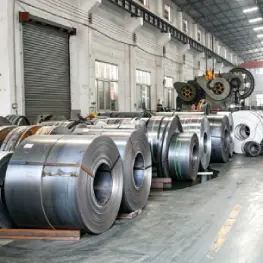
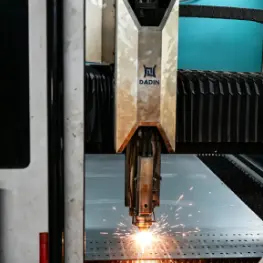
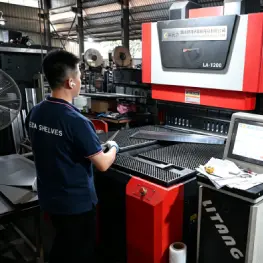
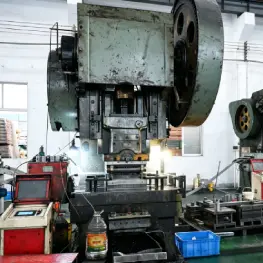
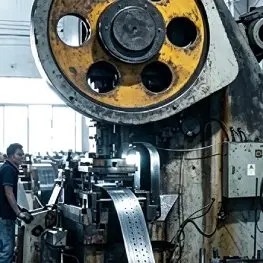
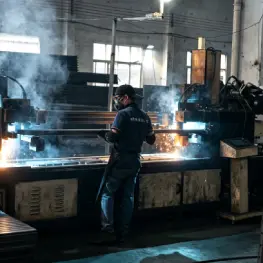
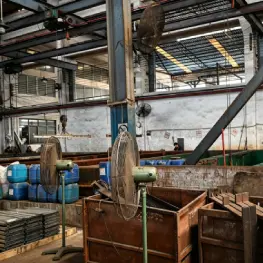
Guangzhou Heda Shelves Co., Ltd. has delivered turnkey intralogistics infrastructure since 2001. Operating a modernized 30,000 m² production complex with fully automated roll-forming and robotic welding cells, we deliver certified structural stability worldwide.
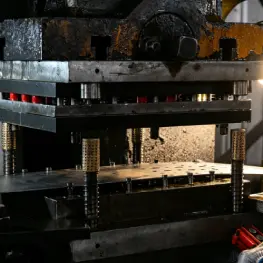
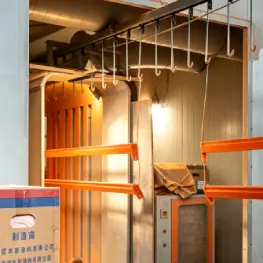
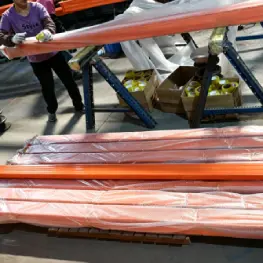
Our 10-Stage Precision Fabrication Workflow
Frequently Asked Structural Engineering & Procurement Questions
Detailed answers addressing load calculations, international design standards, seismic zoning, and building permit compliance for warehouse projects.
What structural engineering design standards do your pallet racking systems adhere to? +
European Standard EN 15512: Principles for structural design of steel static pallet racking, including load safety factors and serviceability limits.
RMI MH16.1 (United States): Specification for the Design, Testing, and Utilization of Industrial Steel Storage Racks.
FEM 10.2.02 (Federation Europeenne de la Manutention): Guidelines covering beam deflection limits (L/200) and beam-to-column connector safety factors.
CE Certification (No. 2435-CPR-8605159) & ISO 9001:2015 (No. 18624Q00169R0M): Certifying quality management, material traceability, and continuous weld integrity across all manufactured assemblies.
How do you calculate permissible beam deflection and structural safety factors? +
Every load calculation includes a minimum material yield safety factor of 1.5 against ultimate tensile failure, and every connector assembly is fitted with dual spring-locking safety pins requiring minimum 1,000-pound upward shear resistance to prevent accidental forklift dislodgement.
Can your designs satisfy Civil Defense and municipal fire sprinkler clearances (NFPA 13)? +
For high-bay installations exceeding 7.6 meters, our CAD designs integrate intermediate in-rack sprinkler pipe bracket clamps and open wire mesh decking with open area greater than 70% to ensure unobstructed vertical water deluge.
How does your chemical surface treatment prevent corrosion in coastal or extreme GCC heat? +
Acid Pickling: Completely strips surface mill scale, oxides, and rust.
Zinc Phosphating: Chemically converts the bare steel into a micro-crystalline phosphate layer that enhances mechanical adhesion.
Electrostatic Powder Coating: Thermosetting epoxy-polyester powder applied at 60–90 μm dry film thickness and cured at 180°C–200°C.
This process achieves 500+ hours of continuous neutral salt spray resistance (ASTM B117) with zero flaking or under-film rust creep. For outdoor yards, full hot-dip galvanization is available.
What concrete slab specifications and anchor embedments are required for installation? +
We supply high-tensile mechanical wedge expansion anchors (typically M12 × 100mm to M16 × 125mm) engineered for minimum concrete embedment depths of 70mm to 100mm. For seismic zones or high-bay installations, our structural engineers run finite anchor shear and tension pull-out calculations according to ACI 318 Chapter 17 criteria.
What technical data is required to generate a complimentary 2D CAD & 3D layout? +
1. Architectural DWG or PDF plan: Showing overall building length, width, column grid spacing, and clear building eaves height.
2. Pallet dimensions & gross weight: Width × Depth × Height (including overhang) and max load in kg.
3. Material handling equipment: Forklift mast type, maximum reach height, turning radius, and minimum right-angle aisle width.
4. SKU profile & rotation: Selective access requirements, total SKU count, and FIFO vs. LIFO logistics workflow.
Ready to Optimize Your Logistics Warehouse Footprint?
Collaborate directly with our senior structural engineers. Whether you need selective pallet racking for a regional logistics hub, cold storage radio shuttle systems, or heavy cantilever framing for industrial steel distribution, we provide tailored engineering calculations, verified layout drawings, and competitive export pricing to any major global port.
- 2D CAD Layout & Aisle Capacity Plan
- 3D High-Fidelity Warehouse Renderings
- FEM 10.2.02 / RMI Load Deflection Sheet
- Itemized FOB / CIF Container Shipping Quote