Standard & High-Density Teardrop Storage Systems
Engineered with cold-rolled Q235B/Q355B high-tensile structural steel, featuring toolless pin-locking teardrop connections, multi-step anti-corrosion pretreatments, and custom beam capacities.
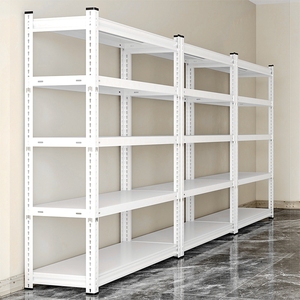
Heavy Duty Steel Storage Rack Adjustable Metal Shelving Pallet Racking
- Pitch Interval: 2-inch (50.8 mm)
- Upright Section: Omega Profile 90×70mm
- Load Class: 1,000–4,500 kg/Beam
- Finish: Epoxy Powder Coated
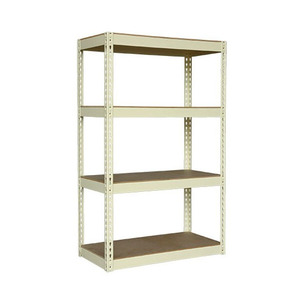
Mracking Factory Boltless Shelving and Custom Teardrop Rack System
- Assembly: Boltless Slide-Lock
- Steel Grade: SS400 / Q235B Cold-Formed
- Safety Factor: 1.67 Design Ratio
- Application: Distribution & Fulfillment
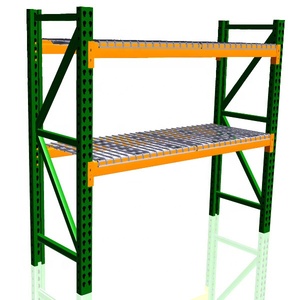
Warehouse Factory Storage Selective Teardrop Pallet Racking
- Hole Pattern: Universal North American
- Beam Heights: 80mm to 160mm Step
- Pallet Accessibility: 100% Direct Selective
- Corrosion Proof: Pickling & Phosphated
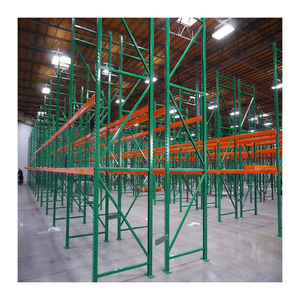
Mracking Custom Heavy Duty Industrial Teardrop Pallet Racking
- Custom Heights: Up to 12,000 mm
- Deck Options: Wire Mesh / Flanged Steel
- Seismic Spec: Zone 1–4 Baseplates
- Deflection Limit: L/180 Design Standard
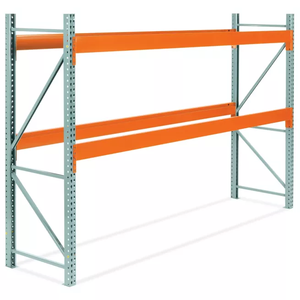
US Style Storage Shelf Unit Adjustable Heavy Load Tear Drop Racking
- Compatibility: Interchangeable Teardrop
- Locking Mechanism: Auto Safety Spring Pin
- Frame Depths: 36" / 42" / 48" Standard
- Certified: CE & ISO 9001:2015
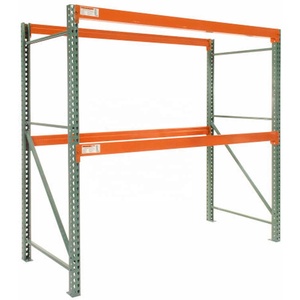
Heavy Duty Teardrop Warehouse Storage Tray & Pallet Rack System
- Beam Tie: Rigid Welded Tubular Connectors
- Base Plate: Heavy Gauge Seismic Anchored
- Coating: Thermoset Hybrid Powder
- Aisle Format: Wide / Narrow / VNA Layout
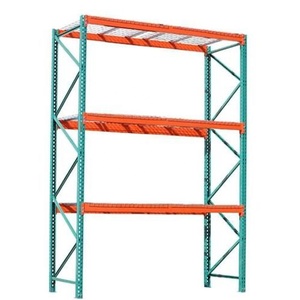
American Teardrop Steel Selective Pallet Rack Corrosion Protection
- Thermal Range: -30°C to +50°C Stable
- Welding Method: MIG Robotic Multi-Pass
- Pallet Fit: GMA 40×48 / Euro 1200×800
- Upright Gauge: 12 Ga. / 14 Ga. High Yield
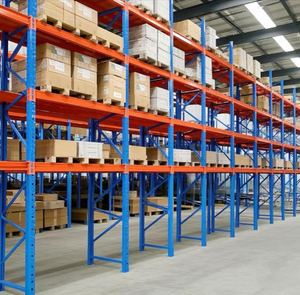
Industrial Grade 3-Layer Adjustable Teardrop Steel Storage Rack
- Config: Starter & Add-On Bays
- Layer Capacity: Up to 3,000 kg/Tier
- Resistance: Anti-Rust Salt Spray Tested
- Inspection: Full Batch Mill Cert Supplied
Founded & Dedicated to Structural Racking Engineering
Intelligent In-House Manufacturing Facility
Monthly High-Tensile Steel Production Capacity
Export Territories: GCC, Americas, Europe & APAC
Engineering Anatomy of Teardrop Pallet Racking Systems
Teardrop warehouse shelving represents the undisputed industrial benchmark across North America, the Middle East, and expanding global logistics corridors. Engineered with a distinct inverted-teardrop punch hole pattern positioned on 2-inch vertical centers, this geometry provides an intuitive slide-and-lock mechanical connection. The tapered profile utilizes gravitational seating: as pallets are positioned onto the cross beams, the downward vector forces the beam rivet studs into the narrowing throat of the teardrop punch, progressively wedging the connection into an ultra-rigid mechanical lock.
Unlike traditional slotted, structural bolted, or proprietary diamond-cut connections, genuine teardrop systems provide cross-manufacturer backward and forward compatibility. Warehouse operators, logistics managers, and third-party logistics (3PL) enterprises achieve unmatched agility—enabling seamless reconfiguration, vertical expansion, and selective bay replacement without decommissioning existing upright frames or requiring specialized tool arrays.
ANSI MH16.1 & RMI Engineering Standard: High-performance teardrop uprights manufactured by certified suppliers are cold-roll-formed from premium certified strip steel (yield strengths exceeding 235 MPa to 355 MPa). They are designed with minimum structural safety coefficients of 1.67:1, ensuring extreme seismic dampening, torsional rigidity, and frame resistance against accidental forklift impact loads.
Mechanical Connection Comparison: Teardrop vs. Alternative Structural Interfaces
Specifying the proper connection interface directly impacts warehouse installation velocity, ongoing operational maintenance, reconfigurability costs, and structural resilience during seismic or dynamic loading incidents:
| Interface Standard | Locking Mechanism | Installation Speed | Cross-Brand Compatibility | Dynamic Impact Resistance | Maintenance Cost |
|---|---|---|---|---|---|
| Teardrop Style (US Standard) | Gravity Wedge + Auto Spring Pin | Fastest (Boltless) | Universal (Standard 2" Pitch) | High (Flexural Stress Dissipation) | Lowest |
| European Diamond / Slotted | Hook Lug Connector | Moderate | Proprietary to Manufacturer | Medium | Medium |
| Structural Bolted Racking | High-Strength Hex Bolts (Grade 5/8) | Slow (Requires Torque Wrenches) | Low (Specific Hole Patterns) | Extreme (Rigid Channel Steel) | High (Re-torquing audits) |
| Speedlock Hook Profile | Claw-Engagement Lug | Fast | Restricted to System Class | Medium-High | Medium |
Technological & Structural Trends Shaping Teardrop Shelving
The convergence of omnichannel supply chains, automated micro-fulfillment hubs, and extreme climate warehousing is driving rapid innovation in heavy-duty teardrop storage architectures.
AS/RS & Autonomous AMR Co-Integration
Modern teardrop racking has evolved beyond static forklift interfaces. Next-generation systems feature precision-engineered upright tolerances (under ±0.5 mm cumulative deviation) capable of docking with autonomous mobile robots (AMRs), automated storage and retrieval systems (AS/RS), and 2D/4D radio shuttle runners for lights-out automated pallet operations.
High-Yield Micro-Alloyed Steels
To reduce structural deadweight without compromising critical beam load margins, tier-one manufacturers are pivoting to micro-alloyed, cold-formed structural steels like Q355B and ASTM A1011. This delivers higher moment-of-inertia values with optimized web profiles, boosting seismic resilience and reducing logistics freight carbon footprints.
Eco-Friendly Pretreatment & Powder Metallurgy
Environmental regulations and extreme warehousing conditions (such as the 45°C+ heat and coastal humidity of the GCC, or sub-zero blast freezers) mandate non-heavy-metal zirconium chemical pretreatments, followed by ultra-durable thermoset TGIC-free polyester powder coats tested to over 500 hours of continuous ASTM B117 salt-spray exposure.
Future Procurement Trends in Industrial Warehouse Shelving
Enterprise procurement executives and logistics general contractors are navigating shifting global supply chain models. Sourcing teardrop shelving has evolved from localized catalog purchasing into direct-from-manufacturer collaborative engineering. The primary strategic procurement indicators include:
1. Direct Manufacturer Partnerships over Intermediaries
Distributors and warehouse developers increasingly bypass domestic multi-tier trading intermediaries to establish verified relationships directly with large-scale manufacturing facilities. Direct engagement eliminates margin stacking (yielding 20% to 35% capital expenditure savings), provides unfettered access to internal structural engineering departments, ensures mill-certified steel traceability, and guarantees exact dimensional compliance with bespoke layout parameters.
2. Container-Optimized Staging & Freight Modularization
International container freight volatility has elevated logistics engineering to a core procurement discipline. Tier-one suppliers utilize robotic bundling matrices that pack upright frames, step beams, and safety wire decks into tightly nested steel cradles. By optimizing container volume utilization up to 98% in 40ft High Cube containers, international buyers minimize landed per-pallet storage position costs while preventing transit chafing across ocean corridors.
3. Holistic Total Cost of Ownership (TCO) Prioritization
Savvy procurement teams assess capital investment beyond the initial quotation invoice. Key TCO evaluation criteria include: paint adhesion resilience to minimize frame rusting; deflection performance that protects forklift mast hydraulic longevity; standardized teardrop interchangeability to eliminate proprietary vendor lock-in; and factory-certified supply of matching accessories such as column protectors, row spacers, and drop-in wire decking.
End-to-End International Procurement & Engineering Protocol
Standardized execution blueprint implemented by global procurement authorities:
Why Industrial Leaders Partner with Guangzhou Heda Shelves
Established in 2001, Guangzhou Heda Shelves Co., Ltd. has grown from a specialized metal fabrication workshop into a global pioneer in heavy-duty warehouse racking, automated shelving, and integrated mezzanine platforms. Our 30,000 square meter intelligent manufacturing base is equipped with modern roll-forming mills, automated robotic welding cells, and eco-certified powder coating lines.
We serve enterprise clients across 120+ countries, with specialized logistics routing into key global hubs including the UAE (Jebel Ali, Khalifa Port), Saudi Arabia (Jeddah, Dammam), Qatar, Oman, North America, and Western Europe.
-
Over 20 Years of Specialized Engineering: More than two decades refining cold-formed structural integrity and completing 10,000+ warehouse projects worldwide.
-
30,000 Metric Tons Monthly Output: Industrial scale that insulates your projects from market bottlenecks and guarantees rapid delivery schedules.
-
Rigorous Traceable Compliance: Fully verified under CE (No. 2435-CPR-8605159), ISO 9001:2015 Quality Management, and RoHS non-toxicity standards.
-
Complimentary Engineering Layout: Professional structural calculations, 2D AutoCAD equipment layouts, and photorealistic 3D warehouse renderings before financial commitment.
Project Engineering Standards
Every teardrop warehouse shelving system supplied by our manufacturing plant adheres to strict structural and safety testing protocols:
Frequently Asked Questions: Teardrop Shelving Procurement
Authoritative technical and logistical answers to help procurement managers and logistics engineers navigate teardrop pallet rack specifications.
Q1: Are all teardrop shelving brands universally interchangeable?
Most reputable industrial teardrop shelving adheres to the standard 2-inch vertical hole spacing. However, subtle variations can exist in the punch taper angle, steel thickness (12 vs. 14 gauge), and connector pin diameters. Our engineering team provides physical sample validation and 3D CAD interface cross-checks to ensure that our replacement beams or frames mate securely with your existing legacy inventory.
Q2: How is maximum beam deflection calculated and verified?
Under ANSI MH16.1 and RMI standards, cross-beam deflection must not exceed L/180 (where L equals the clear span between upright columns). For example, a standard 96-inch (2,438 mm) beam loaded to maximum rated capacity cannot deflect vertically more than 0.533 inches (13.5 mm). Each production batch undergoes static four-point hydraulic load cell tests before container packaging.
Q3: What surface finish is ideal for high humidity, heat, or coastal warehouses?
In harsh coastal logistics environments (such as Dubai, Dammam, or coastal Americas), standard spray paint will degrade prematurely. We utilize an automated seven-stage chemical dipping cycle (degreasing, acid pickling, rust removal, and zinc phosphating) followed by an electrostatic thermosetting polyester powder coat cured at 200°C, producing an abrasion- and moisture-resistant barrier.
Q4: What is the functional difference between step beams and box beams?
Step beams feature an indented 1-5/8 inch interior ledge running along the top surface, engineered to accept flush-fitting wire decking, steel shelving panels, or drop-in pallet support bars. Box beams feature a smooth rectangular profile, offering high torsional resistance, and are typically specified for heavy, uniform pallet racking without secondary shelf decking.
Q5: What seismic documentation is required for local building permits?
Municipal building codes and Civil Defense authorities frequently require engineer-stamped structural calculations demonstrating baseplate sizing, anchor bolt embedment depths (typically Hilti or wedge anchors), concrete slab compressive strength verification (minimum 3,000 to 4,000 PSI), and regional seismic acceleration factor calculations (Ss and S1 data).
Q6: How do teardrop racks integrate with warehouse fire sprinkler codes?
Fire safety standards (NFPA 13) require open flue spaces between back-to-back pallet positions (longitudinal flues of 3–6 inches) and between side-by-side pallet loads (transverse flues). Furthermore, selecting open wire mesh decking with greater than 50% open surface area allows overhead fire sprinkler discharge to penetrate through lower storage tiers without horizontal obstruction.
Q7: What container logistics lead time can international buyers anticipate?
Standard engineering CAD layouts are finalized within 24–48 hours. Manufacturing for high-volume orders (2 to 10 full container loads) is typically completed in 15 to 25 business days at our 30,000 m² plant. Ocean transit to major Middle East ports (Jebel Ali, Dammam) averages 18–24 days, while transit to US West and East Coast ports ranges from 16 to 32 days.
Q8: Can custom column heights and profile gauges be produced on demand?
Yes. Because we operate dedicated continuous cold roll-forming lines, we routinely manufacture upright frames from 2,000 mm up to 12,000 mm in single piece profiles, with customizable upright widths (80mm, 90mm, 100mm, 120mm) and steel thicknesses (1.5mm to 2.5mm / 16 Ga. to 12 Ga.) tailored to specific engineering requirements.
Accelerate Your Storage Efficiency with Custom Teardrop Solutions
Collaborate directly with our senior racking design engineers. Submit your warehouse architectural layout, slab specifications, and pallet dynamics to receive a free structural calculation, CAD layout, and factory-direct quotation within 24 hours.