Certified High-Rack & Industrial Storage Solutions
Fabricated from premium cold-rolled structural steel, optimized for T11 (1,100×1,100mm) and T12 (1,200×1,000mm) standard Korean pallets, and backed by ISO 9001:2015 and CE certification.
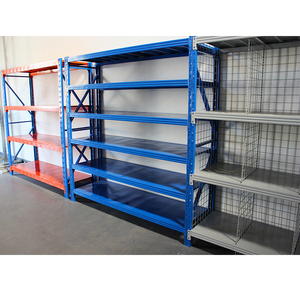
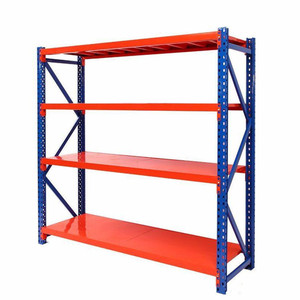
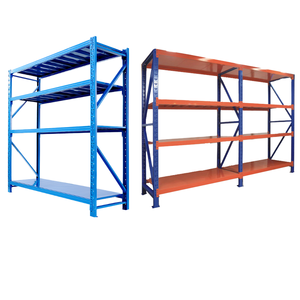
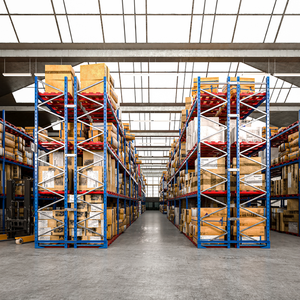
High Rack Optimization in the Seoul Metropolitan Area (SMA)
Analyzing volumetric cube economics, the dominance of T11 pallet matrices, and seismic regulatory frameworks across South Korea's high-density logistics corridors.
The Greater Seoul Metropolitan Area (encompassing Seoul Special City, Incheon Metropolitan City, and Gyeonggi Province) concentrates over 51% of South Korea's total population and more than 65% of national retail order fulfillment. Over the past decade, unprecedented land acquisition costs in traditional logistics corridors—such as Yongin, Icheon, Gwangju, and Gimpo—have fundamentally altered industrial warehouse architecture. Land prices in prime Gyeonggi logistics hubs frequently exceed 3.5 million to 6.0 million KRW per pyeong (approx. $800 to $1,400 per m²), forcing third-party logistics (3PL) operators, cold storage chains, and hyper-scale fulfillment giants like Coupang, CJ Logistics, and Kurly to replace horizontal square footage with extreme vertical cube utilization.
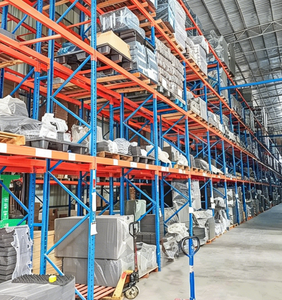
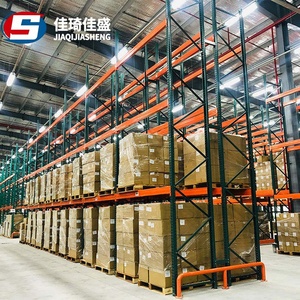
Standard warehouse racking systems with clear heights of 6 to 8 meters are economically non-viable for new Class-A development sites. Instead, modern logistics assets deployed across the Sudogwon region require High Rack Storage systems spanning 12 meters to 24 meters in clear height, or integrated automated AS/RS (Automated Storage and Retrieval System) rack-supported building structures extending up to 35 meters. At these extreme vertical profiles, the fundamental physics of steel deflection, frame buckling under eccentric loads, seismic moment connections, and slab anchor shear demand an unprecedented level of precision engineering and metallurgical integrity.
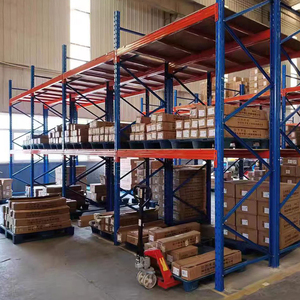
Unlike North American or Western European facilities operating on 48×40 inch GMA or 1200×800 mm Euro-pallets, the South Korean supply chain is fundamentally anchored to the KS A 2149 standard: the T11 pallet format (1,100 × 1,100 mm), alongside the secondary T12 format (1,200 × 1,000 mm) used for specialized automotive imports and export air cargo. Standard international racking configurations fail to account for the unique aspect ratio and point-load distributions of the T11 square footprint. When two T11 pallets sit on a standard 2700 mm beam, excessive deflection and insufficient 75 mm transverse flue spaces violate Korean Fire Services Act compliance.
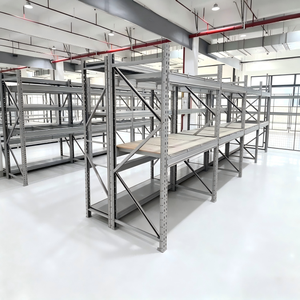
To address these structural challenges, Guangzhou Heda Shelves Co., Ltd. (HEDA Shelves) provides bespoke high-bay racking systems engineered from high-tensile cold-rolled Q235B and Q355B structural steel. By designing structural uprights with column cross-sections up to 120 mm width, dual-rib profile stamping, and cold-forged 5-hook connector brackets, our high-bay systems ensure that beam deflection remains strictly below the structural safety limit of L/200 to L/250 under dynamic rated capacity, while maximizing volumetric density across Seoul's most valuable logistics real estate.
Information Gain: Volumetric Cube Equation for Seoul Fulfillment Hubs
In a standard 10,000 m² floor footprint in Icheon, upgrading from a conventional 7.5 m selective racking layout (3 pallet tiers, 1.2 tons/pallet) to an engineered 16 m Very Narrow Aisle (VNA) high rack system (7 pallet tiers) increases total storage volume from 9,600 pallet positions to 22,400 pallet positions—a 133% capacity surge. This translates to a direct reduction in per-pallet real estate lease expense of 42.8% per month, neutralizing high Korean industrial land premiums within the first 14 months of commercial operation.
Dawn Delivery & E-Commerce Fulfillment
Fierce competition in South Korea's “Dawn Delivery” (Saebyeok Baesong) sector demands multi-tier picking towers and high-bay dynamic flow racks positioned within 30 km of Downtown Seoul.
- Integrated carton live storage for rapid SKU sorting
- Rack-supported mezzanine multi-tier picking decks
- Optimized for Gimpo, Bucheon, and Hanam express hubs
Cold Chain Storage (-25°C to +4°C)
Refrigerated mega-centers in Dongtan, Yongin, and Pyeongtaek incur extreme per-cubic-meter thermal chilling expenses, requiring deep-lane high-density racking to minimize refrigerated cubic volume.
- Radio Shuttle automated deep-lane storage lanes
- Low-temperature crack-resistant powder coatings
- Eliminates air infiltration with 85%+ spatial density
Semiconductor & Hi-Tech Buffer Hubs
Supporting Gyeonggi's semiconductor corridor spanning Suwon, Giheung, Hwaseong, and Pyeongtaek with high-precision clean-room compatible racking and heavy die-storage racking.
- Conductive ESD protective coatings for electronics
- Micro-deflection tolerance for precision tooling storage
- Automated AGV and forklift magnetic wire guidance
Seismic Engineering (KDS 41) & Fire Protection Codes
Navigating the legal mandates enforced by the Ministry of Land, Infrastructure and Transport (MOLIT), KOSHA safety guidelines, and National Fire Safety Codes (NFSC).
Following the seismic events in Gyeongju (magnitude 5.8) and Pohang (magnitude 5.4), South Korea revised its national structural design framework into the unified Korean Design Standard (KDS 41 17 00: Seismic Design Standards for Buildings). Under current Korean regulatory enforcement, industrial storage racks with upright heights exceeding 6 meters are classified as building-integrated non-structural components or independent steel frameworks subjected to dynamic lateral seismic coefficients.
When designing high-rack installations for facilities in Incheon, Ansan, or Pyeongtaek, racks must be calculated to resist ground acceleration values ($S_{DS}$ and $S_{D1}$) based on local geotechnical soil profiles (Class $S_2$ through $S_5$). A racking system calculated strictly to static gravity standards risks cataclysmic collapse during a regional seismic incident, generating catastrophic progressive collapse across consecutive bays.
HEDA Shelves incorporates dynamic response spectrum analysis and Finite Element Analysis (FEA) on all high-rack installations engineered for the Korean market. We engineer enlarged baseplates with heavy-gauge stiffener gussets, manufactured from 8 mm to 12 mm Q355B hot-rolled steel plates, anchored via M16 to M20 chemical epoxy anchor bolts embedded deeply into high-strength reinforced concrete slabs (Fc 210–240 kgf/cm²). Our structural portal ties across aisle tops link parallel racks into rigid, hyper-stable three-dimensional space frames.
Parallel to seismic mandates, the National Fire Safety Code NFSC 103 (Automatic Sprinkler Systems), enforced vigorously by regional Korean fire stations during occupancy inspections, dictates stringent high-rack clearances. Under Korean fire codes, any high-rack warehouse with storage heights exceeding 10.2 meters (or containing Category IV hazardous commodities) must implement integrated in-rack sprinkler lines across every two pallet levels.
This operational reality requires that high-rack structural beams and uprights maintain exact transverse flue spaces of not less than 75 mm to 150 mm between stored pallet edges, and continuous longitudinal flue spaces down the center spine of double-entry racks. HEDA Shelves engineers integrate mechanical pallet back-stops, welded wire mesh fall-protection decks, and custom CNC-punched in-rack sprinkler pipe support brackets directly into the frame uprights, ensuring that fire department walkthroughs and safety certificates proceed without costly project delays.
Furthermore, under guidelines mandated by the Korea Occupational Safety and Health Agency (KOSHA Guide M-107), high racks must incorporate certified column corner guards, end-of-row heavy wrap-around crash barriers, and mechanical beam safety locking clips that withstand accidental vertical uplift forces of at least 5.0 kN applied by ascending forklift forks.
| System Architecture | Height Envelope | Aisle Width (AST) | Floor Space Index | Pallet Selectivity | KDS Seismic Rating | Target Seoul Application |
|---|---|---|---|---|---|---|
| Standard Selective High Rack | 8.0m – 14.0m | 3.2m – 3.8m | 40% – 45% | 100% Immediate | Zone I & II Verified | Multi-SKU 3PL & Retail Hubs (Yongin) |
| Very Narrow Aisle (VNA) High Bay | 12.0m – 18.0m | 1.6m – 1.9m | 60% – 70% | 100% Immediate | Reinforced Portal Braced | Fast FMCG & Cross-Docking (Icheon) |
| Automated Radio Shuttle Racking | 10.0m – 22.0m | 3.0m (Transfer only) | 75% – 85% | Batch / SKU Channel | Rigid High-Density Frame | Sub-Zero Cold Chain Hubs (Dongtan) |
| Double-Deep Heavy-Duty Rack | 8.0m – 13.0m | 3.4m – 3.8m | 55% – 60% | 50% Immediate (LIFO) | Heavy Base Gusset Plated | Raw Materials & Chemicals (Ansan) |
| AS/RS Clad-Rack Structure | 18.0m – 35.0m | 1.4m – 1.6m | 85% – 92% | 100% Automated Crane | Full Building Space Frame | Automated Giga-Hubs (Pyeongtaek) |
Why Korean Enterprise Logistics Teams Choose HEDA Shelves
Combining 25+ years of factory-direct heavy structural manufacturing with dedicated engineering consultation, European certifications, and swift maritime delivery directly to Incheon and Busan.
In-House Production Base
Fully vertically integrated roll-forming mills, automated laser beam profiling, and CNC column punch lines in Guangzhou, China.
Verifiable Traceability
Certified under CE (No. 2435-CPR-8605159), ISO 9001:2015 (No. 18624Q00169R0M), and strict RoHS heavy-metal-free standards.
Pretreatment Coating
Rigorous automatic pickling, phosphating, and electrostatic epoxy-polyester powder coating for superior corrosion resistance.
Rapid Sea Freight to Korea
Immediate direct container shipping routes from Pearl River Delta ports to Incheon Port (West Sea) and Busan New Port (South Sea).
Turnkey Engineering from 3D CAD to Site Acceptance Testing
When international or domestic general contractors build logistics facilities in South Korea, communication delays and unverified drawing submittals lead to catastrophic schedule slippage. HEDA Shelves operates a dedicated team of over 300 technical personnel and structural design engineers proficient in AutoCAD, SolidWorks, and Revit BIM integration.
Before manufacturing commences, we provide complete 2D CAD structural layouts, 3D mechanical renderings, and load stress calculation sheets detailing dead loads, live loads, seismic shear distribution, and point load pressures transferred to the concrete slab. This documentation allows Korean project consultants and municipal inspectors to review beam deflection calculations and slab anchor pull-out ratings effortlessly.
Factory-Direct Pricing Advantage Under RCEP / China-Korea FTA
Purchasing high rack storage systems through multi-tier domestic trading brokers in Seoul frequently inflates structural material costs by 25% to 40%. Sourcing direct from HEDA Shelves' 30,000 m² production facility eliminates intermediary markups while ensuring direct engineering oversight over steel mill certificates (BaoSteel / Shougang cold-rolled steel coils).
Furthermore, under the Regional Comprehensive Economic Partnership (RCEP) and the China-Korea Free Trade Agreement (CKFTA), eligible steel racking components benefit from preferential tariff schedules when accompanied by our factory-issued Certificate of Origin (Form E / CO). We provide clear packing lists, color-coded bundle labeling, and pre-sorted modular packaging that streamline customs clearance at Incheon Port and enable rapid unloading at project job sites.
Need a Seismic & Layout Feasibility Analysis for a Seoul Site?
Share your warehouse architectural CAD drawings, clear height limitations, pallet metrics (T11/T12), and forklift models. Our senior racking structural engineers will return a complimentary 2D layout and 3D concept model within 48 hours.
Frequently Asked Questions for Seoul Market Buyers
Technical, regulatory, logistical, and structural answers tailored for warehouse developers, operations managers, and supply chain procurement heads in South Korea.
Are HEDA Shelves high rack systems compatible with South Korea's T11 pallet standard? +
How do your high-bay racking systems comply with KDS 41 seismic requirements? +
Can your racking layout pass Korean Fire Services Act (NFSC 103) inspections? +
What is the typical shipping lead time and customs process from Guangzhou to Incheon Port? +
How do your high rack coatings perform inside cold storage warehouses at -25°C? +
Do you offer on-site installation guidance in South Korea? +
What warranty and quality certifications accompany HEDA Shelves products? +
How We Deliver Turnkey High Rack Projects to Korea
A disciplined, milestone-driven engineering protocol ensuring zero discrepancy between architectural layouts and final high-rack operational throughput.
Requirements Audit
Analyzing floor slab capacity (kN/m²), ceiling clear heights, column grids, T11/T12 pallet loads, and MHE forklift reach specifications.
CAD & Seismic Design
Delivering 2D CAD layout plans, 3D renderings, flue space alignments, and KDS 41 seismic structural load calculations.
Automated Production
Precision profile cold roll-forming, automatic robotic welding, 10-stage phosphating, powder coating, and strict piece-by-piece QC inspection.
Export & Commissioning
Container optimization for ocean transit to Incheon/Busan, customs clearance support, assembly schematics, and technical commissioning.
Equip Your Seoul Warehouse with World-Class High Rack Engineering
Connect directly with HEDA Shelves' technical solutions team. We provide free warehouse CAD layouts, load capacity calculations, and factory-direct quotation sheets tailored to South Korea's demanding supply chain standards.