Engineered Racking Solutions for High-Density Japanese Logistics
All systems are manufactured using automated roll-forming and certified Q235B high-tensile structural steel, custom-tailored for standard JIS T11 pallets (1,100 × 1,100 mm) and international freight dimensions.
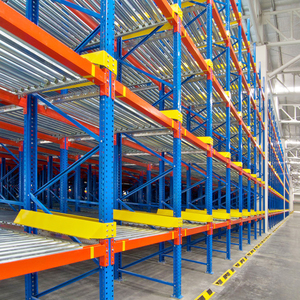
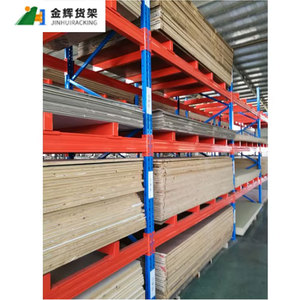
Optimizing Volumetric Efficiency & Seismic Integrity: Double Deep Racking in Tokyo Logistics
The Greater Tokyo Bay area and Kanto inland distribution corridor (including Saitama, Chiba, and Kanagawa) represent the most capital-intensive, high-throughput logistics markets in East Asia. With warehouse land rents in prime submarkets like Shinagawa, Koto-ku, Ota-ku, and Yokohama reaching record highs of ¥7,500 to ¥9,800 per tsubo per month, industrial operators face immense pressure to extract maximum volumetric storage capacity while strictly adhering to the Japanese Building Standards Act (Kenchiku Kijun-hō) and Japanese Industrial Standards (JIS B 8887).
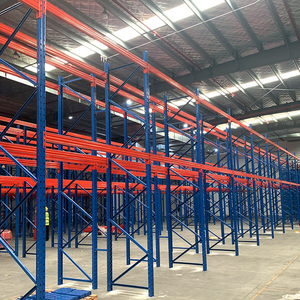
Double deep pallet racking provides a mathematically proven compromise between standard selective pallet racking and high-density, low-selectivity systems like drive-in racking. By configuring pallet rows four units deep between operating aisles (back-to-back double rows), a double deep configuration eliminates approximately 40% to 50% of the redundant operating aisles required in conventional selective designs. For Tokyo logistics managers handling medium-velocity SKUs (10 to 50 pallets per SKU line), this architecture increases net pallet capacity by 30% to 40% within the exact same structural footprint.
Comparative Engineering Metrics: Selective vs. Double Deep vs. Drive-In vs. Shuttle
Selecting the proper storage medium requires balancing land acquisition costs, specialized forklift fleet investments, and SKUs turnover velocities. Below is the operational comparison evaluated against typical Kanto Plain logistics park parameters:
| Racking Topology | Pallet Storage Density | Direct SKU Selectivity | Material Handling Vehicle Required | Seismic Ductility Index (JIS/RMI) | Estimated Cost per Pallet Position |
|---|---|---|---|---|---|
| Selective Pallet Racking | Baseline (100% Benchmark) | 100% Instant Access | Standard Counterbalance / Reach Truck | High (Standard baseplate damping) | Baseline Economic |
| Double Deep Racking | 130% – 142% Increase | 50% Direct Immediate (FILO/LIFO) | Pantograph Reach / Telescopic Forklift | Very High (Dual-frame connected tying) | Low to Moderate (+12% vs. Selective) |
| Drive-In Racking | 160% – 175% Increase | 15% – 25% (Lane Dependent) | Standard Narrow Reach Truck | Moderate (Susceptible to forklift frame collisions) | Moderate |
| Radio Shuttle Cart Racking | 180% – 210% Increase | Variable (Lane batch-dependent) | Standard Forklift + Automated AGV Shuttle | High (Rigid internal rail anchoring) | High (+150% to +220%) |
As shown in the technical matrix, double deep racking preserves 50% direct selectivity while circumventing the staggering capital expenditure associated with full automation or radio shuttle systems. Because standard reach trucks fitted with pantograph scissor extensions or double-reach telescopic forks can operate comfortably in 3,000mm to 3,400mm clear aisles, the barrier to transition for established Japanese 3PL companies is exceptionally low.
Application Profiles in the Greater Tokyo Metropolitan Logistics Cluster
How leading Japanese retail, cold chain, and manufacturing distribution centers deploy OEM/ODM double deep configurations across specific prefectural nodes.
Tokyo Bay Coastal Cold-Storage Hubs
Facilities located along the Heiwajima, Jonanjima, and Kasai refrigerated belts operate under crushing power consumption costs. Double deep installations reduce refrigerated cubic volume per stored pallet by up to 35%, slashing compressor thermal loads while seamlessly integrating with standard 1,100 × 1,100mm frozen seafood and meat handling flats.
Automotive & Tier-1 Assembly (Kanagawa/Tochigi)
Supporting manufacturing corridors along the Tomei Expressway and Ken-O Expressway, our heavy-duty double deep modules accommodate heavy stamped parts and transmission component skids. With certified beam capacities reaching up to 4,500 kg per level, parts suppliers minimize staging footprints while maintaining synchronized just-in-time sequencing.
Fast-Moving E-Commerce Hubs in Saitama & Chiba
Cross-dock fulfillment mega-warehouses along the Joban and Tohoku Expressway trunks use double deep racking as a master pallet reserve replenishment zone. Top beam levels hold overflow stock, which continuously cascades down to ground-level ergonomic pick faces, resolving bottleneck pick-waves during seasonal promotional spikes.
Emerging Trends Reshaping Tokyo's Warehousing Infrastructure
The Japanese logistics industry is undergoing a systemic structural transformation, driven by statutory labor reforms (the "2024 Logistics Problem") and tightening regional real estate availability.
1. The "2024 Truck Driver Overtime Cap" Ripple Effect: With statutory caps restricting commercial drivers to 960 overtime hours annually, logistics providers cannot rely on long-haul multi-stop buffering. Regional logistics complexes surrounding Tokyo must maximize instantaneous storage capacity to maintain stock cushions closer to the end consumer. Double deep racking provides this volume surge capability without necessitating warehouse expansion or expensive facility relocation.
2. Evolution of Strict Seismic Restraints (JIS B 8887 & Tokyo Fire Defense): Earthquakes in the Kanto region demand unprecedented structural rigor. Traditional selective racks suffer torsional deformation under heavy seismic sway. Double deep racking systems, by mechanical definition, connect two parallel upright frames via heavy-gauge structural cross-row spacers (typically 200mm to 300mm length). This dual-frame linkage forms an intrinsically wide, self-stabilizing structural truss that dramatically increases the transverse second moment of area ($I_y$), significantly damping lateral seismic resonance.
3. Standardization on the T11 (1,100 × 1,100 mm) Pallet: While European operations rely on 800 × 1,200 mm and North American networks use 40 × 48 inches (1,016 × 1,219 mm), Japanese domestic supply chains are dominated by the JIS T11 square footprint pallet. Standard off-the-shelf Western racking components waste horizontal beam clearance or induce improper beam deflection when loaded with T11 skids. Our OEM/ODM service precision-engineers beam spans (such as 2,500mm clear openings for two T11 pallets or 3,600mm for three) to achieve zero wasted horizontal space and exact 50mm clearance compliant with Tokyo Fire Department flue space rules.
Why Japanese Importers & Contractors Source OEM/ODM From Us
Guangdong HEDA Shelves delivers direct factory engineering rigor, cutting out intermediary brokerage markups while complying with international ISO 9001 and CE quality standards.
Free 3D Simulation & CAD Layouts
Our in-house structural engineering group renders full structural CAD schematics, flue space allocations, and 3D stress-distribution visuals within 24 hours of receiving warehouse blueprint specs.
Certified Prime Q235B / Q355B Steel
We use exclusively certified continuous cold-rolled prime steel from Baosteel and Shougang. Every production coil includes raw material mill test certificates verifying yield strengths above 235–355 MPa.
Automated Electrostatic Coating Line
Components pass through an automated 8-stage pre-treatment, pickling, and phosphating process followed by thermo-cured epoxy polyester powder coating resistant to flaking, scratching, and high-humidity rust.
Direct Port of Tokyo / Yokohama Logistics
Precision container pack-bundling with labeled structural piece markers matching assembly drawings. Shipped directly to Tokyo Oi Container Terminal or Honmoku Pier with transparent customs export documentation.
Frequently Asked Questions: Tokyo Warehouse Racking Sourcing
Key questions Japanese general contractors, facility directors, and procurement leaders consider when importing heavy racking systems.