Featured Warehouse Storage & Flow Racking Solutions
Explore certified structural components, high-density live storage lanes, and modular heavy-duty steel systems manufactured directly in our 30,000 m² production base.
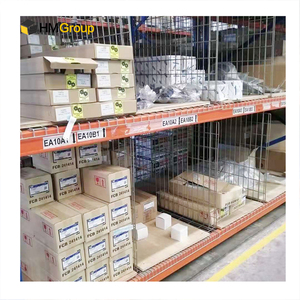
Galvanized Steel Pallet Rack Hanging Metal Wire Mesh Shelf Dividers
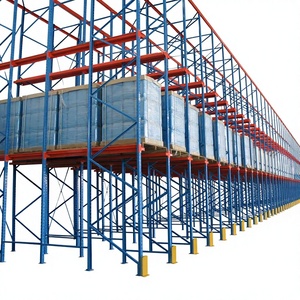
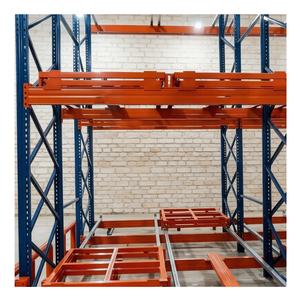
DJ High Density Storage Solution Push Back Pallet Racks
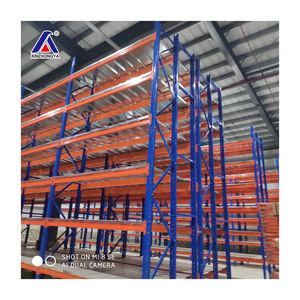
Q235b Steel Single Deep Double Side Selective Pallet Storage Rack
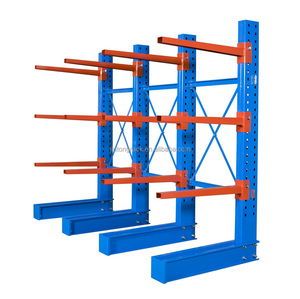
China Factory Economical Cantilever Racks Modular Steel Storage
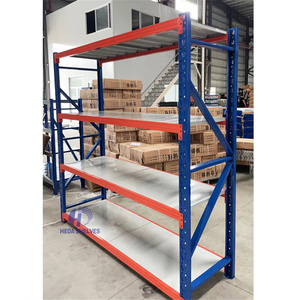
Customized Factory Supply Industrial Workshop Display Shelving
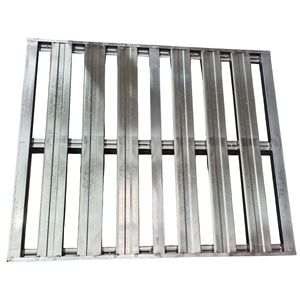
1000KG Heavy Duty Galvanized Stackable Steel Pallet
Physics of Dynamic Gravity Storage: Velocity, Separation & CE Compliance
Dynamic pallet flow and carton flow racking systems operate entirely on mechanical gravity, drastically cutting energy consumption while ensuring strict First-In, First-Out (FIFO) batch turnover. Achieving CE certification requires rigorous compliance with structural safety, dynamic load balancing, and impact damping.
Calculated Incline Gradient
The optimal pitch for standard industrial pallet flow lanes ranges precisely between 2.5% and 4.0% (approx. 1.5° to 2.3°). Pitch determination depends strictly on bottom pallet skid geometry, total pallet weight (ranging from 300 kg to 1,500 kg), and roller track surface friction coefficients, preventing runaway speeds or midway stall.
Centrifugal Speed Controllers
To restrict pallet acceleration over deep storage lanes (up to 20 pallets deep), integrated centrifugal brake rollers engage proportionally with rotational speed. Internal planetary gearboxes and friction pads maintain uniform pallet terminal velocity below 0.3 m/s, shielding both rack frames and delicate inventory.
Safety Pallet Separators
At the picking face, accumulative back-pressure from rear pallets can reach several metric tons. Our mechanical separation mechanisms isolate the lead pallet by locking back subsequent loads. Once the primary pallet is lifted by the forklift, the separator trips, systematically advancing the queue with zero line pressure.
Engineering & Operational Matrix: Gravity Flow vs. Competing Systems
Evaluating structural density, stock rotation dynamics, material handling efficiency, and investment payback for modern intralogistics architectures.
| Storage Topology | Stock Rotation | Floor Space Utilization | SKU Selectivity | Throughput Speed | Forklift Operating Risk | Energy / Automation |
|---|---|---|---|---|---|---|
| Pallet Flow Racks (Gravity) | Strict FIFO | Up to 75% | One SKU per Lane | Highest (Immediate) | Low (Aisle Isolated) | Passive Mechanical (0 kWh) |
| Carton Flow Racks | Strict FIFO | Up to 65% | High per Shelf Level | Extremely Fast Picking | Zero (Manual Picking) | Passive Mechanical (0 kWh) |
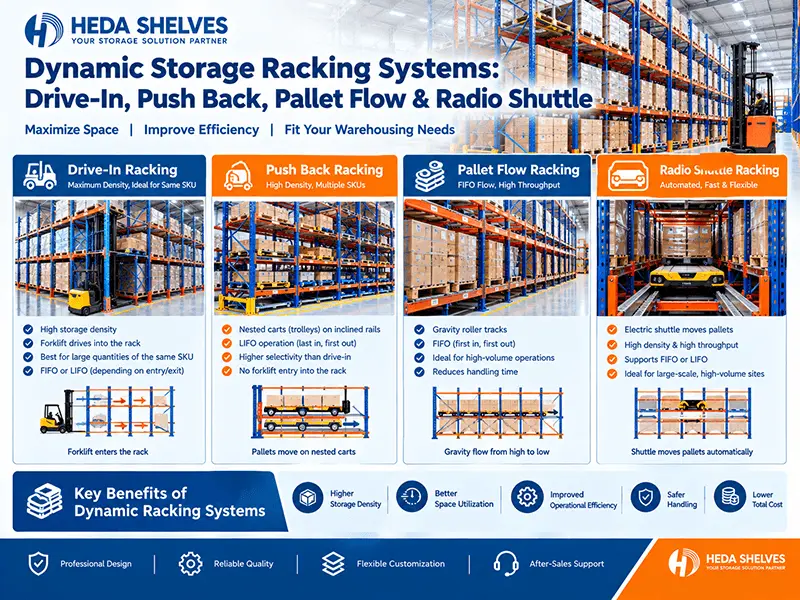
| Drive-In Racking | LIFO Only | Up to 60% | Lowest (By Bay) | Slow (Mast in-lane) | High (Upright Collision) | Manual Handling |
| Push-Back Racking | LIFO Only | Up to 55% | Medium (Per Lane) | Moderate | Low (Face Access) | Passive Gravity Carts |
| Radio Shuttle Racking | FIFO or LIFO | Up to 80% | Medium per Level | High (Semi-Automated) | Lowest (External Lift) | Lithium Battery Powered |
Structural Safety Under EN 15512:2020 & EN 1090-1
Unlike static shelving, dynamic flow racks absorb cyclical kinetic loads, dynamic pallet drop forces, and ongoing vibration. Structural engineering must account for horizontal inertial displacement, frame buckling under concentrated live tracks, and floor slab shear capacity.
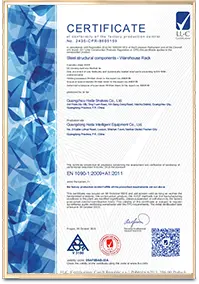
Guangzhou Heda Shelves designs its flow rack systems using certified high-strength cold-formed structural steel (Q235B and Q355B). Column profiles feature specialized beam connector tabs with 5-tooth locking pins and continuous automated welding compliant with Execution Class EXC2 under EN 1090-1.
 CE Certificate
2435-CPR-8605159
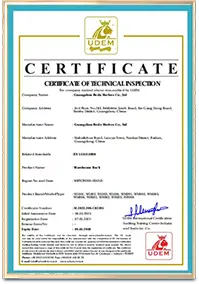
 ISO 9001:2015
No. 18624Q00169R0M
From Certified Steel Coil to Engineered Flow Bed: The 10-Step Process
Operating since 2001, HEDA Shelves integrates complete in-house fabrication across 30,000 square meters. Every component in our gravity flow and industrial rack structures undergoes automated mechanical testing and surface pre-treatment to thrive in severe operating conditions.
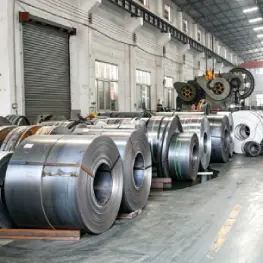
Coil Vetting & Slitting
Spectrographic analysis of raw steel hot-rolled coils ensuring high tensile yield strength and micro-alloy purity.
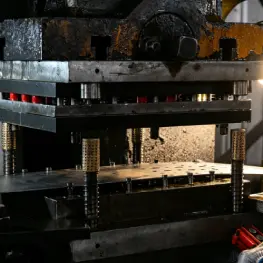
Continuous CNC Punching
50mm/75mm upright pitch holes stamped with ±0.05mm geometric tolerance on multi-station punch lines.
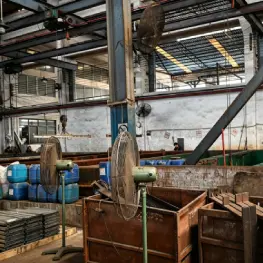
Pickling & Phosphating
Deep immersion anti-corrosion chemical wash eliminating mill scale and creating crystalline zinc phosphate bonding.
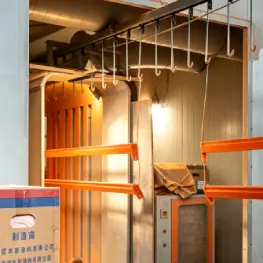
Electrostatic Coating
Thermosetting epoxy-polyester powder baked at 180°C–200°C for 60–90μm film thickness resisting moisture and chemical vapors.
Future Procurement Trends in Gravity Flow & Dynamic Live Storage
Warehouse operational managers and 3PL contractors are navigating transformative shifts in automated staging, pallet standardization, and resilient supply chains. Align your facility with the next decade of storage engineering.
1. Interfacing with Autonomous Mobile Robots (AMRs)
Flow racks are no longer isolated manual buffers. Advanced operations now procure flow lanes fitted with magnetic sensors and optical docking alignment channels for AMR/AGV automated loading and unloading. Gravity lanes act as self-indexing accumulator buffers between high-speed automated storage and dispatch docks.
2. Escalating Energy Costs Favor Passive FIFO
With warehouse electrical loads skyrocketing due to facility HVAC and cold storage, logistics managers are turning away from continuously powered conveyors. Gravity pallet flow lanes consume 0 kWh operating energy, providing maximum cubic storage density with lower lifecycle OpEx and zero carbon emissions.
3. E-Commerce Split-Case Pick-to-Light Integration
Carton flow racking is evolving rapidly with built-in electronic busways for pick-to-light (PTL) arrays, digital shelf tags, and sensorized weight plates. This eliminates picker travel time, boosts picking accuracy past 99.9%, and guarantees ergonomic carton presentation at the replenishment face.
4. Cold Chain & Sub-Zero Food Security Demands
Expanding pharmaceutical and refrigerated food supply chains necessitate dynamic roller bearings that perform reliably down to -30°C without grease freeze or polymer roller embrittlement. Zinc-plated steel rollers with sealed low-temperature synthetic lubricants are becoming mandatory procurement line-items.
Technological Milestones in Modern Flow Rack Engineering
Flow rack design has progressed from passive sheet metal channels into highly calculated mechatronic warehousing assets. Here are the core technological advances implemented in modern factory production lines.
Direct-Contact Magnetic Braking
Traditional centrifugal brake rollers rely on internal mechanical friction pads which wear over time. Next-generation systems feature eddy-current magnetic retardation, creating contact-free kinetic deceleration. This ensures non-wearing, maintenance-free speed damping that operates identically across extreme temperature gradients.
Universal Pallet Compatibility Tracks
Early flow racks failed if wooden pallets had damaged bottom runners or irregular stringers. Modern full-width, split-roller tracks utilize engineered steel cylindrical rollers mounted on heavy-gauge zinc-coated C-profiles, ensuring safe transport of GMA, Euro (EPAL), Australian standard, and plastic bottom-skid pallets without track jam.
Tool-Less Quick-Drop Track Brackets
Warehouse managers frequently alter SKU weights and packaging styles. State-of-the-art flow rack designs integrate universal clip-in drop brackets that allow maintenance engineers to re-pitch lane gradients in increments of 0.5° without torch cutting, drilling, or disassembling the primary rack structural frames.
Frequently Asked Technical Questions: Flow Racking Procurement
Critical questions addressed by our chief structural engineers regarding pallet deflection, fire suppression, seismic compliance, and export logistics.
What specific standards define a "CE Certified" pallet flow rack?
In structural warehousing, a CE Mark verifies compliance with the Construction Products Regulation (CPR 305/2011/EU). Specifically, steel structures must be fabricated under EN 1090-1 and EN 1090-2 (Execution Class EXC2 or EXC3), which mandates raw material traceability, certified robotic or welder qualifications, and non-destructive weld testing. Furthermore, rack structural analysis and beam deflection limits must adhere strictly to EN 15512:2020 (Steel static storage systems – Adjustable pallet racking systems – Principles for structural design). Guangzhou Heda Shelves holds verified CE Certificate No. 2435-CPR-8605159.
How do you calculate the ratio and spacing of speed controller brake rollers?
Brake roller frequency is a direct function of total lane depth, pallet mass, and track gradient. The standard engineering formula dictates one speed controller for every pallet position starting from the second pallet, or at intervals of 1.4 to 1.6 meters along the lane. For high-mass pallets (1,200 kg to 1,500 kg), specialized direct-geared brake rollers are installed every single pallet position to ensure acceleration kinetic energy never surpasses the brake absorption ceiling.
Can flow racks be deployed in sub-zero cold storage facilities (-25°C to -30°C)?
Yes. However, standard commercial racking will fail in sub-zero applications due to lubricant freezing and cold embrittlement. For cold-chain projects, HEDA Shelves specifies: (1) Structural steel with certified Charpy V-notch impact toughness at -30°C; (2) High-impact polymer or zinc-plated steel rollers equipped with low-temperature synthetic hydrocarbon grease; and (3) Increased lane clearances to accommodate thermal contraction of steel uprights and roller axles.
What are the acceptable pallet quality criteria and deflection limits for live storage?
Pallet quality is paramount. Under EN 15512, maximum acceptable pallet bottom deflection across the rollers is 1/200th of the span (L/200), never exceeding 10mm. Missing bottom boards, exposed nails, broken stringers, or excessive overhang of shrink-wrap will cause line blockages. For plastic pallets, roller beds require full-width 3-runner or 5-runner skids, or triple-track configurations, to prevent plastic creep under ambient warehouse temperatures.
How do flow racks comply with warehouse fire sprinkler codes (NFPA 13)?
Because pallet flow racks form solid, high-density blocks without wide aisles, they require dedicated flue space engineering. Standard configurations include a minimum 150mm (6-inch) vertical longitudinal flue space between back-to-back bays and open transverse flue channels to permit rapid ceiling sprinkler heat activation and water penetration. In buildings exceeding 9 meters in height, our engineers integrate in-rack ESFR sprinkler bracket channels directly into the intermediate flow rack upright frames.
What data is required from our engineering team to provide a certified 2D/3D layout?
To produce an authoritative structural design, we request: (1) Architectural CAD floor plans with column grids, roof trusses, clear heights under hook, and egress pathways; (2) Slab specifications, including concrete compressive strength (psi or MPa), rebar configuration, and slab thickness; (3) Pallet specifications (width, depth, overall height including load, center of gravity, and minimum/maximum weight); (4) Bottom runner orientation relative to flow direction; and (5) Forklift fleet specifications (lift height, mast collapsed height, and turning radius).
Why EPC Contractors & Global 3PLs Partner with HEDA Shelves
Since 2001, Guangzhou Heda Shelves Co., Ltd. has bridged the gap between heavy structural manufacturing and refined intralogistics system integration. We provide factory-direct execution without distributor markups.
Transform Your Facility's FIFO Storage Density Today
Whether you require an engineered pallet flow system for high-velocity FMCG distribution or an ergonomic carton live pick module, our certified senior engineers provide comprehensive technical vetting, layout simulations, and factory-direct pricing.
Direct Inquiries to: [email protected] • Factory: No. 133-1, Tingyuan Road, Xingang East Road, Haizhu District, Guangzhou, China