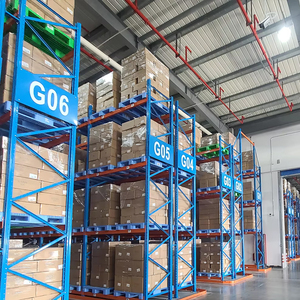
Industrial-Grade Stacking & Pallet Rack Systems
Engineered to handle high-density load classes ranging from 500kg to 4,500kg per storage level, certified for extreme industrial throughput.
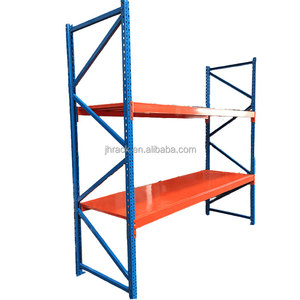
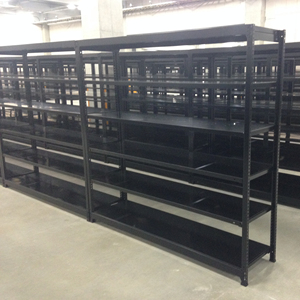
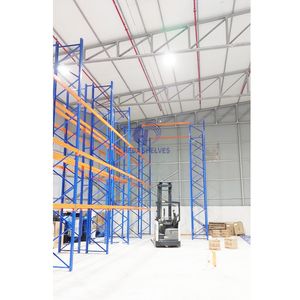
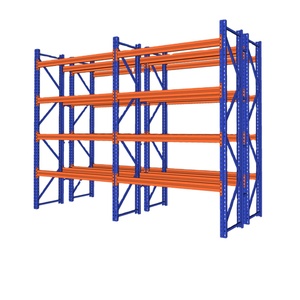
2001
Established Engineering Root
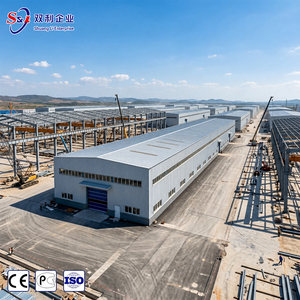
30,000 m²
In-House Manufacturing Area
30,000 t
Monthly Steel Output Volume
120+
Global Export Destinations
Technical Authority
Structural Integrity & Engineering Science of Portable Stack Racks
A technical evaluation of why modern modular stack racks outperform conventional bolted structural steel in dynamic distribution environments.
Cold-Formed High-Tensile Q235B/Q355B Steel
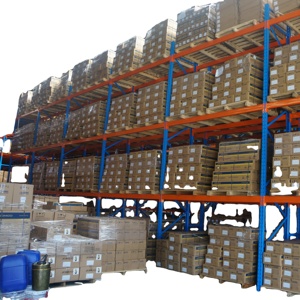
Stack racks manufactured by China's top exporters utilize high-grade certified cold-rolled structural steel coils. The metallurgical density and automated roll-forming tolerances ensure tensile yields exceeding 355 MPa. In contrast to cheap low-gauge scrap metal, certified cold-drawn tubing provides maximum elastic deformation absorption, preventing column collapse under heavy dynamic shock loads from forklift approaches.
Interlocking Target Nesting Design
The safety of a multi-tier stack rack structure relies fundamentally on the mechanical coupling mechanism between modular tiers. Precision-stamped cup-and-cone target nesting posts allow rapid fork alignment while providing positive locking angles. These interlocking posts redistribute gravitational and lateral kinetic vectors down to the foundation slab, neutralizing shear failure risks when stacked up to four to six tiers high.
Dual-Stage Chemical Pre-Treatment & Anti-Corrosion
Surface longevity defines the total lifecycle cost of warehouse assets. Operating beyond rudimentary spray paints, Tier-1 manufacturing lines run an automated 10-step finishing procedure: acid immersion pickling, micro-crystalline phosphating, neutralization, and electrostatic epoxy-polyester powder baking (180°C to 200°C cure). Alternatively, hot-dipped zinc galvanizing conforming to ISO 1461 prevents sub-surface galvanic oxidation in high-humidity cold stores.
Future Procurement Trends
How Global Supply Chains Are Re-Engineering Stack Rack Sourcing
Structural demands, volatile leasing rates, and automated handling are reshaping stack rack engineering parameters for 2026 through 2030.
Transition from Fixed Aisles to Elastic Stacking
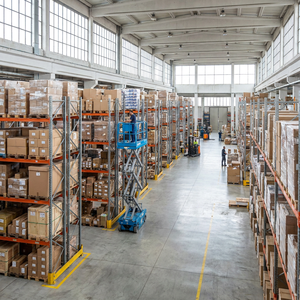
Static selective pallet racking is constrained by fixed footprint amortization. When seasonal SKU inventories surge (e.g., peak retail or harvest cycles), fixed bays waste valuable aisle space. Procurement directors are transitioning to flexible, demountable stack racks. These units can be erected during inventory spikes and consolidated into 1:6 nestable footprints during off-peak lulls, dramatically reducing wasted cubic volume.
AGV and AMR Automated Interfacing
Autonomous Mobile Robots (AMRs) and automated counterbalanced forklifts demand tighter dimensional repeatability than manual forklift operations. Modern stack racks manufactured in advanced Chinese facilities leverage robotic structural welding jigs to maintain tolerances within ±1.5mm. This enables optical sensor grids and laser pallet positioning systems to dock and extract loaded nests without structural hang-ups.
Total Lifecycle Costing Over Initial FOB Sourcing
Procurement teams are moving away from selecting suppliers based solely on raw steel tonnage prices. Hidden costs stemming from non-uniform stacking profiles, post-deflection failure, and premature rust in cold chain environments often negate initial purchase discounts. Specifying mill-certified steel grades, verified weld seam ultrasound tests, and compliant safety factors (minimum 1.5 safety ratio) guarantees asset performance across decades.
| Evaluation Parameter | Legacy Fixed Racking Systems | Certified Modular Stack Racks |
|---|---|---|
| Spatial Agility & Layout Changes | Anchored to slab; requires structural teardown & relayout permits | 100% modular mobility; repositioned instantly via standard forklifts |
| Off-Peak Floor Utilization | Permanent spatial footprint regardless of inventory capacity | Collapsible/demountable posts; compact nesting footprint |
| Civil Defense & Anchor Permits | Strict civil code floor anchoring, expansion bolt pull-tests required | Self-supporting dynamic equipment; eliminates concrete anchoring damage |
| Cold-Chain Footprint Density | Limited by permanent access aisles for material handling equipment | Dense block-stacking maximizes expensive blast freezer refrigeration cubes |
Factory Competence
Why Tier-1 Importers Partner With Our Factory Direct Facilities
Operating since 2001, Guangzhou Heda Shelves delivers turn-key manufacturing, structural calculations, and export packaging directly from our 30,000 m² production base.
25+ Years of Structural Roll-Forming Leadership
Founded in 2001 with more than 300 experienced technical craftsmen, our manufacturing site operates high-precision automated rolling mills, computer-controlled punching setups, and robotic welding stations. We manufacture up to 30,000 tons of structural steel storage racks monthly, fulfilling complex orders across 120+ destination countries without production bottlenecks.
Traceable Structural Certifications: CE & ISO 9001
Our quality control management systems are fully audited and backed by official credentials: CE Certification (No. 2435-CPR-8605159) for structural steel safety conformity, ISO 9001:2015 Quality System Registration (No. 18624Q00169R0M, valid to June 2027), and verified RoHS surface finish purity reports. This guarantees seamless compliance reviews by municipal engineering consultants and industrial insurers.
Optimized Export Packaging & Ocean Freight Density
Exporting over 10,000 logistics projects globally requires specialized export packing methodologies. Modular stack rack bases and removable posts are bundled using specialized steel band strapping, corrugated corner protection, and high-tensile stretch wrapping. Component arrangements are CAD-configured to match standard 40ft High Cube containers, maximizing freight cube fill rates while preventing in-transit salt spray corrosion.
Procurement Knowledge Base
Frequently Asked Questions on Stack Rack Sourcing
Essential guidance addressing load capacities, ocean freight logistics, surface treatments, and building safety criteria.
What is the dynamic vs. static load capacity of heavy-duty stack racks?
Static load capacity represents the maximum gross weight a stacked column of racks can hold while resting stationary on a concrete floor slab (typically up to 4,000 kg to 6,000 kg for a 4-tier stack, or 1,000 kg to 1,500 kg per individual tier). Dynamic load capacity denotes the maximum weight an individual unit can securely handle while in motion on forklift tines (rated up to 1,500 kg to 2,000 kg). Safety engineering mandates an ultimate yield safety factor of at least 1.5 to 2.0 based on FEM 10.2.02 and RMI specifications.
How does container transport packing prevent surface corrosion and deformation?
Our loading teams bundle stack rack bases and tubular uprights using custom nesting pallets secured with heavy-duty polyester strapping, high-density edge guards, and vapor corrosion inhibitor (VCI) shrink wrap. Each 40ft container is balanced to prevent transit shifting, and components are elevated off the container deck to avoid pooled condensation during trans-oceanic shipping.
Can stack racks be engineered for sub-zero cold storage operations?
Yes. Low-temperature environments (-20°C to -30°C) introduce cold brittleness risks in generic carbon steels. We supply specialized Q355D structural steel with verified low-temperature Charpy V-notch impact toughness, paired with hot-dipped galvanizing or cryogenic epoxy powder formulations that maintain structural ductility and resist surface cracking caused by repeated freeze-thaw cycles.
What documentation is required to clear customs and pass local warehouse safety audits?
Every export shipment from Guangzhou Heda Shelves includes mill test certificates (MTC 3.1) tracing steel coil heats, ISO 9001:2015 quality control records, official CE Declaration of Conformity documents (under EN 1090 structural steel execution standards), and clear 2D/3D assembly manuals showing maximum load distributions to support third-party facility safety inspections.
How does modular stacking compare economically against cantilever and selective pallet racking?
Modular stack racks offer superior structural economics when storing irregular, crushable, or seasonal items (such as bulk bags, tires, rolled textiles, and engine blocks) that cannot be safely double-stacked directly on top of one another. They eliminate the substantial capital expense of concrete floor anchor bolts, seismic post ties, and static access aisles, allowing users to increase overall building cubic density by 40% to 60%.
Request Custom Stack Rack Layouts & Direct Factory Quotes
Send your warehouse drawings and pallet specifications. Our engineering team will supply free CAD floorplans, 3D spatial renders, and itemized load calculations within 24 hours.