Factory-Direct High-Density Industrial Racking & Shelving
Engineered to strict FEM 10.2.02, EN 15512, and RMI MH16.1 specifications. Cold-rolled from prime high-tensile steel coils with automated continuous roll-forming tolerances within ±0.5mm.
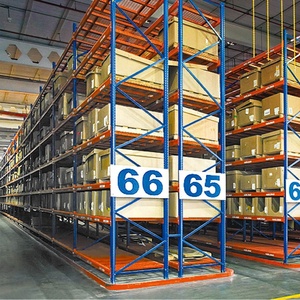
Narrow Aisle VNA Pallet Racking System Heavy Duty Cold Rolled Steel
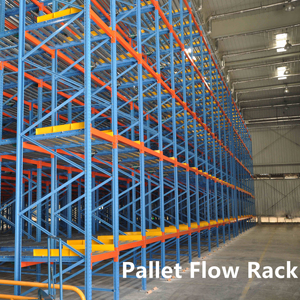
Customized Gravity Flow Pallet Roller Shelf System Heavy Duty Rack
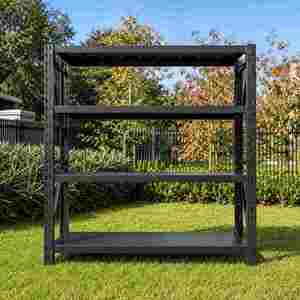
Custom Heavy Duty Shelving 300-800 Kg Layer 4 Tier Metal Rack
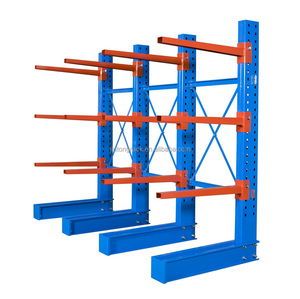
Modular Steel Cantilever Racks Storage System For Wood & Timber
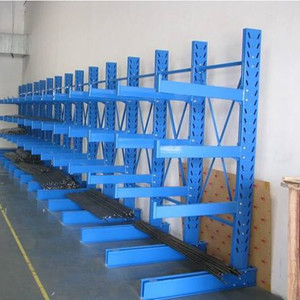
Warehouse Heavy Duty Industrial Structural Cantilever Rack
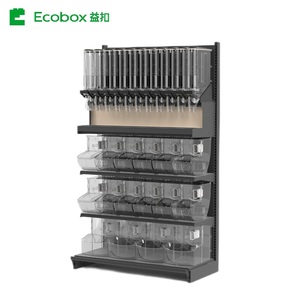
Matching Iron Display Rack with Bulk Food Bins Gravity Bins
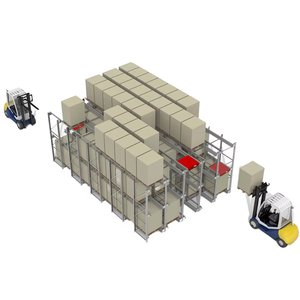
Heavy Duty Drive-In Rack High-Density Pallet Racking System
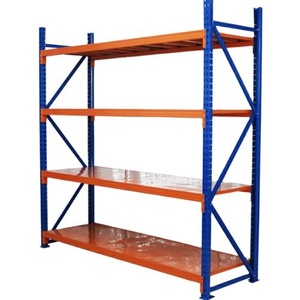
Warehouse Storage Racks 4-Layer Factory Long Span Industrial Steel
Evaluating the Global Top 10 Warehouse Shelving & Racking Manufacturers
Industrial warehousing infrastructure is no longer evaluated merely as static steel fabrications. In modern supply chain engineering, pallet racking and industrial shelving constitute the critical physical structural matrix for material velocity, dynamic loads, and automated material handling system (AMHS) precision. Selecting a tier-1 manufacturing partner requires rigorous technical evaluation encompassing raw coil metallography, FEA (Finite Element Analysis) structural calculation models, automated cold-roll forming profile constancy, and climate-specific surface coating longevity.
Below is an authoritative technical comparison matrix detailing the leading global warehouse shelving and pallet racking manufacturing plants, assessing structural compliance (FEM, RMI, AS4084), fabrication footprint, steel tensile grades, and specialized regional engineering adaptability across hyper-demanding operating environments such as the Gulf Cooperation Council (GCC), Southeast Asia, North America, and the European Union.
| Manufacturer / Factory | Primary Production Base | Core Structural Steel Standard | Certified Load Standards | Surface Treatment Tech | Engineering Agility & TCO |
|---|---|---|---|---|---|
| Guangzhou HEDA Shelves Co., Ltd. | Guangzhou, China (30,000 m²) | Q235B / Q355B (SS400 / ASTM A572) | CE (EN 15512), ISO 9001, RoHS | 9-Stage Pickling & Phosphating + Electrostatic Powder | High (Direct OEM/ODM) |
| SSI SCHAEFER | Neunkirchen, Germany | EN 10025 Structural Steels | FEM 10.2.02, EN 15512, DIN | High-Grade Epoxy Polyester Cure | High CapEx / Tier-1 Global |
| Mecalux, S.A. | Barcelona, Spain / Global | S235JR / S355JR European Steel | EN 15512, RMI (Americas) | Cataphoresis + Continuous Powder Line | Comprehensive / Standard Systems |
| Dexion (Constructor Group) | Kallandso, Germany / Romania | EN 10149-2 High Yield Microalloyed | FEM, EN 15512, AS4084 | Epoxy-Polyester Hybrid Powder | High Quality / Extended Lead Times |
| Stow Group | Dottignies, Belgium | S355MC Cold-Forming Strip | EN 15512, CE Marking EN 1090 | Multi-Stage Pretreated Powder Coat | European Logistics Focused |
| Interlake Mecalux Inc. | Melrose Park, IL, USA | ASTM A1011 / A36 Commercial Steel | RMI MH16.1, AISC Specifications | Electrodeposition Primer + Powder | North American Standard Focused |
| Daifuku Co., Ltd. | Shiga, Japan | JIS G3101 (SS400), JIS G3131 | JIS, Japanese Seismic JIS B 8941 | Precision Baked Industrial Enamel | Integrated High-End AS/RS Heavy |
| Dematic (KION Group) | Grand Rapids, MI / Global Bases | High-Strength Low-Alloy (HSLA) | RMI, ANSI, FEM, ISO 14001 | Automated Industrial Powder Coater | Turnkey AS/RS / High Premium |
| Kardex Remstar | Bellheim, Germany | EN Precision Cold Rolled Sheets | DIN EN ISO 9001, CE Machinery | Acoustic-Damped Powder Finish | Niche Dynamic Vertical Lift Only |
| Frazier Industrial Company | Long Valley, NJ, USA | AISC Structural Channel (ASTM A36) | RMI, AISC Structural Welding D1.1 | Structural Primer & Dipped Enamels | Heavy Channel Structural / High TCO |
While legacy European and North American providers maintain commanding positions in fully turnkey robotic automated mega-warehouses, their multi-tier distribution channels, rigid standard product catalogs, and substantial project overheads frequently impose 35% to 55% CapEx premiums. Conversely, premier industrial manufacturers such as Guangzhou HEDA Shelves Co., Ltd. bridge this efficiency divide by delivering heavy-duty cold-formed structural steel integrity, absolute parametric layout customization, and direct-from-mill pricing backed by full CE and ISO 9001 compliance.
Factory Engineering Standards: Guangzhou HEDA Shelves Co., Ltd.
Established in 2001, Guangzhou HEDA Shelves Co., Ltd. has expanded into one of the world's most versatile, engineering-driven industrial racking and shelving production centers. Operating an integrated 30,000 square meter advanced production plant with over 300 technical production specialists, HEDA delivers an unyielding monthly output capacity of 30,000 metric tons of certified cold-formed storage systems, serving logistics networks in over 120 countries.
The 10-Stage Precision Fabrication Workflow
Structural reliability in seismic zones and high-throughput distribution environments depends entirely on uncompromised fabrication tolerances. Unlike small non-standard job shops that perform manual cold-shearing and simple dry-powder spraying, HEDA operates an automated, closed-loop, 10-stage fabrication workflow:
Specialized Engineering for Harsh Climates & Seismic Zones
Warehousing infrastructure installed in desert and coastal belts—such as Dubai (JAFZA), Dammam, Jeddah, Doha, and coastal Asian hubs—endures relentless microclimatic stress: ambient temperatures exceeding 45°C, particulate sand abrasion, and high salt-fog atmospheric corrosion. Standard industrial paint systems experience micro-cracking and osmotic blistering within 18 months under these conditions, causing hidden steel rust and catastrophic structural frame failure.
HEDA addresses this through an automated immersion pickling and zinc-phosphating pretreatment process that strips hot-rolled mill scale and creates an inert micro-crystalline zinc-phosphate conversion layer. This is immediately followed by robotic electrostatic application of thermosetting TGIC-free polyester powders (60–80μm thickness) cross-linked at 200°C. This technical coating exceeds ASTM B117 500-hour neutral salt-spray standards. For refrigerated, cold-chain, and open-air lumber storage, hot-dip galvanized finishes complying with ISO 1461 provide decades of maintenance-free durability.
Future Procurement Trends in Industrial Storage (2025–2030)
How digital automation, e-commerce micro-fulfillment, green building certifications, and supply chain volatility are reshaping global warehouse racking specifications.
AS/RS & Shuttle Readiness
Procurement teams are shifting away from static, forklift-only selective racks toward hybrid systems capable of integrating autonomous radio shuttles, AGVs, and high-speed cranes. Modern specifications mandate tighter beam deflection limits (L/300 instead of traditional L/200) and strict millimeter-level guide rail tolerances to ensure sensor-guided shuttle navigation without kinematic jamming.
Seismic & Civil Defense Mandates
Global warehouse insurers and municipal Civil Defense authorities (e.g., UAE Civil Defense, Saudi SBC 301-306, US IBC 2024) enforce non-negotiable structural compliance. Modern tender documents demand complete engineering calculations showing dynamic response spectra, vertical flue space dimensions for NFPA 13 in-rack sprinklers, and heavy oversized seismic baseplates with Hilti chemical anchoring.
TCO & Modular Vertical Expansion
Industrial land costs near major transit hubs have escalated by over 40% globally. Logistics engineers now maximize volumetric clear heights using rack-supported multi-tier mezzanine floors and Very Narrow Aisle (VNA) systems reaching 16 meters. Sourcing focus has pivoted from lowest initial purchase price to modular reconfigurability and total cost of ownership across a 20-year structural lifespan.
Technological Evolution of Industrial Shelving & Racking
From simple hot-rolled structural angles to multi-bend cold-formed profiles, FEA computerized design, and IoT-enabled structural health monitoring.
Multi-Fold Omega Upright Engineering
Historically, industrial shelving relied on heavy, inefficient structural channel iron assembled with field bolts. Contemporary systems utilize advanced high-yield cold-rolled steel (Q355B / S355JR) formed into complex 11-fold and 13-fold Omega profiles. These continuous cold-bent folds dramatically augment the section modulus and radius of gyration, resisting torsional buckling while cutting dead structural weight by up to 25%.
Finite Element Analysis (FEA) Simulation
Leading manufacturers calculate structural load envelopes using computer-modeled non-linear Finite Element Analysis (FEA). By simulating beam-to-column connector semi-rigidity, torsional moment rotations, asymmetric pallet loading, and simulated seismic ground accelerations ($S_s$ and $S_1$), structural engineers eliminate localized structural stress concentrations before raw coils are fed to the roll mill.
Sensorized Rack Health & Impact Tech
Warehouse operations are entering the Industry 4.0 era. High-bay racking uprights are increasingly fitted with wireless piezoelectric strain-gauge sensors and Bluetooth-enabled impact sentinels. Any forklift collision exceeding safe velocity thresholds triggers immediate automated WMS alerts, prompting targeted non-destructive structural inspection and safeguarding personnel from progressive progressive collapse.
Frequently Asked Questions: Technical Procurement & Engineering
Answers to core questions raised by warehouse logistics managers, civil contractors, structural engineers, and global procurement directors.
Q1 How do you determine beam section sizing and deflection limits under international codes?
Beam load design is governed by both ultimate limit state (bending strength and shear resistance) and serviceability limit state (deflection limits). Under European standard EN 15512 and US RMI MH16.1 specifications, maximum vertical deflection of a loaded rack beam must not exceed $L/200$ for standard forklift systems (where $L$ is clear beam span length), and must remain within $L/300$ or even $L/400$ for automated robotic AS/RS or shuttle channels. In high-density installations, dual C-profile interlocked box beams or welded step beams are selected based on concentrated point-load distributions and total uniformly distributed load (UDL) requirements.
Q2 Why is pre-treatment pickling and phosphating vital for racks deployed in coastal and desert zones?
Untreated cold-rolled structural steel retains hot-mill scales, carbon oils, and microscopic moisture pockets. In coastal cities (such as Dubai, Dammam, and Singapore) where ambient relative humidity approaches 90% alongside temperatures up to 48°C, powder coating applied over poorly pretreated steel delaminates quickly. Multi-stage chemical pickling acid baths thoroughly dissolve mill scale and rust, while an automated zinc-phosphate bath deposits an insoluble, non-conductive crystal layer that mechanically bonds the electrostatic powder coat, preventing rust creep even if the steel surface suffers physical forklift scrape damage.
Q3 What warehouse CAD documentation is necessary to ensure local Civil Defense and fire authority approval?
Civil Defense, municipal building inspectors, and property underwriters mandate precise architectural submittals before issuing warehouse operating permits. Required documentation includes a comprehensive CAD floor plan illustrating code-mandated main egress aisles (≥ 3.0m), transverse cross-aisles, precise clear flue spaces (≥ 75mm longitudinal and ≥ 150mm transverse) for early fire detection and overhead ESFR sprinkler penetration per NFPA 13, stamped structural loading charts, certified seismic baseplate anchoring specs, and verified load plaque locations indicating maximum certified UDL capacity per tier.
Q4 How does direct factory procurement from an OEM/ODM compare against local shelving distributors?
Sourcing factory-direct from established manufacturers like Guangzhou HEDA Shelves eliminates tier-2 and tier-3 reseller markups, cutting overall structural capital expenditure by 25% to 45%. Furthermore, factory-direct procurement grants engineering teams direct collaboration with factory CAD/FEA design specialists to customize beam heights, upright gauges, and frame configurations precisely tailored to existing column grids and slab capacities. Direct factory production delivers complete material test certificates (MTC), verifiable CE/ISO compliance files, and unified container packing matching site installation sequences.
Q5 What slab structural criteria must be met before installing multi-tier mezzanines or tall VNA racks?
High-bay VNA racks (>10m) and rack-supported mezzanines exert massive point loads via their upright baseplates. Ground slabs must generally provide minimum compressive strength of 25–35 MPa with a slab thickness between 180mm and 250mm, reinforced with steel mesh or rebar. For VNA wire-guided or mechanical rail-guided turrets, concrete floor super-flatness tolerances matching DIN 18202 (or ASTM E1155 / F-min standards) are mandatory to prevent dynamic forklift mast sway at maximum reach heights.
Q6 How are components securely packaged to eliminate transit damage during long-haul sea freight?
International freight logistics subject structural components to violent container vessel accelerations and high-humidity maritime holds. Quality manufacturers bundle upright frames and beams on heavy dunnage blocks wrapped in heavy multi-layer stretch film with corner edge protectors and high-tensile steel strapping. Smaller connectors, baseplates, shims, and safety locking pins are packed in reinforced wooden crates labeled with unique QR/item numbers corresponding to the engineering assembly drawings, streamlining container unloading and on-site erection.
Accelerate Your Storage Capacity: Request an Engineering Layout
Send your building dimensions, pallet specifications, and throughput targets to our senior storage design team. We deliver custom 2D CAD layouts, realistic 3D spatial models, and structural FEA load calculations within 24–48 hours.