An engineering analysis of structural load limits, automated intralogistics kinematics, seismic criteria, and global procurement architectures for industrial supply chain directors.
Factory-Direct Heavy-Duty Systems
Featured Industrial Racking Product Catalog
Certified by CE and ISO 9001:2015 standards, each structural component is roll-formed from premium Q235B/Q355B structural steel, processed through multi-stage pickling and phosphating, and finished with electrostatic epoxy-polyester coatings.
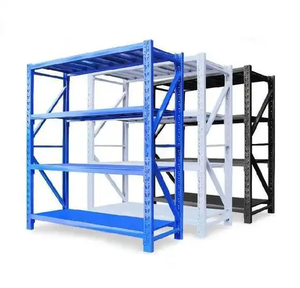
Engineered for toolcribs, manual assembly kitting, and garage parts distribution. Features roll-formed drop-in beams with zero hardware required for fast pitch adjustments.
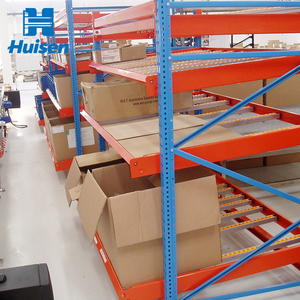
Full gravity roller track bed with automatic brake drums and speed controllers. Eliminates forklift aisle travel for high-throughput perishables and FMCG distribution.
Designed with reinforced dual-C box beams and heavy-gauge baseplate anchors. Engineered specifically for raw casting dies, heavy hardware, and bulk crated machinery.
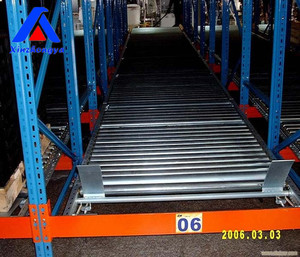
Precision inclined roller tracks paired with centrifugal damping brakes. Built for continuous pallet gliding in beverage distribution, dairy plants, and central cold rooms.
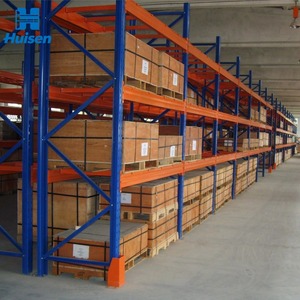
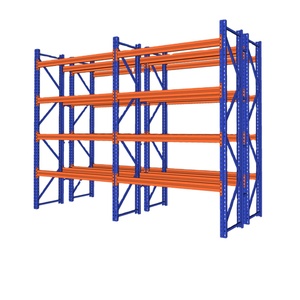
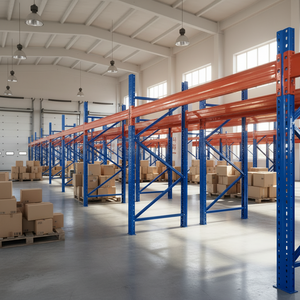
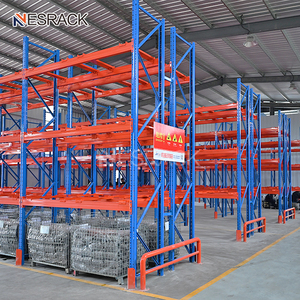
The benchmark solution for universal supply chain operations. Offers unhindered access to 100% of pallet positions, accommodating standard reach, counterbalance, or VNA trucks.
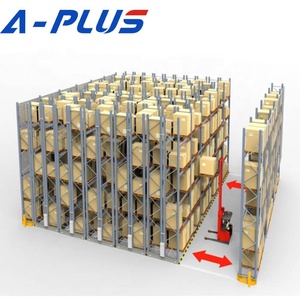
Motorized chassis riding on embedded heavy-duty floor rails opens operational aisles on demand. Cuts required warehouse floor footprint by up to 50% while doubling storage density.
Features robotic welded beam end-connectors with multi-point engagement hooks. Resists dynamic uplift forces while providing stable load capacities up to 4,500 kg per level.
Surface-treated through an automated powder coat tunnel resisting high ambient heat, extreme coastal humidity, and abrasion. Configurable for multi-level pick towers.
Industrial supply chain design demands selecting racking geometry based on SKU concentration, pallet turnaround speeds, capital expenditure, and cubic volume utilization. Here is an engineering breakdown of the 10 dominant systems deployed globally.
01
1. Selective Pallet Racking
The global gold standard for direct access. Every pallet bay is immediately accessible without honeycombing or shifting adjacent loads. Designed around single-deep runs, it supports random put-away algorithms, variable beam pitch configurations, and works seamlessly with counterbalance or reach trucks.
Selectivity: 100%Floor Utilization: 35–40%
02
2. Double-Deep Pallet Racking
Arranged by placing two selective rack structures back-to-back, reducing overall operating aisle count by 50%. Requires pantograph reach trucks or specialized dual-depth hydraulic forks. Offers an optimal middle ground between pure selectivity and high-density warehouse storage.
Selectivity: 50%Floor Utilization: 50–55%
03
3. Drive-In & Drive-Through
Forklifts drive directly into structural storage lanes where pallets rest on continuous cantilevered side rails. Drive-in operates on Last-In, First-Out (LIFO), while drive-through permits First-In, First-Out (FIFO). Ideal for bulk homogeneous consumer goods and industrial cold stores.
Selectivity: 20–30%Floor Utilization: 65–75%
04
4. Pallet Flow (Gravity Flow)
Sloped tracks (typically 3–4% gradient) outfitted with heavy-duty skate wheels or continuous rollers utilize kinetic energy to feed unit loads from the rear loading face to the front picking face. Brake rollers prevent pallet runaway, guaranteeing automated FIFO inventory turnover.
Rotation: Strict FIFOFloor Utilization: 70–80%
05
5. Push-Back Racking
Operates on nested rolling carts resting on inclined steel channels. When a new pallet is loaded, it gently pushes back the existing pallet on its cart. When unloaded, gravity rolls the subsequent cart forward. Accommodates 2 to 6 pallets deep per lane on a LIFO basis.
Rotation: LIFOLane Depth: 2–6 Pallets
06
6. Radio Shuttle Racking
A semi-automated high-density system employing autonomous, battery-powered shuttle carts directed via RF remotes or tablet WMS interfaces. Forklifts simply deposit pallets at the channel entrance, and the shuttle navigates deep inside lanes, drastically curbing upright collision risks.
Safety: Zero Mast EntryDensity: Up to 85%
07
7. Very Narrow Aisle (VNA)
Compresses conventional operating aisles from 3.5m down to 1.6–1.8m while leveraging vertical bay heights up to 16 meters. Guided by inductive in-floor guidance wires or mechanical floor rails, VNA turret trucks maximize cubic building volume without sacrificing 100% selectivity.
Aisle Width: 1.6–1.9mHeight: Up to 16m
08
8. Heavy-Duty Cantilever Racking
Engineered completely free of front column obstructions. Consists of heavy central structural columns with horizontal arms projecting outward. It provides continuous linear shelving for cumbersome, long-format stock such as extruded PVC pipes, structural steel rebar, and lumber packs.
Arm Rating: 500–3,000 kgFormat: Linear Continuous
09
9. Rack-Supported Mezzanine
Combines high-density pallet or shelving racks beneath structural steel multi-tier floor platforms. Eliminates separate structural columns by utilizing racking frames as the primary load-bearing matrix, multiplying warehouse floor space 2x to 4x for manual order fulfillment.
Floor Load: 300–1,000 kg/m²Tiers: 2–4 Levels
10
10. Automated Storage and Retrieval Racking (AS/RS High-Bay)
Precision-engineered rack structures soaring from 18 to over 40 meters high, built to rigid tolerances (FEM 9.831 / EN 15620 standards). Automated storage cranes (stacker cranes) or 3D robotic shuttles glide through continuous narrow corridors at speeds reaching 240 m/min. In "clad-rack" designs, the racking framework itself supports the warehouse exterior wall insulation and roof sheeting, slashing civil infrastructure costs and maximizing thermal efficiency for megascale automated logistics fulfillment.
Clear Heights: 18m to 42m+Crane Velocity: Up to 240 m/minCivil Integration: Rack-Clad Building Option
Data-Driven Decision Making
Racking Systems Technical Evaluation Matrix
Compare mechanical properties, aisle requirements, rotation kinematics, and capital expenditure indices across major configurations to determine the optimal return on investment (ROI).
Racking Topology
Selectivity (%)
Floor Space Util.
Rotation Logic
Operating Aisle
Relative Cost Index
Best Application Match
Selective Standard
100%
35%–40%
FIFO / LIFO
3.0m – 3.5m
$ (Baseline 1.0x)
Multi-SKU, 3PL logistics, retail hubs
Double-Deep
50%
50%–55%
LIFO
3.0m – 3.3m
$$ (1.2x – 1.4x)
Medium SKU batches, dry goods buffering
Drive-In System
20%–30%
65%–75%
LIFO
Drive-Through
$$ (1.3x – 1.5x)
Homogeneous bulk items, cold-storage rooms
Pallet Flow (Gravity)
15%–25%
75%–85%
Strict FIFO
Separate In/Out
$$$$ (2.8x – 3.5x)
High-throughput FMCG, fresh dairy, pharma
Push-Back Carts
30%–40%
60%–70%
LIFO
2.8m – 3.2m
$$$ (2.0x – 2.5x)
2-6 deep pallet buffering, shipping docks
Radio Shuttle
15%–30%
80%–88%
FIFO or LIFO
Single entry face
$$$$ (3.0x – 4.2x)
Deep lane buffer, extreme cold food chain
Very Narrow Aisle (VNA)
100%
55%–65%
FIFO / LIFO
1.6m – 1.9m
$$$ (1.8x – 2.2x)
High ceiling facilities, expensive land hubs
Cantilever Rack
100% (Front)
Variable
Random Access
Wide / Side-loader
$$ (1.5x – 2.0x)
Pipes, aluminum extrusions, timber planks
Rack-Supported Mezzanine
100% (Manual)
Up to 250%
Carton / Piece
0.9m – 1.4m Walk
$$$ (2.2x – 3.0x)
E-commerce fulfillment, spare parts hubs
AS/RS Clad-Rack High-Bay
Variable / WMS
88%–95%
Algorithmic FIFO
1.4m Crane Path
$$$$$ (5.0x – 8.0x)
Lights-out mega distribution, 24/7 velocity
Strategic Sourcing Intelligence
Future Procurement Trends Shaping Global Supply
Warehouse storage is no longer viewed as passive steel framing. Modern procurement directors must align hardware purchases with emerging intralogistics robotics, sustainability frameworks, and strict building compliance codes.
Kinematics Convergence
AMR & Robotic Interoperability
Autonomous Mobile Robots (AMRs) and automated reach trucks require racking engineered to tighter tolerances (EN 15620 Class 300). Baseplates now require laser-guided slab shimming, high-visibility optical targets, and reinforced bottom portal beams to accommodate floor-running pallet lifters and collaborative cobots.
Seismic & Geo-Engineering
Non-Linear Seismic Modeling
Under updated RMI (Rack Manufacturers Institute) MH16.1 and European EN 15512 codes, racking structures are analyzed through 3D finite element dynamic modal simulations. Buyers demand verifiable ductility reduction factors and oversized seismic anchor bolts to safeguard high-density inventory in active tectonic zones.
Cold Chain Expansion
Sub-Zero Thermal Durability
With refrigerated pharmaceuticals and food preservation booming, steel must withstand ductile-to-brittle transitions down to -30°C. Suppliers must utilize low-temperature impact tested structural alloys (such as Q355D/E) combined with specialized zinc thermal-spray or hot-dip galvanizing to eliminate cryogenic flaking.
Industrial ESG Mandates
Low-Carbon Green Steel & Zero-VOC
Procurement scoring models now integrate Environmental Product Declarations (EPDs). Leading manufacturers employ closed-loop electrostatic powder coating lines with dry-off reclaim tunnels, avoiding toxic volatile solvents, alongside electric arc furnace (EAF) scrap steel coils to lower embodied carbon.
Smart Infrastructure
IoT Strain Gauges & Impact Telemetry
Structural health monitoring sensors are migrating directly into upright columns. Battery-free RFID strain sensors and impact transponders detect minor forklift strikes, logging structural yield thresholds into the cloud WMS before an overload cascade or beam dislodgement can occur.
Standardization
Modular Reconfigurable Tooling
Rapid omnichannel retail shifts mean racking can no longer be static. Standardized 50mm and 75mm hole pitches, interchangeable bolt-free row spacers, and standardized deck recesses allow warehouses to pivot from selective bulk storage to carton pick shelves within 48 hours without structural hot-work.
Supplier Qualification Protocol
Global Supplier Audit & Technical Vetting Checklist
Ensure structural integrity and eliminate commercial risks before issuing a Letter of Credit (LC). Professional procurement teams enforce these 4 key quality benchmarks during on-site and remote factory audits.
1. Steel Metallurgy
Original Mill Test Certificates (MTC) verifying Q235B / Q355B standard compliance.
Yield strength test verifying ≥ 235–355 N/mm² tension tolerance.
Uniform strip thickness tolerance checked with digital micrometers (±0.05mm).
Cold-bend crack testing on high-stress radius corners.
2. Forming & Welding
Continuous multi-station roll-forming lines ensuring zero lateral twisting.
Robotic MIG/CO2 shielding welding on all beam end-connectors.
Weld seam penetration depth check and ultrasonic flaw inspections.
Slot punching pitch precision maintained within ±0.1mm tolerance.
3. Surface Pretreatment
Multi-tank automated pickling and phosphating acid baths.
Complete de-rusting and degreasing to guarantee chemical paint adhesion.
Electrostatic dry powder curing at 180°C–200°C chamber temps.
ASTM B117 salt spray resistance test (≥ 500 hours without blister).
4. Export Packaging
Heavy steel-banded bundle packing cushioned by corrugated protective edge boards.
Upright frames crated on custom dunnage skids for container forklift un-stuffing.
High-adhesion moisture barriers and desiccant packs for ocean freight.
Numbered component labels cross-referenced to installation blueprints.
Direct Manufacturing Authority
Guangzhou HEDA Shelves Co., Ltd.
Established in 2001, Guangzhou Heda Shelves Co., Ltd. has developed into a premier industrial manufacturer of high-precision pallet racking, heavy-duty shelving, and structural mezzanine platforms. Spanning a state-of-the-art 30,000 m² production facility in Guangzhou, China, our specialized lines manufacture over 30,000 metric tons of certified steel racking components monthly.
With over 300 experienced technical professionals, certified structural engineers, and logistics specialists, HEDA Shelves delivers turn-key intralogistics engineering. We execute every phase in-house: from 2D architectural CAD layouts and 3D structural rendering to automated roll-forming, pickling-phosphating surface protection, and global container shipping to 120+ countries worldwide.
We specialize in engineering robust storage solutions tailored to demanding environments across the Middle East (including Jebel Ali, Dammam, and Jeddah ports) and seismic zones globally. Our designs are engineered to support full civil defense approval, featuring certified flue spaces, seismic floor anchor calculations, and durable coatings that resist extreme ambient heat, blowing sand, and high coastal humidity.
2001
Founded Year
30,000m²
Factory Base
30,000t
Monthly Capacity
120+
Export Nations
CE Certified: No. 2435-CPR-8605159
ISO 9001:2015: No. 18624Q00169R0M
RoHS Compliant Green Finishes
Our Verified Core Differentiators
1. Free Professional 2D CAD & 3D Modeling
Before signing purchase orders, our engineering desk delivers full structural layouts indicating clear column aisles, flue distances, forklift clearances, and slab loading distributions for local engineering sign-off.
2. Rigorous Pickling & Phosphating Pretreatment
Unlike budget suppliers using simple solvent wipes, every HEDA component undergoes full immersion chemical bath pickling to strip microscopic scale, creating an inert iron phosphate conversion coating for lifetime adhesion.
3. End-to-End OEM & ODM Custom Fabrication
We manufacture bespoke column gauges (1.5mm to 3.0mm+), custom beam connector hooks, seismic baseplates, and specialized RAL industrial colors matching corporate branding specifications.
4. Turn-Key GCC & Global Shipping Coordination
From export stuffing at Guangzhou Port to CIF/DDU delivery at Jebel Ali, Dammam, Hamad, or Shuwaikh ports, our packing crates prevent transit friction, accompanied by complete step-by-step 3D assembly guides.
Knowledge Center
Frequently Asked Technical Questions
Detailed engineering answers covering deflections, floor loading requirements, seismic validation, and compliance approvals for supply chain and EPC managers.
Q1
What vertical beam deflection limit standard is applied in structural design calculations?
Under international standard EN 15512 and RMI MH16.1 specifications, beam maximum allowable deflection under maximum uniform design load must not exceed L/200 (where L is the clear span distance between upright columns). For sensitive automated picking systems, we engineer beam rigidity to tighter L/300 tolerances to eliminate sensor refraction errors.
Q2
What warehouse floor concrete slab specifications are needed to anchor heavy-duty racking?
Typical heavy industrial installations require a concrete slab thickness of ≥ 150mm to 250mm, poured with a minimum compressive strength of 25 to 30 MPa (C25/C30). Slabs must be reinforced with steel rebar mesh to handle post-installed chemical or expansion mechanical anchor bolts without sub-base punch cracking.
Q3
How do HEDA racking coatings withstand extreme coastal heat, humidity, and fine dust?
All raw steel components undergo an automated 4-stage pretreatment cycle: degreasing, acid pickling, rinse, and iron-phosphating before electrostatic powder application. We cure our architectural-grade epoxy-polyester powder at 195°C to achieve a minimum dry film thickness (DFT) of 60–80 microns, passing 500-hour ASTM B117 salt spray tests.
Q4
What data inputs must the client supply for a comprehensive 3D layout and structural proposal?
To provide precise structural calculations, please provide: 1) Architectural building CAD files detailing column grids and clear height to overhead trusses; 2) Pallet dimensions (Length x Depth x Total Height including cargo); 3) Maximum unit load gross weight; 4) Material handling equipment (forklift model, lift mast profile, and minimum turning radius); 5) Target operating temperature range.
Q5
Are your warehouse layout blueprints engineered to support local Civil Defense approval?
Yes. Our structural drawings clearly identify mandatory longitudinal and transverse flue spaces (typically 75mm–150mm) according to NFPA 13 sprinkler penetration standards, clear egress travel corridors, maximum bay load placards, and upright frame base impact protection. This documentation streamlines fast sign-offs with municipal and Civil Defense authorities.
Q6
What installation guidance and on-site support are available for overseas shipments?
Every export container includes color-coded component tagging matched to explicit 2D CAD assembly schematics and 3D exploded assembly diagrams. We provide comprehensive video guides and live remote engineering video consultations. For large-scale multi-tier mezzanines or automated projects, certified installation supervisors can be dispatched on site.
Ready to Optimize Your Warehouse Storage Footprint?
Connect directly with our senior intralogistics structural engineers. Get an exhaustive site evaluation, structural load calculation sheet, and full 2D CAD/3D layout drawings within 24 to 48 hours—factory-direct from our 30,000 m² Guangzhou production facility.
 Modular Rivet