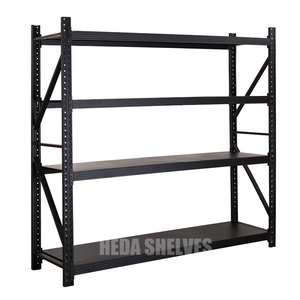
Customizable Medium Duty Steel Warehouse Shelving
- Capacity: 200–800 kg per tier
- Finish: Anti-corrosion powder coat
- Pitch: 50mm pitch adjustable beam
Direct factory-manufactured racking solutions configured for tropical humidity, heavy point loads, high volumetric turnover, and harsh multi-shift warehouse environments across Ghana.
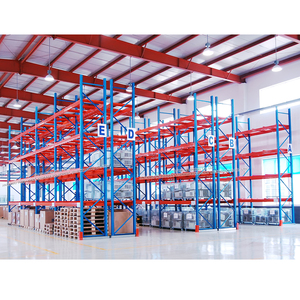
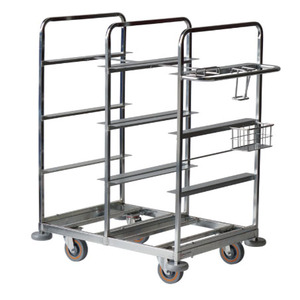
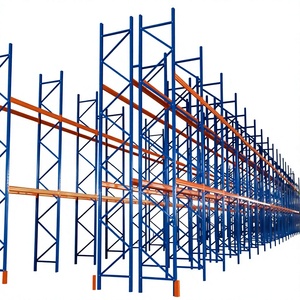
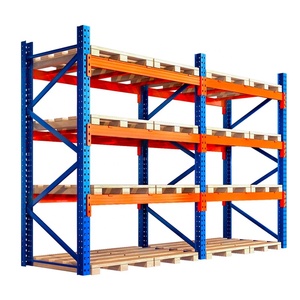
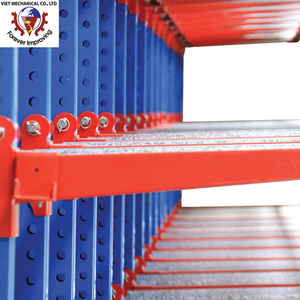
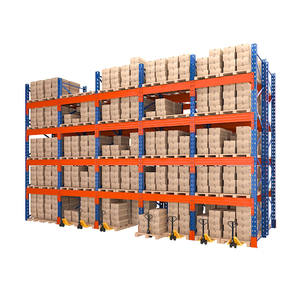
Addressing structural load capacities, container turnaround friction, and tropical air stability across Ghana’s prime distribution corridors.
High-density selective and drive-in racking engineered for freight handling depots and ICDs surrounding Meridian Port Services (MPS) Terminal 3. Built to endure heavy turnover cycles and maritime coastal salinity.
Rapid pallet throughput systems serving retail supermarket hubs and consumer goods wholesalers in Spintex Road, North Industrial Area, and Kumasi Adum wholesale centers, balancing FIFO operations with carton-picking efficiency.
Ventilated pallet racking and galvanized wire mesh container staging specifically tailored for processed cocoa derivatives, packaged cashew kernels, grain sacks, and fertilizer distributions with strict moisture management.
Strict FDA Ghana-compliant racking environments supporting cleanroom temperature distribution across Greater Accra. Epoxy powder finishes prevent particulate shedding and simplify chemical cleaning regimens.
Heavy-duty structural cantilever systems and heavy pallet racks designed to store long pipe bundles, drill steels, rebar rods, earthmover spares, and hazardous extraction reagents under continuous rugged load stress.
Drive-in and high-density racking deployed across refrigerated fisheries, poultry depots, and dairy storage hubs in Tema fishing harbor and coastal reefer facilities, minimizing thermal loss per refrigerated cubic meter.
Ghana’s industrial warehousing landscape is undergoing a systemic structural transformation. As the headquarters of the African Continental Free Trade Area (AfCFTA) Secretariat, Accra has positioned itself as the trade and logistical fulcrum of West Africa. However, warehouse operators, 3PL providers, and factory managers face acute challenges: high industrial land lease rates in Greater Accra (especially along the Spintex Road and Tema Motorway corridors), persistent ambient relative humidity fluctuating between 75% and 95%, and severe port demurrage risks that penalize construction and installation delays.
"Procuring racking systems for Ghanaian commercial operations is no longer a simple catalog commodity purchase; it is a complex structural engineering discipline balancing slab bearing capacity, atmospheric corrosion resistance, and fast-track ocean freight consolidation from Chinese manufacturing centers directly into Tema Port."
Historically, Ghanaian distribution centers relied on horizontal block stacking of pallets or rudimentary angle-iron frames fabricated on-site. This legacy method yields poor volumetric floor utilization (often below 35%), causes extensive pallet crushing in agricultural and beverage supply chains, and completely invalidates FIFO inventory control. Modern distribution hubs in Free Zones such as Dawa Industrial Zone and Appolonia City are shifting to clear heights of 9 to 12 meters.
By leveraging Chinese factory-direct roll-formed heavy-duty selective pallet racking and VNA (Very Narrow Aisle) systems, facility managers increase storage density by up to 240% within identical real estate footprints, dramatically lowering effective rental cost per pallet position.
Industrial installations within 40 kilometers of the Gulf of Guinea (such as Tema, Kpone, and Accra Central) are subject to elevated airborne chlorides coupled with tropical ambient heat. Standard industrial paint flutters and oxidizes within 18 months, leading to hidden structural weakness under load. Our manufacturing protocol integrates an advanced 10-step surface treatment: shot blasting, deep pickling and phosphating, followed by electrostatic thermosetting epoxy-polyester powder coating cured at 200°C. For open-air timber or rebar yards in Takoradi, hot-dip galvanizing with a minimum 65-micron zinc coating thickness guarantees a multi-decade operational lifespan.
A prevalent engineering risk across Ghanaian industrial parks is the variance in concrete floor slab engineering. Many existing warehouses feature unreinforced or thinly poured ground slabs unable to bear immense point loads from high-bay racking footplates. When supplying China-manufactured racked warehouse systems to Ghana, our structural engineering team conducts rigorous baseplate and anchor bolt calculations in accordance with FEM 10.2.02 and SEMA standards. We custom-engineer oversized heavy gauge baseplates (typically 10mm to 16mm thick) equipped with multi-point chemical expansion anchoring, ensuring point loads are safely dispersed across the building slab without risking foundation punching shear failure.
We operate as your direct industrial fabrication partner, bypassing third-party traders to deliver transparent steel pricing, rigorous European structural certifications, and custom turnkey logistics.
Equipped with automated continuous roll-forming lines, laser profiling cutters, robotic welding cells, and high-capacity dual-chain powder coating lines producing 30,000 tons monthly.
Our structural design engineers provide comprehensive 2D warehouse layouts, 3D parametric renderings, and structural loading calculations tailored to your forklift fleet before quotation confirmation.
Full international certification (CE No. 2435-CPR-8605159; ISO 9001:2015 No. 18624Q00169R0M). Every batch is verified via yield strength, deflection, and drop tests before containerization.
Components are pre-bundled, color-coded, protected by corrugated bubble film, and loaded with balanced weight distribution for long-haul maritime shipping, ensuring fast on-site unloading.
Practical answers concerning ocean transit, ICUMS customs clearing, assembly in Ghana, and structural tailoring.
Shipments depart directly from major Chinese export terminals (such as Guangzhou, Shenzhen, or Ningbo) bound for the Port of Tema (or Port of Takoradi for Western Region mining projects). Average ocean sailing time is typically 30 to 45 days. Production lead times range from 14 to 25 days depending on total project tonnage. We bundle upright frames, beams, and pallet accessories in dedicated 40ft High Cube containers, complete with itemized packing lists matching installation assembly blueprints.
Yes. We provide complete and compliant export documentation sets required for clearance under the Integrated Customs Management System (ICUMS) at Tema Port. This includes Commercial Invoices, Packing Lists with detailed HS codes (typically HS 7308.90 for steel structures and racking), Original Bills of Lading (or Telex Release), Certificates of Origin, and Mill Test Certificates (MTC). If your company is registered under the Ghana Free Zones Authority (GFZA), we ensure all trade paperwork clearly specifies duty-free or concessionary status.
All our racking components feature precision-engineered interlocking slot systems (teardrop, diamond, or butterfly punch formats) requiring minimal on-site welding or specialized tooling. We deliver comprehensive CAD installation schematics, step-by-step 3D assembly guides, and bolt torque specifications. In addition, our structural engineers provide dedicated remote video technical support for local assembly contractors in Accra or Kumasi. For large-scale multi-tier mezzanines or automated shuttle facilities, on-site supervision engineers can be dispatched.
To deliver an optimized 2D CAD layout and load matrix, we require: (1) Architectural floor plan showing interior clear dimensions, column grids, doorways, and dock positions; (2) Clear height to the lowest overhead obstruction (sprinklers, structural rafters, lighting); (3) Pallet specifications (Length x Width x Overall Height including load, plus maximum weight per pallet); (4) Material handling equipment data (forklift turning radius, mast height, reach type); and (5) SKU velocity profiles (FIFO vs. LIFO requirements).
Unlike basic brush-painted steel that flakes and corrodes under coastal West African humidity, all our components undergo an automated multi-stage pre-treatment: alkaline degreasing, acid pickling to strip surface oxides, and zinc phosphate conversion coating. This chemical conversion creates an impermeable bond before thermosetting electrostatic epoxy-polyester powder application. This achieves superior salt-spray corrosion resistance tested to exceed 500 hours, preventing subsurface iron oxide formation.