Top China Industrial Rack Storage Manufacturers Serving the New Zealand Market

AS/NZS 4084:2023 & NZS 1170.5 Compliant Seismic Storage Engineering: Direct Factory Fabrication, Automated Roll-Forming, and Turnkey Logistics Solutions for Auckland, Canterbury, and Waikato Warehouses.

Factory Catalog

Engineered Industrial Racking Systems for Kiwi Warehouses

Direct supply from Guangzhou Heda Shelves Co., Ltd. Tailored for CHEP/Loscam pallet profiles, cold chain performance down to -30°C, and structural engineering compliance for New Zealand seismic zones.
2001
Year Established
30,000 m²
Dedicated Factory Footprint
30,000 t
Monthly Production Capacity
10,000+
Global Completed Projects
Structural Compliance Whitepaper

Engineering Racks for New Zealand’s Rigorous Seismic Environment

Procuring warehouse storage in New Zealand differs fundamentally from European or standard Asian specifications. Due to New Zealand’s geographical position on the Pacific Ring of Fire, steel storage racks are classified as structural systems subjected to cyclic seismic loading.

AS/NZS 4084:2023 Limit State Design
The updated standard introduces stringent testing protocols for stub columns, beam-to-column connector assemblies, and baseplate anchorage. Our components are modeled using cold-formed steel limit state analysis, ensuring both Ultimate Limit State (ULS) resistance against collapse and Serviceability Limit State (SLS) stiffness under operating deflections.
NZS 1170.5 Seismic Action Compliance
From low-seismic Auckland zones to high-seismic regions in Canterbury, Wellington, and Hawke’s Bay, lateral coefficient calculations account for ductility factors (typically $\mu \le 1.25$ for cold-formed steel framing), spectral shape factors, and ground soil classifications (Class A to E) to prevent plastic hinge failure.
Producer Statement (PS1) Collaboration
New Zealand Territorial Authorities require building consents for high-bay racking systems exceeding standard threshold heights. We supply chartered professional engineers (CPEng) with verified fabrication drawings, FEA finite element structural models, steel mill test certificates (MTC), and anchorage reaction calculations.
Design Criterion Standard Import Rack (Non-NZ) HEDA Engineered NZ Racking System Engineering Benefit
Structural Standard EN 15512 / General ANSI MH16.1 AS/NZS 4084:2023 & NZS 1170.5 Passes Council Building Consent & WorkSafe Audits
Steel Grade & Yield Strength Standard Q235B ($f_y = 235 \text{ MPa}$) Q355B Hot-Rolled Strip ($f_y \ge 355 \text{ MPa}$) 51% higher yield strength; handles dynamic seismic sway
Column Footplate Anchorage Single mechanical pin anchor Seismic dual-bolt footplates with Hilti/Ramset spec Prevents concrete pull-out under extreme uplift moments
Seismic Spine & Plan Bracing Optional or cross-braced without calculation Tension-compression rated structural K-bracing Controls down-aisle and cross-aisle drift ratios
Surface Corrosion Protection Single-pass flash powder spray Pickling, phosphating + 80-120μm electrostatic epoxy Withstands high maritime salt humidity (C3/C4 exposure)
Localized Industry Verticals

Tailored Deployment Across New Zealand’s Key Sectors

From Waikato dairy processors to Marlborough wineries and Auckland logistics distribution parks, industrial operations demand purpose-designed storage geometry.

Fonterra-Scale Dairy Cold Storage
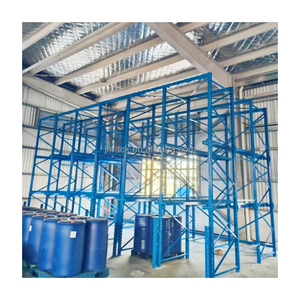
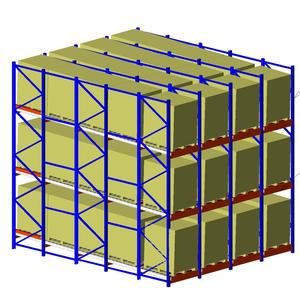
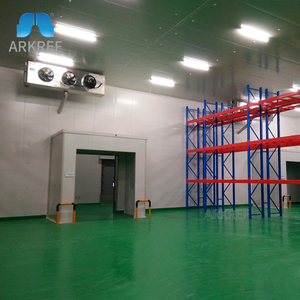
Sub-zero cold chain facilities (down to -30°C) operating ammonia or R744 systems across Canterbury and Southland require heavy-duty drive-in or automated radio shuttle racks that resist low-temperature steel embrittlement and maximize expensive refrigerated cubic volume.
Marlborough Wine Maturation & Bottling
Viticulture barrel storage and bulk finished-case distribution in Blenheim, Napier, and Hawke’s Bay utilize cradle racks and selective pallet racking with high-clearance bays designed to protect fragile liquid bulk goods from earthquake shock oscillations.
Forestry & Building Material Cantilevers
New Zealand's structural timber, plywood, and steel distribution merchants (e.g., in Rotorua and Taupo) rely on heavy-duty cantilever racks with adjustable arm capacities up to 3,000 kg, hot-dip galvanized for open-air timber yard protection.
FMCG & E-Commerce Logistics Hubs
High-throughput 3PL warehouses in Auckland Airport Oaks, Highbrook, and Tauranga industrial estates implement Very Narrow Aisle (VNA) and multi-tier mezzanine floors to manage tens of thousands of SKUs with rapid pick cycles.
Macro Market Dynamics

Emerging Trends Shaping Kiwi Warehouses

Strategic shifts in warehouse automation, strict land use constraints in major city corridors, and safety mandates are reshaping storage investments.

1. Transition to Dense Radio Shuttle Automation
Faced with high industrial land lease rates in South Auckland and Christchurch, operators are moving away from wide-aisle selective racking. Semi-automated 4-way radio shuttle systems allow 80% higher volumetric utilization while reducing forklift entry hazards inside racking lanes.
2. Enhanced WorkSafe NZ Pallet Racking Mandates
Following post-earthquake safety updates, WorkSafe New Zealand has heightened inspections regarding impact protection, load capacity signage, beam locking pins, and annual safety audits. Racks lacking verifiable design plaques or with altered beam configurations face strict enforcement.
3. Hybrid Mezzanine Fulfillment Centers
The acceleration of domestic omnichannel delivery has driven demand for rack-supported and structural steel mezzanine floors. By doubling or tripling internal usable footprint without extending the building roof envelope, operators optimize both ground-level bulk storage and upper-level manual picking.
Manufacturing Might

Guangzhou Heda Shelves Co., Ltd. Direct Factory Advantages

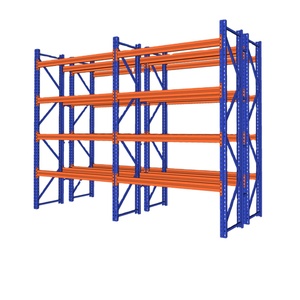
Established in 2001, Guangzhou Heda Shelves Co., Ltd. is an industry-leading designer and manufacturer of high-precision heavy-duty pallet racking, automated storage retrieval structures, and multi-tier mezzanine systems.

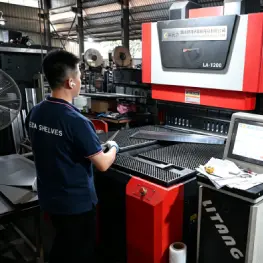
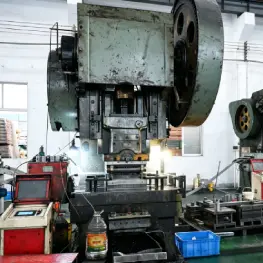
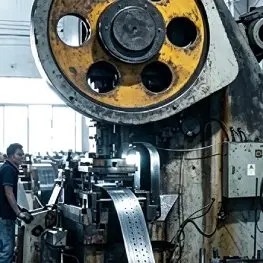
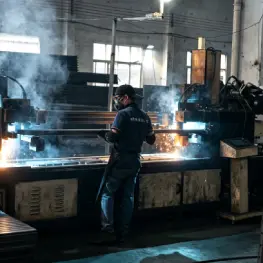
With an integrated 30,000 square meter fabrication facility and over 300 technical engineers and production specialists, we manufacture over 30,000 tons of structural storage systems each month. By retaining all operations in-house—from continuous roll-forming of high-tensile upright profiles to robotic beam welding and automatic electrostatic powder coating—we guarantee complete batch traceability and competitive factory-direct pricing for New Zealand importers and distributors.

Our engineering team provides comprehensive 2D CAD floor configurations, 3D structural models, and finite element calculations formatted to assist local New Zealand CPEng partners in obtaining council building consents quickly.

Send an Inquiry for Project Consultation
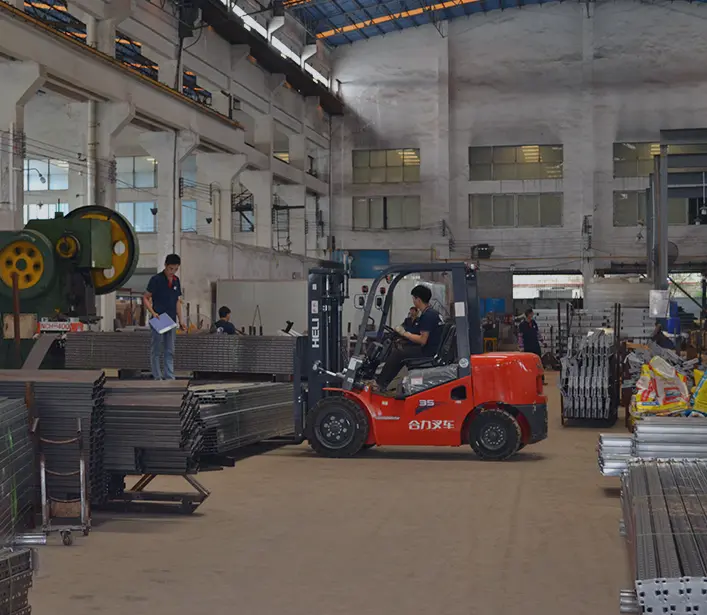
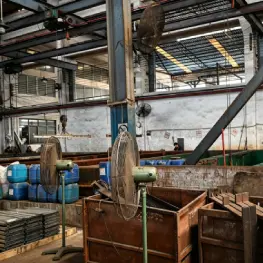
HEDA Shelves Racking Factory Interior
Quality Control Pipeline

Our End-to-End In-House Production Process

Precision manufacturing guarantees dimensional stability, weld integrity, and finish adhesion across every upright frame and beam dispatched to New Zealand.
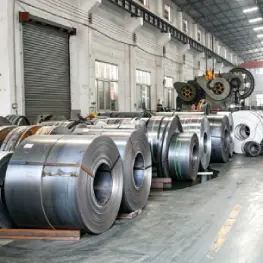
Raw Materials Inspection

01. Certified Q355B Steel

Precision Steel Cutting

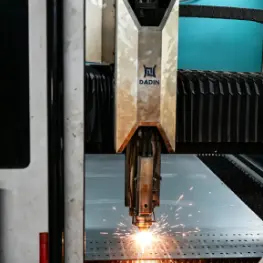
02. Precision Laser Cutting

Automated Upright Punching

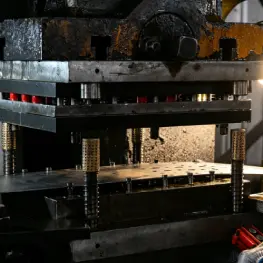
03. Auto Pitch Punching

Cold Bending Forming

04. Cold Bending Forming

Profile Roll Forming

05. Continuous Roll Forming

Surface Polishing

06. Surface Polishing

Robotic Welding

07. Robotic Seam Welding

Pickling & Phosphating

08. Chemical Pretreatment

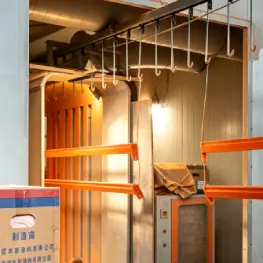
Electrostatic Powder Coating

09. Epoxy Powder Coating

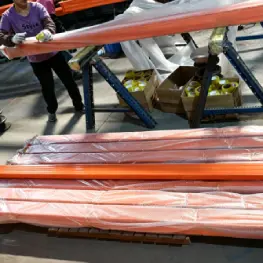
QC & Export Packing

10. Containerized Packing

Audited Compliance

Internationally Recognized Safety & Quality Accreditations

Independent laboratory testing records, tensile strength certificates, and ISO 9001 compliance guarantee that every shipment stands up to international engineering review.
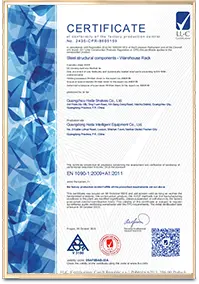
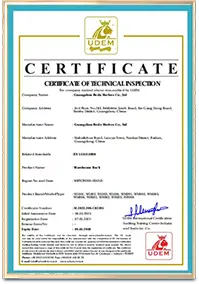
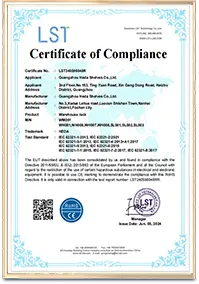
CE Mark Certificate CE Factory Production Control
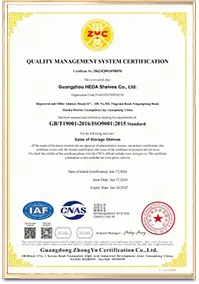
ISO 9001 Quality Management ISO 9001:2015 Management
RoHS Environmental Compliance RoHS Heavy-Metal Free Finish
Load Testing Audit Report Independent Structural Deflection Test
Procurement Guidance

New Zealand Buyer FAQs: Direct Factory Sourcing

Key technical, legal, and operational considerations for logistics directors, operations managers, and facility owners importing Chinese industrial storage systems into New Zealand.

Can HEDA Shelves support New Zealand Building Consent and Producer Statement (PS1)?
Yes. New Zealand councils (such as Auckland Council, Christchurch City Council, and Hamilton City Council) require a Producer Statement Design (PS1) signed by a Chartered Professional Engineer (CPEng) registered under Engineering New Zealand. We collaborate directly with your local engineer or can recommend experienced independent Kiwi structural engineering consultancies. We supply detailed 3D AutoCAD files, section properties ($I_x, I_y, Z_x$), material mill test certificates (showing tensile/yield strengths of Q355B steel), and seismic baseplate connection moment capacities.
How does HEDA handle standard New Zealand pallet dimensions (CHEP / Loscam 1200 x 1000 mm)?
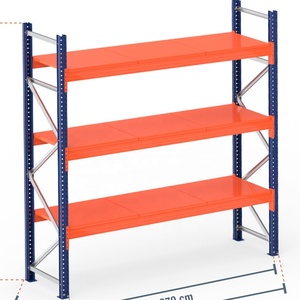
Standard Australian/NZ four-way timber pallets measure 1200 mm wide x 1000 mm deep (or 1200 x 1200 mm square in specific primary produce packaging). Unlike standard European 800 mm depths, we engineer our beam spans (commonly 2591 mm or 2743 mm clear entry for two pallets) and frame depths (usually 840 mm to 900 mm) to achieve the mandated 50 mm to 100 mm pallet overhang front and rear, preventing pallet displacement during material handling.
What are the transit shipping lead times and designated destination ports in New Zealand?
We routinely arrange containerized shipments (20GP, 40GP, 40HQ) from Guangzhou / Nansha / Shenzhen ports directly to New Zealand ports:
  • Ports of Auckland (POAL): Average transit time 16–22 days.
  • Port of Tauranga: Average transit time 18–24 days.
  • Lyttelton Port (Christchurch): Average transit time 22–28 days.
  • Port of Napier / Port Chalmers (Dunedin): Available on direct or transshipment schedules.
Factory production typically requires 15 to 25 days depending on project tonnage.
How does the powder coat finish resist New Zealand’s coastal salt-air conditions?
Due to New Zealand’s high maritime atmospheric exposure (ISO 9223 Corrosivity Category C3/C4), standard paint finishes can deteriorate prematurely. Our factory incorporates an eight-stage chemical pre-treatment process comprising high-temperature degreasing, acid pickling to eliminate scale, and zirconium/zinc phosphating before electrostatic curing of architectural-grade epoxy-polyester powder (80–120 microns). For external timber yards or high-humidity coastal sites, hot-dip galvanizing conforming to AS/NZS 4680 is also available.
How are components protected against damage during multi-week trans-Pacific ocean shipping?
All upright frames and beams are bundled with steel strapping, cushioned by corrugated board corner guards, and wrapped in industrial moisture-barrier PE shrink film. Heavy baseplates, bolts, and safety accessories are packed in labeled, reinforced wooden crates. Each bundle is marked with item tags matching the project installation assembly layout drawings, facilitating rapid sorting and container de-stuffing at your Kiwi warehouse site.
Does HEDA provide on-site installation support or assembly drawings for local Kiwi crews?
Every project includes full 2D erection schematics, 3D exploded assembly diagrams, frame load warning plaques, and torque fastening schedules for concrete slab anchor bolts. While most New Zealand clients utilize licensed local installation contractors to fulfill local Health and Safety at Work Act (HSWA 2015) site requirements, our technical project managers provide step-by-step remote video coordination and structural engineering verification.

Ready to Optimize Your New Zealand Warehouse Footprint?

Submit your warehouse floor plan, ceiling clear heights, and pallet specifications. Our structural engineering team will deliver a complimentary 2D CAD layout, 3D render, and transparent factory-direct pricing within 24 hours.

Send an Inquiry